


Coastal Dune and Sea Cliff Vegetation Management with RC Mowers
Introduction: One of the Most Demanding Environments for Grounds Equipment
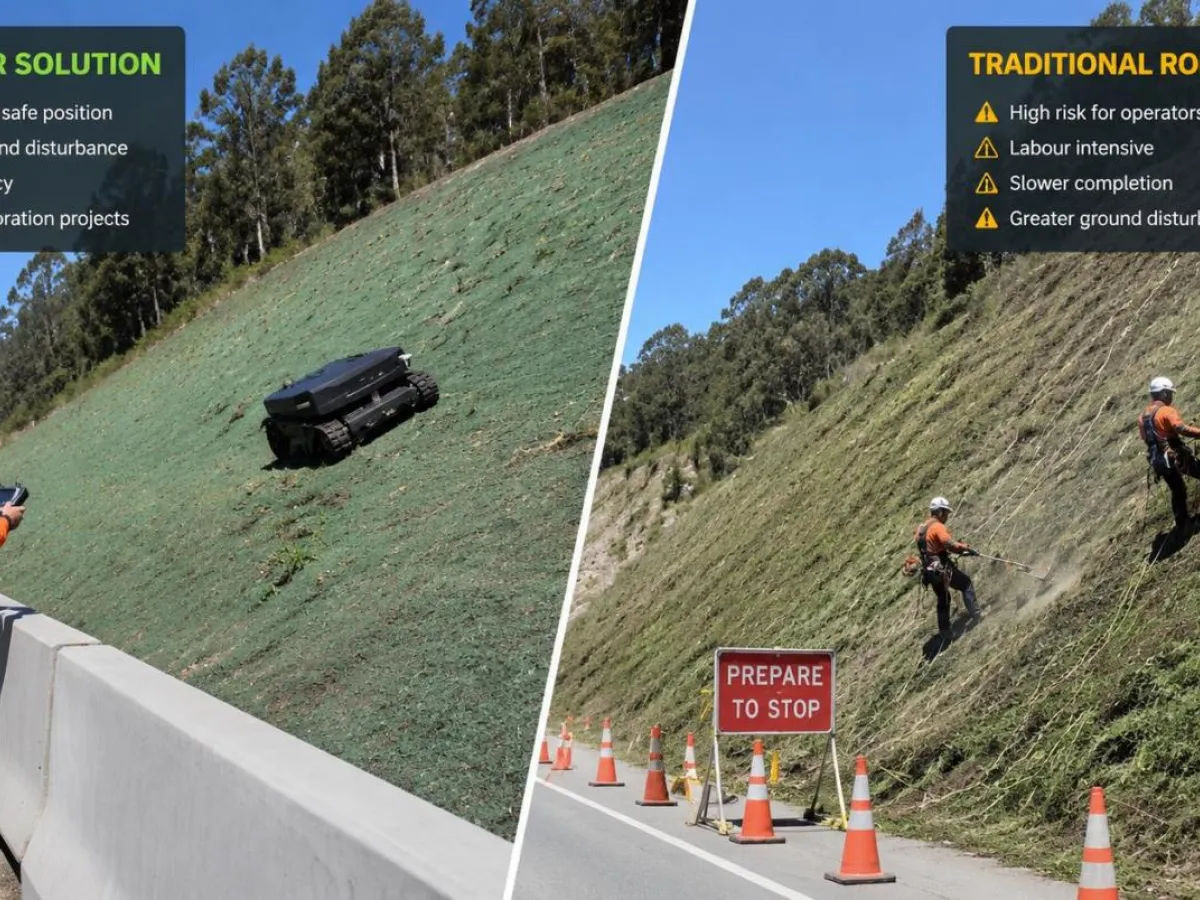
Coastal dune systems, sea cliff grasslands, and saltmarsh transition zones are among the most ecologically sensitive and physically demanding environments where vegetation management is required. Dune faces can exceed 45 degrees; substrates are unstable sand that shifts under machine weight; saltwater spray creates one of the most corrosive environments any mechanical equipment can encounter; and many coastal sites carry designation as Sites of Special Scientific Interest (SSSIs) or Special Areas of Conservation (SACs) that impose strict management constraints. RC slope mowers give grounds teams a way to cut these sites properly without putting an operator onto unstable sand.
Yet vegetation management on coastal sites is essential. On managed recreational beaches, encroaching marram grass and sea buckthorn must be controlled to maintain public access paths and viewpoints. On sea defence dune systems, vegetation management is required to maintain the structural integrity of dune ridges that provide natural storm surge protection. On cliff-top grasslands, rare plant communities require periodic cutting to prevent rank grass from shading out early-successional species. Remote-controlled slope mowers provide a way to manage these environments more safely and consistently than manual methods — provided the right machine specification and operational technique are applied.
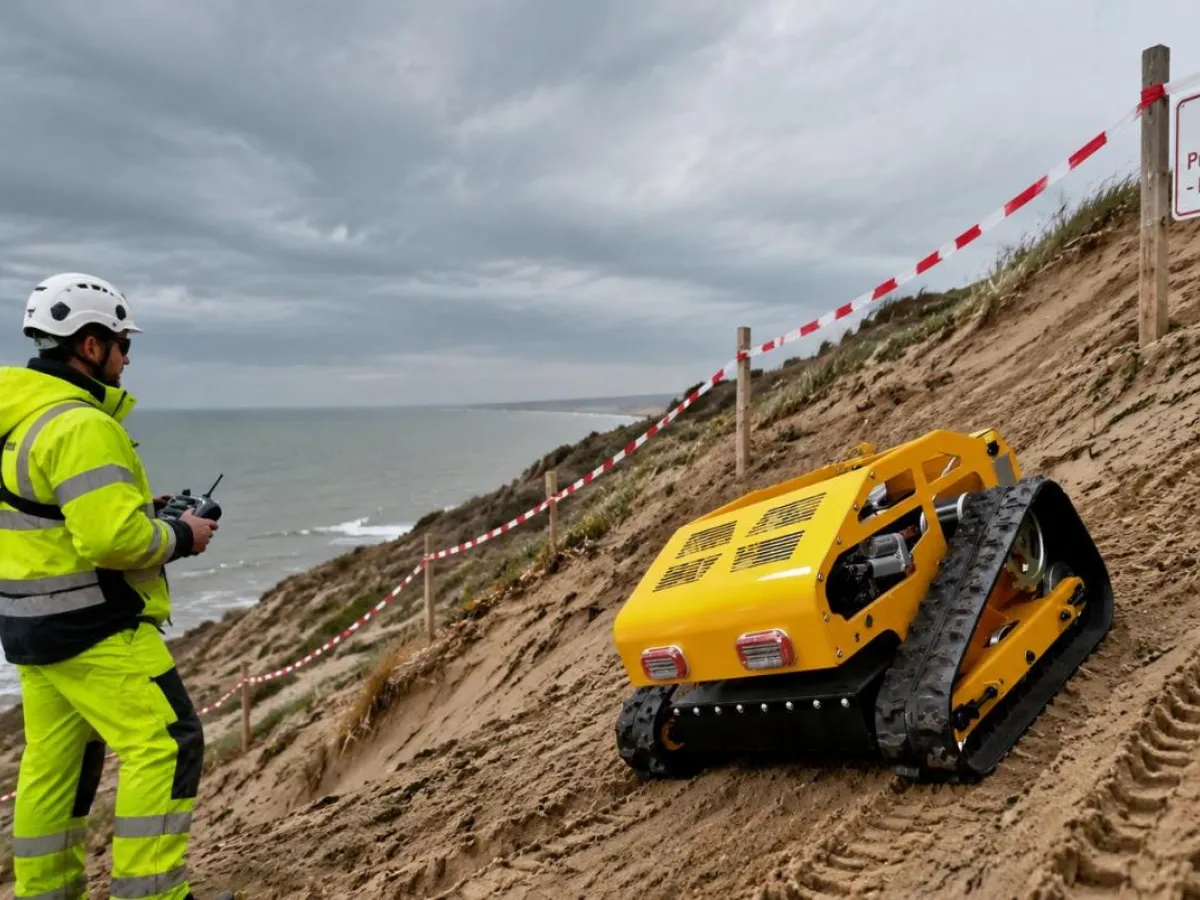
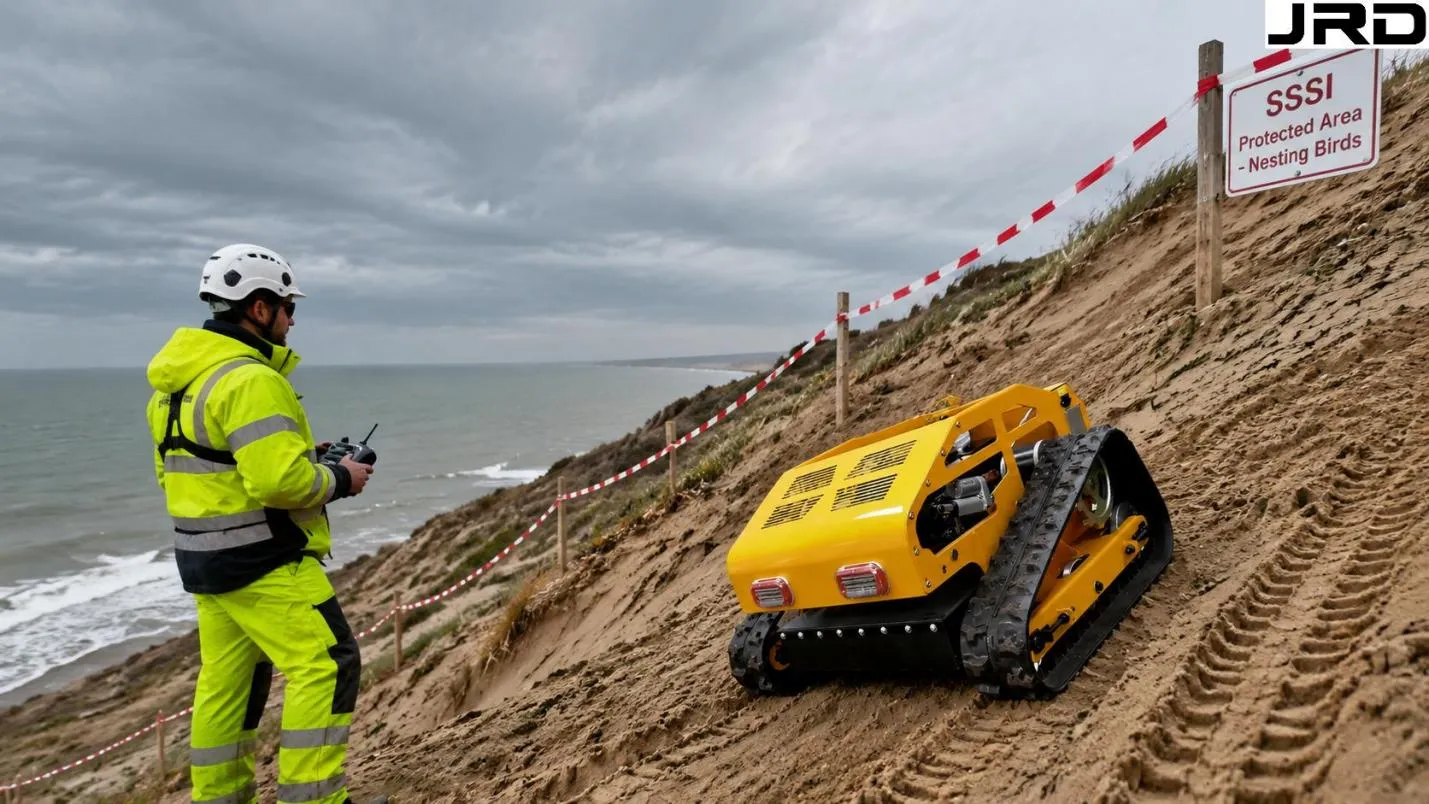
a rugged RC slope mower via handheld transmitter, the machine is leaving distinct wide-track imprints on the dry
Specific Challenges of Coastal Environments
Unstable substrate: Sand dunes present a fundamentally different substrate challenge than soil-based slopes. Dry sand provides poor track traction and can shift under load, particularly on the steep faces of embryonic and mobile dune systems. Machine deployment is typically more reliable on semi-fixed or fixed dune areas with established marram grass root networks that provide substrate stability.
Saltwater corrosion: Coastal spray environments are severely corrosive to all metal components. Standard machine paint protection and exposed fastener coatings are not designed for continuous coastal exposure. Machines operating in coastal environments require a post-session freshwater washdown and more frequent lubrication of exposed grease points and pivot pins.
Variable terrain: Coastal topography is rarely uniform. Dune faces feature blowouts, slacks, paths, and abrupt grade changes that require careful operator attention and lower operating speeds than on uniform embankments.
Wind: Coastal sites are frequently exposed to strong winds that affect both operator comfort and machine stability on exposed dune crests and cliff grasslands. Operating on exposed terrain in wind speeds above 40 km/h should be avoided — wind loading on the machine on a steep slope can exceed the machine's lateral traction reserve.
Public access: Popular beaches and coastal paths have high public footfall. Mowing operations must be carefully timed around peak visitor periods, and robust exclusion zone management is essential — beachgoers and path users are often unaware of the hazard zone around an operating RC mower.
Application Zones on Coastal Sites
Sea defence dune ridges: The primary dune ridge system that provides natural sea defence requires periodic cutting to prevent tall vegetation from destabilising the dune crest through wind resistance and root penetration of the dune structure. Cutting is typically carried out on the landward face where substrate is more stable, at annual or biennial intervals.
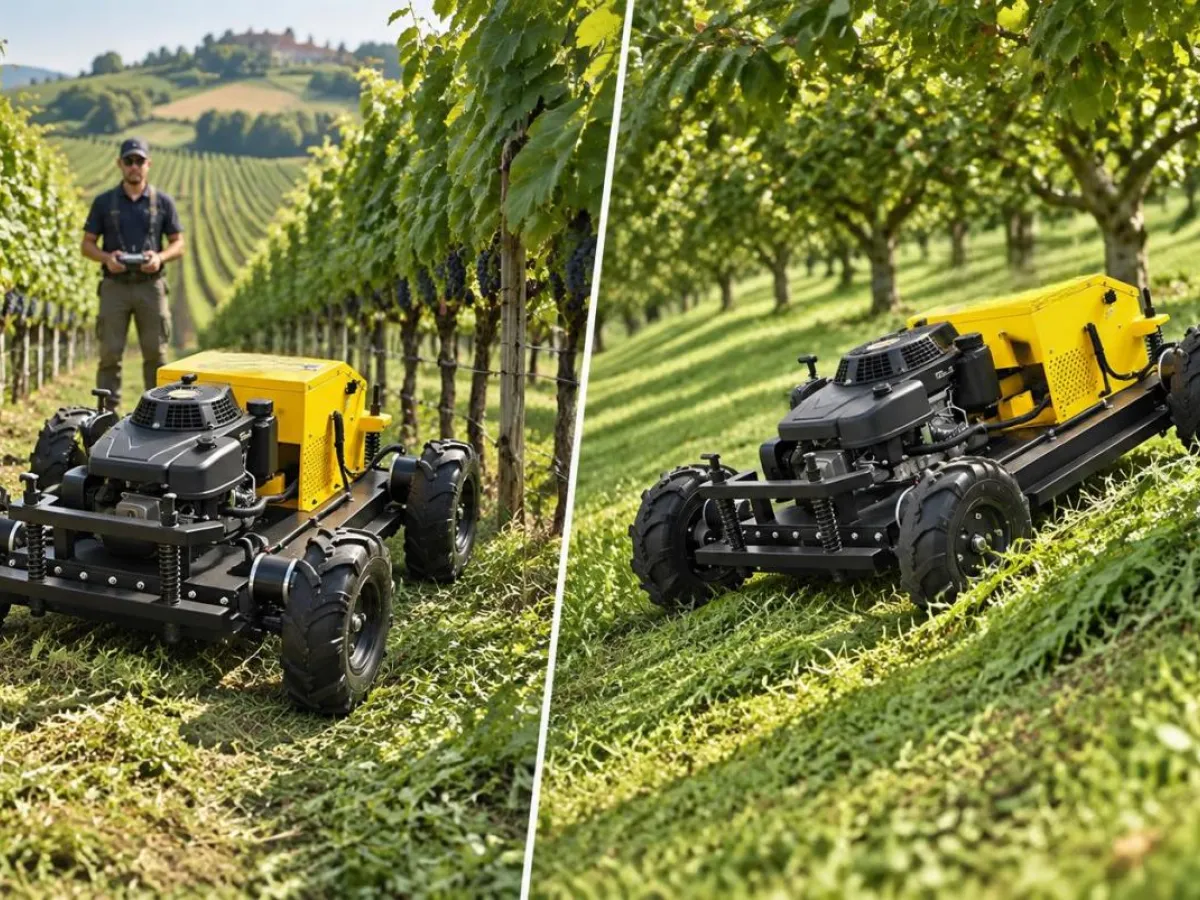
Beach access path banks: The cut slopes flanking managed beach access paths through dune systems are classic RC mower terrain — steep grass-covered faces that require regular cutting to maintain path visibility and prevent encroachment narrowing.
Cliff-top SSSI grasslands: Thin-soil grassland on chalk and limestone cliffs supports nationally important plant communities. Annual or biennial cutting maintains the open sward structure these communities require. Cliff-top cutting requires absolute discipline in maintaining the machine clear of the cliff edge — establish a minimum 5-metre cliff edge exclusion zone for all RC mower operations.
Coastal car park surrounds and picnic area banks: The landscaped banks around coastal recreation facilities are managed to recreational standard and typically have more stable, soil-based substrates than the dune system itself. These are the lowest-risk coastal RC mower application.
Saltmarsh transition margins: The upper edges of saltmarsh where transition to terrestrial grassland occurs sometimes require cutting to manage rush and sedge encroachment. These areas are very sensitive to machine traffic — ground pressure must be assessed against current water-table conditions before deployment.
Machine Selection and Coastal Specification
Standard RC mower specification requires several modifications or additional measures for sustained coastal operation:
Stainless steel or hot-dip galvanised fasteners: Replacing standard zinc-plated bolts and fasteners on exposed components with stainless steel equivalents significantly extends corrosion life on coastal machines.
Additional underseal and frame protection: Apply a cavity wax or corrosion inhibitor to all hollow frame sections before coastal deployment season.
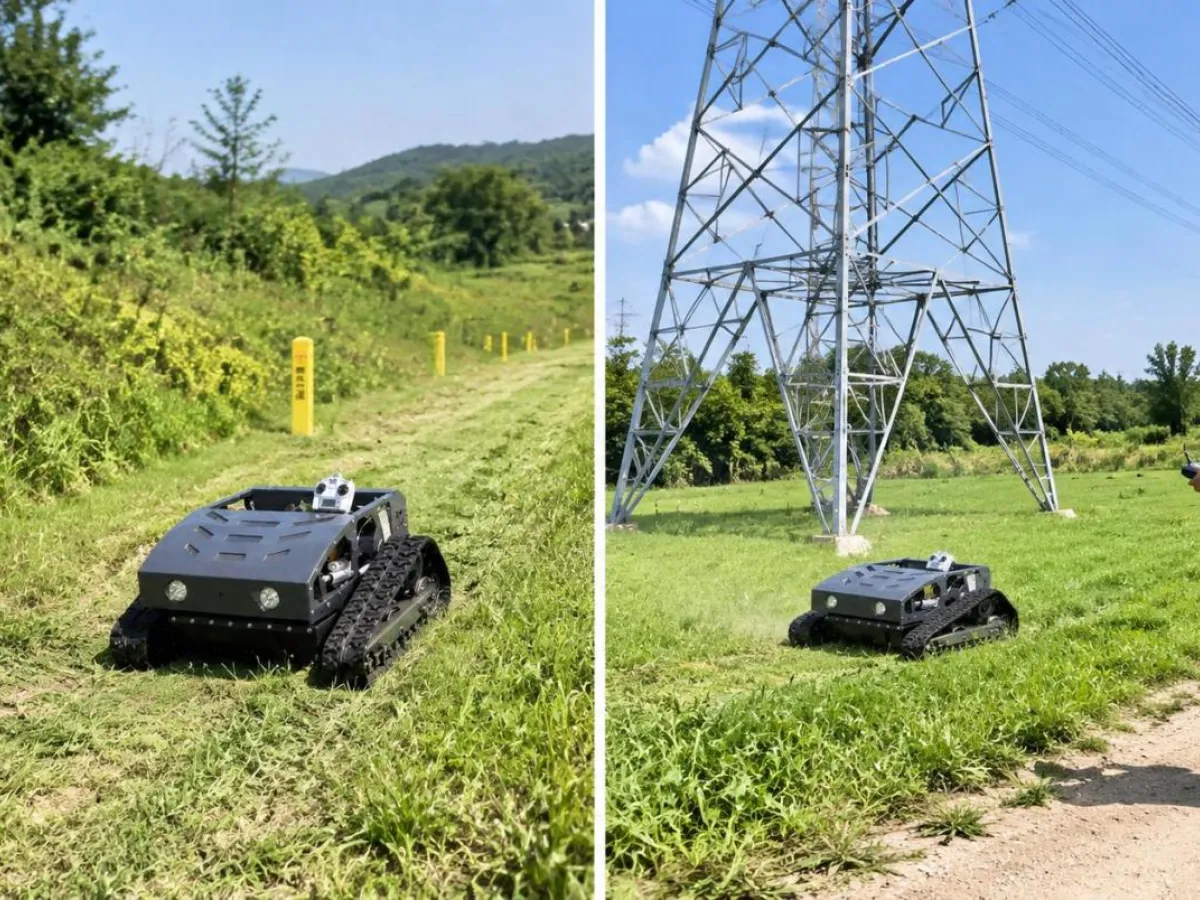
Wider track option: On sand substrate, the wider track option (where available) reduces ground pressure and improves traction on dry sand faces. The BLADEFORCE RS-1T wide-track configuration is specifically suited to sandy coastal terrain.
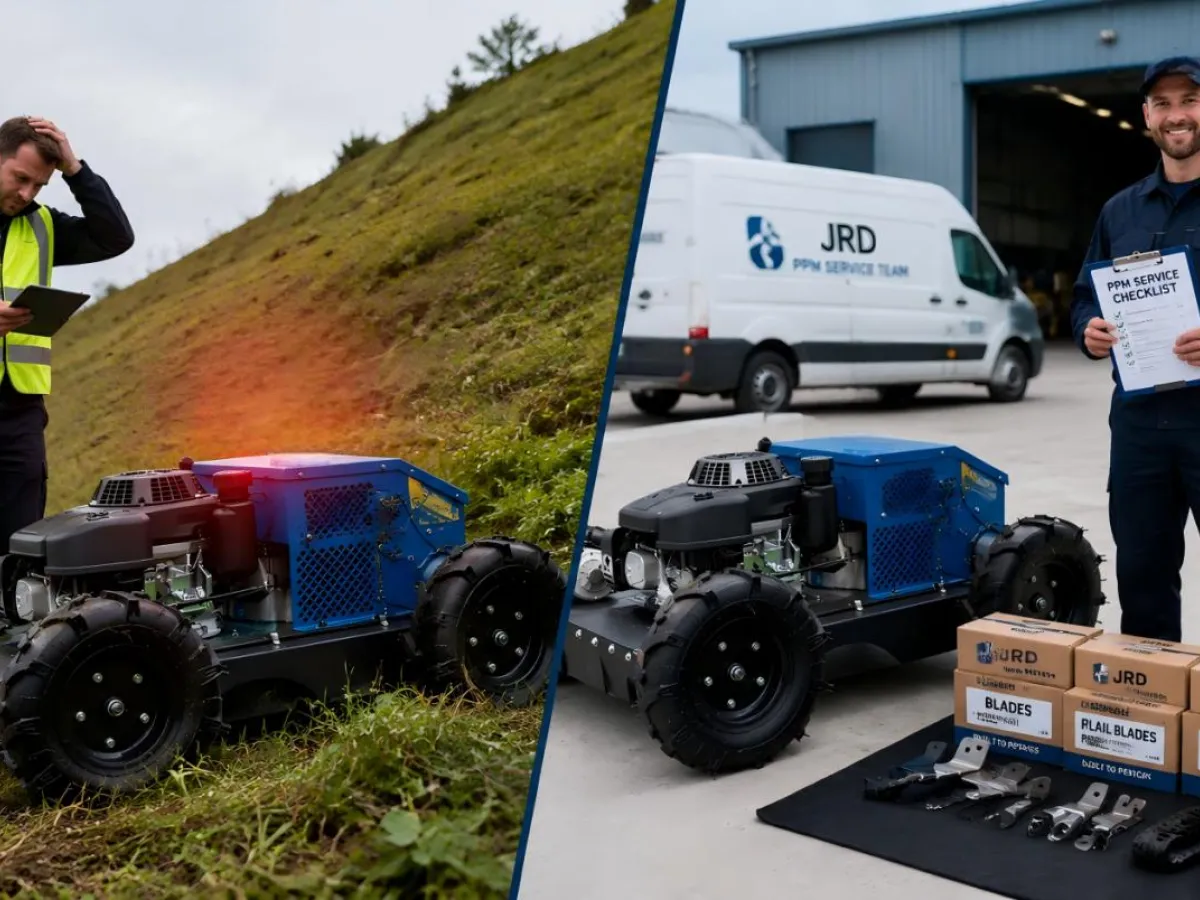
Freshwater washdown after every coastal session: This is non-negotiable on salt-spray environments. A 10-minute freshwater rinse after each operating session, paying particular attention to track drive motors, pivot pins, and any exposed electrical connectors, will extend machine service life by years compared to machines left unwashed.
Inspect hydraulic hose armour more frequently: Salt atmosphere accelerates degradation of hose outer sheathing. Increase hose inspection frequency to every 25 hours on machines deployed at coastal sites.
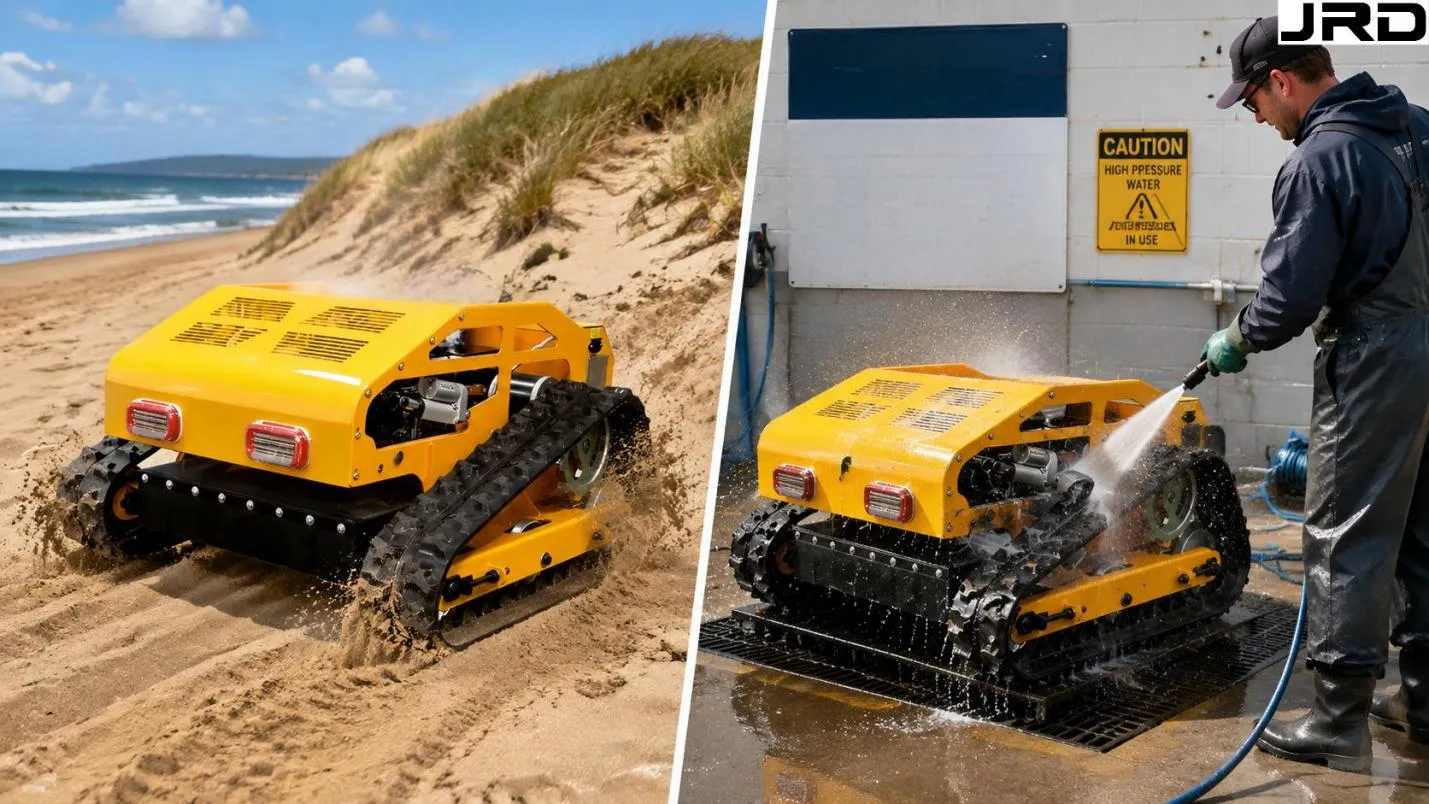
Perform mandatory high-pressure freshwater flushing on the lawnmower.
Ecological Constraints and Conservation Management
Coastal sites carrying SSSI or SAC designation are managed under Natural England or Natural Resources Wales licensing. Vegetation management on designated sites requires notification to the relevant statutory nature conservation body, and some management operations require a Management Agreement or specific assent. Key ecological constraints:
Bird nesting season (March–August): Many coastal habitats support ground-nesting birds including little tern, ringed plover, stonechat, and skylark. No vegetation cutting should occur during this period on or adjacent to known nesting areas without specific licence.
Plant species protection: Some coastal grasslands support protected plant species including early spider orchid, early gentian, and various nationally rare grass species. Obtain a botanical survey before mowing any SSSI coastal grassland to confirm species distribution and appropriate cutting timing.
Dune slack hydrology: Dune slacks (seasonally wet interdune depressions) support rare plant and invertebrate communities that are sensitive to machine traffic. Never deploy RC mowers in or through dune slack vegetation without specific conservation management guidance.
Cut material removal: On nutrient-poor coastal grasslands, removing cut material after mowing is ecologically important — leaving clippings smothers the low-growing rare species these sites support. Where cut material cannot be collected by the machine, a follow-up collection operation may be required.
Operational Planning for Coastal Sites
Obtain site access authorisation and any required statutory consents before first deployment.
Conduct a pre-season site survey confirming current nesting bird activity, access point suitability, and substrate stability.
Brief all operators on the ecological designations applying to the site and the specific management constraints for the cutting operation.
Establish exclusion zones: minimum 5 metres from cliff edges, minimum 10 metres from any identified nesting area.
Plan operations to avoid peak visitor access periods — early morning starts on weekdays minimise public contact.
Carry out machine washdown immediately on return from site — never transport an unwashed machine from a coastal site.
Managing vegetation on a coastal SSSI, sea defence dune system, or recreational beach facility? Our specialist team can advise on machine specification for coastal environments, corrosion protection programmes, and operational planning that satisfies both maintenance objectives and conservation management constraints. We have experience supporting Natural England-licensed management operations on designated coastal sites. Contact us to discuss your coastal vegetation management programme. JRD Machinery is an RC slope mower manufacturer and supplier, and can specify the coastal protection package — stainless fasteners, cavity wax, and the wide-track option for sand.
Get in touch for expert advice or a quote:
Email:info@jrdmachinery.com
Website: www.jrdmachinery.com