


Road Embankment & Cut Slope Restoration with RC Mowers
Introduction: The Restoration Challenge
Road construction inevitably creates large areas of disturbed ground in the form of cut slopes (where hillsides have been excavated to create the road formation) and fill embankments (where excavated material has been deposited to raise the road above the surrounding terrain). Both slope types require careful vegetation establishment and ongoing management to prevent erosion, maintain structural integrity, and comply with highway authority standards. Both are now routinely managed with RC slope mowers.
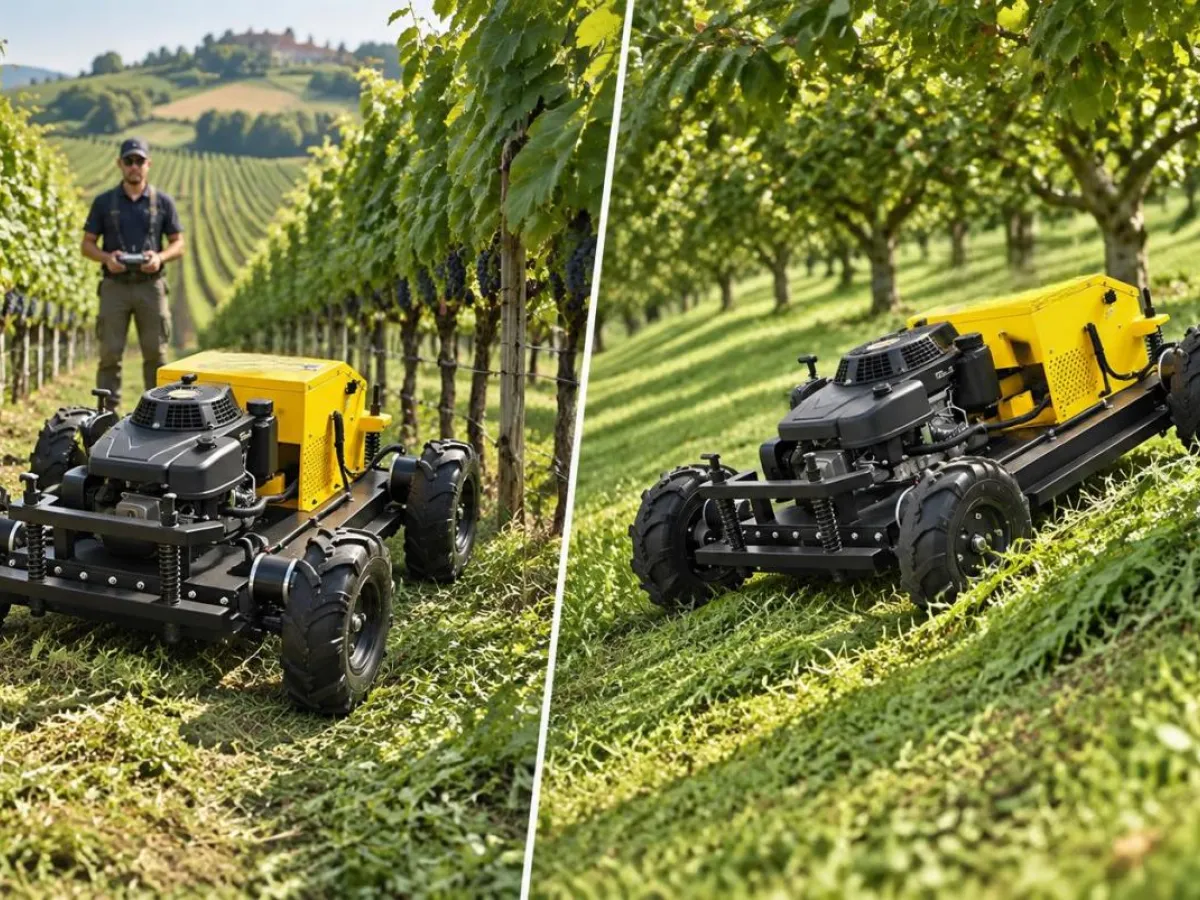
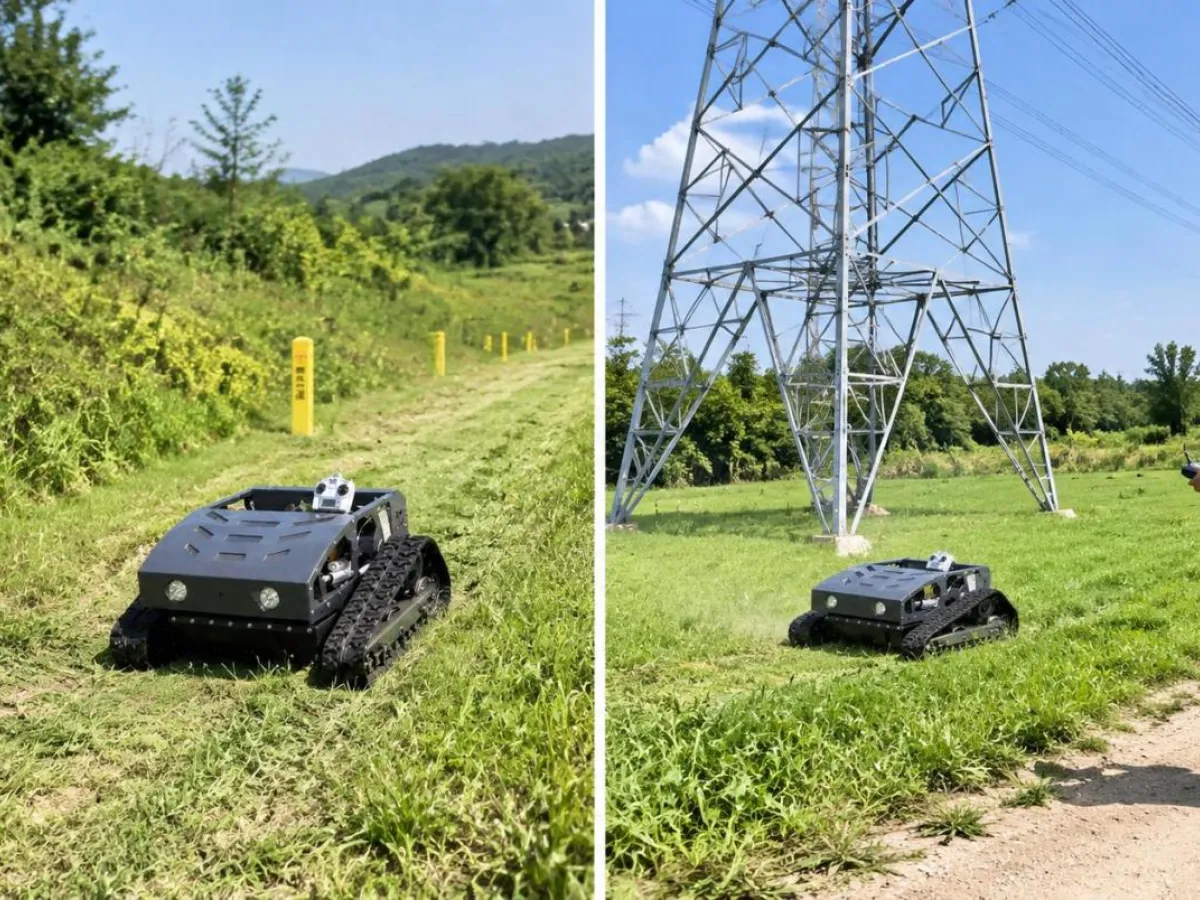
RC (remote-control) slope mowers have become an essential tool in embankment restoration programmes, enabling contractors and highway authorities to manage steep, recently seeded slopes that would be inaccessible to conventional wheeled or tracked mowing equipment.
Slope Typology & Vegetation Requirements
|
Slope Type |
Typical Gradient |
Vegetation Objective |
First-Year Priority |
|
Cut Slope (Rock) |
>60° |
Pioneer colonisation with drought-tolerant grasses |
Erosion control |
|
Cut Slope (Soil) |
30–55° |
Rapid grass establishment, root binding |
Structural stability |
|
Fill Embankment |
25–45° |
Dense fibrous-rooted sward |
Settlement management |
|
Drainage Swale Bank |
10–30° |
Grass with wildflower mix; no woody species |
Flow attenuation |
|
Roundabout Island |
5–15° |
Close-cut amenity sward |
Appearance standard |
The vegetation management requirement shifts dramatically in year one versus established slopes. Newly seeded embankments require light, frequent cutting to prevent pioneer weed species from outcompeting the establishing grass sward, while older embankments require less frequent but heavier cuts.
Why RC Mowers Excel in Embankment Restoration
Year-One Seeded Slopes
Newly hydroseeded or hand-broadcast embankments are highly sensitive to disturbance in the first 8–16 weeks after seeding. The low ground pressure of tracked RC mowers (typically 0.04–0.07 bar) avoids disrupting the establishing root mat, whereas wheeled tractors or brush-cutters with operators can cause slippage and bare patches that re-expose soil to erosion.
Steep Active Sites
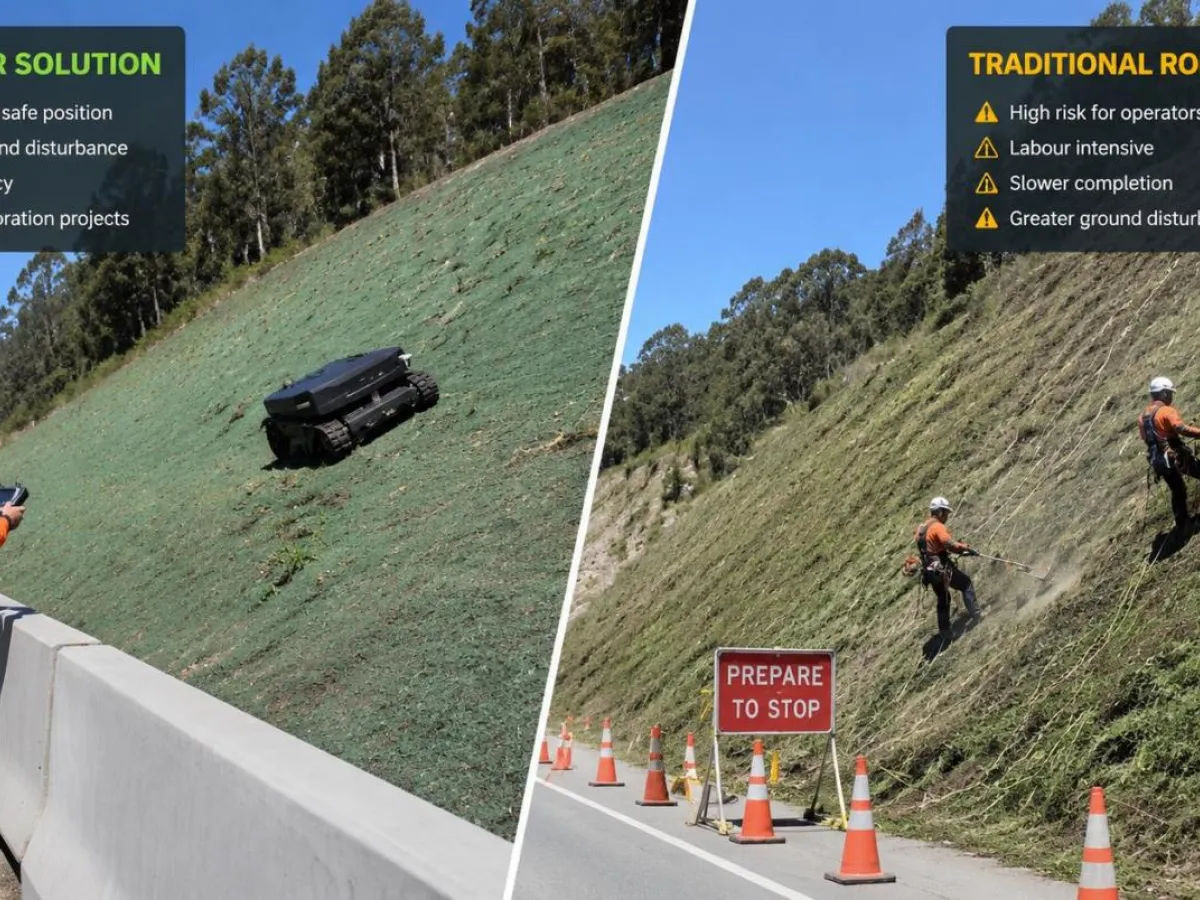
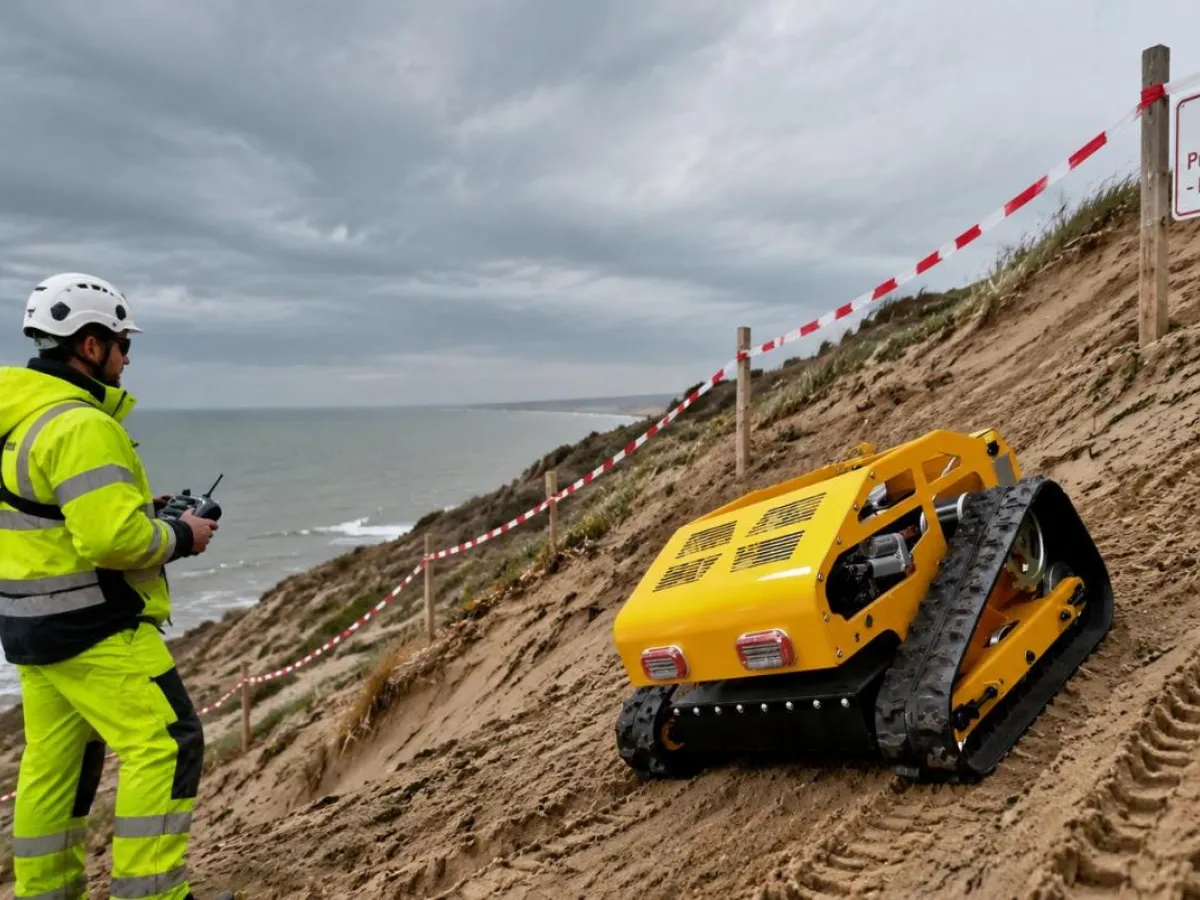
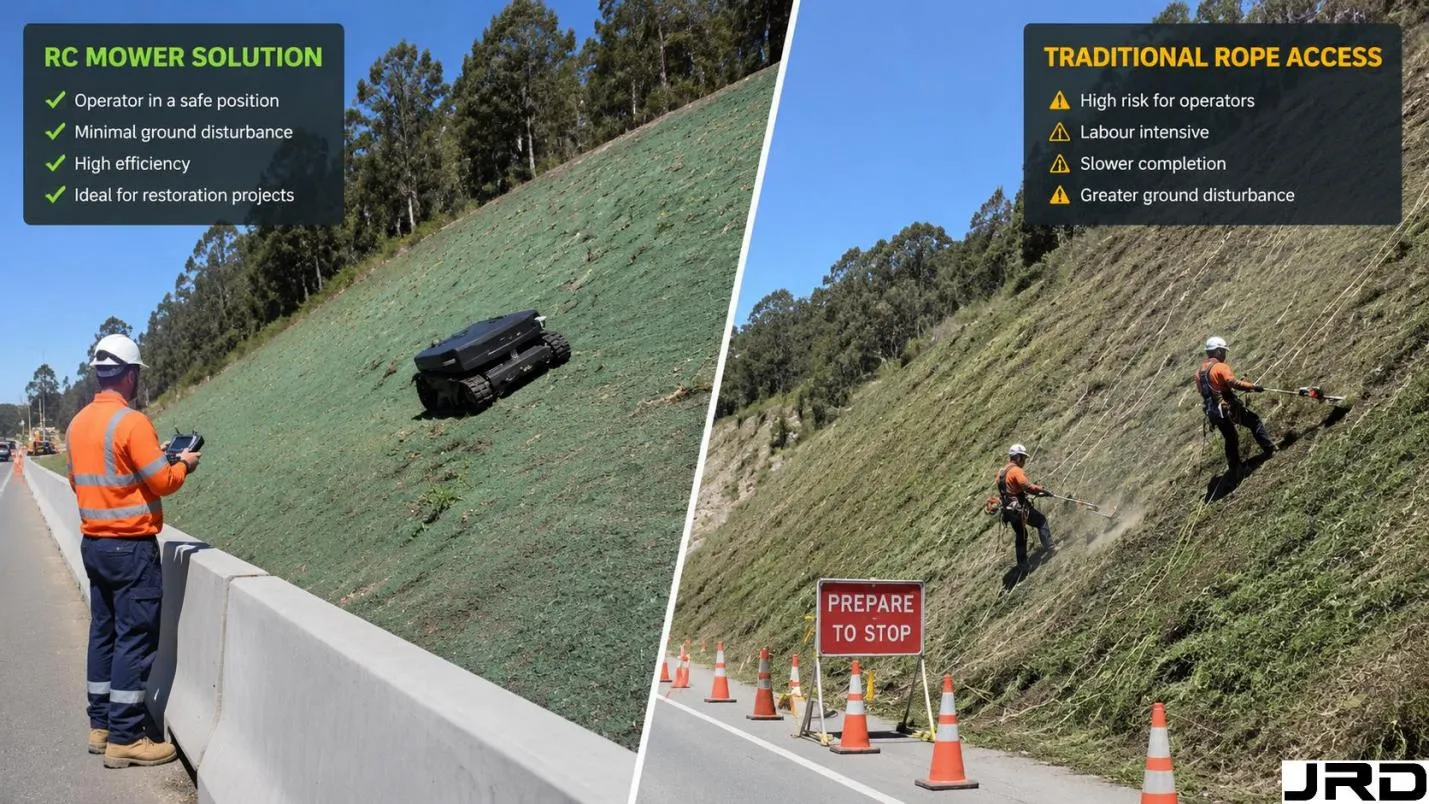
Cut slopes alongside active highway construction sites present particularly high risk for operators using conventional equipment, due to ongoing traffic movement, uncompacted ground, and steep gradients. RC mowers allow the operator to stand at a safe distance — behind barriers, on the road formation, or at the base of the slope — while the machine works the face.
Gradient Capability
RC platforms rated to 55° gradient manage the full range of UK highway embankment standards (typically 1:2 or 1:1.5 batters)
Self-levelling deck systems maintain consistent cut height across slope face undulations
Emergency stop via radio signal ensures machine can be halted instantly if ground conditions change
Restoration Mowing Programme: Year-by-Year
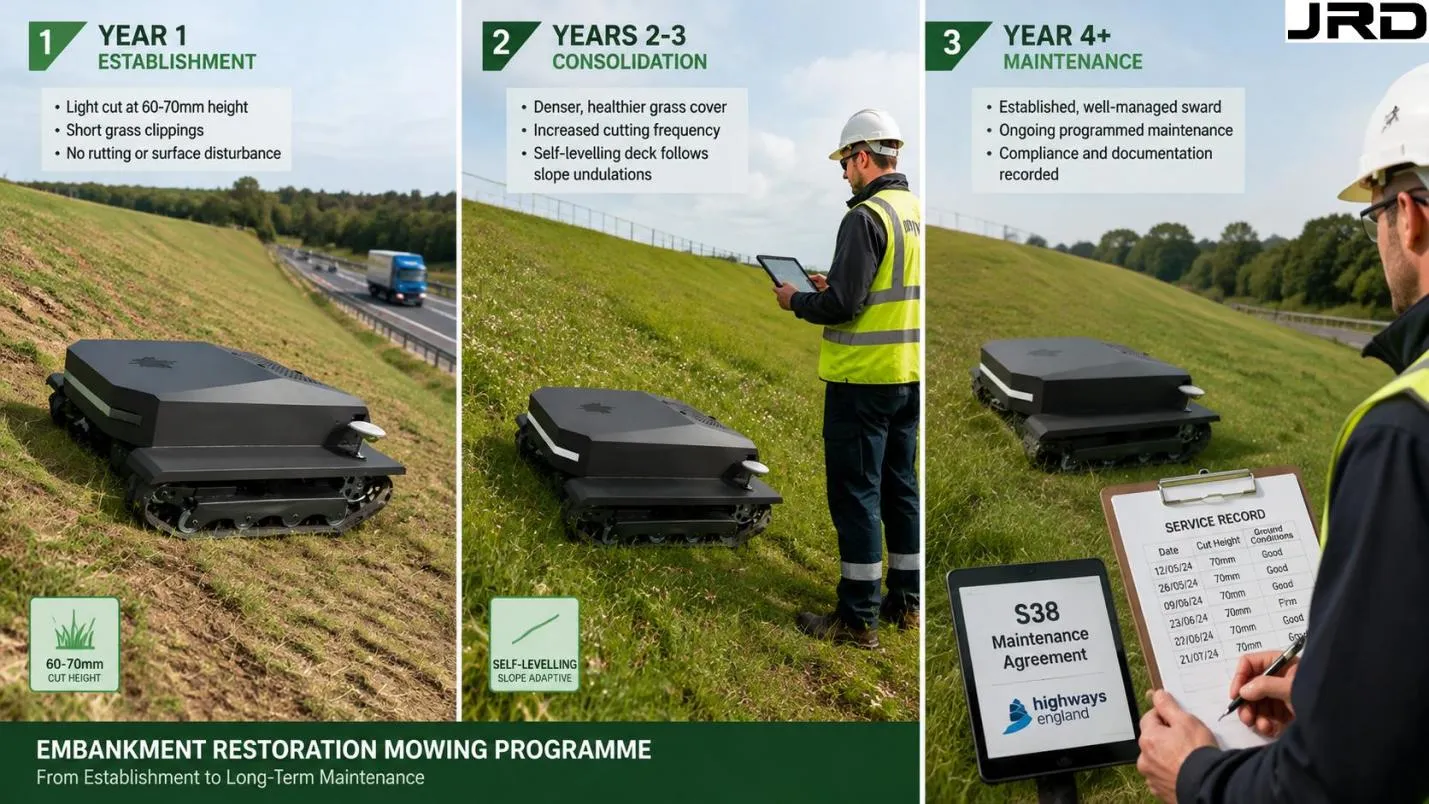
Year 1 (Establishment Phase)
First cut: when sward reaches 100 mm height — reduce to 60–70 mm (no more than one-third of leaf removed)
Frequency: every 3–4 weeks during growing season (April–October in UK temperate climate)
Avoid cutting in wet conditions — surface saturation on new embankments risks rut formation
Remove arisings from slope face to reduce smothering of establishing grasses
Year 2–3 (Consolidation Phase)
Reduce cut frequency to 4–6 times per season as root system consolidates
Introduce higher cut height in late season to build winter sward density
Begin monitoring for invasive species (Japanese knotweed, Himalayan balsam) at slope margins
Apply targeted herbicide via hand lance to isolated weed patches rather than broadcast spraying
Year 4+ (Maintenance Phase)
2–3 cuts per season typically sufficient for stable established embankments
Annual wildflower enhancement mowing in July where biodiversity scheme in place
Inspect for subsidence crack lines at slope crest — indicator of drainage or stability issues
Submit annual vegetation management records to highway authority as required by S38 or S278 agreements
Contractor Operations: Health & Safety Requirements
|
Requirement |
Standard / Reference |
RC Mower Application |
|
Traffic Management |
Chapter 8 (UK) / MUTCD (US) |
Reduced lane closures vs. conventional mowing |
|
RAMS / Method Statement |
CDM Regulations 2015 |
Slope-specific risk assessment required |
|
Operator Exclusion Zone |
Manufacturer guidance (typically 2× blade disc radius) |
Mark with cones or barrier tape |
|
PPE |
Hard hat, high-vis, safety boots, eye protection |
Required even for RC operation at base of slope |
|
Emergency Procedure |
Included in site-specific RAMS |
Identifies machine retrieval plan if loss of signal |
Note: Contractors operating RC mowers within the highway boundary during live traffic management must hold a valid Street Works card (UK: NRSWA Operative) and the site must be registered with the relevant highway authority.
Case Study: A57 Bypass Embankment, East Midlands
A 2.3 km bypass scheme created 18 ha of new embankment and cut slopes ranging from 28° to 47°. The main contractor's vegetation management sub-contractor deployed two RC slope mowers from seeding completion through to the two-year maintenance handback period.
Year 1: 11 cuts completed across all slopes without a single slope stability incident
Year 2: Ground coverage exceeded the 90% establishment target at 6-month inspection
Conventional alternative would have required specialist rope-access mowing teams at 2.4× the cost
Zero reportable RIDDOR incidents during the 24-month establishment programme
Key Takeaways
RC mowers provide highway contractors and authority maintenance teams with a safe, precise, and cost-effective means of managing the critical vegetation establishment phase on new road embankments and cut slopes.
Specify low-ground-pressure tracked RC platforms for all year-one embankment work
Integrate mowing programme into the S38/S278 maintenance plan from design stage
Train site supervisors in RC mower operation and emergency procedures before sowing
Document all cut dates, heights, and ground conditions to support defect period sign-off
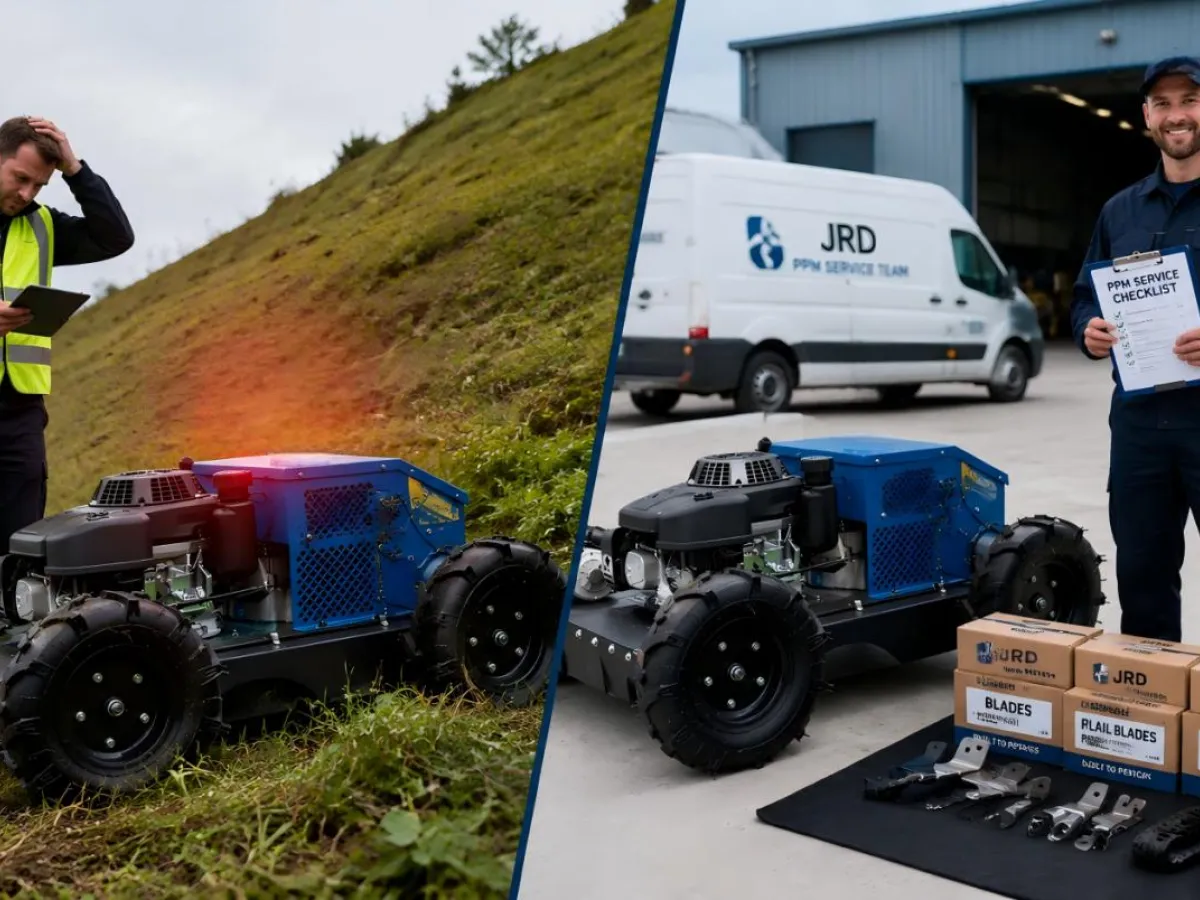
Delivering an embankment restoration or new-build highway scheme? JRD Machinery is an RC slope mower manufacturer and supplier of low-ground-pressure machines for year-one seeded slopes and cut faces, with specification sheets formatted for S38 and S278 maintenance documentation. We also support contractors with the operator training records the establishment-phase mowing programme requires. Contact us to discuss your scheme.
Get in touch for expert advice or a quote:
Email:info@jrdmachinery.com
Website: www.jrdmachinery.com