


Solar Farm Vegetation Management with RC Mowers
Introduction: The Solar Farm Maintenance Challenge
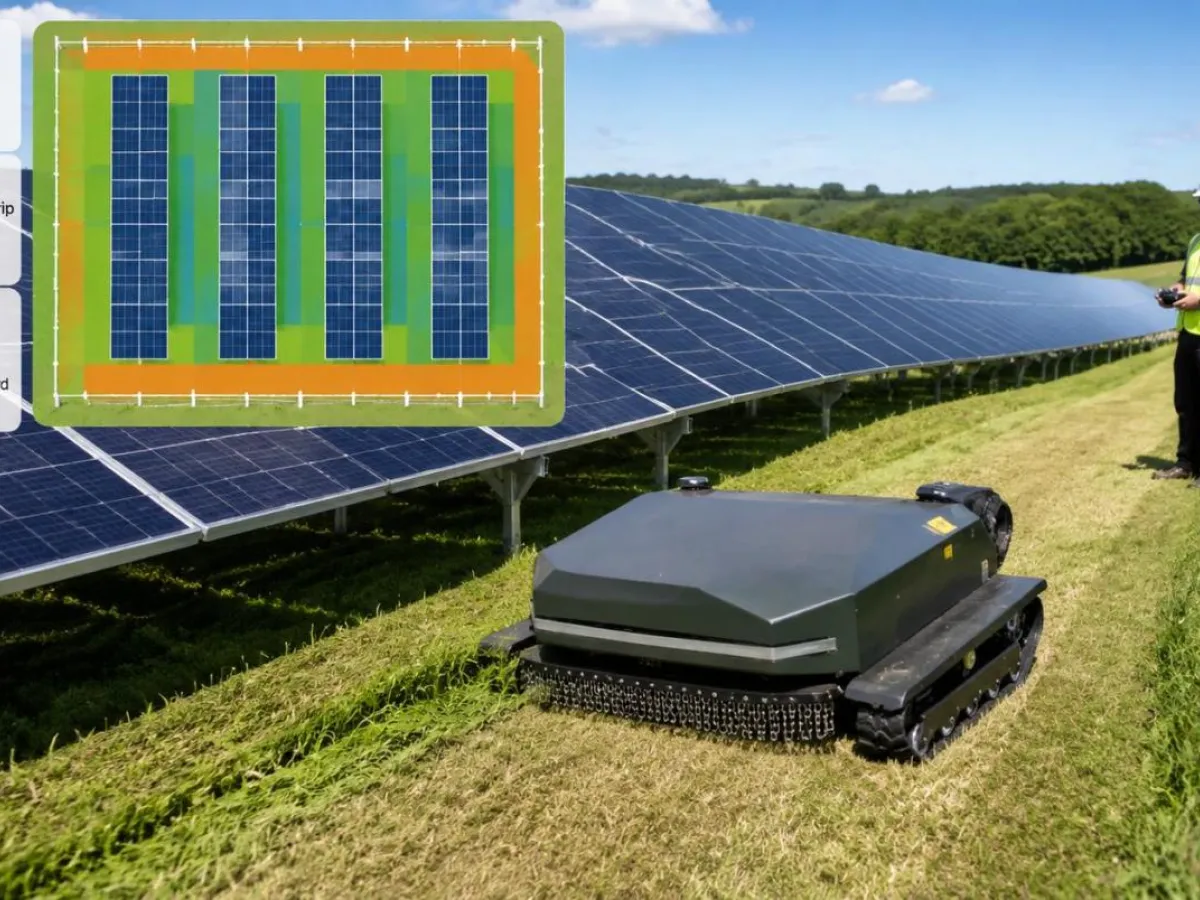
The rapid expansion of utility-scale solar photovoltaic (PV) installations has created a significant and growing market for specialist vegetation management. A typical ground-mounted solar farm of 50 MWp covers 80–120 ha, with panel arrays mounted on steel posts or tracker frames between 400 mm and 1,800 mm above ground level. Managing vegetation across this complex, obstruction-rich landscape requires equipment that can operate in tight clearances, on sloped ground, and without risk of damaging panels or electrical infrastructure. RC slope mowers have become the default machine for the inter-row work on sites like these.
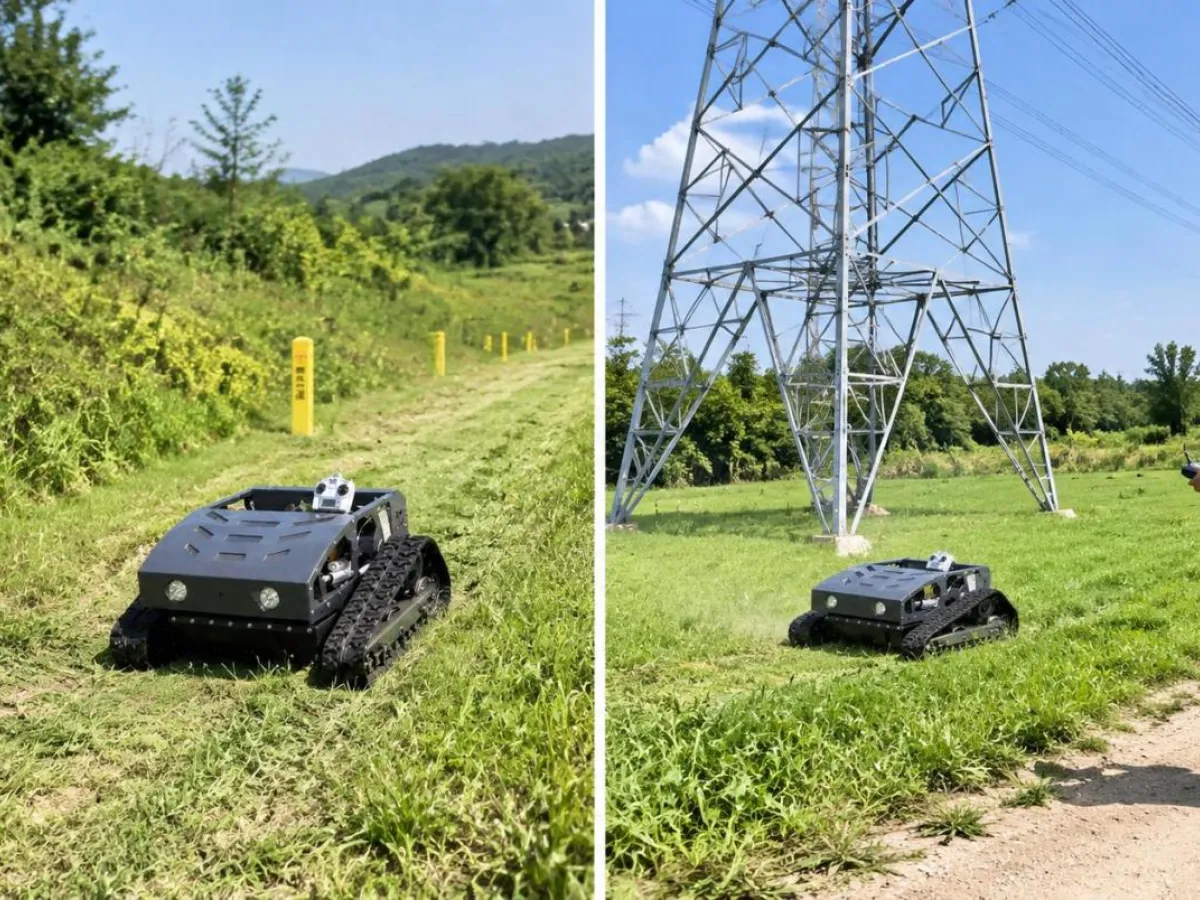
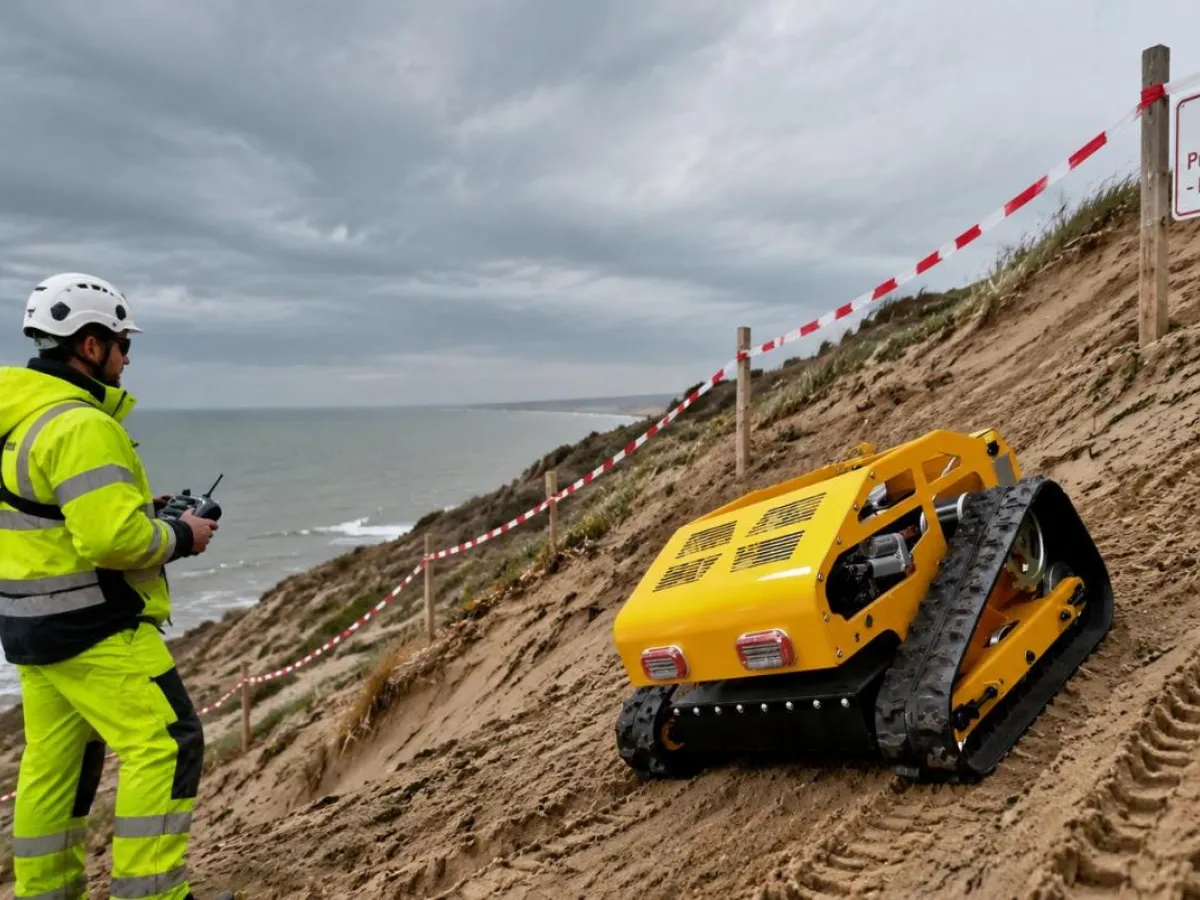
Remote-control slope mowers, originally developed for embankment work, have been widely adopted by solar operations and maintenance (O&M) contractors due to their low profile, precise controllability, and slope capability — particularly important on sites in Wales, Scotland, and hilly regions where panel arrays follow contours.
Vegetation Management Objectives at Solar Farms
|
Objective |
Rationale |
Target Height |
|
Maintain sward below panel bottom edge |
Prevent shading of lower cell strings — reduces output by 5–15% if unmanaged |
Keep below 200 mm (varies by array height) |
|
Control invasive species |
Prevent structural damage to posts and cables by woody vegetation |
Zero tolerance for shrub establishment |
|
Support biodiversity net gain |
Planning conditions & ESG commitments require habitat enhancement |
Mixed sward 100–200 mm with wildflower zones |
|
Prevent shade mismatch |
Tall vegetation causes hot-spot failures in panel strings |
Uniform height across inter-row bays |
|
Reduce fire risk |
Dry grass under panels in summer presents ignition hazard |
Maintain below fire-risk threshold (site-specific) |
Why RC Mowers Are Preferred for Solar Sites
Infrastructure Clearance
Solar farms contain extensive underground cabling, inverter housings, distribution transformer plinths, and earthing networks just below surface level. RC mowers with height-controlled flail heads can be set to maintain precise ground clearance (typically 40–80 mm above grade) to avoid striking surface-laid cable protection or ground-level combiner boxes.
Panel Safety
Glass PV panels are highly susceptible to stone strike damage from high-speed rotary blades. RC mowers fitted with multi-blade flail decks — rather than fixed rotary blades — dramatically reduce the risk of projectile stone ejection. Many solar O&M contracts now specify flail-only cutting within 2 m of panel arrays.
Electrical Safety
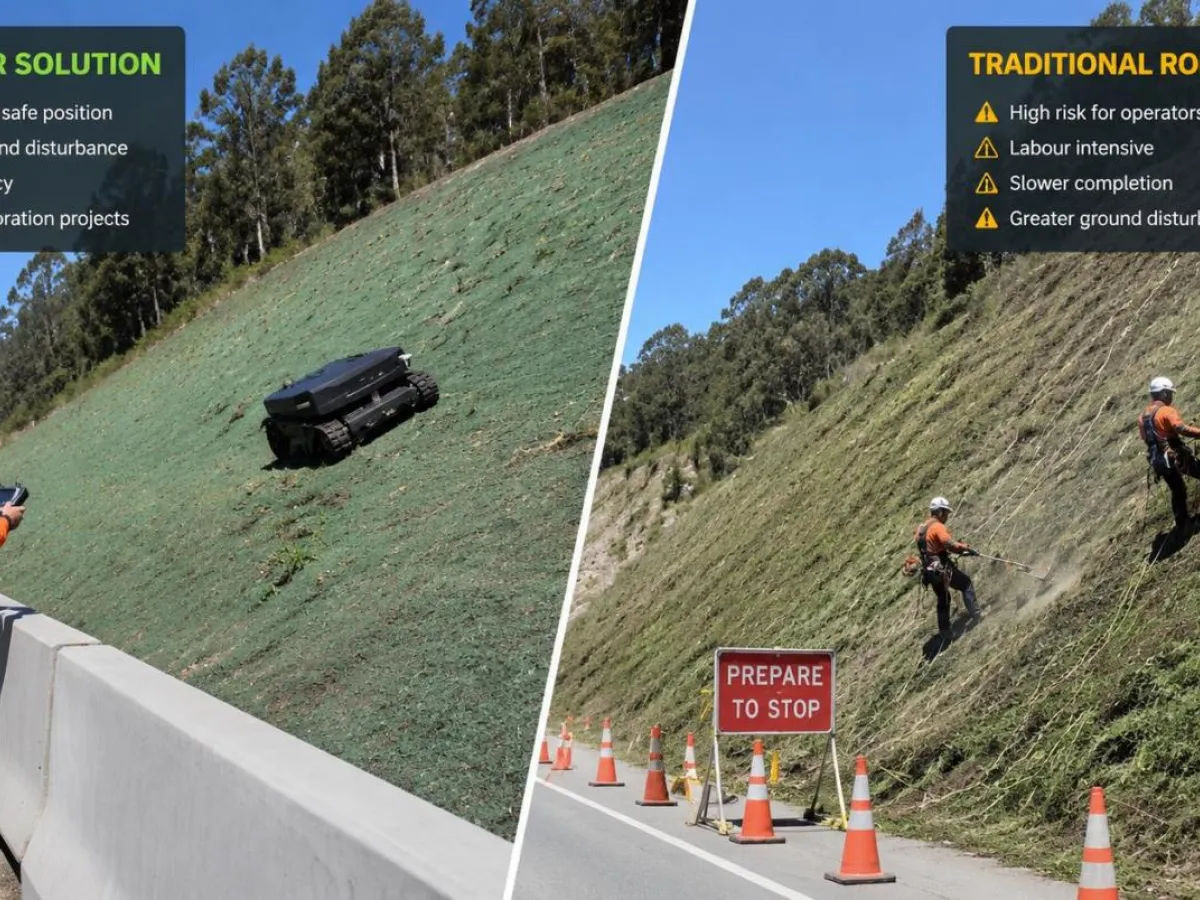
Mowing personnel working in energised solar farms must maintain defined exclusion distances from live AC distribution equipment. RC operation allows the operator to stand outside the cable and equipment exclusion zone while the machine works around inverter bases and transformer enclosures.
Slope Performance
Hillside solar sites with inter-row gradients of 10–35° are routine for RC mowers
Tracker arrays on sloped sites present variable clearance heights — RC mowers adjust approach angle to follow the tracker frame geometry
RC platforms with differential track steering can pivot within the inter-row bay width without requiring a turning headland
Solar Site Mowing Specification: Key Parameters
|
Parameter |
Typical Requirement |
RC Mower Setting |
|
Cut Height |
40–150 mm above grade |
Adjustable deck height with locking pin |
|
Inter-Row Clearance |
Minimum 600 mm working width |
Standard 800–1200 mm deck width: may require deck offset |
|
Panel Clearance |
300 mm minimum between deck and panel underside |
Height stop + operator caution zone |
|
Stone Projection |
Zero tolerance within 5 m of panels |
Flail deck mandatory; deflector skirt fitted |
|
Cut Frequency |
4–8 cuts per season |
Adjusted for site latitude, rainfall, soil type |
|
Arisings |
Mulch in situ (most common) |
Flail mulch: chops to <50 mm pieces |
Biodiversity Integration: Agri-Voltaic Approaches
Many UK solar farm planning permissions now require a Biodiversity Net Gain (BNG) uplift of 10% or more above the pre-construction baseline. Vegetation management programmes must balance the energy production need for low sward height with ecological requirements for diverse, structured grassland habitat.
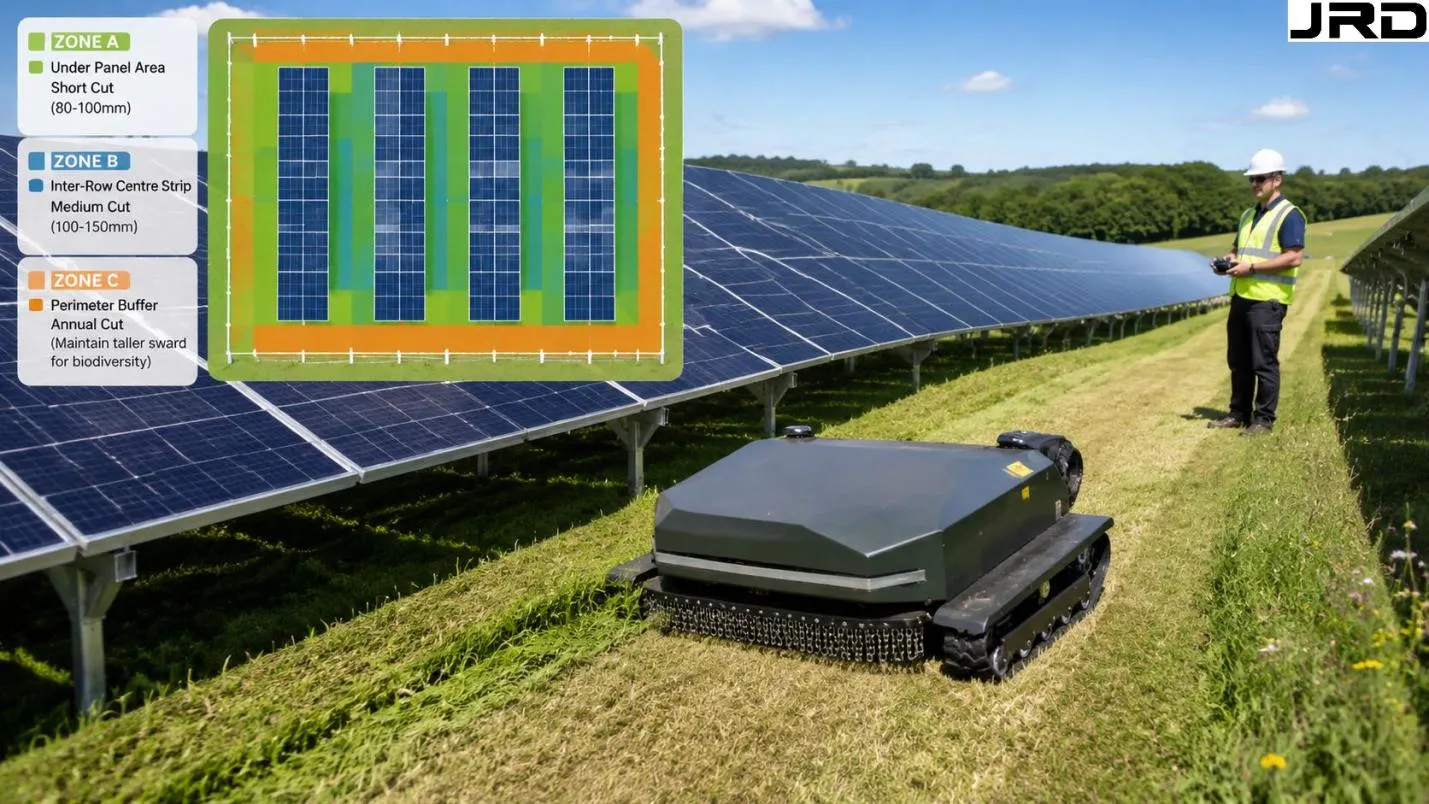
Zoned Mowing Approach
Zone A (under-panel): cut to 100 mm maximum; 4–6 cuts per season — energy priority zone
Zone B (inter-row centre strip, 1.5 m wide): cut to 200 mm; 2–3 cuts per season — pollinator foraging strip
Zone C (perimeter buffer, 5 m): cut once annually in September — target grassland habitat zone
Zone D (pond margins / wildflower areas): no mowing — designated habitat features
Tip: Alternating inter-row cut frequency so that only 50% of rows are cut in any given visit maximises the continuous habitat corridor available to invertebrates and small mammals across the site.
Grazing Integration
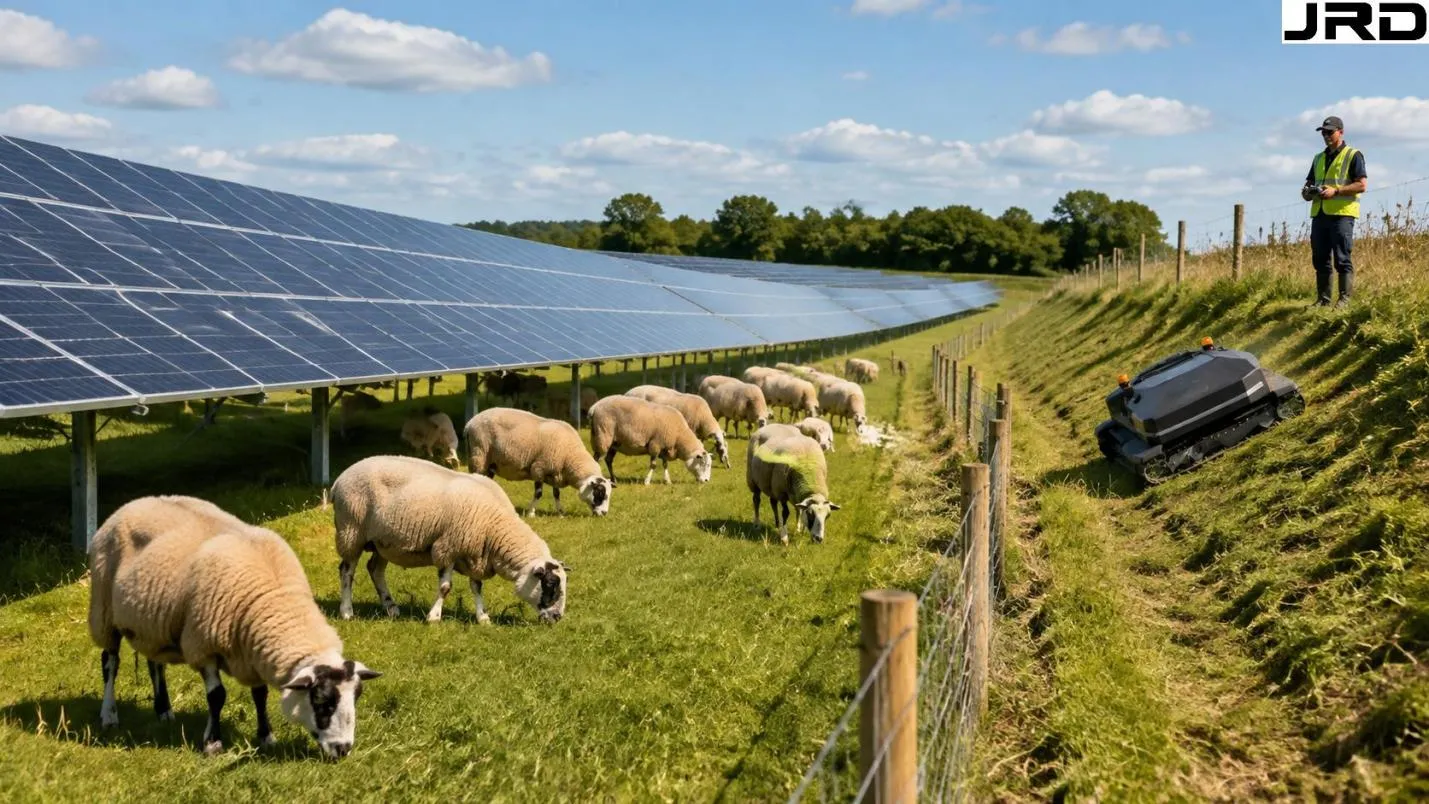
A growing number of solar O&M operators integrate sheep grazing as the primary inter-row vegetation management strategy, with RC mowers deployed for targeted control tasks including perimeter tidying, boundary bank management, and corrective cuts when grazing density has been insufficient. This hybrid approach can reduce mechanical mowing visits by 50–70% while generating a supplementary rental income from the grazing licence.
Breeds typically used include Shropshire sheep (known for their disinterest in chewing cables and panel frames), Soay, and Herdwick. Fencing specification must be sufficient to contain the selected breed and prevent livestock from entering inverter and transformer enclosures.
Summary & Best Practice Checklist
Specify flail-deck RC mowers with stone deflectors for all within-array vegetation work
Set deck height stops to prevent contact with below-panel infrastructure
Develop a zoned mowing plan aligned with the site's Biodiversity Management Plan
Coordinate mowing schedules with inverter monitoring data to avoid production losses during planned visits
Record all mowing activity in the O&M management system for inclusion in annual site reports
Review cut-height specification annually against updated panel shading analysis from the energy model
Contact Us
Specifying RC mowers for a solar farm O&M contract? JRD Machinery is an RC slope mower manufacturer and supplier of flail-deck machines with stone deflectors and adjustable deck height stops for within-array work. We support solar O&M contractors and asset owners across the UK and Europe with machine specification, operator training, and O&M documentation. Contact us to discuss your site layout.
Get in touch for expert advice or a quote:
Email:info@jrdmachinery.com
Website: www.jrdmachinery.com