


Diesel vs Electric RC Mower Cost, Run Time and Application Fit
Introduction: The Technology Choice Shaping the Next Decade of Slope Mowing
The transition from diesel to electric powertrains is reshaping the commercial grounds maintenance equipment market. Walk-behind mowers, ride-ons, and robotic mowers have seen significant electric model launches in the past five years, and the RC slope mower sector is following. For operators evaluating their next machine purchase, the diesel-vs-electric question is no longer hypothetical — it is a live commercial decision with real implications for operating cost, environmental performance, and suitability for your specific contract portfolio.
This article provides a structured, honest comparison of diesel and electric RC mowers across the factors that matter most to commercial operators: initial cost, operating cost, run time and range, environmental credentials, maintenance requirements, and the contract environments where each technology performs best.
Initial Purchase Cost
Electric RC mowers currently carry a purchase price premium over equivalent diesel models, reflecting the higher cost of battery pack technology and, in some cases, lower production volumes. Approximate comparison by category:
Entry-level compact models: Diesel £28,000–£38,000 / Electric £34,000–£45,000 — approximately 20–25% premium for electric.
Mid-range commercial models: Diesel £45,000–£65,000 / Electric £55,000–£75,000 — similar proportional premium.
Premium high-gradient models: Diesel £70,000–£90,000+ / Electric models in this category are limited in availability; where available, premiums of 25–35% are typical.
Battery replacement cost must be factored into lifetime cost modelling. Lithium battery packs on commercial RC mowers have an expected service life of 1,500–2,500 charge cycles, equivalent to 4–7 years of intensive commercial use. Replacement pack cost is typically £8,000–£18,000 depending on capacity and model — a significant capital expenditure mid-machine-life.
Operating Cost Comparison: Fuel vs. Electricity
This is where the economics shift meaningfully in favour of electric. A typical diesel RC mower consumes 1.5–2.5 litres per hour at full load. At current UK red diesel pricing:
Diesel fuel cost per 1,000 operating hours: £900–£1,500 (at £0.60–£0.60/litre red diesel).
Electric energy cost per 1,000 operating hours: £80–£180 (at £0.08–£0.18/kWh commercial tariff, assuming 8–12 kWh per hour of operation).
Fuel/energy saving over 5,000 hours: Approximately £3,500–£6,500 cumulative advantage for the electric model, excluding any future diesel tax or levy changes.
These figures are indicative and vary with fuel price fluctuations, local electricity tariffs, and machine loading. The direction of the comparison is consistent: electric energy cost is substantially lower than diesel fuel cost per operating hour under current UK pricing.
Engine Oil and Maintenance Cost
This is a frequently underestimated advantage of electric RC mowers:
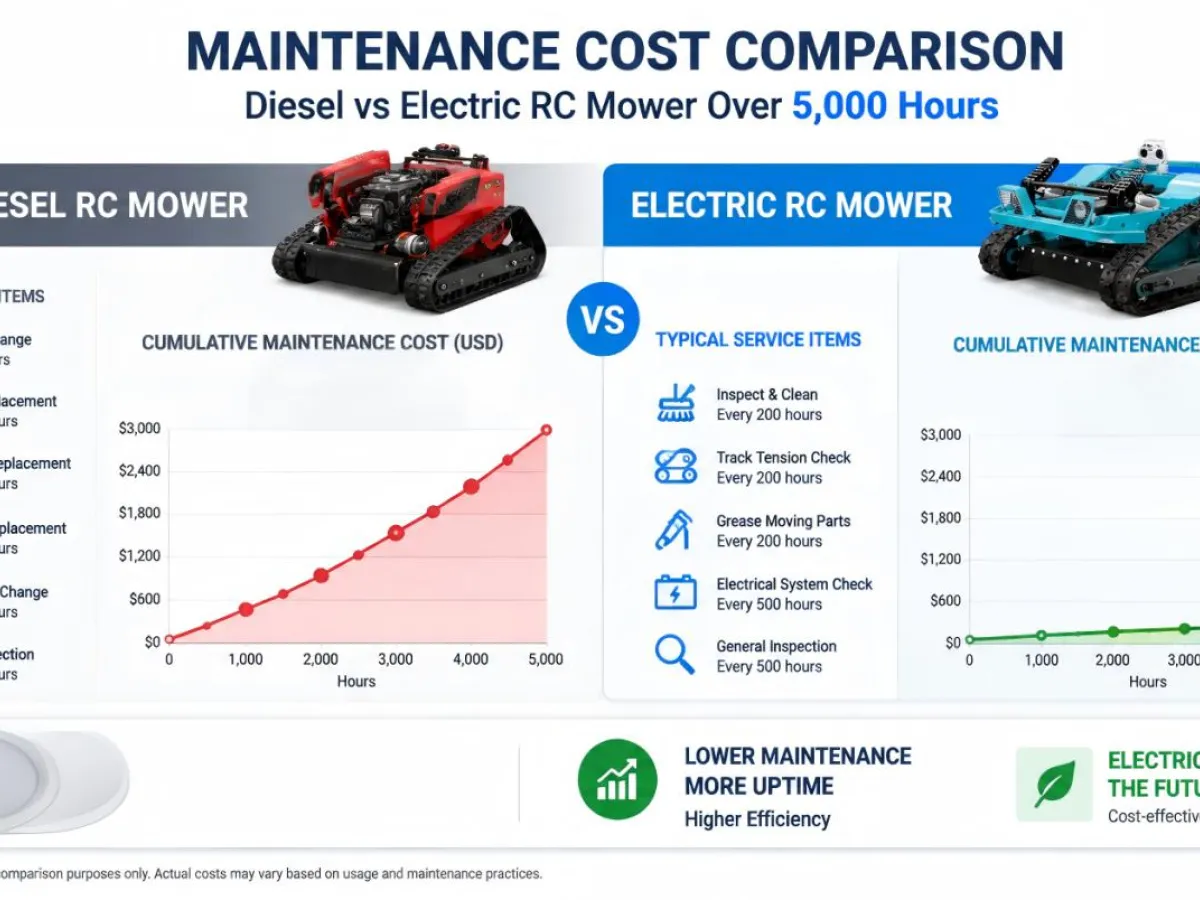
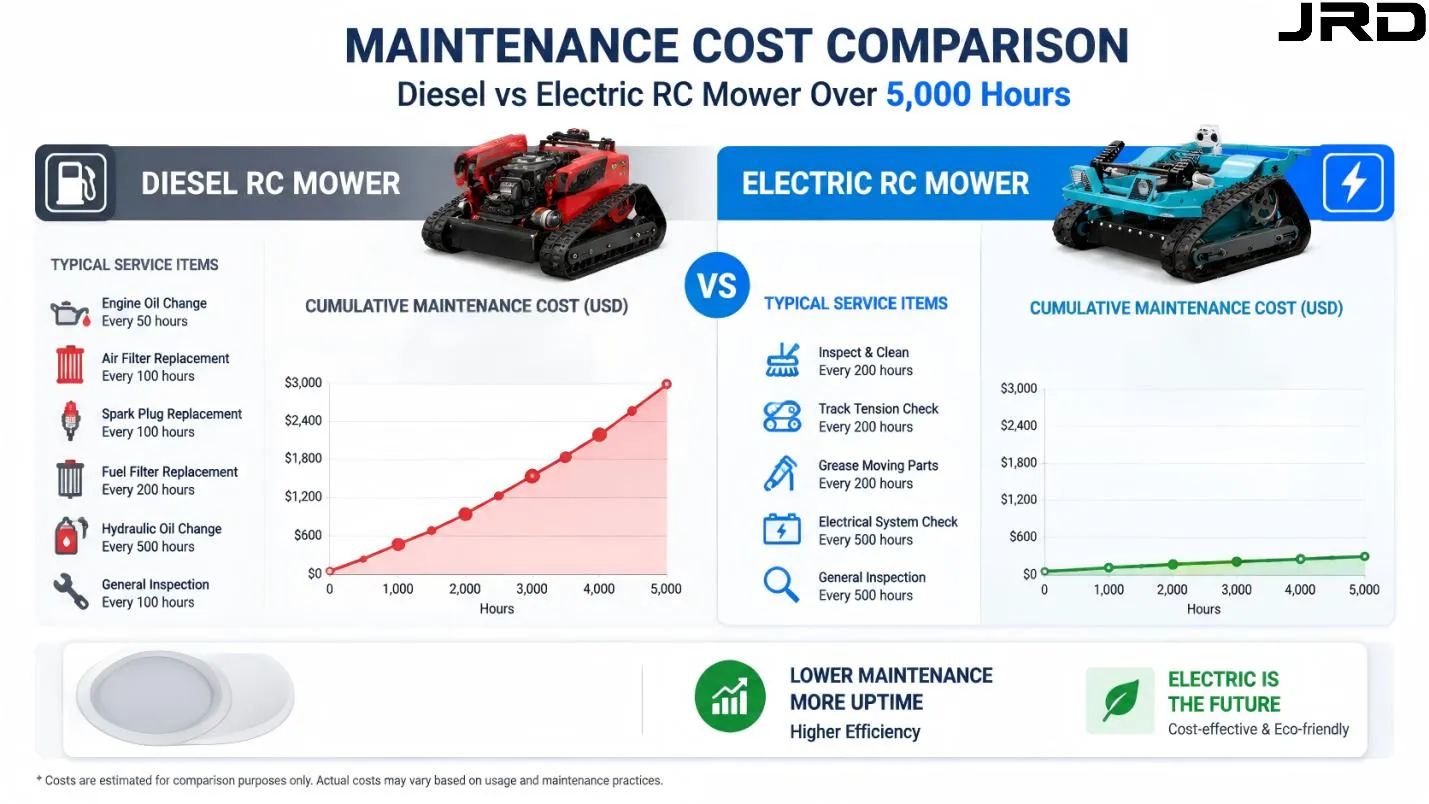
Diesel RC mower maintenance (per 1,000 hours): Engine oil and filter changes, air filter, fuel filter, coolant service (if liquid-cooled), belt inspection — typically £600–£1,200 in consumables plus technician labour.
Electric RC mower maintenance (per 1,000 hours): No engine oil, no fuel filter, no air filter. Hydraulic system service costs remain (most electric RC mowers still use hydraulic track drives). Battery health monitoring and connection cleaning. Estimated consumable cost: £200–£450 per 1,000 hours.
Electric maintenance saving over 5,000 hours: Approximately £2,000–£4,000 in consumables, plus reduced technician time for engine service tasks.
Run Time, Range, and Operational Flexibility
This is the most significant practical limitation of current electric RC mowers:
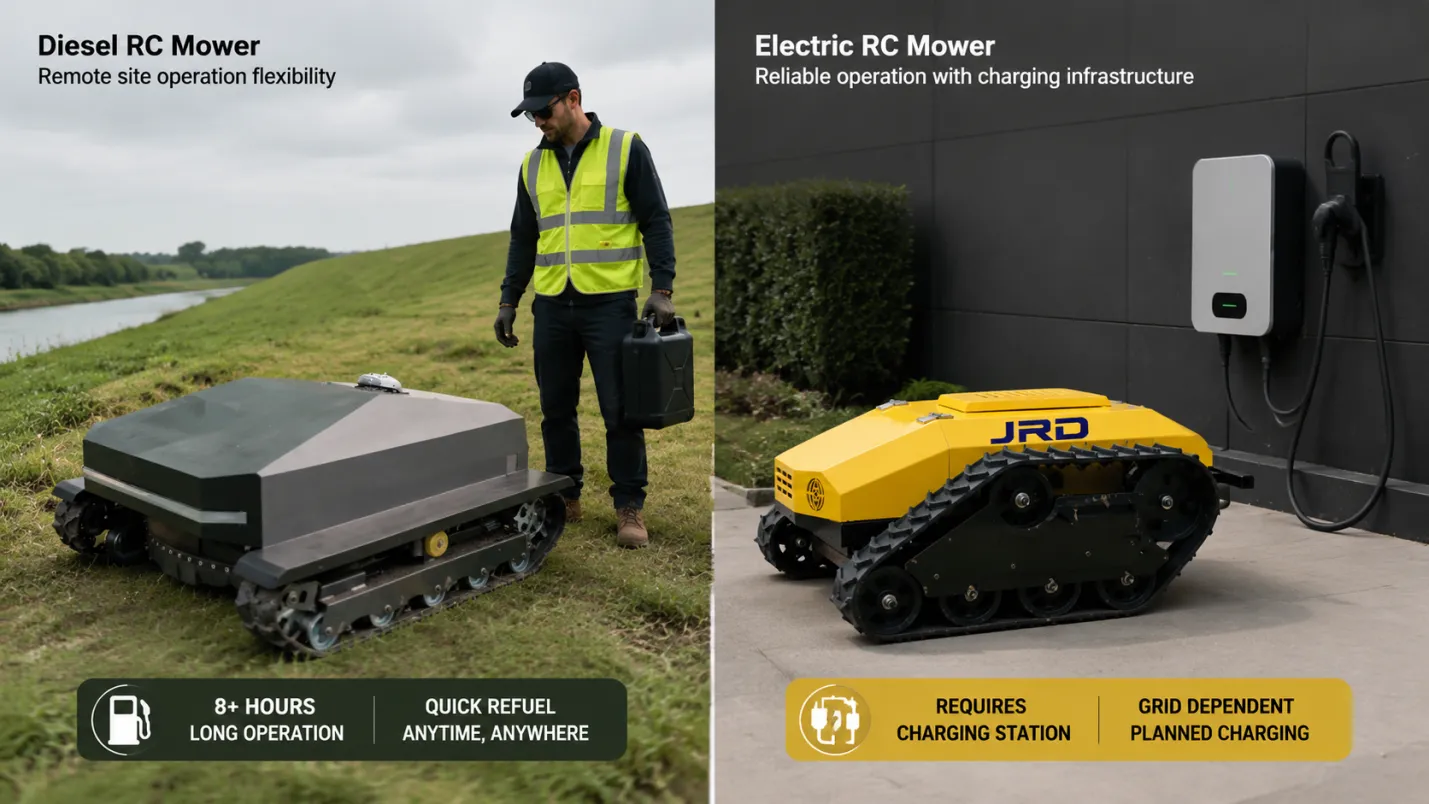
Diesel run time per tank: 6–10 hours of operation before refuelling. Refuelling takes 5–10 minutes and can be done anywhere with a fuel container.
Electric run time per charge: 2–4 hours of full-load operation on current commercial models. Recharge time: 2–4 hours on standard charger, 45–90 minutes on fast charger.
Operational implication: A diesel machine can work a full 8-hour day with one refuel stop. An electric machine requires two charge cycles for an equivalent day — feasible if charging infrastructure is on-site, but challenging on remote sites without grid connection.
Solutions for remote site electric deployment: Portable fast charger + diesel generator (adds cost and a diesel dependency); battery swap system (where manufacturer offers spare battery packs as a service); hybrid scheduling (two electric machines alternating while one charges).
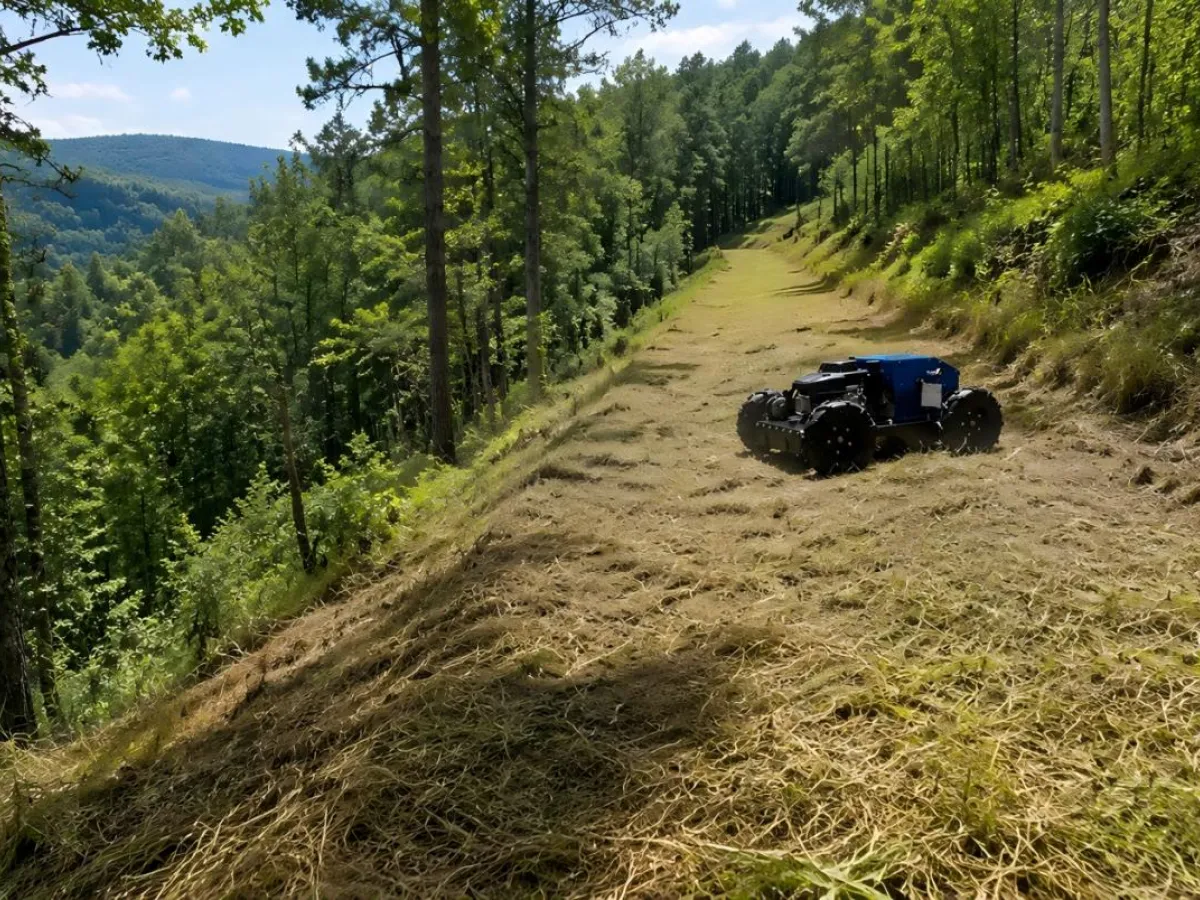
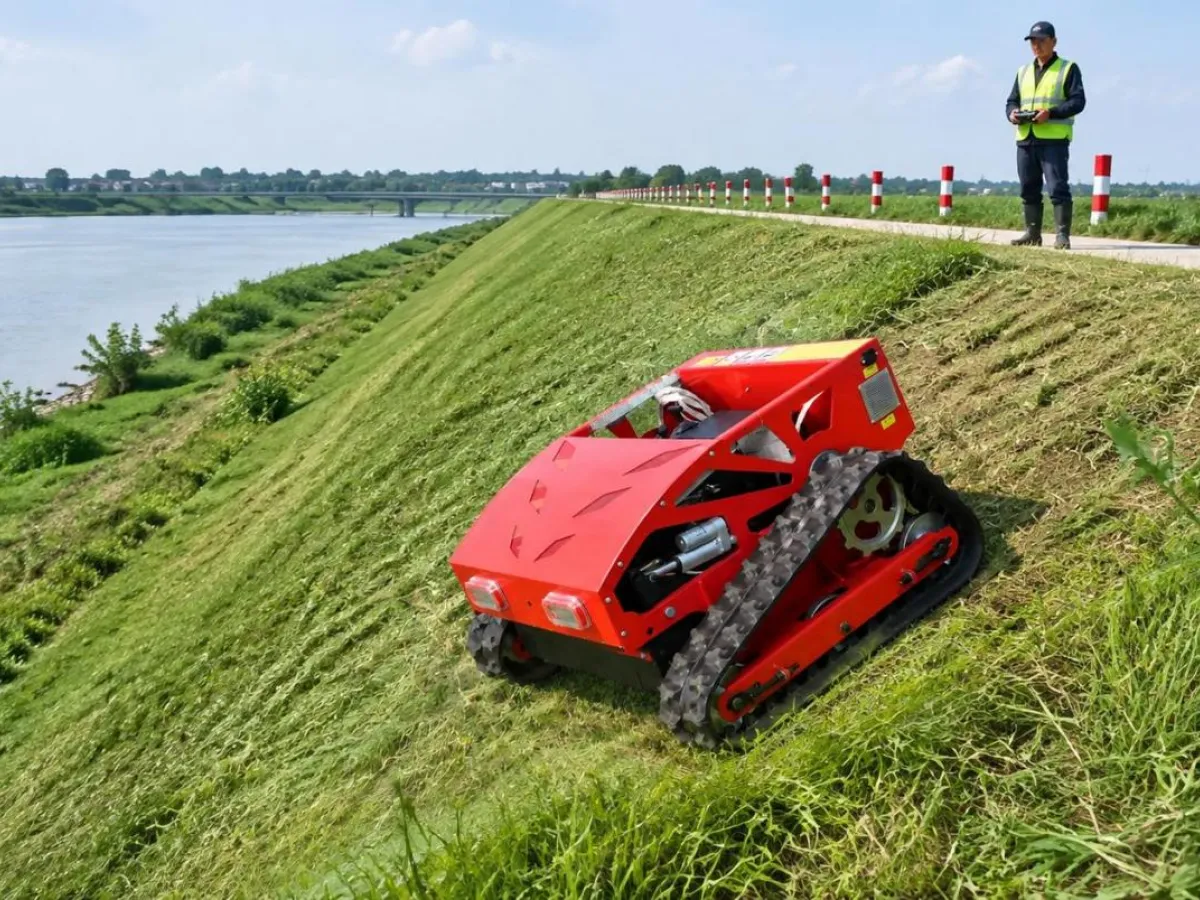
For operators working predominantly from a fixed depot or on sites with grid access, electric run time is manageable with proper scheduling. For operators mowing remote sites — flood banks, forestry tracks, upland slopes far from grid infrastructure — diesel remains the operationally practical choice with current technology.
Environmental Credentials
The environmental case for electric RC mowers is clear — but the full picture is more nuanced than zero-emission point-of-use:
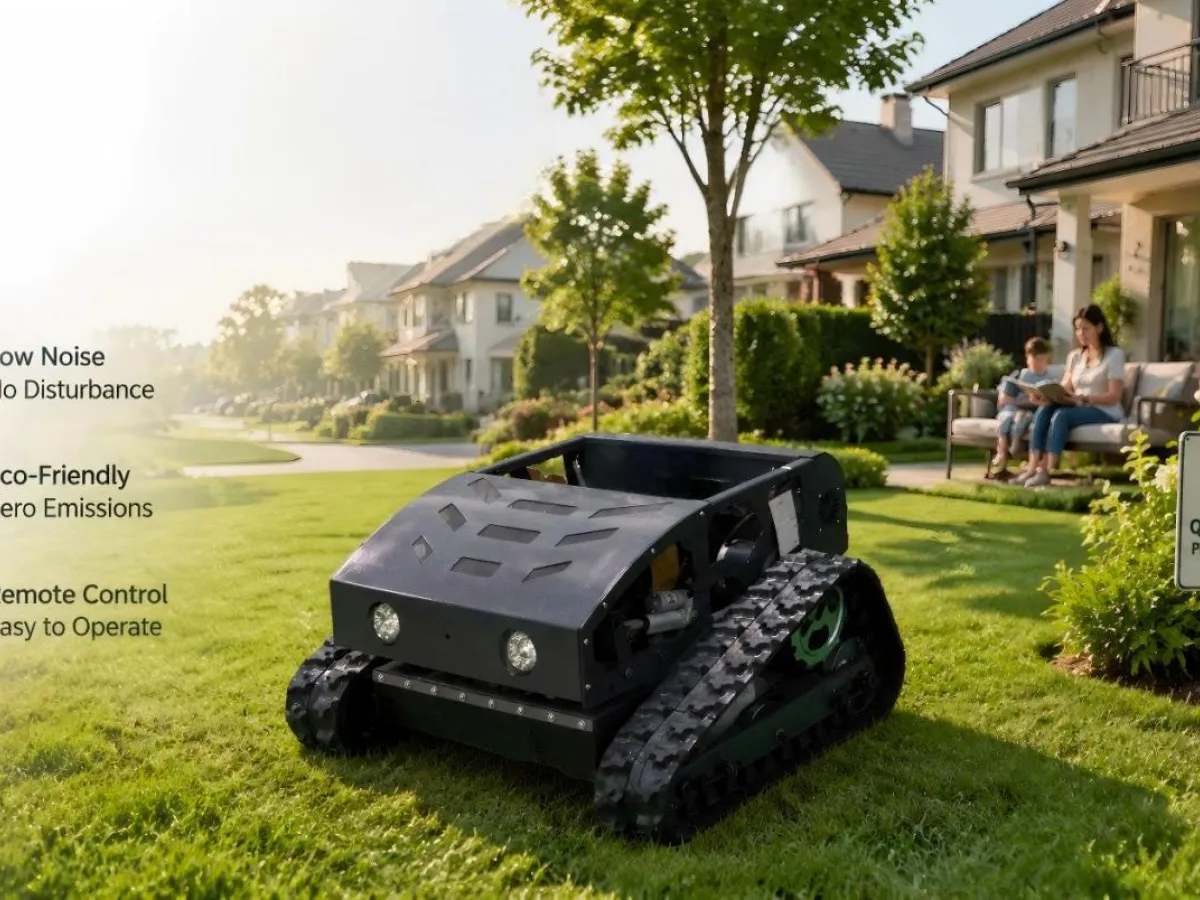
Local emissions: Electric RC mowers produce zero exhaust emissions at the point of operation. This is significant for sites with air quality requirements — hospital grounds, school estates, urban parks, and indoor or semi-enclosed environments.
Carbon footprint: The carbon intensity of the electricity used for charging determines whether the electric mower is genuinely lower-carbon than diesel over its life. On a UK grid supplied by increasing renewable generation, electric is increasingly lower-carbon than diesel; on a site using diesel generator charging, the carbon saving is largely eliminated.
Battery lifecycle: Lithium battery production carries an embedded carbon cost — typically equivalent to 50,000–80,000 km of driving for a vehicle-scale battery. Battery recycling and second-life programmes (being introduced by some manufacturers) reduce this embedded cost over time.
Contract and tender value: An increasing number of public sector and large commercial grounds maintenance contracts include carbon reduction requirements or request environmental management plans. Specifying electric equipment supports these commitments and may provide tender evaluation advantages.
Which Technology Fits Which Operation?
The honest answer is that both technologies have a role in a modern RC mower fleet — the decision depends on your specific contract profile:
Electric is the better choice for: Urban and peri-urban sites near residential properties (noise and emission benefit); hospital, school, and care home grounds; sites with grid access and 4-hour maximum continuous mowing requirement; operators with sustainability commitments in contracts.
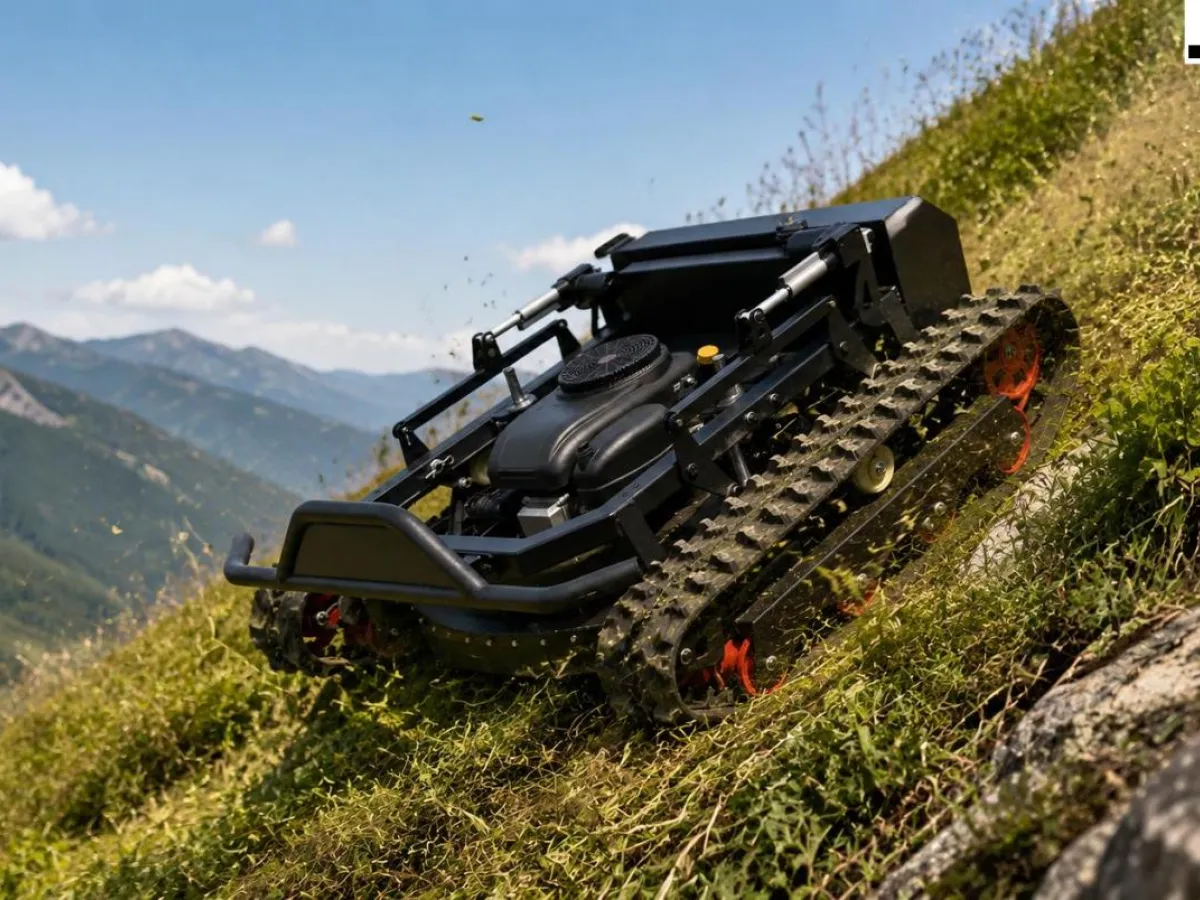
Diesel remains the better choice for: Remote sites without grid access; operations requiring 8+ hours of continuous cutting; high-gradient sites where full-load running significantly reduces electric range; operators with large single-site acreage where multiple recharge cycles per day are impractical.
Mixed fleet strategy: For larger operators, maintaining both technologies optimises deployment: electric machines on urban, noise-sensitive, and short-shift contracts; diesel machines on remote, long-shift, and high-gradient sites.
Looking Ahead: Battery Technology Development
Battery energy density is improving at approximately 5–8% per year on a capacity-to-weight basis. By 2030, industry projections suggest electric RC mowers will achieve 6–8 hour run times on a single charge at equivalent machine weight to today's models — which would eliminate the primary practical limitation of current electric machines. Operators purchasing electric RC mowers today are on the leading edge of a technology curve that is moving clearly in the electric direction.
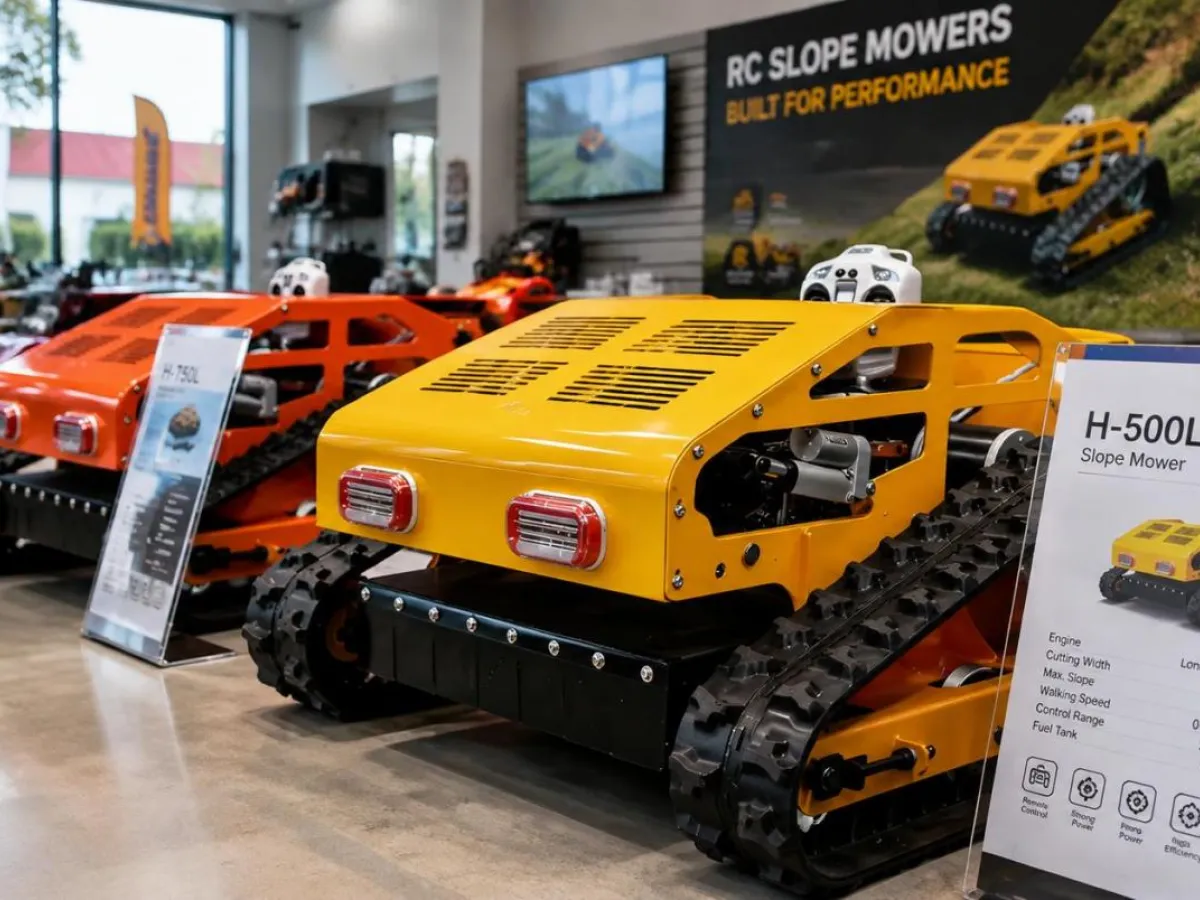
The diesel-vs-electric decision for RC slope mowers is not a one-size-fits-all choice — it depends on your specific operating hours, site types, contract requirements, and local energy costs. Our sales team can model the 5-year TCO for both options based on your operation's actual utilisation patterns, providing a data-driven comparison tailored to your business rather than a generic brochure figure. We offer both diesel and electric RC mower ranges, with CE and EPA-compliant models available for export to Europe, North America, and Australia. Contact us to request a TCO analysis, arrange a side-by-side demonstration, or discuss which technology fits your contract portfolio. JRD Machinery is an RC slope mower manufacturer and supplier across both diesel and electric ranges, so the TCO comparison is run against two machines from the same source.
Get in touch for expert advice or a quote:
Email:info@jrdmachinery.com
Website: www.jrdmachinery.com