



How Workflow Design Influences Skid Steer Attachment Longevity on Job Sites
Attachment durability is often discussed in terms of material strength or manufacturing quality. While these factors are important, long-term field experience shows that workflow design plays an equally significant role in determining how long a skid steer attachment remains efficient. The way tasks are organized throughout a workday directly affects mechanical stress, hydraulic stability, and operator behavior.
Attachments rarely fail because of a single overload event. Instead, lifespan is shaped by thousands of repeated cycles influenced by how work is structured. Efficient workflow design reduces unnecessary stress accumulation, allowing attachments to maintain performance over extended operating periods.
Workflow as a Mechanical Environment
Every job site creates a mechanical environment defined by task order, movement patterns, and operational timing. Attachments respond not only to materials but also to how frequently they transition between tasks.
For example, repeatedly alternating between heavy digging and high-speed travel introduces constant load variation. Hydraulic systems must continuously adapt, increasing thermal and mechanical stress.
When workflows group similar tasks together, attachments operate under more stable conditions. Stable workloads allow components to experience predictable force patterns, slowing wear progression.
A skid steer bucket used continuously for a defined loading phase experiences less fatigue than one repeatedly switched between digging, grading, and transport tasks within short intervals.
Task Sequencing and Stress Accumulation
Task sequencing determines how forces accumulate within attachment structures. Poor sequencing often introduces unnecessary stress peaks.
Common inefficient patterns include:Switching attachments before completing task groups;Performing precision tasks immediately after heavy impact work;Frequent direction changes caused by unplanned material placement.
These patterns force attachments to operate outside stable load ranges.
Efficient sequencing follows a gradual progression:Heavy ground engagement;Material transport;Surface finishing.
Cleanup operations
This progression allows hydraulic and structural loads to decrease gradually rather than fluctuate sharply.
Hydraulic Stability Through Workflow Planning
Hydraulic systems benefit from predictable demand. When workflow design creates sudden workload transitions, pressure fluctuations increase.
Repeated pressure variation contributes to:Valve fatigue;Increased oil temperature;Reduced control precision;
Accelerated seal wear
Grouping similar attachment functions stabilizes hydraulic flow. Operators experience smoother control, and attachments operate within optimal pressure ranges.
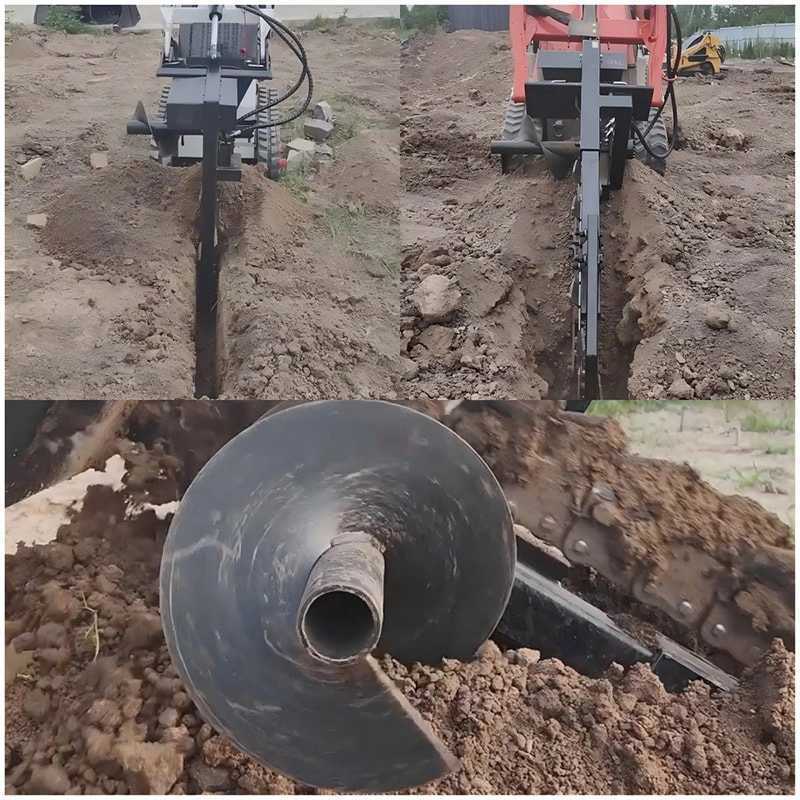
For instance, completing all trenching operations before switching to transport tasks reduces repeated hydraulic adaptation cycles.
Operator Behavior Shaped by Workflow
Operators naturally adapt their behavior to workflow structure. Disorganized workflows encourage rushed decisions and abrupt movements, increasing attachment stress.
Well-designed workflows promote predictable motion patterns. Operators develop rhythm, leading to smoother inputs and reduced shock loading.
Consistent workflows also reduce cognitive load. When operators know the next task in advance, they avoid sudden adjustments that often cause mechanical strain.
Attachment longevity therefore depends partly on human factors influenced by planning quality.
Travel Distance and Attachment Wear
Workflow layout affects how often attachments remain engaged during travel. Excessive travel with loaded attachments introduces unnecessary vibration and structural stress.
Efficient site planning minimizes travel distance between work zones. Material staging areas positioned strategically reduce repetitive long-distance movement.
Shorter travel cycles lead to:;Lower vibration exposure;Reduced tire and joint stress;Improved fuel efficiency
More controlled attachment handling
Even minor layout adjustments can significantly influence long-term wear patterns.
Idle Time and Thermal Recovery
Attachments and hydraulic systems benefit from periodic thermal stabilization. Continuous high-load operation without natural pauses increases oil temperature and accelerates degradation.
Well-structured workflows naturally include brief low-load intervals between heavy tasks. These moments allow hydraulic systems to stabilize without reducing productivity.
Operators often notice improved responsiveness after short transitions between work phases. Workflow planning can intentionally incorporate these recovery periods.
Matching Attachments to Workflow Roles
Not all attachments are suited for continuous heavy-duty roles. Assigning attachments based on operational strengths prevents misuse.
Examples include:Buckets for sustained material movement;Sweepers for periodic cleanup phases;Grapples for controlled lifting rather than repetitive impact tasks.
When attachments perform roles aligned with design intent, structural fatigue decreases significantly.
Workflow clarity ensures attachments are used efficiently rather than opportunistically.
Long-Term Productivity Benefits
Contractors who optimize workflow design observe measurable improvements:Longer attachment service life;Reduced maintenance interruptions;Stable hydraulic performance;More predictable project timelines.
Improved operator comfort
These benefits accumulate gradually, often becoming noticeable only after months of consistent operation.
Importantly, workflow optimization requires planning rather than additional investment.
Workflow Design as Preventive Maintenance
Traditional maintenance focuses on inspection and repair. Workflow design functions as preventive maintenance by reducing stress before damage occurs.
Planning task order, travel paths, and attachment usage effectively controls mechanical load exposure.
Attachments used within organized workflows often maintain structural integrity far beyond expected service intervals.
This approach shifts maintenance strategy from reactive repair to operational prevention.
Integrating Workflow Awareness Into Daily Operations
Effective teams incorporate workflow review into daily planning meetings. Simple discussions about task order and equipment usage help prevent inefficient patterns.
Operators also contribute valuable feedback regarding attachment behavior under specific workflows. Their observations help refine processes over time.
Continuous adjustment ensures workflows evolve alongside job site demands.
Conclusion
Attachment longevity depends not only on design quality but also on how work is organized. Workflow design shapes hydraulic stability, operator behavior, and mechanical stress patterns throughout daily operations.
By grouping tasks logically, minimizing abrupt transitions, and aligning attachments with appropriate roles, contractors significantly extend attachment lifespan while maintaining consistent productivity.
In real-world skid steer operations, efficient workflow planning acts as a powerful but often overlooked tool for improving equipment reliability and operational performance.