



Why Attachment Balance Matters More Than Machine Size in Skid Steer Operations
When evaluating equipment performance, many contractors focus primarily on machine size, engine power, or lifting capacity. While these specifications are important, real-world job site experience often reveals a different truth: attachment balance frequently has a greater influence on operational efficiency than machine size itself.
A properly balanced skid steer attachment allows operators to maintain control, reduce hydraulic strain, and achieve consistent results across varied tasks. Conversely, even powerful machines can struggle when attachments create instability or uneven weight distribution. Understanding attachment balance helps contractors maximize productivity without relying solely on larger equipment.
Understanding Balance Beyond Machine Weight
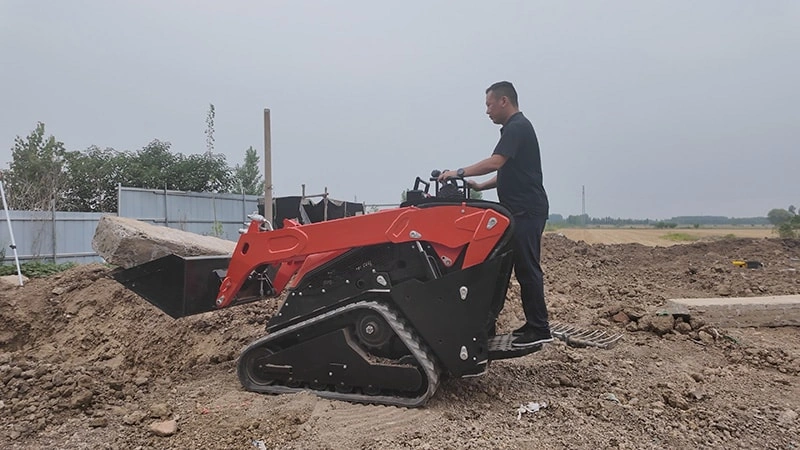
Machine size determines theoretical capability, but attachment balance determines usable performance. Skid steer loaders operate with compact wheelbases, meaning weight shifts occur quickly during lifting, turning, and ground engagement.
Attachments extend the machine’s working radius, effectively moving the center of gravity forward or outward. When balance is optimized, the loader maintains traction and predictable motion. When balance is poor, operators compensate continuously, reducing efficiency.
For example, a correctly sized skid steer bucket distributes material weight close to the machine frame. This allows smooth lifting and stable travel. An oversized or poorly balanced attachment shifts weight too far forward, forcing operators to slow movements to maintain stability.
How Attachment Geometry Influences Stability
Balance is not determined only by attachment weight. Geometry plays an equally important role. Key factors include:Distance between attachment load center and mounting plate;Shape of the attachment frame;Material distribution within the attachment structure;Ground contact angle during operation.
Attachments designed with balanced geometry allow forces to transfer evenly into the loader arms. This reduces oscillation and improves control precision.
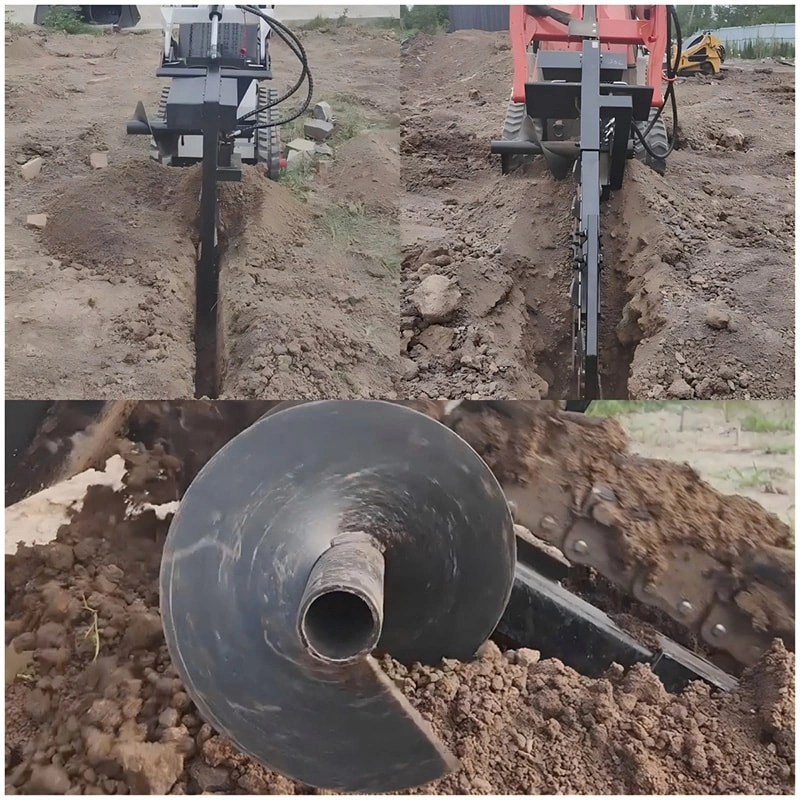
Ground-engaging tools such as trenchers or tillers demonstrate this clearly. When geometry maintains consistent ground contact, hydraulic effort remains stable. Poor geometry causes repeated resistance changes, increasing vibration and operator fatigue.
The Operator’s Perspective on Balance
Operators often recognize imbalance before it becomes visible to observers. Signs include:Frequent steering correction;Uneven tire traction;Attachment bouncing during travel;Difficulty maintaining straight motion under load;
These behaviors indicate that machine energy is being used to stabilize motion rather than perform productive work.
Experienced operators instinctively adjust speed and lifting height to compensate. However, compensation reduces efficiency and increases fatigue over long work periods.
Balanced attachments allow operators to focus on task execution instead of constant correction.
Balance and Hydraulic Efficiency
Attachment balance directly affects hydraulic system performance. When loads remain centered and predictable, hydraulic pressure changes occur gradually. Pumps and valves operate within stable ranges, improving responsiveness.
Imbalanced attachments introduce sudden load shifts. These shifts require rapid hydraulic adjustments, which increase heat generation and energy loss.
Over time, unstable hydraulic demand can contribute to:Increased oil temperature;Reduced control precision;Faster component wear;Balanced attachments therefore improve not only stability but also hydraulic efficiency.
Why Larger Machines Do Not Always Solve Problems
A common assumption is that upgrading to a larger machine resolves performance limitations. In many cases, the underlying issue is attachment mismatch rather than insufficient power.
Larger machines introduce higher fuel consumption, reduced maneuverability, and increased operating cost. If attachment balance remains poor, instability simply scales with machine size.
Contractors often achieve better results by selecting attachments that match machine characteristics instead of increasing machine capacity.
Balanced systems allow smaller machines to operate efficiently within their intended design range.
Attachment Balance in Mixed Work Environments
Job sites rarely present uniform conditions. Operators move between soft soil, compact surfaces, slopes, and confined areas. Balanced attachments adapt more effectively to changing terrain because they maintain predictable weight distribution.
For instance, when performing trenching along uneven ground, balanced attachments maintain consistent penetration depth. Imbalanced tools require constant correction, slowing progress and increasing operator workload.
Balanced operation becomes especially important when attachments are used repeatedly throughout the day. Reduced correction effort leads to smoother workflows and more consistent output.
Long-Term Operational Advantages
Contractors who prioritize attachment balance observe several long-term benefits:Improved machine stability during lifting and travel;Reduced tire and track wear;Lower hydraulic stress levels;More precise attachment control;Increased operator confidence.
These improvements contribute to predictable performance, which is often more valuable than maximum theoretical capacity.
Predictability allows crews to plan workflows accurately and maintain steady project timelines.
Designing Workflows Around Balanced Equipment
Balanced attachments support efficient workflow planning. Operators can maintain consistent operating speeds, reducing stop-and-start movement patterns.
When balance is optimized:Loading cycles become smoother;Transport paths remain stable;Ground engagement stays uniform;Cleanup operations require fewer corrections.
This continuity improves overall job site organization and reduces unnecessary machine repositioning.
Rather than adapting workflow to equipment limitations, balanced attachments allow equipment to support workflow naturally.
Viewing Performance as a System Relationship
Machine size, hydraulic power, attachment design, and operator behavior form an interconnected system. Attachment balance acts as the stabilizing element linking these components.
When balance is correct:Hydraulic systems operate efficiently;Operators maintain control effortlessly;Machine capability becomes fully usable.
When balance is ignored, performance limitations appear regardless of machine specifications.
This systems perspective explains why experienced contractors often prioritize attachment compatibility over raw machine power.
Conclusion
In skid steer operations, attachment balance frequently determines practical performance more than machine size. Balanced attachments maintain stable weight distribution, support efficient hydraulic operation, and reduce operator workload across varied job conditions.
By focusing on attachment geometry, compatibility, and operational stability, contractors can achieve reliable productivity without increasing equipment size or complexity. Real efficiency comes not from more power, but from balanced interaction between machine and attachment.
Understanding and prioritizing attachment balance transforms skid steer loaders into more predictable, efficient tools capable of handling diverse tasks with confidence.