



What Attachment Wear Patterns Reveal About Skid Steer Operating Efficiency
Attachment wear is often viewed simply as an unavoidable result of daily work. However, experienced operators and equipment managers understand that wear patterns provide valuable insight into how efficiently a skid steer attachment is being used. Rather than indicating only material fatigue, wear often reflects operator habits, workflow design, and hydraulic load distribution.
By learning to interpret wear patterns correctly, contractors can improve productivity, extend attachment lifespan, and prevent recurring operational inefficiencies. Wear becomes not just a maintenance concern but a diagnostic tool for evaluating real job site performance.
Wear as Operational Feedback
Every attachment interacts continuously with materials, terrain, and hydraulic force. These interactions leave visible marks over time. Instead of appearing randomly, wear typically develops in predictable patterns tied directly to operating behavior.
Common attachment wear indicators include:Uneven cutting edge erosion;Localized structural polishing;Asymmetrical deformation;Accelerated pin or joint wear;Surface abrasion concentration
Each pattern represents repeated operational forces applied during normal use.
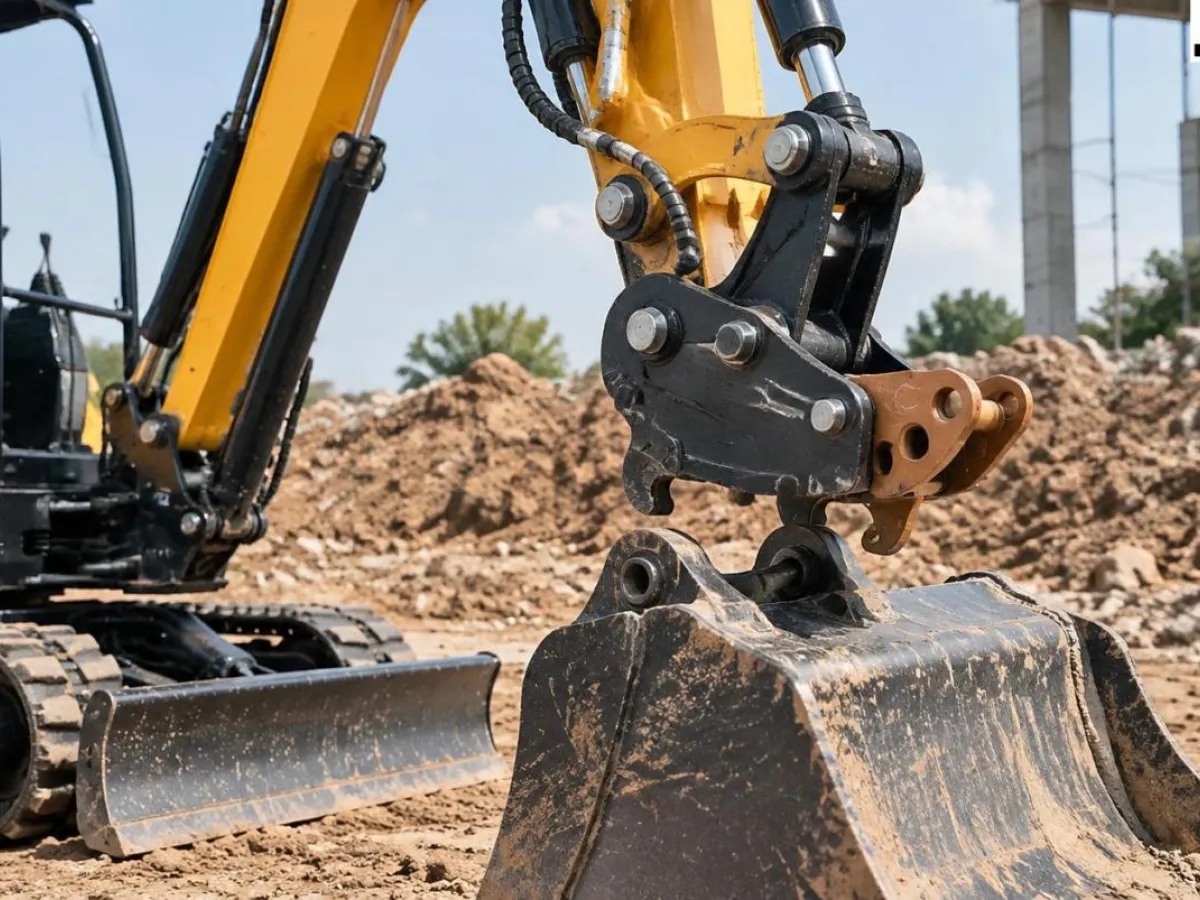
For instance, a skid steer bucket showing heavier wear on one side often indicates consistent angled loading rather than manufacturing imbalance.
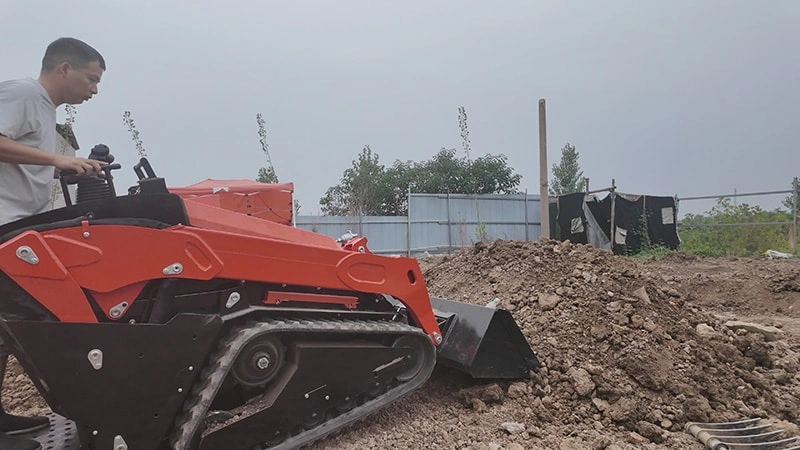
Recognizing these signals allows operators to correct technique before performance declines.
Uneven Edge Wear and Loading Technique
One of the most common wear patterns appears along bucket cutting edges. Ideally, wear should distribute evenly across the edge surface. When one side deteriorates faster, operational asymmetry is usually the cause.
Typical reasons include:Approaching material piles from the same angle repeatedly;Steering during penetration instead of after lifting;Uneven ground conditions combined with fixed operator habits.
Over time, uneven wear reduces digging efficiency and increases hydraulic effort required for penetration.
Adjusting entry angle and alternating approach directions distributes force more evenly, restoring efficiency without equipment modification.
Structural Polishing and Repeated Motion Paths
Polished metal surfaces often appear where friction occurs repeatedly. While polishing may seem harmless, it reveals concentrated operational movement.
Examples include:Repeated contact points during lifting cycles;Consistent travel height during transport.
Fixed tilt angles maintained throughout work
These patterns show that operators rely on habitual motion rather than adapting movement to changing conditions.
Although repetition improves speed, excessive uniformity concentrates stress in specific areas. Introducing slight variation in movement distributes load more evenly and reduces long-term fatigue.
Pin and Joint Wear as Indicators of Control Style
Pins and pivot joints experience dynamic loads during attachment operation. Excessive wear in these areas often points to aggressive control inputs rather than heavy workload alone.
Sudden stops, rapid direction changes, and abrupt lifting motions create shock loads transmitted directly into joints. Over time, clearances increase, leading to reduced precision and vibration.
Operators using smoother motion cycles typically observe slower joint wear even under identical workloads.
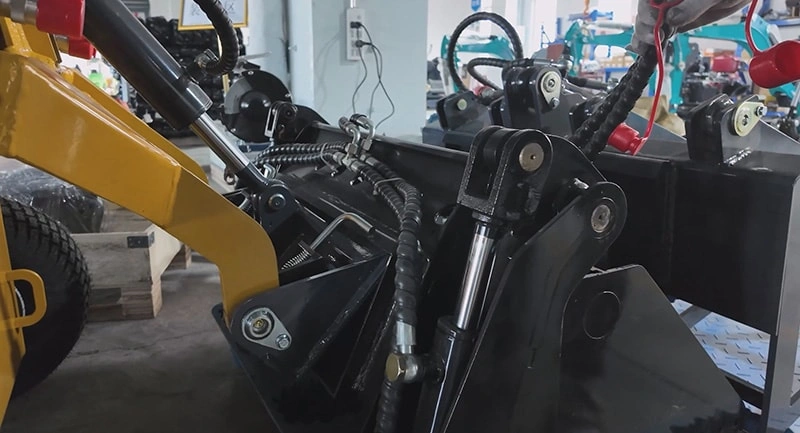
Monitoring joint condition therefore provides insight into operator control consistency.
Ground Interaction and Material Influence
Different materials produce distinct wear characteristics. Abrasive soils cause gradual erosion, while rocky environments introduce impact damage.
However, material type alone does not determine wear rate. Operating method significantly influences outcomes.
For example:Maintaining consistent penetration depth reduces edge impact;Avoiding excessive downward force prevents structural stress;Matching travel speed to material resistance stabilizes wear progression.
Attachments operated with balanced force typically display smoother, predictable wear patterns regardless of material conditions.
Hydraulic Efficiency Reflected Through Wear
Hydraulic inefficiency often leaves indirect physical evidence. Attachments subjected to unstable hydraulic pressure may experience micro-vibrations that accelerate surface fatigue.
Signs include:Fine cracking near stress points;Irregular abrasion zones;Fastener loosening over time.
These effects occur when hydraulic load fluctuates excessively due to abrupt operator inputs or mismatched workflow pacing.
Stable hydraulic operation reduces vibration and promotes uniform wear distribution.
Using Wear Analysis for Workflow Improvement
Instead of replacing attachments immediately after performance declines, contractors can analyze wear patterns to identify workflow inefficiencies.
Questions worth asking include:Are operators approaching materials consistently from one direction?Is machine travel synchronized with attachment movement?Are loads applied smoothly or abruptly?Does task sequencing create unnecessary stress cycles?
Small workflow adjustments often resolve recurring wear problems more effectively than equipment replacement.
Preventive Adjustments Based on Wear Observation
Regular visual inspection helps detect early wear indicators before productivity loss becomes noticeable.
Recommended inspection practices:Compare left and right wear symmetry;Check mounting alignment monthly;Observe vibration changes during operation.
Monitor hydraulic response consistency
These observations allow early corrective action that maintains attachment efficiency.
Preventive adjustments extend usable lifespan while preserving operational stability.
Economic Value of Wear Awareness
Attachments represent ongoing operational investment. Understanding wear behavior improves financial planning by preventing premature replacement and reducing downtime.
Benefits include:Longer attachment service intervals;Reduced repair frequency;Improved fuel efficiency through smoother operation.
More predictable maintenance scheduling
Wear analysis transforms maintenance from reactive repair into performance optimization.
Wear Patterns as Operational Communication
Attachments effectively communicate how they have been used. Every abrasion mark, deformation, or polished surface records operational history.
Operators and managers who interpret these signs gain insight into machine interaction with real working conditions. This understanding helps align equipment usage with design intent, improving long-term reliability.
Rather than viewing wear as damage alone, experienced teams treat it as feedback guiding operational improvement.
Conclusion
Attachment wear patterns provide a clear window into skid steer operating efficiency. Uneven edges, joint wear, and surface abrasion reveal how machines are controlled, how workflows are structured, and how hydraulic forces are applied during daily operations.
By analyzing wear rather than ignoring it, contractors can refine operating techniques, stabilize hydraulic performance, and extend attachment lifespan. Efficient operation leaves balanced wear signatures, reflecting harmony between machine, attachment, and operator behavior.
In practical job site management, understanding wear patterns turns routine inspection into a powerful tool for continuous performance improvement.