



Mini Excavator Cab Options — Why Enclosure Matters More Than Comfort
Most buyers treat the mini excavator cab decision as a weather choice — canopy for dry climates, enclosed cab for rain and cold. That framing misses most of what the enclosure decision actually involves: operator fatigue over a full shift, site safety compliance (ROPS and FOPS certification), productivity in demolition or tree work where debris is in the air, and resale value in markets where enclosed cabs are the expected standard. Getting the enclosure specification right is not a luxury question — it is a work performance question.
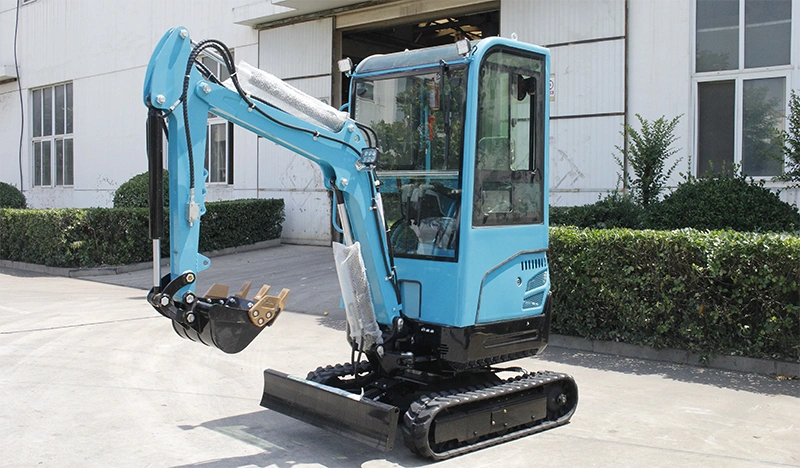
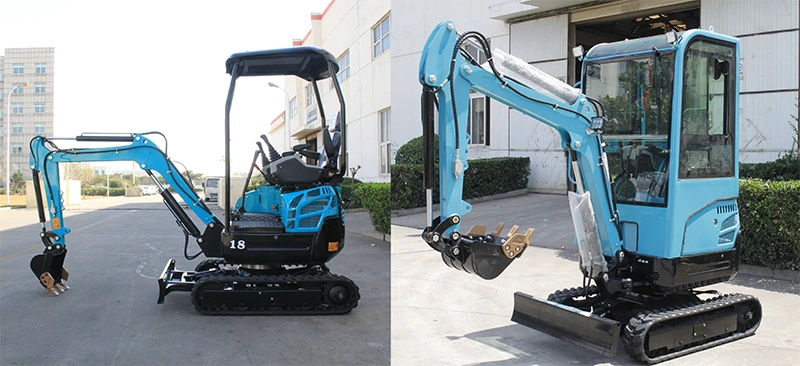
The compact excavator range covers three enclosure configurations: open canopy (ROPS only), half-cab (ROPS with front screen), and full enclosed cab (ROPS/FOPS with glass surround). The 12K, 13K Pro, 17K, and 18K Pro are examples of models where cab configuration is a specifiable option. Understanding what each configuration delivers — and what it does not — is the starting point for getting the specification right.
ROPS and FOPS — What These Certifications Require and When They Are Mandatory
ROPS — Rollover Protective Structure — is a structural cage designed to protect the operator if the machine tips over. For compact excavators in most regulated markets, ROPS certification is required for any machine that will operate on slopes or near excavation edges. The ROPS structure must meet specific load ratings that vary by machine operating weight, tested and certified to the applicable standard (ISO 3471 is the international reference; EN 474 applies in European markets).
FOPS — Falling Object Protective Structure — adds protection above the operator position against objects falling from above. This is specifically required for demolition work where structural material may fall, tree work where branches are a hazard, and work in quarries or rocky cut slopes. The mini excavator cab with full glass enclosure and a certified FOPS overhead guard is the correct specification for these environments. A canopy alone does not provide FOPS-level protection because the overhead guard must meet a specific impact energy absorption standard, not simply be present.
For buyers supplying machines into European markets: CE certification of the machine as a whole does not automatically certify the ROPS/FOPS structure to the specific load rating — the ROPS/FOPS structure certification must be documented separately and matched to the machine operating weight. Machines in the range are CE-certified, and the ROPS/FOPS documentation should be requested specifically when the machine will be used on sites where site safety regulations require it. This is not a formality — site safety inspectors in the EU and UK routinely check ROPS certification documentation.
The Open Canopy — When Less Structure Is the Right Choice
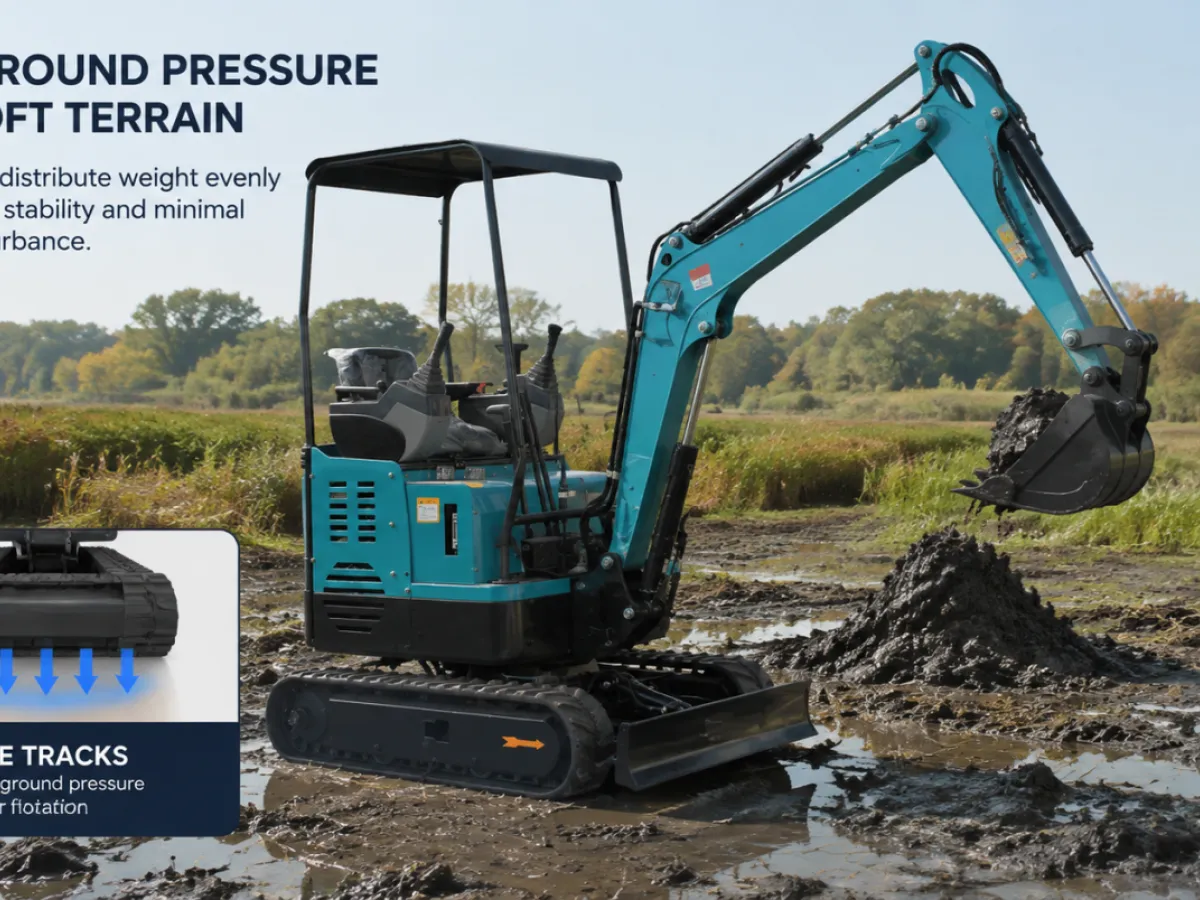
The open canopy configuration — a ROPS overhead guard with no side or front glass — is the correct specification for two distinct scenarios. The first is outdoor work in benign weather conditions where operator comfort is acceptable without weather sealing and where maximum outward visibility is the priority. Landscaping in open sites, service trenching in dry climates, and general demolition work on outdoor sites all fit this profile.
The second and less obvious scenario where an open canopy is preferred: low-ceiling indoor work. Basement demolition, car park excavation, and indoor infrastructure work in buildings with ceiling heights below 2.4 metres require a machine whose operating height allows it to work without the cab roof contacting the structure above. The open canopy profile is typically 200 to 300 mm shorter than the full enclosed cab on the same machine. In environments where the machine is operating at 150 mm clearance overhead, that height reduction is the difference between a machine that can work and one that cannot.
The visibility argument for open canopy work is real. A glass cab, even with large windows, introduces reflections, edge obstructions from the frame members, and the occasional condensation or dust film that reduces visibility to ground-level features. Operators working fine grading tasks on open sunny sites often prefer the unobstructed sightlines of an open canopy machine for precision finish work where the boom and bucket position must be matched to sub-100 mm ground targets.
Full Enclosed Cab — What the Glass and Sealing Actually Add
The full enclosed mini excavator cab adds five distinct performance factors that compound over a working day. The first is weather exclusion — rain, dust, and cold air outside, consistent temperature inside. In dusty environments, this also protects the operator's respiratory health over the long term, a factor that matters more in aggregate than it seems in the moment.
The second is noise attenuation. An enclosed cab reduces the operator's exposure to hydraulic noise, engine noise, and ground impact noise during breaking work. Over a full day of operation, this reduction in noise exposure produces measurably lower operator fatigue — which translates to better precision in the afternoon hours when fatigue typically degrades fine motor control. This is not a comfort observation; it is a productivity observation.
The third is FOPS protection, covered above. The fourth is resale positioning: in markets where enclosed cab is the standard specification for professional compact excavators, an open canopy machine sells at a discount regardless of hours. Buyers who expect to sell or trade the machine within three to five years should factor this into the initial specification decision.
The fifth factor is client site access. Some commercial construction sites, particularly in the UK and EU, specify that all operator-present machinery must have enclosed cab ROPS/FOPS certification as a site access condition. A canopy-only machine cannot access those sites regardless of its mechanical specification. If the intended customer base includes commercial contractors working under health and safety management systems, enclosed cab specification is a business necessity, not an upgrade.
Air Conditioning and Heating — When They Are Worth Specifying
Air conditioning in a compact excavator cab is available as an option on selected models and is worth serious consideration for operators working in climates where summer temperatures exceed 35°C regularly. The argument for AC is not comfort — it is continuous attention. An operator who is managing heat stress is not managing machine control and ground conditions simultaneously, and the error rate in fine positioning tasks climbs measurably above 30°C ambient in an unsealed environment.
For markets in the Middle East, Southeast Asia, or any region with sustained high-temperature working seasons, AC specification in the mini excavator cab should be treated as a safety specification rather than an amenity. The machines in the range that carry AC options do so through a factory-fitted refrigerant circuit matched to the cab volume — aftermarket cabin air conditioning units fitted to machines not designed for them create vibration problems and create electrical load that the alternator may not be specified for.
Heating is relevant for cold-climate deployment and is simpler than AC in principle: most enclosed cabs in the range come with a fresh-air cab heater as standard, using coolant heat from the engine circuit. This is effective for ambient temperatures down to approximately -10°C for the operator environment. Below that, cab insulation and heated seat options become relevant for markets in northern Europe, Canada, or high-altitude deployment zones.
Making the Cab Decision
The practical decision sequence for cab specification: start with the regulatory environment of the primary deployment market (ROPS required? FOPS required for planned applications?), then assess the physical environment (ceiling heights for indoor work?), then assess the climate (is weather protection required for productivity?), and finally assess the resale market expectations. Running through these four filters will produce a clear cab specification without over-specifying features that the actual deployment does not require.
For buyers sourcing compact excavators across multiple markets: specifying the enclosed cab universally and leaving the decision for end users to configure down is almost never possible in this machine class — cab configuration is a factory specification, not a field conversion. Make the decision at the point of order for each deployment context.
Specifying compact excavators for a specific deployment environment — outdoor, indoor, demolition, or climate-controlled?
JRD Machinery offers CE-certified mini excavators with configurable cab options across the K-series range — open canopy, half-cab, and full ROPS/FOPS enclosed cab. ROPS/FOPS certification documentation available on request.
Visit www.jrdmachinery.com for cab configuration options by model, or contact our team for export documentation support and application-specific specifications.