



Why Mini Excavator Performance Falls Off in the Afternoon — Engine Heat and Hydraulic Thermal Management
The 8 a.m. machine and the 2 p.m. machine are not the same machine. If compact excavator thermal management is working as designed, they should be identical — same response, same digging force, same travel speed. When they feel different, something in the heat management chain is operating outside its design parameters. This is one of the more frequently misdiagnosed problems in compact excavation — operators attribute the sluggishness to engine wear or hydraulic pump wear when the actual cause is oil viscosity that has climbed 15°C past its working window.
Understanding why machines heat up, which components are most sensitive to temperature, and what operating habits keep the system inside its designed thermal range is practical knowledge that extends machine life and protects the output quality that clients are paying for. This applies regardless of which engine is fitted — the Kubota D722 in the 15 series and 18K, the Yanmar 3TNV80 in the 22 series, or the Laidong KM385B in the 17 series and 20 series.
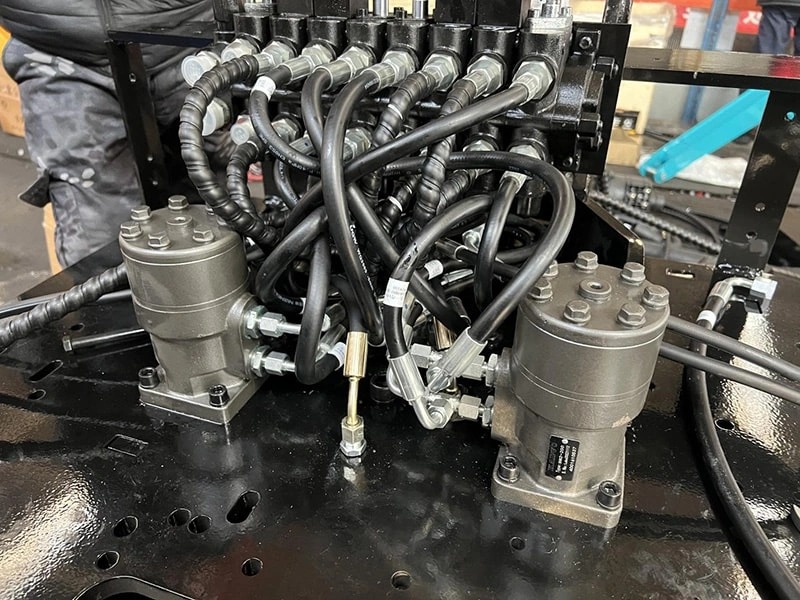
Mini Excavator 13 Series — Hinged Engine Compartment Hood Open for Service
The Heat Chain: Where Temperature Enters the System
Compact excavator thermal management begins with understanding where heat is generated. The main sources are, in order of thermal contribution: the engine combustion cycle (converted to coolant heat and exhaust heat), the hydraulic pump (especially a fixed-displacement gear pump operating against a partially closed relief valve), the control valve block (where pressure differentials across valve spools generate heat), and the hydraulic cylinders (where seal friction and fluid turbulence add smaller amounts of heat during active cycles).
In a well-matched system, the heat generated by each of these sources is within the capacity of the engine cooling circuit and the hydraulic oil cooler to remove. The problem arises when the system is operated in conditions outside the design assumptions: high ambient temperature (above 35°C), extended high-throttle operation without load variation, inadequate oil cooler maintenance (clogged fins), or simply an undersized oil cooler for the actual duty cycle.
The Laidong KM385B engine fitted to the 17 series at 18.1 kW (24 HP) and the Yanmar 3TNV80 in the 22 series at 20 HP are both liquid-cooled engines with separate hydraulic oil cooling circuits. The water-cooled circuit handles the combustion heat load; the hydraulic oil cooler handles the circuit heat load. These are separate loops with separate thermostat control and separate maintenance intervals. Treating them as one system — or neglecting one while servicing the other — is a common source of thermal problems on otherwise well-maintained machines.
Hydraulic Oil Temperature: The Number Most Operators Never Check
Hydraulic oil has a rated operating temperature range — typically 40°C to 80°C for standard mineral oil — within which its viscosity keeps it in the correct working range for pump clearances and seal integrity. Below 40°C, cold start conditions apply (see Article 51 for warm-up guidance). Above 80°C, viscosity drops enough that gear pump and piston pump internal leakage increases, effective working pressure falls, and seal compounds begin to soften.
In practice, most compact excavator operators don't have a hydraulic oil temperature gauge on the display — or don't watch it if they do. The symptoms of thermal sag are visible first as sluggish response to fine joystick inputs, then as reduced bucket breakout force when trying to curl against hard material, then as travel speed dropping slightly under load. By the time these symptoms are obvious, the oil has likely been outside its operating range for 20 to 30 minutes and has been accelerating wear on pump internals and seal compounds throughout that period.
The practical check that doesn't require a gauge: if the machine is working noticeably harder than usual during a task it handled smoothly two hours ago, and no mechanical fault is evident, hydraulic temperature is the first thing to investigate. A hand near (not on) the oil tank return line should feel warm but not hot enough to be uncomfortable at one second of contact. If it is that hot, stop the high-demand work and run the engine at low idle for five minutes before continuing.
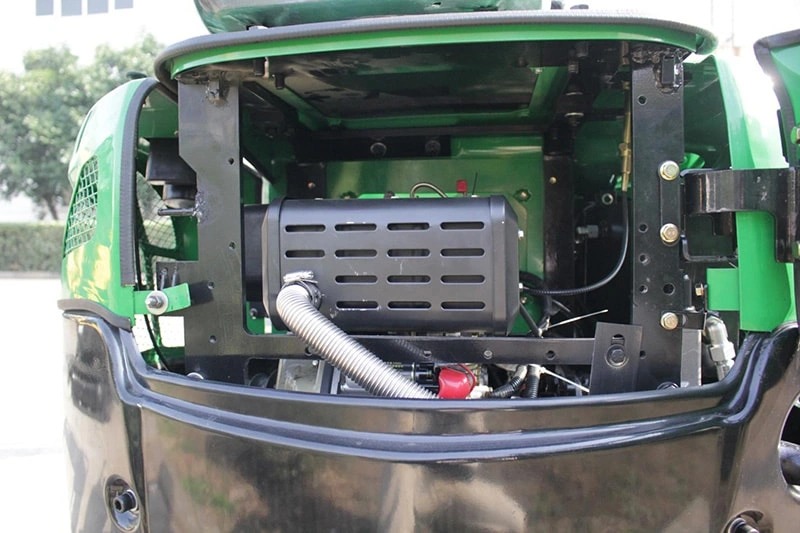
Mini Excavator 13 Series — Yanmar Engine Cooling System Overview
Operating Habits That Keep the System Inside Its Thermal Window
The single most effective habit is load cycling — deliberately alternating between high-demand operations (breaker use, hard clay digging, sustained travel uphill) and lower-demand tasks (fine grading, backfilling loose material, repositioning) within the work cycle. This is not a compromise on productivity; it's the scheduling of work in an order that keeps the hydraulic circuit below its thermal ceiling rather than spending the last two hours of the shift fighting heat-degraded response.
Breaker use is the highest thermal load in normal compact excavator operation. A hydraulic breaker running at full throttle continuously generates more heat in the hydraulic circuit than any other attachment, because the breaker's pressure relief cycling (the point where the tool is hitting harder material than the circuit can push through) dumps energy directly into the oil as heat. Limiting continuous breaker runs to 20 to 30 minutes before switching to a lower-demand task — even for ten minutes — prevents the accumulative thermal peak that causes afternoon performance degradation.
Engine throttle management is the second lever. A common observation on rental machines or machines operated by less experienced drivers is that the throttle is set to maximum and left there all day regardless of the current task. Running the engine at maximum throttle during bucket swap, attachment changes, or machine repositioning between dig zones generates heat from the hydraulic pump (which is still circulating oil against a closed system) without doing productive work. Throttle-down habits — dropping to 50–60% during non-productive machine movements — extend the thermal window meaningfully across a full shift.
Maintenance Checks Specific to Thermal Performance
The hydraulic oil cooler fins are the most commonly neglected component in compact excavator thermal management. In dusty or grassy environments, the cooler fins clog within 40 to 80 hours of operation, reducing heat rejection by 30% or more. The maintenance interval should be visual inspection every 20 hours in heavy dust conditions, with cleaning using compressed air from inside the fin pack outward — not from the outside in, which compresses the clogged material further into the fins.
Engine coolant condition also affects hydraulic thermal performance indirectly. If the engine runs hotter than normal due to depleted coolant or a faulty thermostat, the hydraulic oil cooler is sharing heat rejection work with a hot engine bay rather than a cool one. Coolant should be checked at every 250-hour service interval and replaced according to the manufacturer's specification — typically every two years or 2,000 hours regardless of visual condition, because corrosion inhibitor depletion is not visible in coolant colour.
Hydraulic oil itself has a change interval — typically 1,000 to 1,500 hours for standard mineral oil under normal conditions — but in high-temperature environments or high-intensity duty cycles, the oxidation and viscosity breakdown happen faster. If the oil in the sight glass appears darker than new oil and slightly murky rather than translucent amber, it has likely exceeded its thermal stability and should be changed rather than run to the standard hour interval. Running degraded oil is the fastest way to accelerate pump wear and seal compression set.
Questions about thermal management specifications or maintenance intervals for specific models?
JRD Machinery provides full technical documentation including cooling system specifications for each engine option — Kubota D722, Yanmar 3TNV80, Laidong KM385B, and others — across the compact excavator range.
Visit www.jrdmachinery.com to download model specifications, or contact us to discuss duty-cycle requirements and the appropriate engine configuration for your climate and application.