



Mini Excavator Safety — What the Operator Needs to Know Before the First Dig
Most mini excavator incidents share a common characteristic: they were foreseeable. Tip-overs on unstable ground, contact with underground services, and collisions with structures happen to experienced operators as well as new ones — not because these operators did not know better in theory, but because the pre-job checks and site assessment habits that prevent incidents were skipped or abbreviated.
This guide covers practical excavator safety — the pre-operation checks, the site hazards with the highest incident rates, the machine systems that help, and the operating habits that experienced operators maintain. It is written for the person sitting in the cab, not for a safety officer writing a policy document.
Pre-Operation Inspection — What to Check and Why
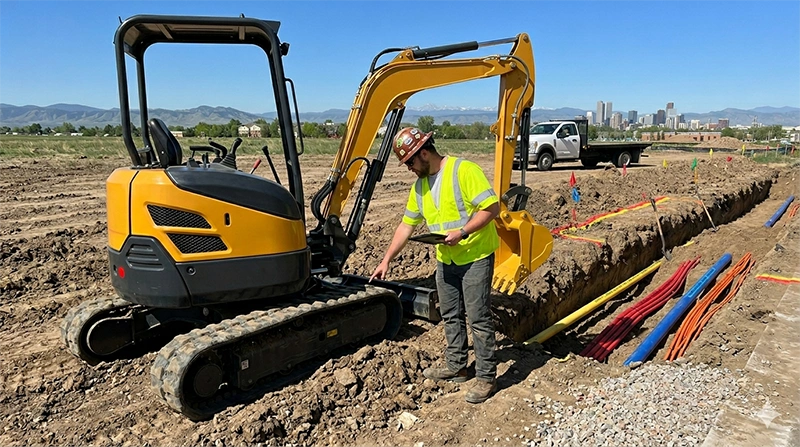
The pre-operation inspection is not a regulatory checkbox — it is the moment the operator learns whether the machine is safe to use that day. A machine with a hydraulic leak, worn track, or failing travel motor is not just a maintenance problem; it is an incident waiting to be triggered by the first difficult condition the job presents.
Walk-around inspection, in order:
• Hydraulic system: check the reservoir level before starting. Look under the machine for fresh puddles or wet spots on hose connections. A hose that is sweating hydraulic fluid under pressure will fail during the job, not before it
• Track condition: check tension (a slack track throws under load; a tight track overloads the sprocket). Inspect rubber track surface for cuts, delamination, or steel cord exposure. Check track bolts for looseness
• Bucket and attachment: inspect the bucket pin retaining clips — worn or missing clips allow the bucket to drop under load. Check teeth for wear; a worn tooth tip requires twice the force to penetrate, overloading the arm
• Slew ring and boom: rotate the machine 360 degrees at low speed and listen for grinding or irregular resistance in the slew circuit. Inspect the boom and arm for cracks at the weld zones; look particularly at the point where boom cylinder brackets are welded
• Cab controls: check that all levers return to neutral when released. Confirm horn and warning devices function. On machines with safety lever lockout, confirm it engages fully and blocks all functions
• Fuel and coolant: low coolant is the most common cause of engine overheating during a work day; check before starting, not after the temperature warning activates
Site Assessment Before Positioning
The risk on any site is established before the machine moves. Site assessment takes ten minutes and changes the decisions the operator makes for the entire job:
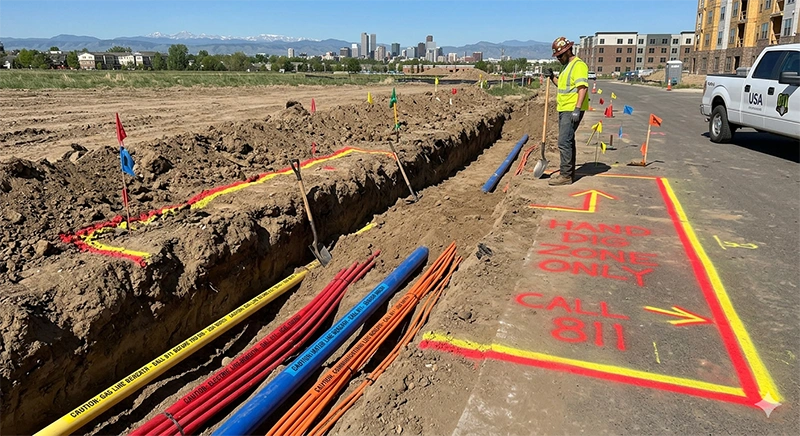
Underground services: obtain a services search or utility locate for any dig to depth. The most dangerous services are gas (ignition and explosion risk) and high-voltage electricity (fatal contact risk). In most markets, a safe dig line (811 in the USA, Dial Before You Dig in Australia and the UK) provides locates within 48 hours. Hand-dig within 500 mm of any marked service.
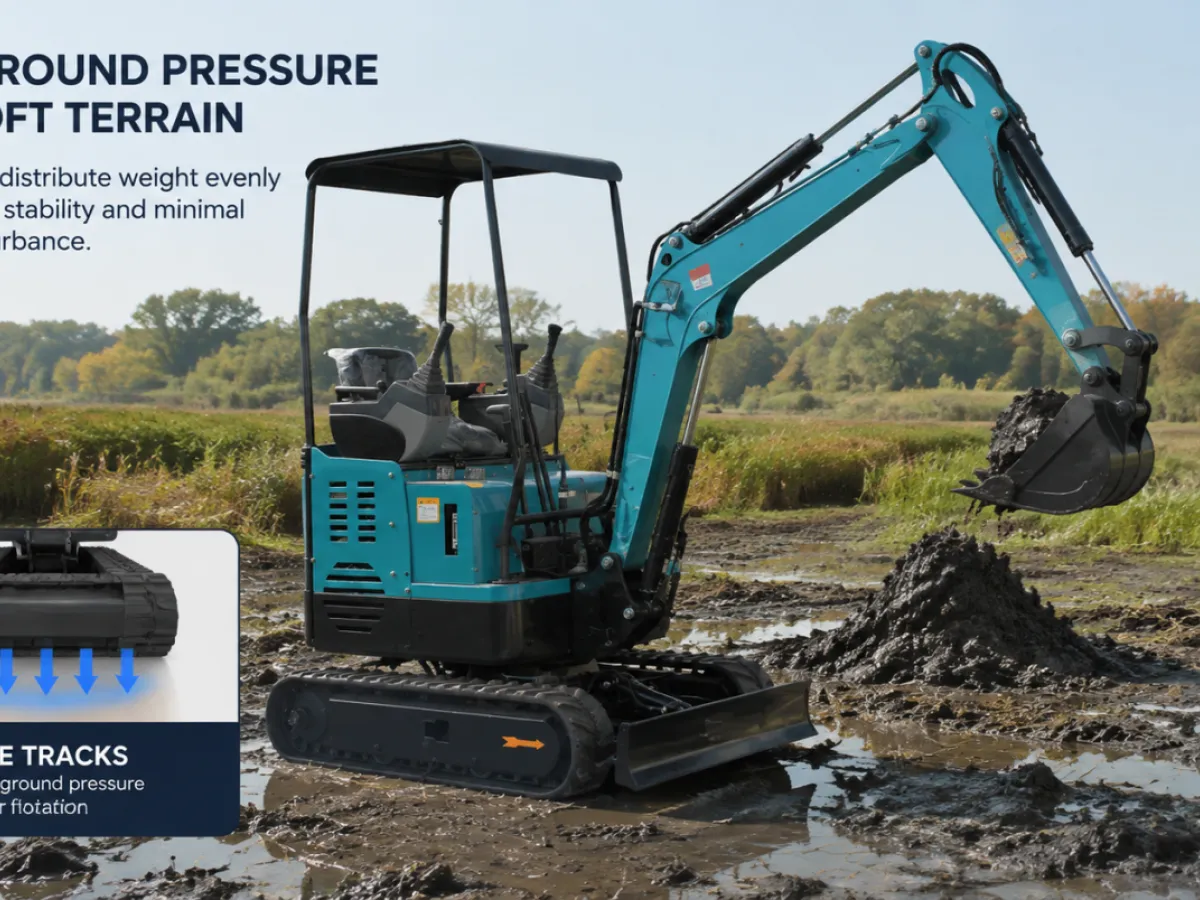
Ground conditions: assess bearing capacity, particularly at the dig edge. Ground that holds the machine when it is stationary may not hold it when one track is extended over a void or the machine is slewing with a loaded bucket. Look for signs of previous excavation, soft patches, buried fill, and slopes that concentrate machine weight on a small contact area.
Overhead hazards: identify overhead power lines before positioning. The safe clearance distance from power lines varies by voltage — confirm with the local authority. A mini excavator's boom can extend into overhead hazard zones without the operator realising it when focused on the dig face.
Adjacent structures: assess how close the dig is to building foundations, retaining walls, or fencing. Removing soil adjacent to a foundation alters the load path and can cause settlement or collapse. Confirm the dig boundary is outside any structure's influence zone before starting.
Tipping Risk — The Most Underestimated Hazard
Tipping is the most frequent serious incident in compact excavator operation. The machine tips when the moment of the load (bucket weight × radius) exceeds the machine's stability moment. Several conditions push the operator toward the tipping threshold without obvious warning:
• Extended reach with heavy load: at maximum reach, the machine's rated lift capacity drops significantly. Operating at 80% of rated capacity at full reach may feel fine until a bucket of saturated clay adds unexpected weight
• Slewing with a loaded bucket: slewing introduces lateral forces. On a slope, slewing downhill with a loaded bucket is the highest-risk combination
• Working on a side slope: the machine should work up-and-down slope (tracking parallel to the fall line), not across it. Crossing a slope with a loaded bucket can tip the machine in less than two seconds
• Ground collapse at the dig edge: the operator is working at the edge of an excavation; the ground underfoot collapses into the void. This is the scenario that ROPS (Rollover Protection Structure) is designed for
Practical mitigation: know the machine's rated lift capacity at the intended reach radius. When in doubt, bring the load closer to the machine before slewing. On any slope exceeding 15 degrees, assess whether the machine is rated for operation on that gradient.
ROPS, FOPS, and the Safety Cab
A ROPS (Rollover Protection Structure) is the cab framework designed to create a survival space if the machine tips over. On a CE-certified mini excavator, the ROPS is tested and certified to ISO 3471. The cab structure must not collapse to within 300 mm of the operator's head in a rollover test.
A FOPS (Falling Object Protective Structure) is the overhead guard that protects the operator from objects dropped from height — relevant in demolition, below cliff faces, and work near overhead loading operations. FOPS is tested to ISO 3449 Level I or Level II depending on the risk level.
Both are legal requirements in most markets for CE-certified machines. When purchasing a compact excavator for export to a market requiring CE compliance, confirm that both ROPS and FOPS certifications are included in the machine documentation.
The safety lever lockout (sometimes called the safety bar or lock lever) is a separate device from ROPS/FOPS — it is the physical lever that cuts hydraulic pilot pressure to all controls when raised, preventing accidental operation. This is the system that stops the machine moving when the operator exits the cab. Confirm it functions correctly in the pre-operation check, every day.
Working Near Existing Structures
Selective demolition and excavation near buildings require additional discipline. The operator cannot see behind the machine, cannot see underground, and cannot feel ground settlement through the joystick. What prevents incidents near structures:
• Exclusion zone marking: mark a 2 m exclusion zone around any structure that must not be damaged; if the bucket work zone reaches the exclusion line, stop and hand-dig the remainder
• Ground monitoring: designate a second person to watch the structure and the ground surface during any dig adjacent to a foundation; any crack or movement is a stop signal
• Sequence control: remove material in small lifts, not in deep cuts — this limits the load change on adjacent foundations and reduces the risk of progressive failure
• No slewing toward the structure: swing away from the structure when loaded, not toward it; a slew brake failure with a loaded bucket swinging toward a building causes structural damage and is an operator safety risk
Confined Space Operation
Operating a mini excavator inside or adjacent to a structure — interior demolition, basement excavation, work in undercroft areas — introduces specific hazards:
• Engine exhaust: diesel exhaust in confined spaces reaches dangerous concentrations quickly. Maintain ventilation; if natural ventilation is insufficient, use forced air ventilation or switch to a battery-electric model if available
• Overhead clearance: map the overhead structure before positioning; a boom raised without adequate headroom contacts beams and structural elements that may not be visible from the cab seat
• Exit planning: always confirm the machine can exit the space before it enters. A machine that cannot turn in a confined space and cannot reverse the entry path is trapped
• Structural load: a mini excavator on a suspended floor or in a basement below grade is adding dynamic load to a structure. Confirm floor capacity before operation; if unknown, do not proceed without a structural assessment
Conclusion
CE-certified machines with documented ROPS/FOPS compliance, functioning safety lever lockout, and maintained hydraulic systems give the operator the best platform to work from. After that, technique and assessment habit are what keep incidents from happening.
Contact Us
Safety on a mini excavator starts with the pre-operation inspection and site assessment—hydraulic leaks, track condition, underground services, tipping risk, and ROPS/FOPS certification are not formalities but the difference between a productive day and an incident. JRD Machinery supplies CE-certified compact excavators with documented ROPS/FOPS compliance, functioning safety lever lockouts, and maintained hydraulic systems. Contact us to discuss machine specifications for your operating environment and export market requirements.