



Mini Excavator Engine Selection — Kubota, Yanmar, Laidong, and What the Spec Sheet Doesn't Tell You
The mini excavator engine appears on the specification sheet as a line item — model name, kilowatt output, horsepower equivalent, and sometimes cylinder count. What the spec sheet does not communicate is the service network behind that engine, the emissions certification level that determines whether the machine can be imported into a given market, the fuel consumption at real operating loads rather than rated output, and the parts availability situation five years from purchase when a fuel injector needs replacement. These factors often matter more than the rated power figure for the machine's total cost of ownership over its working life.
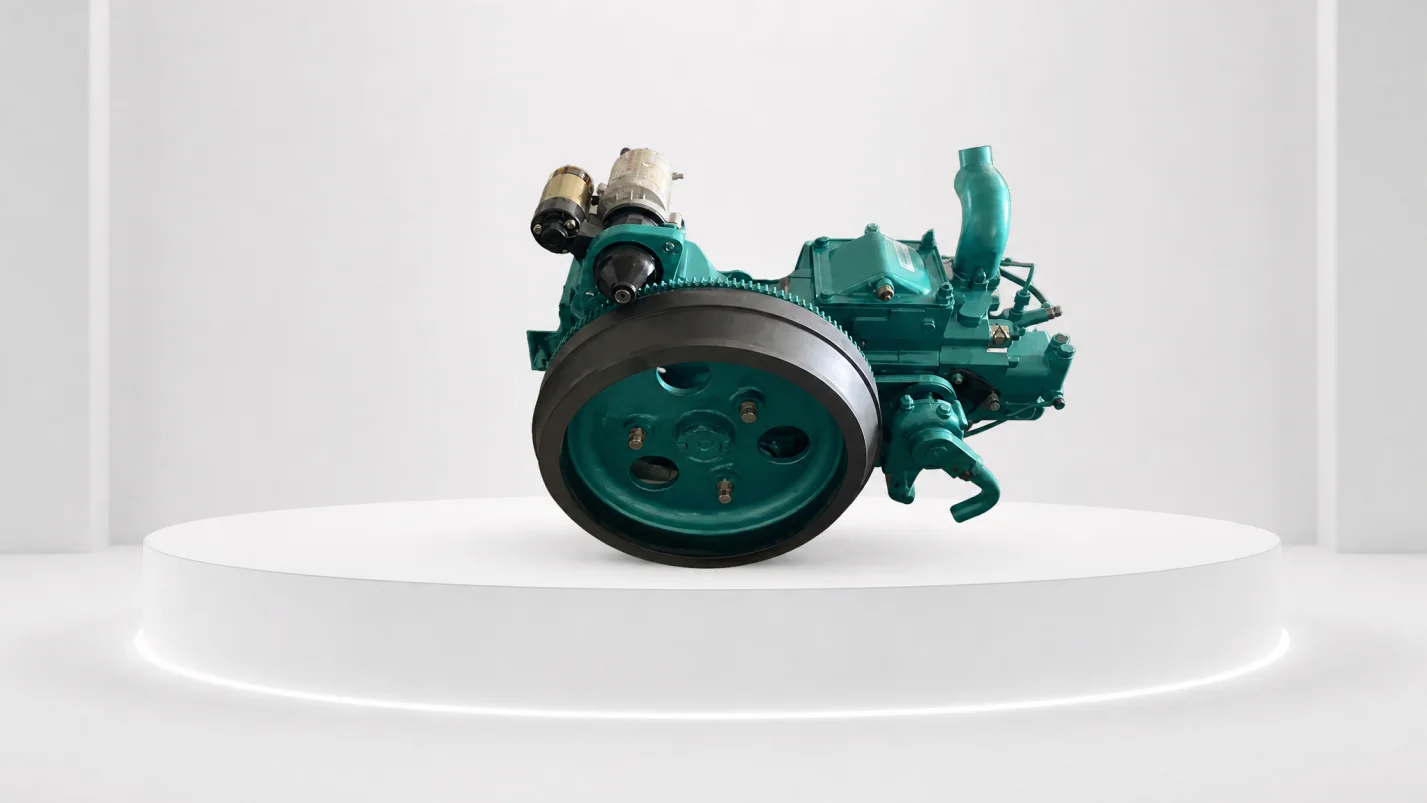
This piece covers the engine options across the compact excavator range — Kubota D722, Yanmar 3TNV80, Laidong KM385B and LL380, and others — and examines each from the perspective of market access, service infrastructure, fuel consumption profile, and the operating conditions where each engine configuration performs most effectively.
Kubota D722 — The Service Network Argument
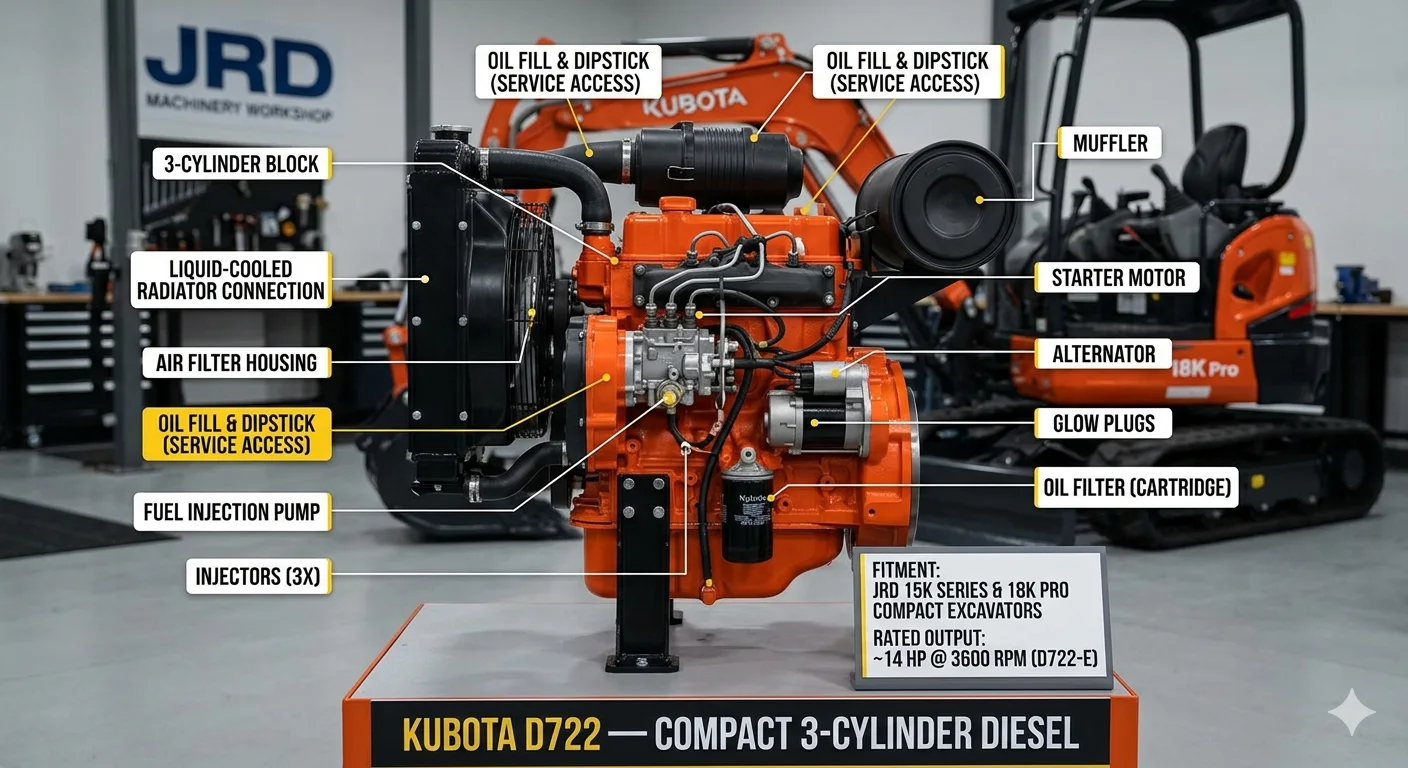
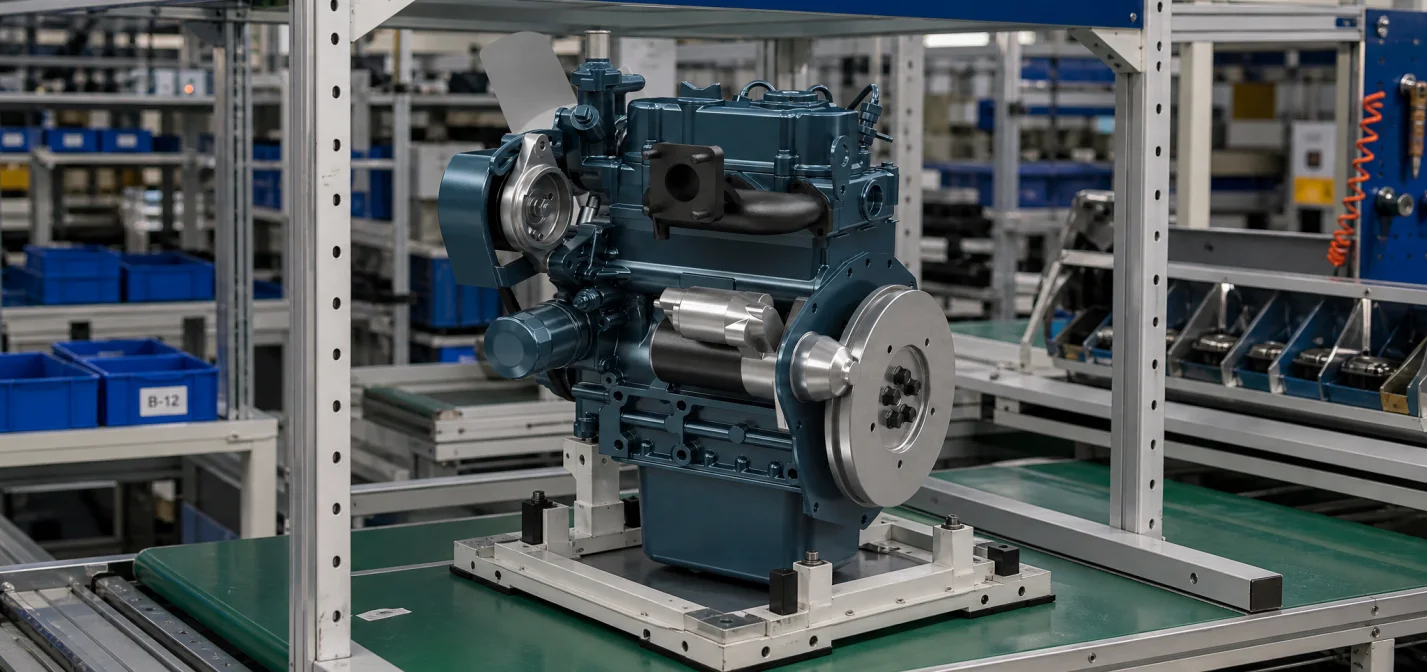
The Kubota D722 is a 3-cylinder, liquid-cooled diesel engine producing approximately 10.2 kW (13.9 HP) in the 15K series and 14 HP in the 18K Pro configuration. It is one of the most widely used engines in the compact equipment category globally, and this ubiquity has a direct practical consequence: Kubota D722 parts are available from Kubota distributors in over 130 countries, and Kubota-trained service technicians who can diagnose and repair the engine exist in most commercial markets.
For buyers purchasing machines for export to markets in Africa, Southeast Asia, the Middle East, or Latin America — where the service infrastructure for specialist equipment engines may be limited — the Kubota D722's parts availability and service network is a significant risk reduction factor. A fuel injector replacement that takes two days on a Kubota requires the same parts and skill set whether the machine is in Germany, Kenya, or the Philippines. An equivalent repair on a less widely distributed engine may require parts to be air-freighted from the original supplier, adding cost and weeks of downtime.
The D722 fuel consumption is modest for its output — typically 2.2 to 2.8 litres per hour at full load, depending on the hydraulic circuit load — which is consistent with its 3-cylinder displacement. This makes it economic for the machine weight class it powers (15K at 1,100 kg, 18K Pro at 1,500 kg) where the hydraulic circuit demands do not typically push the engine to sustained full throttle for extended periods.
Yanmar 3TNV80 — Emission Standard Compliance as a Market Access Tool
The Yanmar 3TNV80 is fitted to the 22 series at 2,100 kg operating weight, producing 20 HP with liquid cooling. The primary reason to specify the Yanmar 3TNV80 in the 22 series over an alternative engine is its emissions compliance. The 3TNV80 meets EU Stage V exhaust emission standards — the current stringent emissions requirement for off-road diesel engines sold in European Union and UK markets.
This matters commercially because a mini excavator engine that does not meet the applicable emission standard cannot be legally sold or operated in that market regardless of its mechanical quality. EU Stage V is the reference standard for European sales; EPA Tier 4 Final is the equivalent for the United States market; Japan has its own emission standard. Matching the engine specification to the market emission requirement is not optional — it determines whether the machine can be imported, registered, and operated legally in that territory.
The Yanmar brand itself also carries recognition value in markets where machinery buyers are familiar with its track record in agricultural and construction equipment. In markets where brand recognition influences procurement decisions — particularly in institutional buying contexts such as government or utility contracts — the Yanmar specification supports the machine's positioning as a professional-grade product. This is not the same as saying an alternative engine is inferior; it is observing that procurement decisions are not made on technical merit alone.
Laidong KM385B and LL380 — The Case for Domestic Chinese Engines
The Laidong KM385B produces 18.1 kW (24 HP) and is fitted to the 17 series and 20 series. The Laidong LL380 at 25 HP is fitted to the 17K. Both are liquid-cooled Chinese domestic diesel engines that offer a specific value proposition: lower first cost, excellent parts availability within China and in markets with Chinese equipment presence, and service teams familiar with the engine in markets where Chinese machinery has established itself.
The argument against Laidong engines in export contexts is the inverse of the Kubota parts argument: in markets where Chinese equipment infrastructure is not established, Laidong parts and service knowledge may be difficult to source quickly. For buyers operating machines in markets with good Chinese equipment presence — parts of Africa where Chinese construction equipment is dominant, domestic Chinese market sales, or markets served by Chinese construction contractors — the Laidong service case is strong. For buyers targeting Western European markets where Kubota and Yanmar are the expected standard, the Laidong specification may face resistance from fleet buyers on parts availability grounds.
On performance, the Laidong KM385B at 24 HP delivers the power to run the 17 series' variable piston pump and Taifeng multi-way valve effectively. The engine has adequate torque for the machine's hydraulic circuit demand across the range of tasks the 17 series is designed for — the power and torque are well-matched to the hydraulic architecture. The operational limitations, where they exist, are supply chain rather than mechanical.
Gasoline Engine Option — The B&S and KOOP Configuration
The 10 series, 12K, 13K, and 15K offer a petrol (gasoline) engine option alongside the diesel alternatives — Briggs & Stratton (B&S) and KOOP engines at 10 HP and 13.5 HP are the configurations in this range. This option exists for a specific market segment: buyers who need a compact excavator in environments where diesel is difficult to obtain or where internal combustion engines are used in spaces where diesel exhaust is a ventilation concern.
Petrol mini excavator engine options trade running economy for convenience. The fuel consumption of a petrol engine at equivalent output is approximately 30 to 40% higher than diesel in this size class, and the power-to-weight efficiency is lower. For buyers who operate machines infrequently — weekend use, occasional project work, or sites where the machine runs less than two hours per session — the running cost difference is small in absolute terms, and the simplified starting procedure of a petrol engine with electric or pull-start is a genuine convenience.
For buyers who intend daily or continuous operation, diesel is the correct choice on running economy grounds regardless of the upfront cost difference. The break-even point where diesel fuel savings offset any additional purchase cost is typically less than 300 operating hours, which most professional users accumulate in under a year.
Matching Engine to Market and Application
The engine selection decision for a compact excavator purchase should run through three filters in sequence: first, which engine meets the emission standard of the intended market? Second, which engine has the service network available within the operating region? Third, which engine is matched correctly to the machine's hydraulic output requirement?
For most European export: Yanmar 3TNV80 (Stage V compliant) in the 22 series, Kubota D722 in the 15K and 18K Pro. For most Southeast Asian and African markets: Kubota D722 for its global parts network, or Laidong where Chinese equipment infrastructure is established. For domestic Chinese market: Laidong engines are a fully serviceable and well-supported choice. For infrequent-use or petrol-preference buyers: B&S or KOOP petrol options across the 10–15 series.
The engine is not an interchangeable component between models — the hydraulic pump specification, cooling system layout, and electrical system are all designed around the specific engine fitted. Ordering a machine with one engine and expecting to fit a different one later is not a practical field modification. Engine selection is a factory specification decision, and getting it right at the point of order is the only time the decision is straightforward.
Questions about engine specifications for specific export market emission standards or service requirements?
JRD Machinery can advise on engine option availability by model and the emission standard compliance documentation required for your target market. All CE-certified machines include engine specification documentation.
Visit www.jrdmachinery.com or contact us directly with your target market and intended application for an engine-specific model recommendation and quotation.