


Winter Preparation & Off-Season Storage of RC Slope Mowers
Introduction: Why Off-Season Preparation Matters
RC slope mowers represent a capital investment typically ranging from £55,000 to over £120,000. Unlike simple hand tools, these complex machines incorporate hydraulic systems, precision electronics, rubber track components, diesel or petrol engines, and radio control hardware — all of which are susceptible to deterioration if stored without proper preparation at the end of the working season.
In temperate climates, the mowing season for most slope and embankment applications runs from approximately March to November. Proper winter preparation and storage procedures applied at the end of November can determine whether a machine returns to work in March in full operational condition or requires expensive remedial work before it can be deployed.
End-of-Season Inspection Checklist
Before placing a machine into winter storage, conduct a comprehensive end-of-season inspection to identify and rectify any developing issues while the machine is still warm and accessible. Defects discovered in storage in February are far more disruptive than those addressed in November.
Cutting Deck
Blade wear, carrier disc cracks, belt tension, flail pin wear
Replace worn blades; weld deck cracks; replace belts if stretch > 10 mm
Hydraulic System
Hose condition, union torque, oil level, cylinder seals
Replace cracked hoses; top up hydraulic oil; note any weeping seals for spring repair
Track System
Track tension, drive sprocket wear, roller condition, track pad wear
Adjust tension to spec; replace worn sprockets; measure pad depth — replace below 8 mm
Engine
Oil and filter condition, coolant level, air filter, fuel filter
Service engine if hours exceeded since last service; drain and replace if overdue
Radio Control
Receiver unit seals, antenna condition, transmitter battery
Replace damaged seals; check antenna mounting; fit new transmitter batteries
Frame & Structure
Corrosion, weld cracks, bolt torques, lifting point condition
Wire-brush and treat rust spots; re-weld any cracked fabrication; replace seized fasteners
Engine Winterisation
Diesel Engines
Change engine oil and filter — used oil contains combustion acids that attack bearing surfaces if left static over winter
Check and top up coolant antifreeze protection to at least -25°C (or site minimum temperature minus 10°C)
Drain and replace fuel filter; treat fresh fuel in tank with approved diesel stabiliser and biocide (diesel bug inhibitor)
Run engine for 10 minutes after adding fuel stabiliser to distribute treated fuel through injection system
Seal air filter intake with a clean, dry cloth secured with elastic band — prevents moisture and rodent ingress
Petrol Engines
Run carburettor dry by switching off fuel tap and running engine to fuel starvation — prevents varnish deposits in jets
Add fuel stabiliser if fuel-in-tank storage preferred (avoids the run-dry approach)
Remove spark plug(s), squirt 5 ml of clean engine oil into cylinder, pull through compression several times to coat bore
Refit spark plug and mark engine as 'do not start until spark plug replaced at recommission'
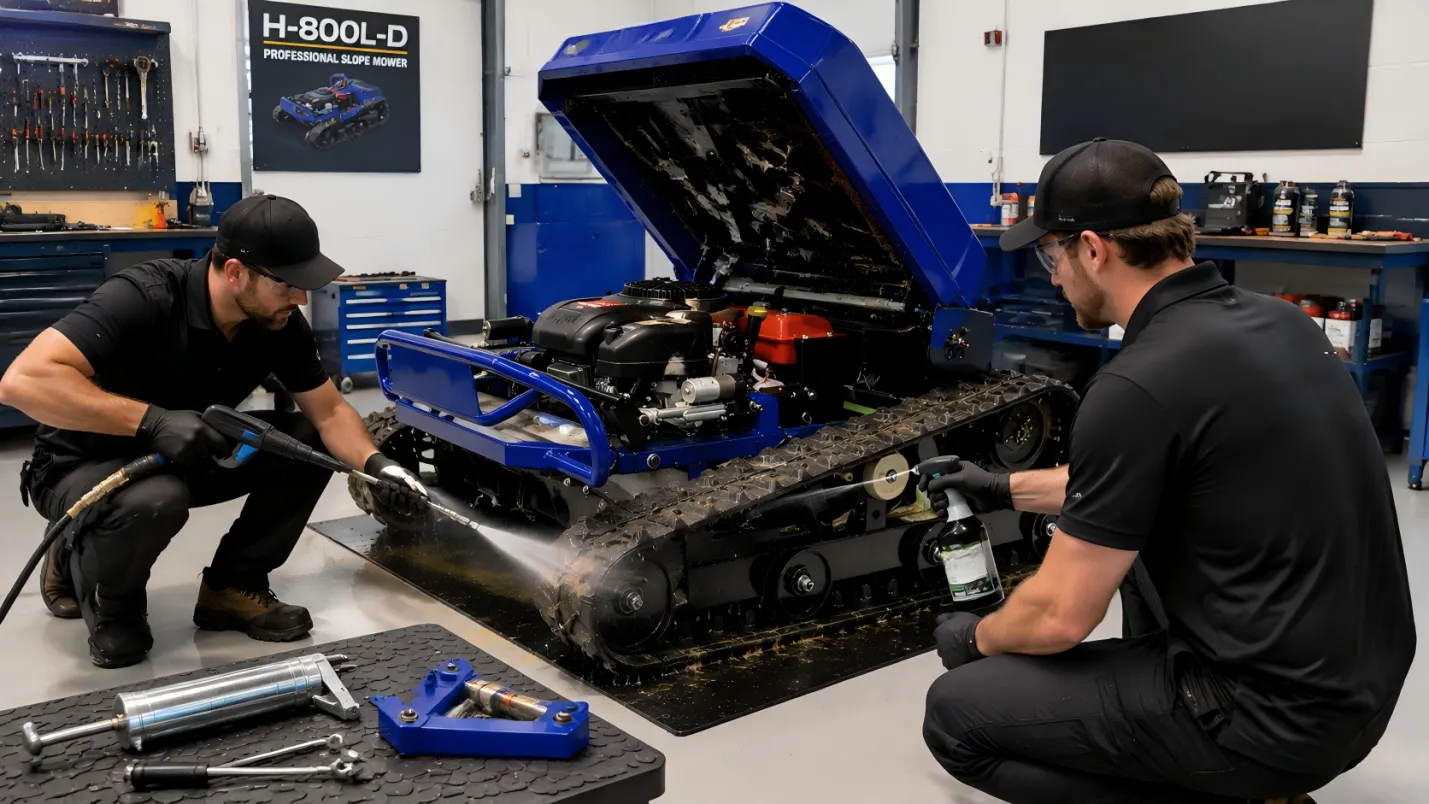
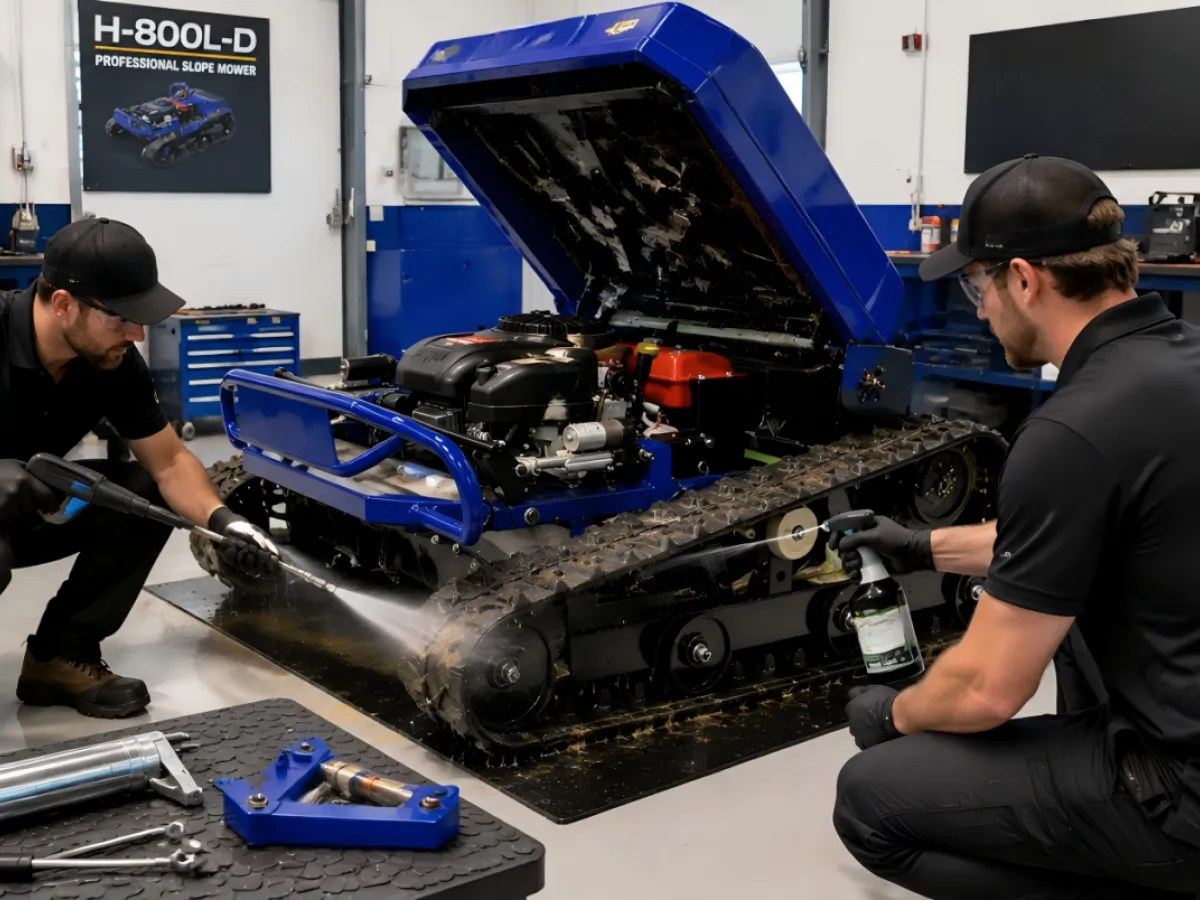
RC mower end-of-season inspection and engine winterisation service
Key Fact: The most common cause of 'spring start' failures in small engines stored over winter is carburettor fuel blockage from old petrol varnish deposits. Fuel stabiliser or run-dry storage eliminates this reliably.
Hydraulic System Preparation
Hydraulic systems are often overlooked in winter storage routines but are among the most expensive to repair if moisture ingress or fluid contamination causes corrosion or seal damage over winter.
Check hydraulic fluid sample against the manufacturer's annual service schedule — if within 200 operating hours of recommended change interval, change now rather than in spring
Inspect all hydraulic cylinder rods and retract fully before storage — exposed chrome rod surfaces corrode rapidly if not protected
Apply a thin film of hydraulic oil to exposed cylinder rod surfaces using a clean cloth
Check reservoir breather cap for blockage — blocked breather causes vacuum on draw-down, pulling moisture past seals
Replace hydraulic return filter if not changed in current season
Track System Winter Care
Rubber Track Maintenance
Rubber tracks degrade most rapidly when stored under tension in cold temperatures. Winter storage procedures for track systems should include:
Clean all mud and vegetation debris from track interior — debris traps moisture and causes accelerated lug cracking
Reduce track tension by half-turn release on each tensioning adjuster — relieves static stress cracking in cold conditions
Apply rubber conditioner or tyre preservation spray to outer track surface — delays UV and ozone cracking
Do not store machine on frozen ground for extended periods — cold hardening of rubber under load creates permanent deformation
Steel Undercarriage Components
Grease all roller and idler bearing nipples to full capacity before storage
Wire-brush and apply corrosion inhibitor to drive sprocket teeth surfaces
Elevate machine on timber bearers to take weight off lower rollers if storage will exceed 8 weeks
Electrical & Radio Control System Storage
Main battery (if electric start)
Remove, store at 60% charge in dry, frost-free environment
Capacity test before fitting — replace if below 80% of rated capacity
Transmitter batteries
Remove all batteries; store separately at room temperature
Test transmitter link before starting engine at recommission
Electrical connectors
Apply dielectric grease to all multi-pin connectors
Check connector seating after storage — damp environments can cause corrosion
Engine ECU / controller
Cover with breathable dust sheet — avoid sealed plastic wrap that traps moisture
Clear any fault codes before first start; reset service counter if applicable
Sensors (slope/tilt)
No specific action required if connectors are sealed
Verify sensor calibration at first use of season
Storage Environment Requirements
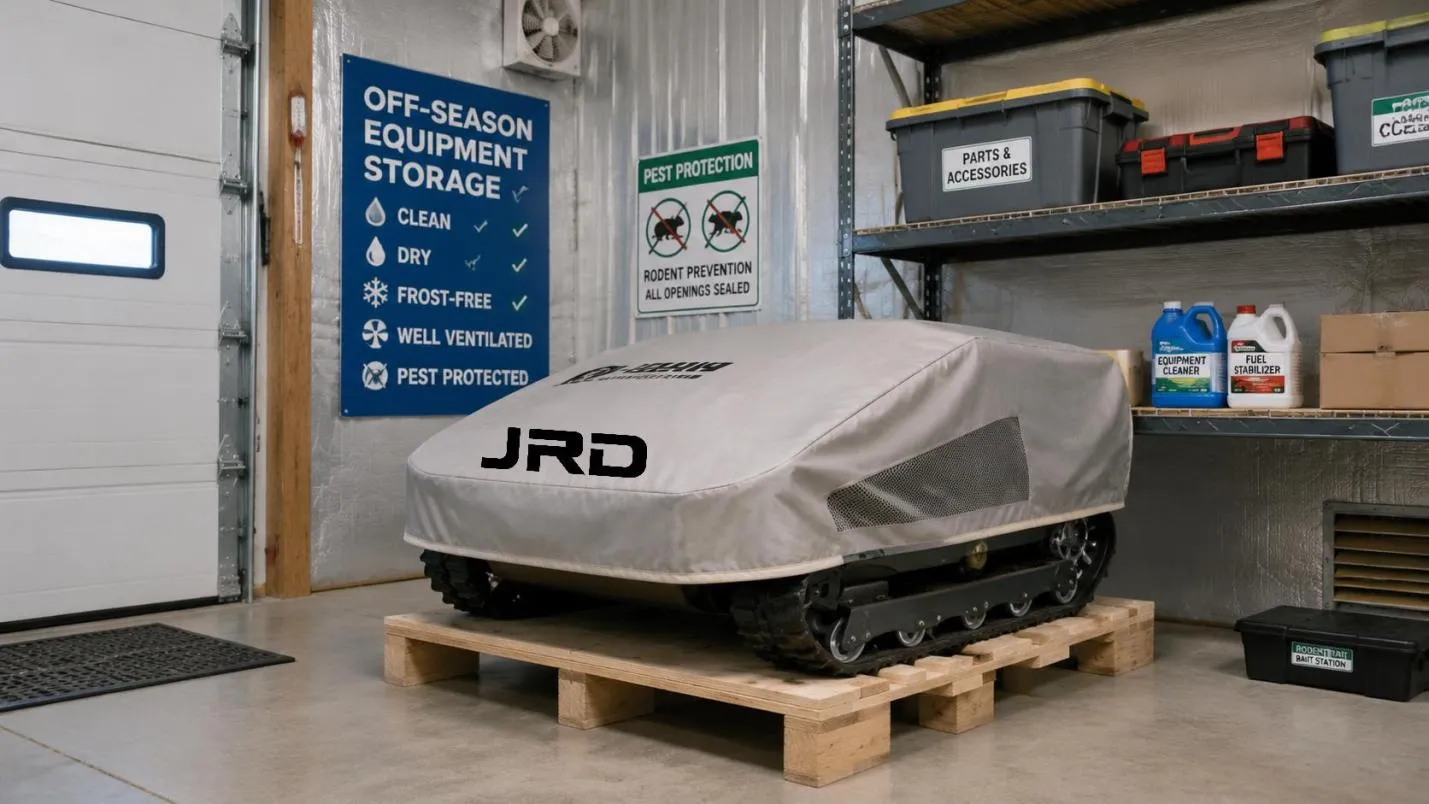
The storage environment has an enormous influence on how well an RC mower survives winter. The ideal storage facility is:
Covered and weathertight — direct precipitation on stored machinery accelerates corrosion significantly
Frost-free or at least protected from prolonged temperatures below -10°C
Ventilated — static humid air is almost as damaging as direct rain exposure
Rodent-controlled — rats and mice are attracted to engine bay heat residue and will nest in air filter housings and hydraulic hose lagging
Secure — RC mowers are high-value, portable equipment; CCTV and perimeter security are recommended
Where covered storage is unavailable, a heavy-duty breathable machinery cover (not sealed plastic tarpaulin) combined with desiccant packs placed inside the engine bay and control panel housing will provide adequate protection for periods up to 12 weeks.
Spring Recommission Checklist
Remove all covers, cloth seals, and desiccant packs placed during storage
Re-tension tracks to manufacturer specification and verify tension with deflection gauge
Replace engine air filter and spark plugs (petrol engines) as a matter of course
Check all fluid levels before first start: engine oil, coolant, hydraulic fluid, gearbox oil
Start engine and run at idle for 10 minutes — check for any unusual noise, smoke, or fluid leak before loading
Test all radio control functions including emergency stop before deploying to site
Complete and file a recommission inspection record — essential for warranty compliance and insurance purposes
Tip: The cost of a professional spring service by the manufacturer's authorised dealer — typically £300–£600 — is almost always recovered in avoided breakdown costs over the season. Schedule the service slot in December to guarantee March availability.
Contact Us
Planning end-of-season storage for your RC mower fleet? JRD Machinery is an RC slope mower manufacturer and supplier, and can issue the full winterisation schedule, the recommended storage consumables list, and the spring recommission checklist for your model — along with any parts needed to complete the work. Contact us before the season ends.
Get in touch for expert advice or a quote:
Email:info@jrdmachinery.com
Website: www.jrdmachinery.com