



RC Mower Fleet Management Telematics, Utilisation and Service Control
Introduction: Managing an RC Mower Fleet Without Data Is Managing Blind
A single RC slope mower deployed by a sole operator is easy to manage manually — you know where it is, how many hours it has run, and when it last had an oil change. Scale that to five machines deployed across three sites managed by a contract mowing company, and the picture changes rapidly. Without a systematic approach to tracking utilisation, maintenance schedules, and operator activity, fleets of RC mowers quickly develop the same inefficiencies as any unmonitored equipment pool: deferred maintenance, under-deployed machines sitting on the wrong site, and no data to support equipment replacement decisions.
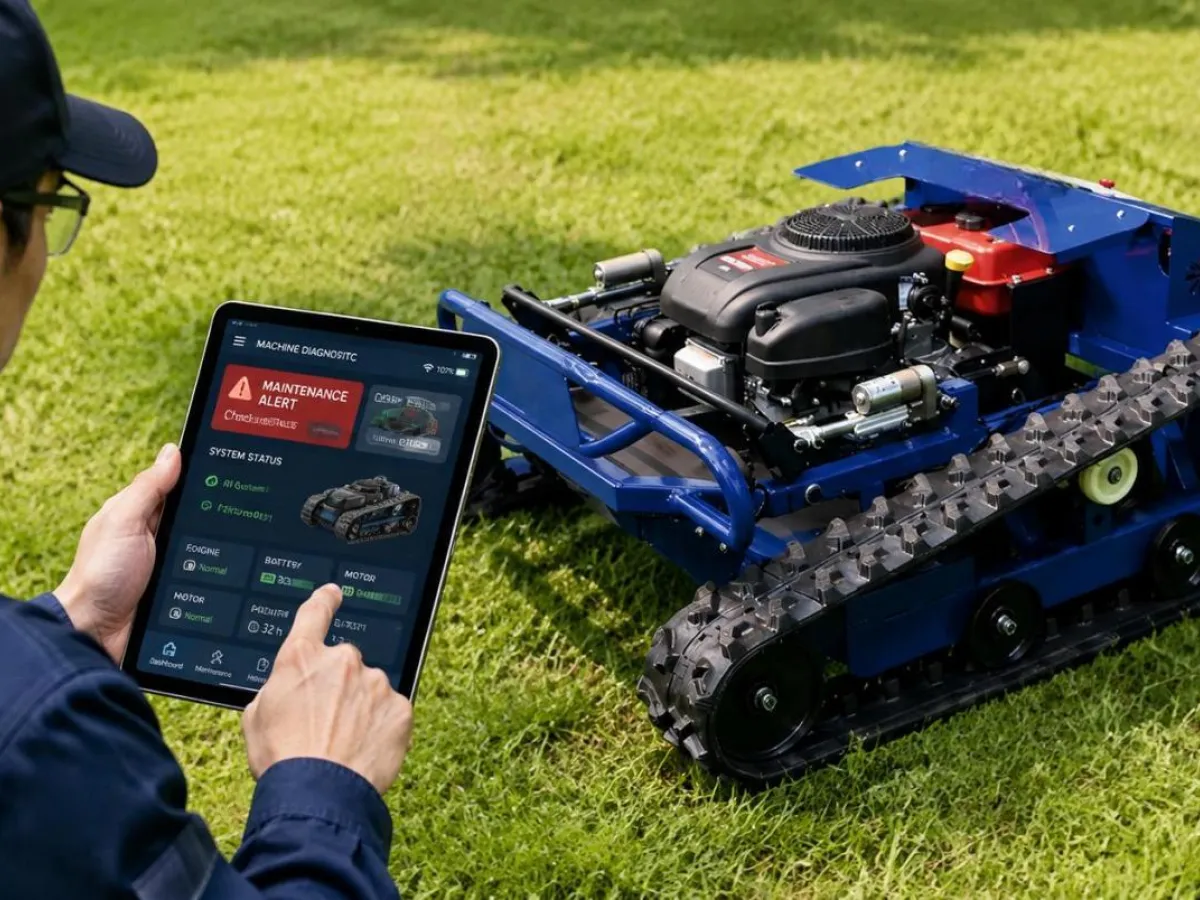
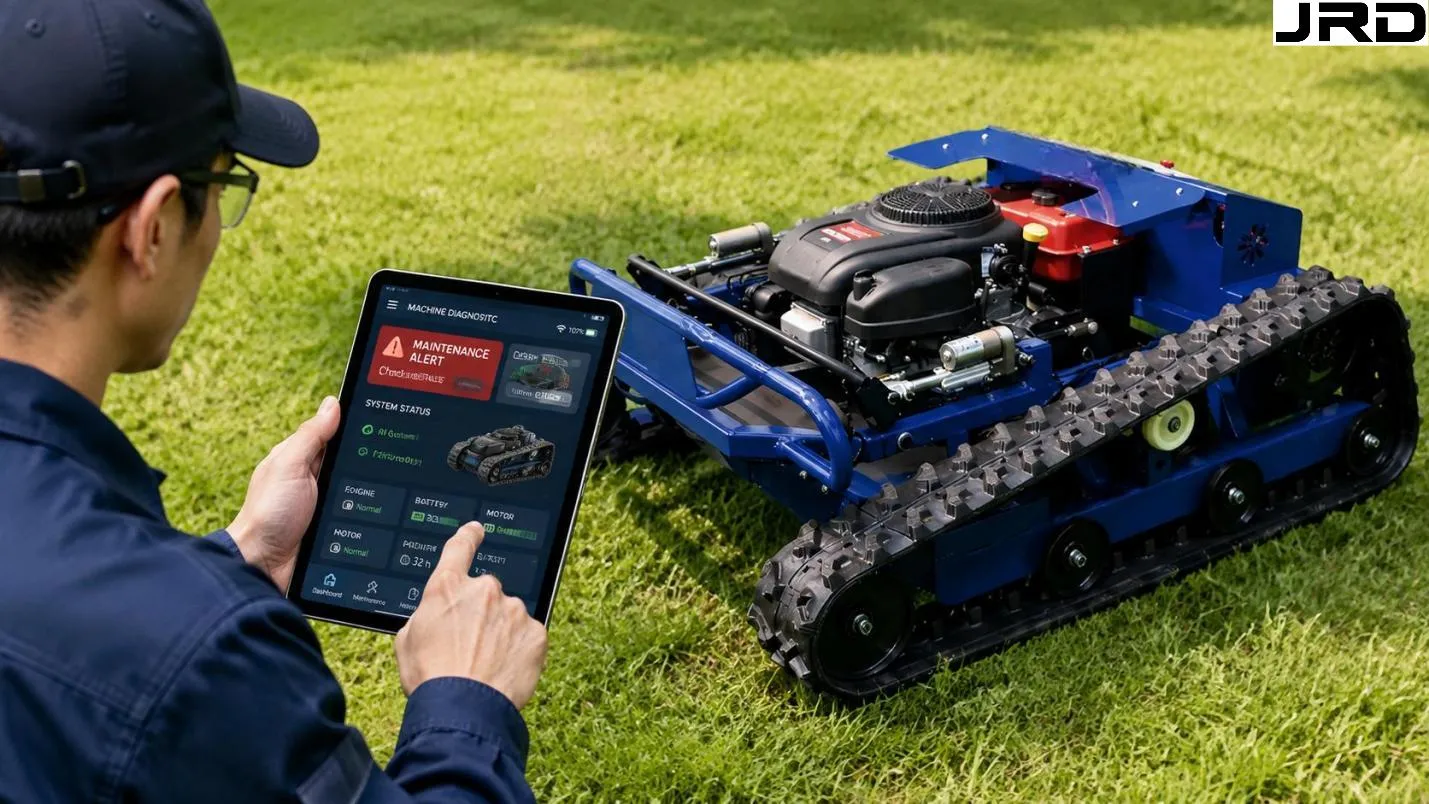
Modern commercial RC mowers increasingly offer telematics integration — either as factory-fitted systems or as retrofit modules — that provide fleet managers with real-time and historical data on machine location, engine hours, fault codes, and utilisation patterns. Understanding what these systems offer, and how to use the data, helps fleet operators extract maximum value from their RC mower investment.
Core Telematics Functions for RC Mower Fleets
Commercial telematics systems for RC mowers typically provide the following data streams:
Machine location (GPS): Real-time and historical position tracking allows fleet managers to confirm machines are deployed at the correct sites and to review movement history for billing verification and productivity analysis.
Engine hours: The definitive basis for maintenance scheduling. Automated maintenance alerts at 50, 250, and 500-hour intervals eliminate the risk of interval overruns that cause warranty and reliability issues.
Fault code reporting: Engine management systems, hydraulic pressure sensors, and emergency stop events generate fault codes. Telematics systems push these to the fleet manager immediately, enabling remote triage before a technician attends site.
Fuel consumption: Hour-by-hour fuel consumption data allows comparison across machines, identification of overconsumption (indicating engine or hydraulic inefficiency), and accurate job costing for contract pricing.
Idle time reporting: Machines running at idle without cutting are consuming fuel and generating hours without productive output. Identifying excessive idle patterns improves scheduling and fuel efficiency.
Operator session data: Linking machine use to individual operator logins (via RFID key fob or PIN) enables operator-level productivity tracking and compliance verification for training certification requirements.
Geofencing: Controlling Where Machines Operate
Geofencing allows fleet managers to define virtual geographic boundaries around approved operating zones. When a machine crosses a boundary — through an operator error, machine runaway event, or attempted theft — the system generates an instant alert and, on some platforms, can send a remote stop command to the machine.
Applications for RC mower geofencing include:
Site containment: Ensuring machines don't inadvertently move from the contracted site onto neighbouring land.
Exclusion zones: Defining areas within a site where mowing is prohibited — around electrical infrastructure, within buffer distances of water features, or near occupied buildings.
Theft prevention: An RC slope mower represents a £30,000–£80,000+ asset. Geofence alerts and GPS tracking significantly assist recovery in theft events.
Predictive Maintenance: Moving from Reactive to Proactive
The shift from time-based maintenance (change oil every 250 hours) to condition-based maintenance (change oil when oil analysis shows degradation) represents a significant cost and reliability improvement for high-utilisation fleets. Telematics enables this transition by:
Hydraulic temperature monitoring: Consistent high operating temperatures indicate blocked coolers, low fluid levels, or pump inefficiency — all detectable before they cause failure.
Vibration pattern analysis: Unusual vibration signatures from track drives or deck motors can indicate bearing wear developing weeks before it causes a breakdown.
Engine load analysis: Sustained high engine load can indicate blade dullness, blocked air filters, or drive system drag — flagging the need for inspection without waiting for a fault code.
Hours-based automatic alerts: Automated service reminders sent by email or SMS to the designated maintenance coordinator ensure no machine exceeds its service interval regardless of which depot or site it's deployed to.
Utilisation Reporting: Understanding Machine Deployment Efficiency
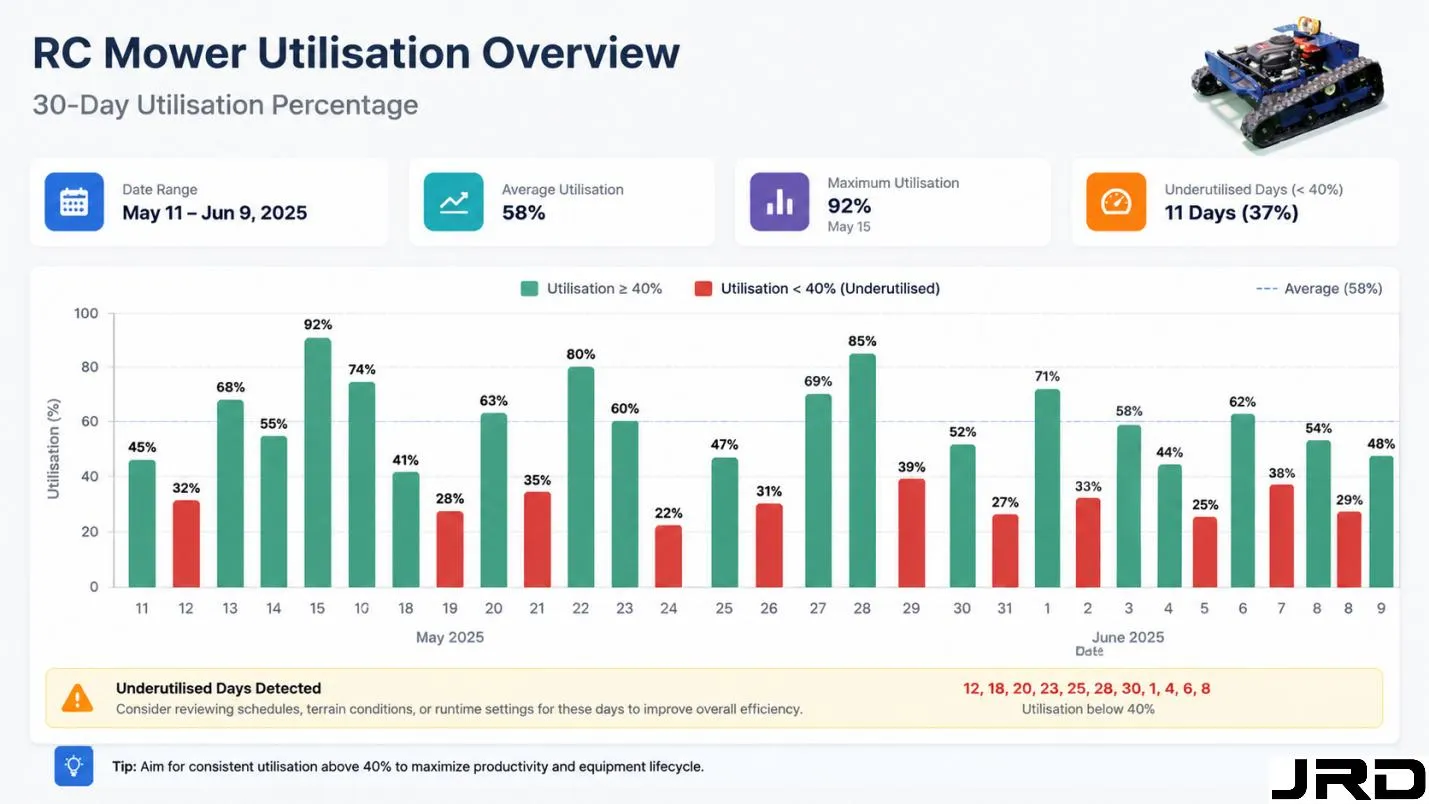
Utilisation rate — the percentage of available working time that a machine is actively cutting — is the key metric for assessing whether your RC mower fleet is correctly sized for your operations. Industry benchmarks vary, but commercial grounds maintenance contractors typically target 60–70% net utilisation after accounting for transit, setup, service time, and weather delays.
Telematics utilisation data enables:
Cross-site deployment optimisation: If Machine 1 is sitting idle at Site A while Machine 2 is running double shifts at Site B, fleet data makes this imbalance visible and correctable.
Contract pricing validation: Accurate machine hours per site per period provides the data foundation for evidence-based contract pricing and renewal negotiations.
Replacement timing decisions: Tracking the relationship between hours, maintenance cost, and productivity over the machine's life provides objective data for replacement cycle decisions rather than relying on rule-of-thumb.
Retrofit Telematics vs. Factory-Fit Systems
Not all machines come with telematics as standard. Operators have two routes to fleet data:
Factory-fit manufacturer telematics: Integrated into the machine's ECU and sensors. Provides the deepest data including fault codes and sensor readings. Typically requires a subscription to the manufacturer's fleet portal. Available on premium models including the STEEPMASTER G-4 and TERRAINPRO FX-2.
Retrofit universal telematics module: A GPS/GSM unit installed to the machine's 12V system that captures location, hours (via engine run detection), and basic diagnostics. Less deep than factory-fit but compatible with mixed fleets from multiple manufacturers. Typically lower subscription cost and supports a single fleet dashboard across all equipment types.
Return on Investment for Fleet Telematics
For a fleet of five RC mowers at £50,000 average value each (£250,000 fleet value), preventing a single major hydraulic failure through early detection (£4,000–£8,000 repair cost) pays for multiple years of telematics subscription. Add the fuel savings from idle time reduction, improved maintenance compliance extending machine life, and reduced administrative burden on maintenance coordinators, and the ROI case for fleet telematics is straightforward for any operator running three or more machines.
Interested in adding telematics to your RC mower fleet? Our fleet management team can advise on factory-fit options for new machine orders and retrofit module compatibility for your existing fleet. We also offer fleet management consulting — including utilisation benchmarking, maintenance interval review, and deployment planning — for commercial grounds maintenance contractors. Contact us to arrange a fleet review. JRD Machinery is an RC slope mower manufacturer and supplier, and every machine we ship can be ordered with factory-fitted telematics or prepared for retrofit modules.
Get in touch for expert advice or a quote:
Email:info@jrdmachinery.com
Website: www.jrdmachinery.com