



Flood Defence Embankment Vegetation Management with RC Mowers
Introduction: Where Vegetation Control Directly Affects Public Safety
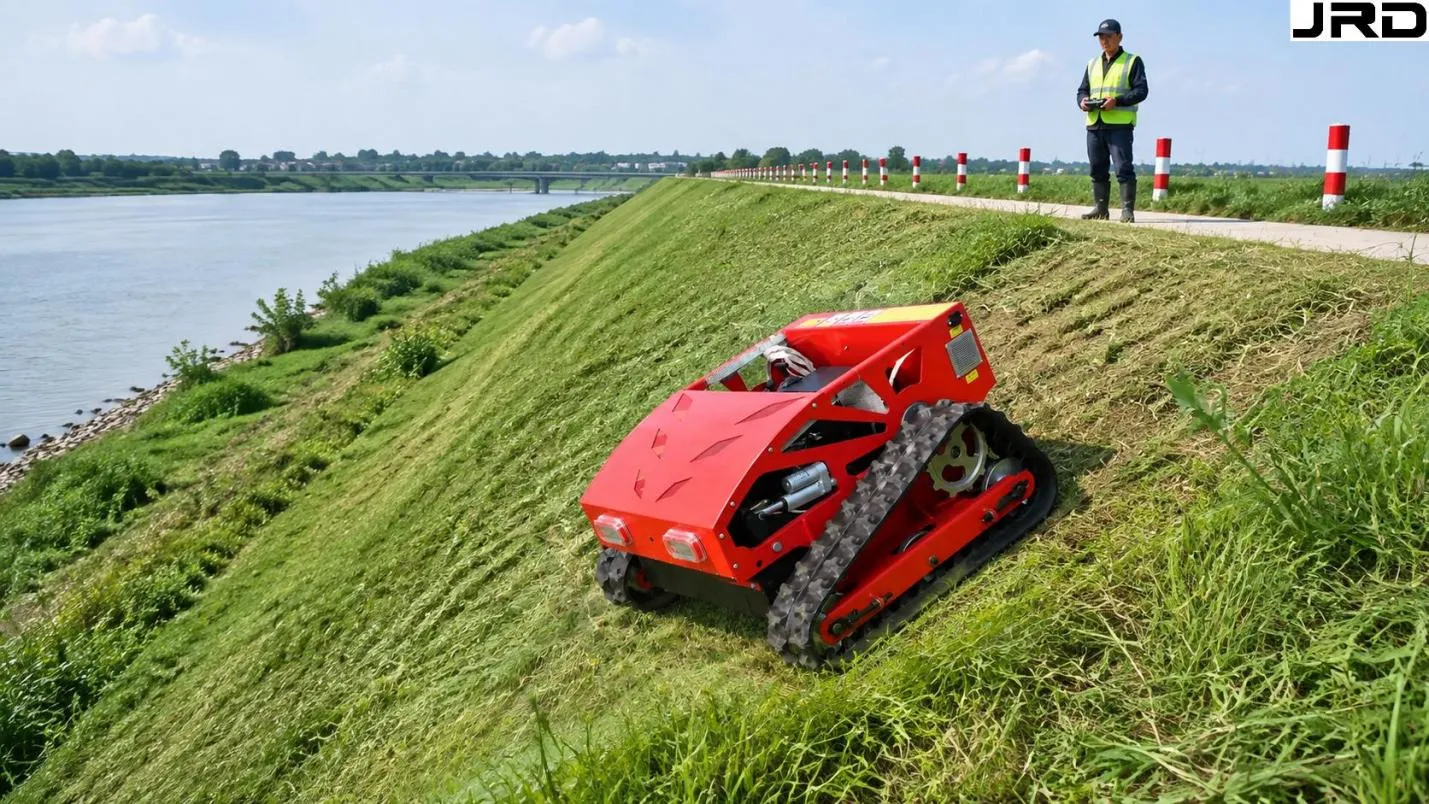
Flood defence embankments, river berms, and levee systems represent some of the most critical and challenging grass-cutting environments in civil infrastructure maintenance. Vegetation management on these structures is not a cosmetic exercise — it is a technical requirement directly linked to flood risk. Unmanaged long grass on embankment faces conceals early signs of structural deterioration such as badger setts, rabbit warrens, seepage points, and erosion channels that can compromise embankment integrity. In several historic flood events, embankment failures were preceded by years of inadequate vegetation management that hid developing defects from inspection teams. RC slope mowers have become the standard machine for keeping those faces within the sward heights the Environment Agency specifies.
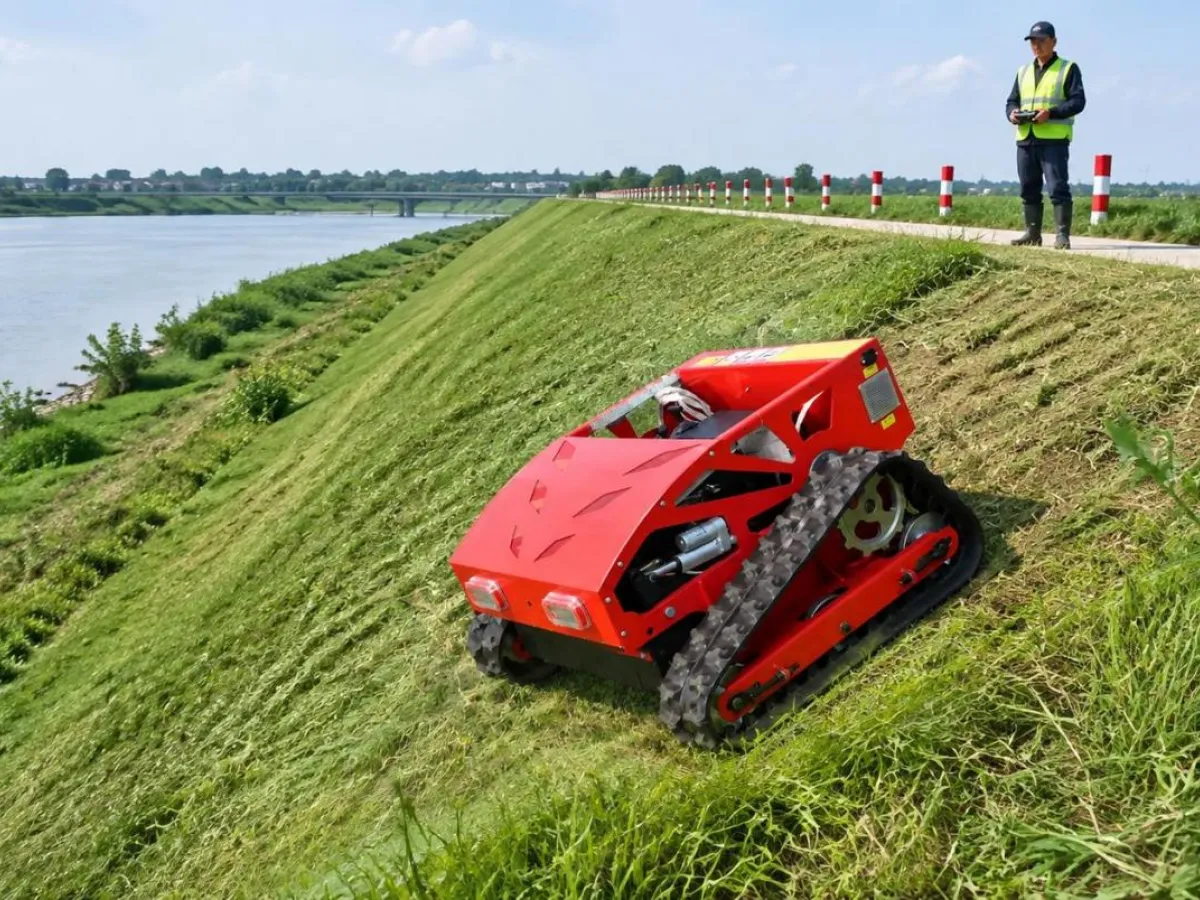
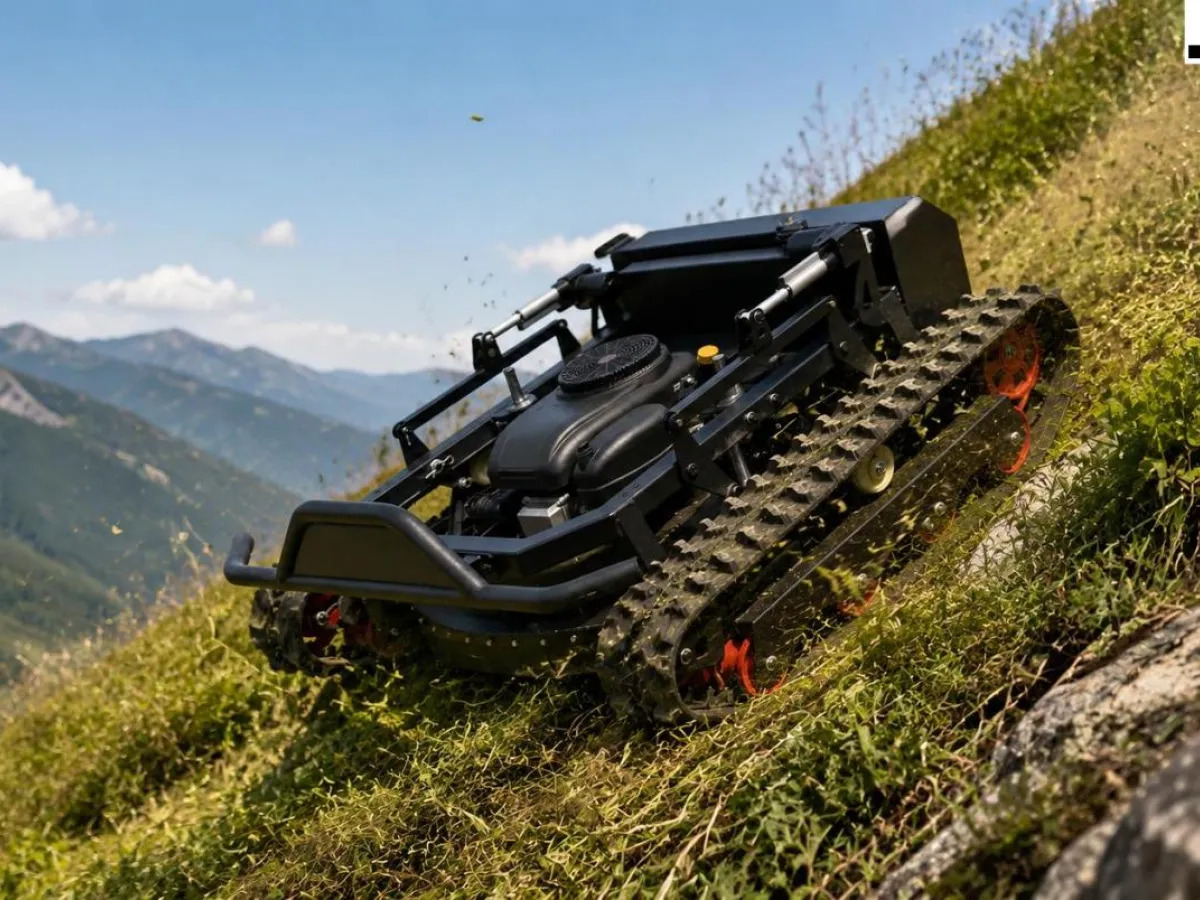
At the same time, the slopes of flood defence embankments are among the steepest maintained grassland environments in the UK. Gradients of 1:2 (approximately 27 degrees) are standard, with some legacy structures steeper still. Conventional ride-on mowers operating on these banks carry significant rollover risk, and walk-behind operators working the faces of high flood banks face both fall risk and the physical exhaustion of multi-kilometre embankment runs. RC slope mowers address both problems simultaneously: the machine manages the embankment face safely while the operator walks the crest or berm on flat, stable ground.
Regulatory Context: Why Embankment Vegetation Management Is Non-Negotiable
In England and Wales, the Environment Agency (EA) and Lead Local Flood Authorities (LLFAs) set vegetation management standards for maintained flood defence assets. Key requirements include:
Maintained sward height: Most EA-maintained embankments specify a sward height of 50–150 mm on the embankment face. This height is short enough to allow visual inspection of the surface for signs of defect, and long enough to maintain root density that protects against erosion.
Inspection windows: Regular cutting creates inspection opportunities. Embankment managers use mowing runs as the primary mechanism for detecting surface defects — operators and supervisors should be briefed on what to look for during and after each mowing cycle.
Frequency: Most maintained flood defence assets require a minimum of two to three cuts per growing season, with additional cuts in high-growth periods. Some critical urban flood defence structures require monthly maintenance during the growing season.
Documentation: EA asset management requirements typically include cut completion records specifying date, contractor, equipment, and any defects observed. RC mower telematics data can support this documentation requirement directly.
Specific Hazards on Flood Defence Sites
Flood defence environments present hazards beyond slope gradient that require specific operational planning:
Proximity to water: Embankment faces slope directly to river, canal, or tidal water. Machine runaway toward the water edge is a serious risk — always operate with the machine traversing horizontally across the face rather than driving toward the water edge, and ensure the emergency stop is tested before every shift.
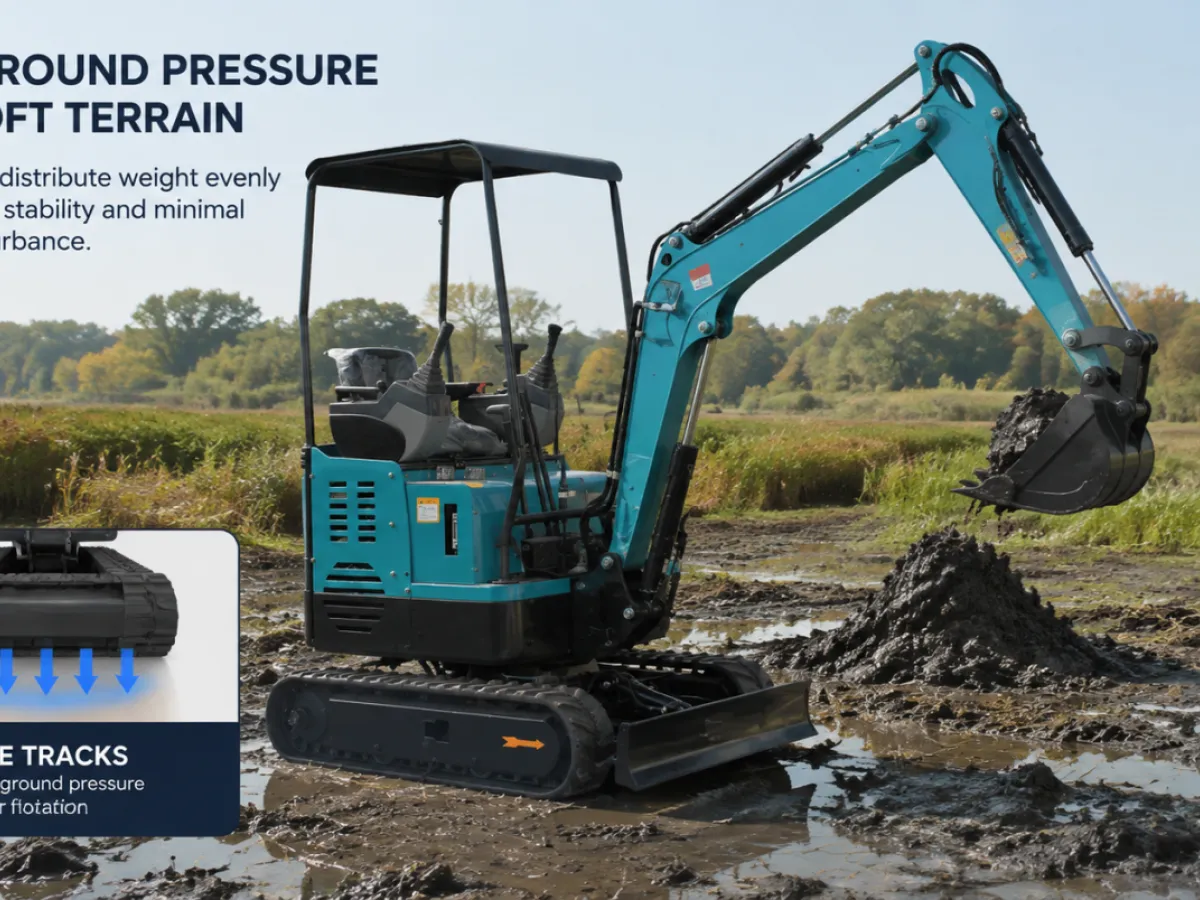
Soft substrate after rainfall: Embankment soils — particularly clay-based structures — become very soft after sustained rainfall. Track ground pressure must be evaluated against current soil conditions. Deploying a heavy machine on a saturated embankment face can itself cause surface damage.
Debris and flood deposits: After flood events, embankments may carry deposited debris including fence posts, branches, plastic sheet, and stones. Always conduct a debris walk of the embankment face before the first mowing pass of the season or after any flood event.
Underground services: Flood defence structures may contain buried land drains, monitoring cable, and seepage collection pipes. Obtain a services record from the asset manager before cutting and observe any marked exclusion zones.
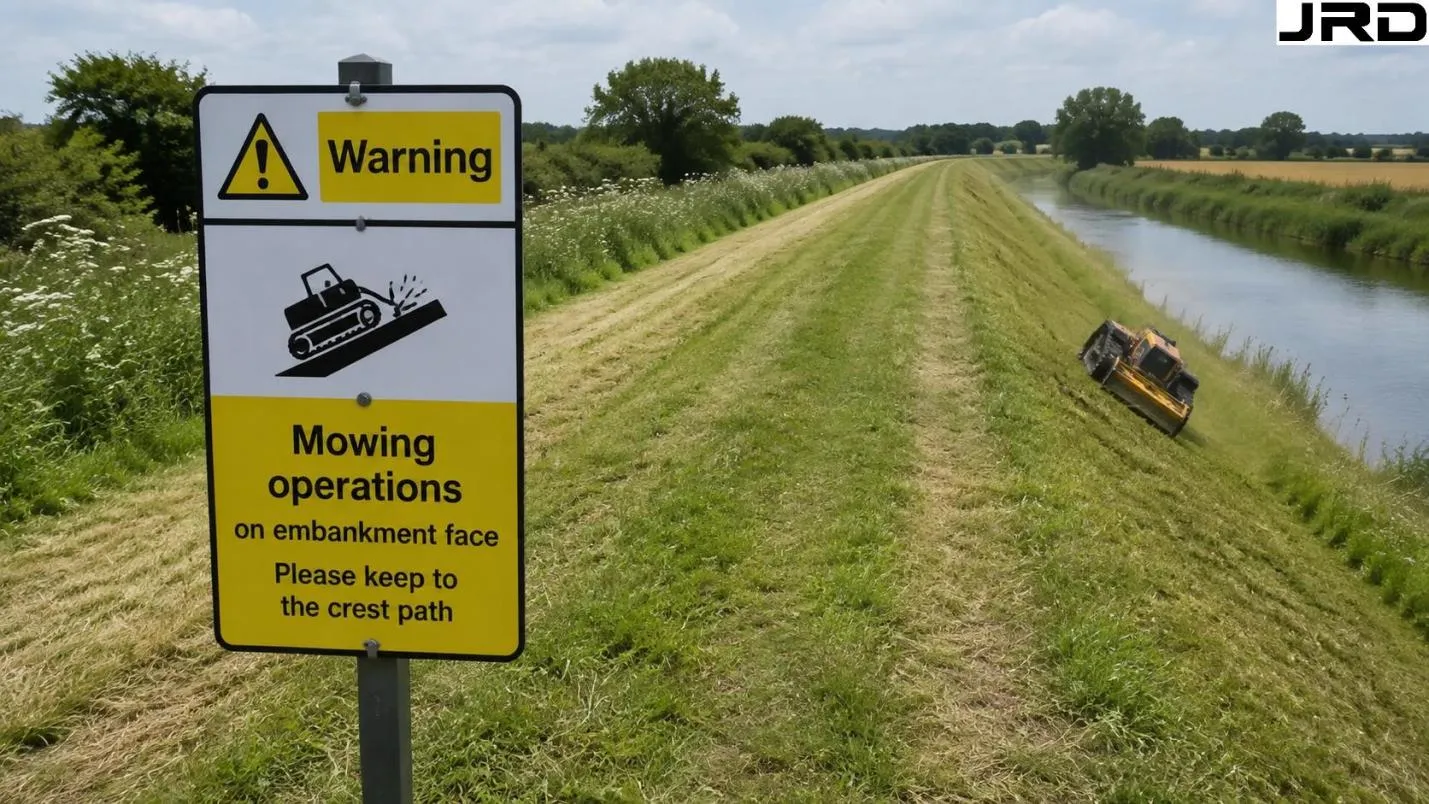
Public access paths: Many flood defence berms double as public footpaths or cycle routes. Plan mowing operations with path user safety — post advance warning signs and, if possible, schedule cuts outside peak footpath use periods.
Recommended Operating Technique for Embankment Faces
The geometry of most flood defence embankments — a long linear structure with a defined crest and toe — dictates a consistent mowing approach:
Start from the crest: Position the machine at the top of the embankment face and drive it onto the slope from the crest. The operator remains on the crest path throughout, controlling via transmitter.
Contour passes: Mow in horizontal passes parallel to the crest. Overlap each pass by 15% to prevent uncut strips on uneven faces.
Avoid driving toward the toe (water edge): Never operate the machine directly down the fall line toward the water. If the machine must change between face sections, bring it back to the crest and reposition before re-entering the slope.
Speed setting: Use 40–60% of maximum travel speed on embankment faces. Faster speeds reduce cutting quality on uneven surfaces and increase the risk of traction loss.
Deck height: Set to 75–100 mm for standard embankment maintenance. This height produces the uniform sward height required for inspection visibility while protecting the deck from contact with uneven surface irregularities.
Working With the Asset Manager: Coordination Requirements
Flood defence assets are typically managed under contract with the EA, local authority, or internal drainage board (IDB). Before deploying on any maintained flood defence structure:
Confirm access permission with the asset manager — flood defence structures are not public land and require formal access authorisation.
Obtain and review the asset's inspection record for any known defects, soft spots, or service locations on the embankment face.
Confirm any mowing exclusion zones — badger sett protection zones, archaeological features, and monitoring station buffer areas are common on managed embankments.
Agree the reporting format for any defects observed during mowing — the asset manager's inspection team needs timely information about any unusual surface conditions observed during maintenance.
Model Recommendation for Flood Defence Applications
Long-run linear embankments with good crest access: STEEPMASTER G-4 with flail deck — the flail configuration handles the variable debris load common on river banks, and the high slope rating handles legacy structures with steep face gradients.
Urban flood walls and shorter embankment sections with access restrictions: COMPACTSLOPE LW-3 — narrower footprint suits restricted urban crest access points and lower-volume urban embankment sections.
Where biodiversity requirements apply: TERRAINPRO FX-2 with adjustable cutting height — height adjustment precision supports the varied sward management regimes increasingly required on ecologically designated flood defence structures.
Maintaining flood defence assets under contract? Our team has experience supplying and supporting RC slope mowers for Environment Agency, local authority, and internal drainage board maintenance contractors. We can provide compliance documentation, operator training records, and machine specification sheets formatted for EA asset management requirements. Contact us to discuss your flood defence maintenance programme. JRD Machinery is an RC slope mower manufacturer and supplier to flood defence contractors, and can provide the compliance documentation and machine specification sheets that EA and LLFA asset managers ask for.
Email:info@jrdmachinery.com
Website: www.jrdmachinery.com