



Woodland Edge and Forestry Vegetation Management with RC Mowers
Introduction: The Growing Challenge of Woodland Edge Vegetation
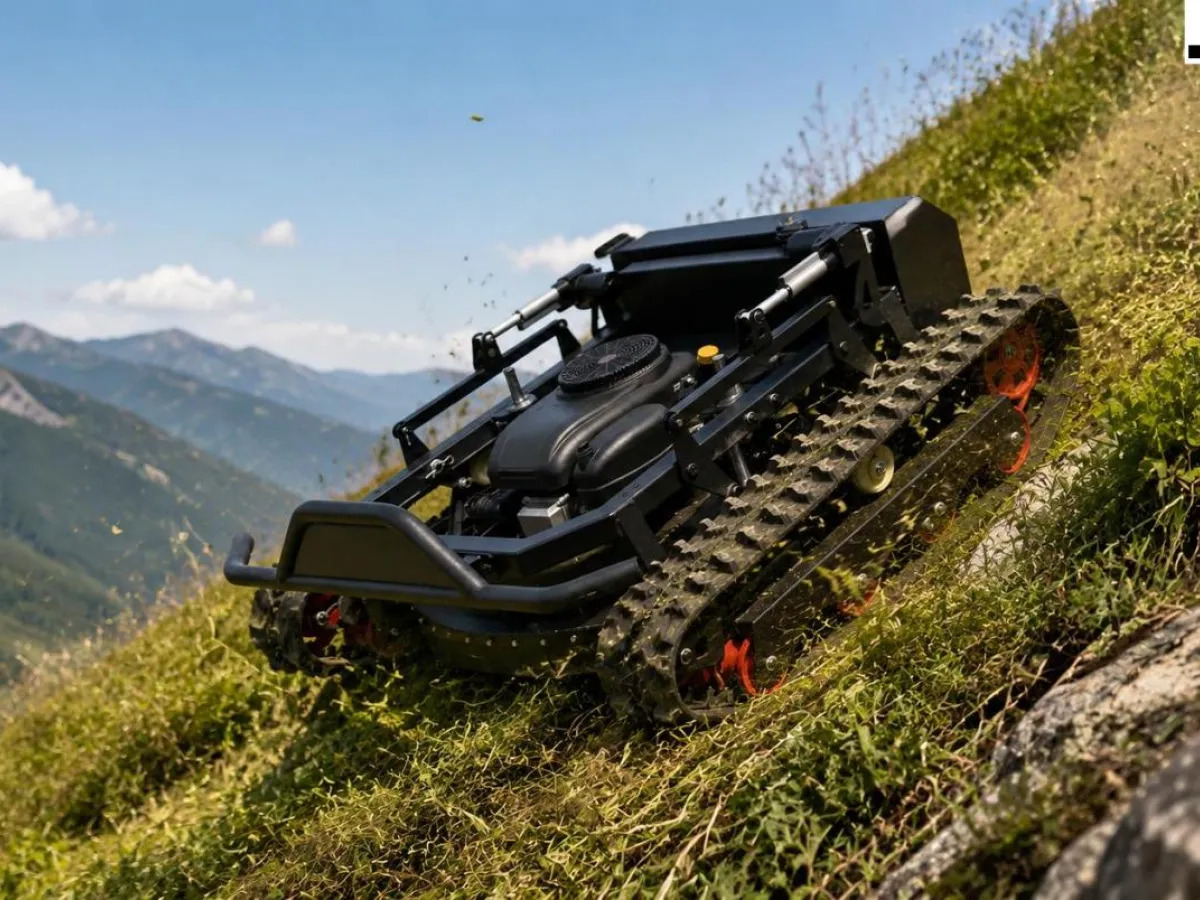
Woodland ride networks, firebreaks, and the transitional zones between open grassland and established woodland represent some of the most ecologically important — and operationally challenging — vegetation management environments in land management. Rides and glades support disproportionate biodiversity value compared to the closed canopy forest on either side: they provide sunlit, sheltered corridors for invertebrates, reptiles, and woodland birds that depend on this structural diversity. Maintaining them requires regular cutting to prevent scrub encroachment from the advancing woodland edge. RC slope mowers have become the practical answer here, because it is the terrain rather than the vegetation that defeats conventional cutting equipment.
The challenge is that these environments are rarely flat or uniform. Firebreaks cut across slopes. Ride edges feature ground that has been disturbed by root systems, fallen timber, and decades of vehicle traffic that create irregular, soft terrain. Scrub encroachment means operators frequently work against woody material at the growth front that resists conventional grass-cutting equipment. Remote-controlled slope mowers — particularly models fitted with heavy-duty flail heads or dedicated mulching attachments — provide a platform that can manage this terrain safely and efficiently.
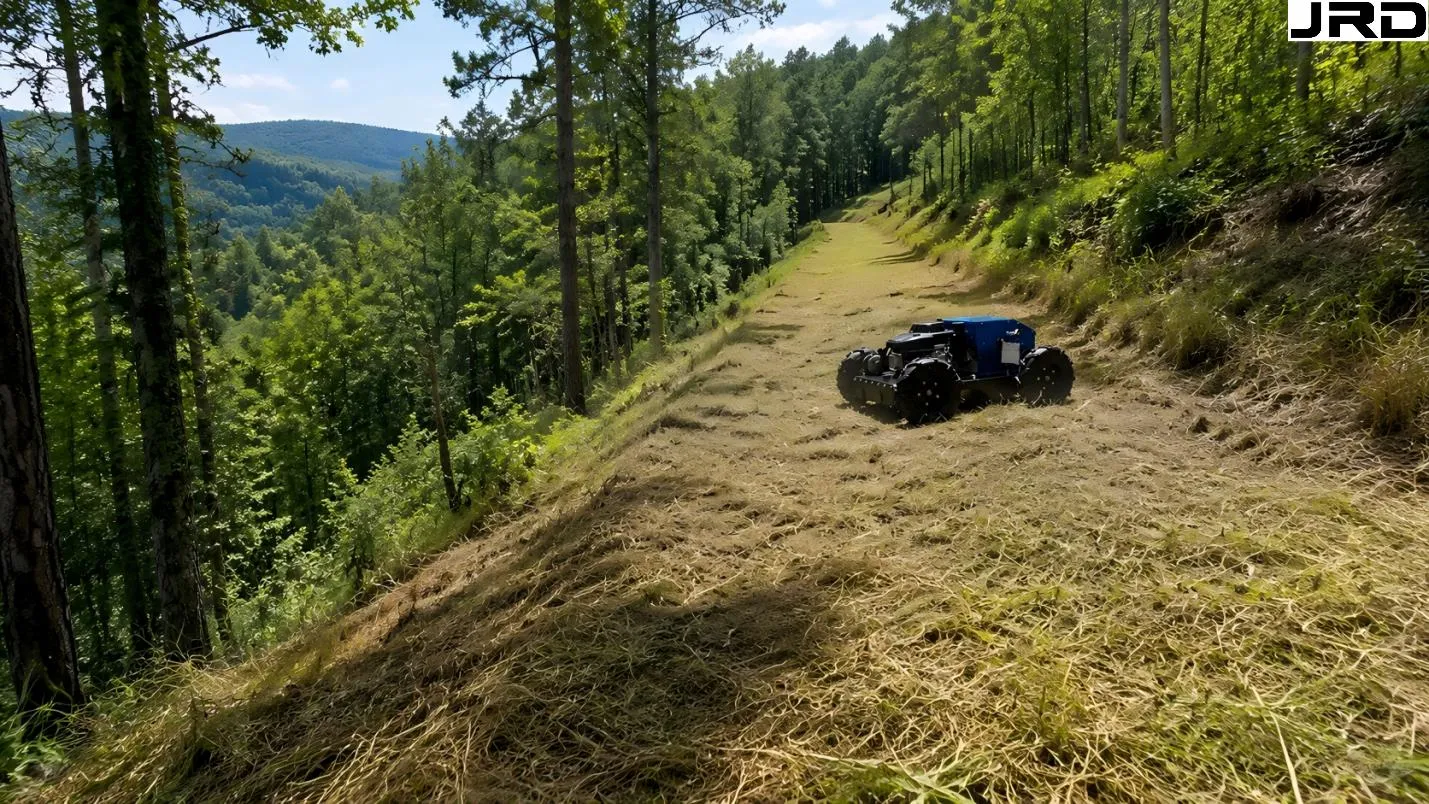
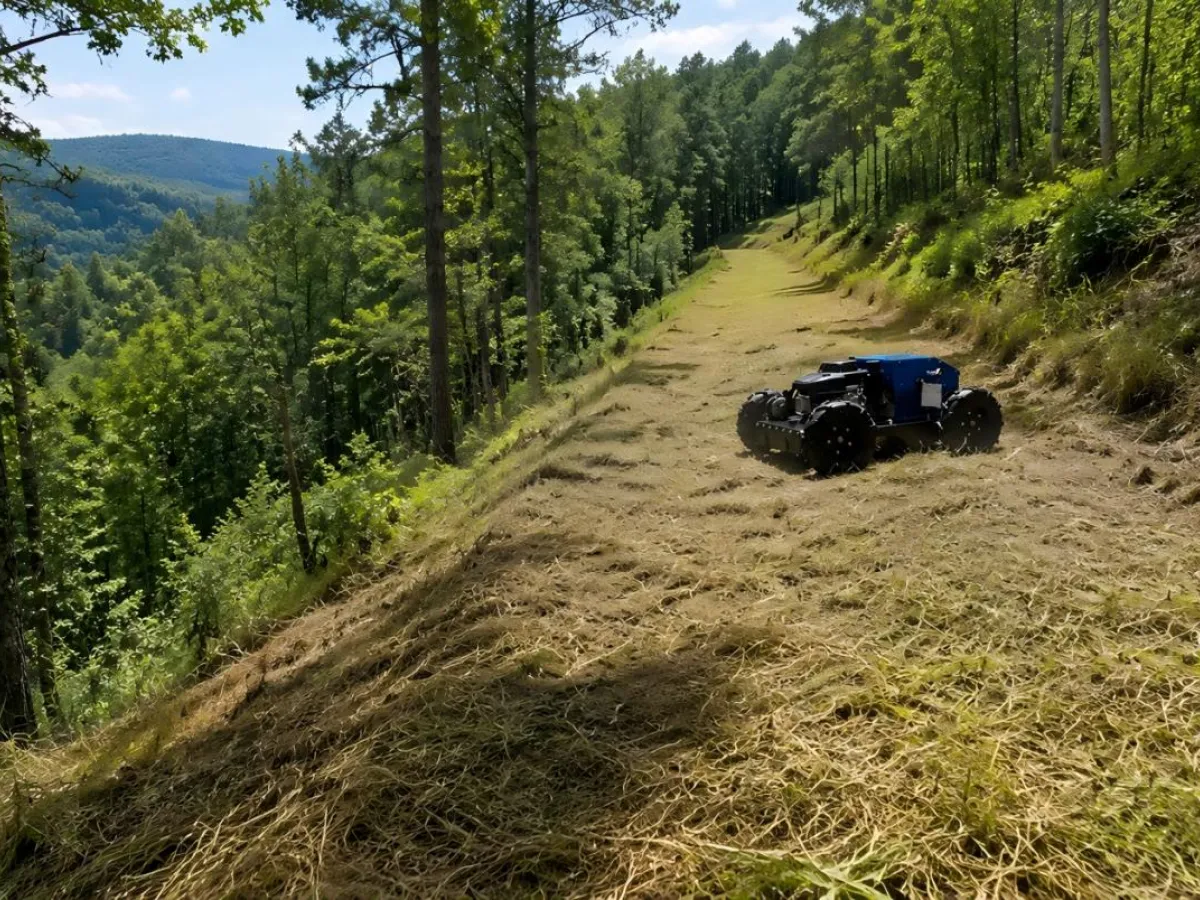
Wide-angle view of forest firebreak maintained as low grass strip through sloping mixed woodland, RC mower visible in mid-distance
Key Application Zones in Forestry and Woodland Environments
Woodland rides: The internal ride network that provides access, biodiversity corridors, and firebreak function within managed woodland. Rides typically require twice-yearly cutting to maintain the open structure — a spring cut that prevents scrub advance from the shade edge, and an autumn cut that removes the season's growth before winter.
Firebreaks: Linear cleared strips that interrupt continuous fuel load across a forest block. These must be kept below a defined vegetation height — typically under 300 mm — to function as effective fire barriers. On sloping ground, maintaining firebreaks with conventional equipment presents significant access challenges that RC mowers resolve.
Forest edge margins: The transition zone between managed open land and the advancing woodland edge. These margins require regular cutting to prevent natural succession — the progressive replacement of grassland by scrub and eventually woodland — on sites where open habitat is the management objective.
Heathland restoration areas: Degraded heathland within or adjacent to woodland frequently requires bracken and scrub removal as part of habitat restoration programmes. RC mowers fitted with heavy flail heads can cut bracken effectively, suppressing regrowth when combined with a targeted cutting programme over multiple seasons.
Post-harvesting regeneration zones: After clear-felling or thinning operations, the cleared area regenerates rapidly with rank vegetation and bramble before replanting. RC mowers manage this regeneration vegetation cost-effectively, reducing manual brushcutter hours.
Equipment Specification for Forestry Applications
Forestry and woodland edge work imposes different demands on RC mower equipment than open grassland applications. Key specification considerations:
Flail head over rotary deck: Flail heads — whether drum-type or Y-blade — handle woody material significantly better than rotary decks. The free-swinging flail hammers deflect on contact with branches and hidden root systems without the catastrophic blade failure that woody material causes in rotary deck configurations.
High hydraulic flow for heavy-duty heads: Dedicated scrub-clearing heads and heavy mulching attachments require higher hydraulic flow (typically 60–80 L/min) than standard grass-cutting decks. Confirm your machine's hydraulic flow specification before purchasing attachments.
Ground clearance: Woodland terrain frequently features protruding roots, embedded stone, and harvesting debris (brash). A machine with higher ground clearance reduces the risk of frame contact with hidden obstacles.
Debris deflection: Flail heads on forestry duty generate high-energy debris — chipped wood, stones, and cut stalks. Confirm the machine's front and rear guard arrangement provides adequate operator protection at the minimum stand-off distance.
Recommended model: STEEPMASTER G-4 with heavy flail attachment option — the high slope rating handles forestry terrain, and the hydraulic flow specification accommodates high-demand mulching and scrub-clearing heads.
Bracken Control: Using RC Mowers in Habitat Restoration
Bracken (Pteridium aquilinum) is one of the most problematic invasive plants on UK upland and woodland edge sites. It shades out ground flora, produces allelopathic chemicals that suppress competitors, and spreads aggressively through underground rhizomes. A single physical cut does not control bracken — it requires a sustained multi-year cutting programme that exhausts rhizome energy reserves.
RC mowers support effective bracken management through:
Timed cutting: The most effective bracken cut is made when fronds are fully expanded but before the plant has photosynthesised enough to restore significant rhizome energy reserves — typically late June to mid-July in the UK uplands.
Slope access: Bracken colonises steep hillsides that are dangerous for manual operators. RC mowers extend effective bracken control onto gradients above 30 degrees.
Repeated annual cutting: A 5–7 year programme of annual late-summer cuts progressively weakens the rhizome, reducing bracken density by 70–90% and allowing grassland species to recolonise.
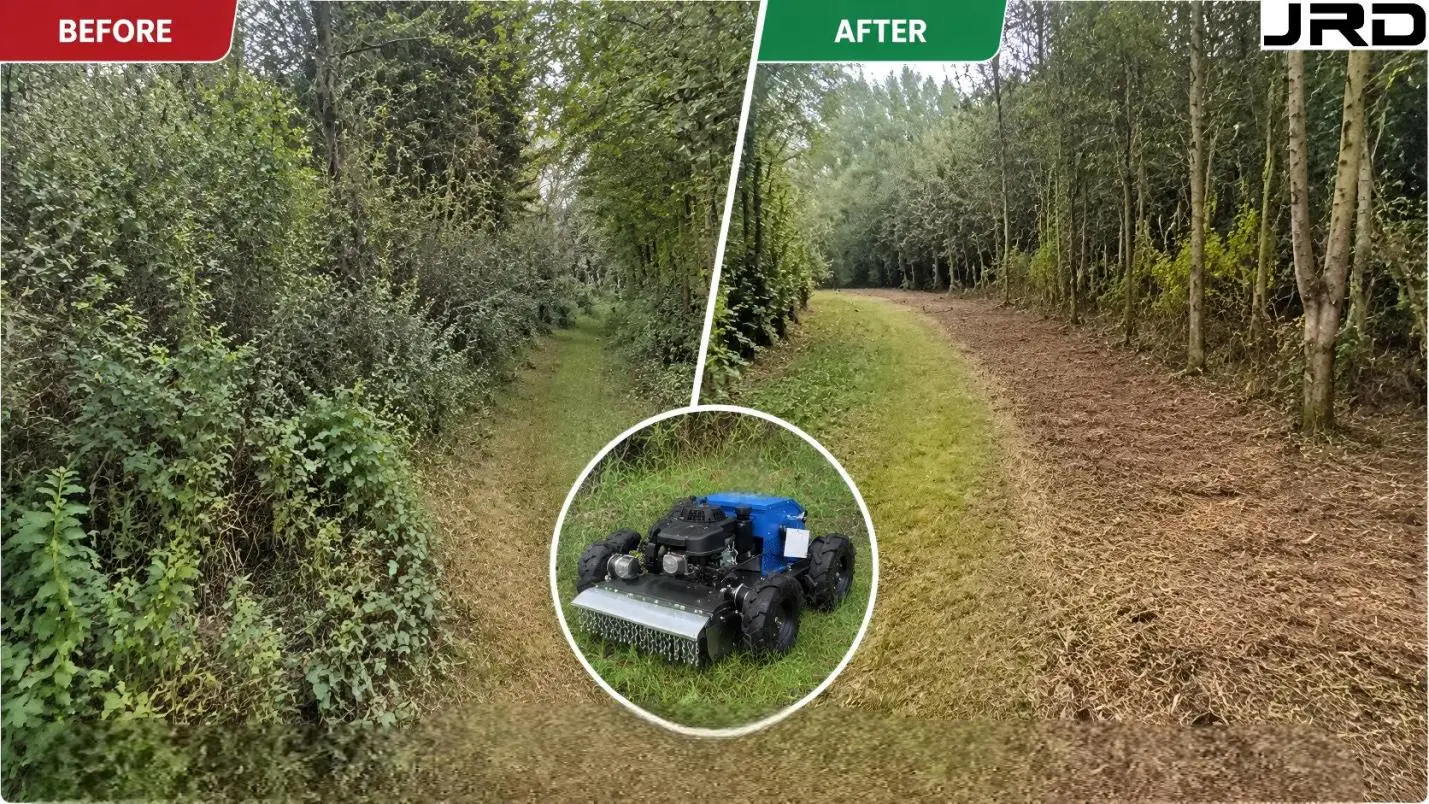
Before and after comparison of woodland ride edge showing scrub encroachment cleared by RC mower flail head
Wildlife and Timing Considerations
Forestry and woodland edge environments are often designated for nature conservation and may fall under specific wildlife protection obligations:
Ground-nesting bird season: Avoid cutting between March and August inclusive on sites where ground-nesting birds (nightjar, woodlark, tree pipit) are known or suspected to be present. This is a legal requirement under the Wildlife and Countryside Act 1981 for protected species.
Reptile basking areas: Woodland rides and sunny banks support protected reptile populations — slow worm, common lizard, adder, and grass snake. Do not cut during morning hours when reptiles may be basking on south-facing slopes.
Dormouse habitat: Ride edges in hazel coppice habitat may be dormouse habitat. Check for active dormouse presence and consult a licensed ecologist before any cutting on designated sites.
Post-cut brash management: On biodiversity-sensitive sites, consider leaving some areas of cut brash in piles as habitat structure — avoid removing all vegetative cover from the site surface.
Operational Planning for Ride and Firebreak Maintenance
Map the ride and firebreak network before the season, noting access points, width constraints, and any known obstacles.
Confirm any ecological constraints with the land manager or ecologist and adjust timing and method accordingly.
Plan mowing direction to direct cut material away from the open ride centre — side-discharge toward the woodland edge maintains the ride surface and avoids smothering wildflowers in the ride centre.
Check access width at pinch points — some ride networks were established before RC mowers were available and may have grown narrower. A pre-season strimmer run along pinch points avoids machine blockage mid-operation.
Carry spare flail hammers and a torque wrench — forestry terrain produces the highest flail hammer wear rate of any RC mower application. Expect to carry out on-site hammer replacements during a full-day ride management operation.
Planning a woodland ride management or heathland restoration programme? Our forestry equipment team can specify the right RC mower and attachment combination for your site conditions, terrain gradient, and target vegetation type. We can also support biodiversity-sensitive sites with guidance on mowing timing, cut height settings, and habitat monitoring integration. Contact us to discuss your woodland management requirements. JRD Machinery is an RC slope mower manufacturer and supplier, and can build machines with heavy-duty flail and mulching head options for forestry work.
Email:info@jrdmachinery.com
Website: www.jrdmachinery.com