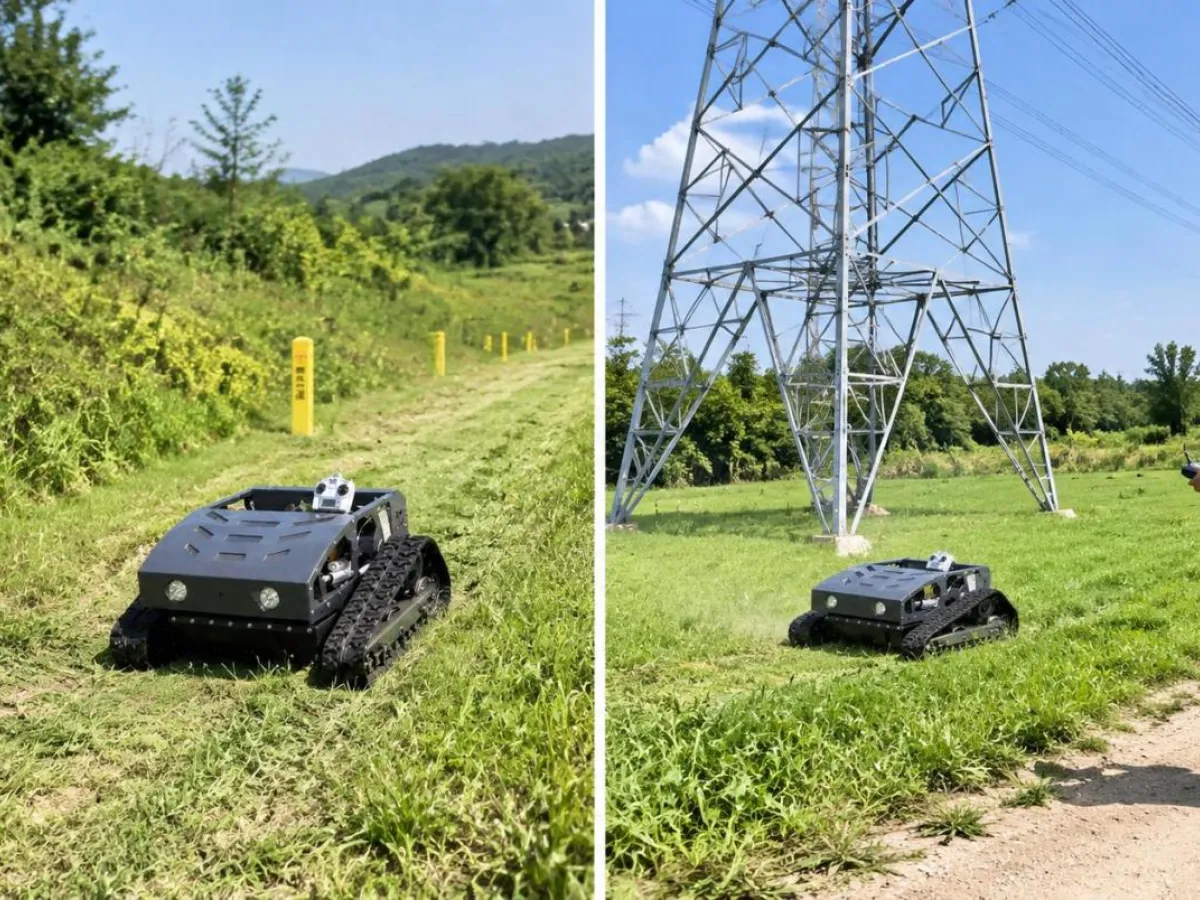




Airport Perimeter & Airside Grass Management with RC Mowers
Introduction: Aviation Grass Management Requirements
Airside grass management is one of the most stringently regulated vegetation management activities in any industry. Grass height on runway strips, taxiway strips, and infield areas directly influences wildlife strike risk — a critical aviation safety factor — while perimeter and boundary bank management affects fence line integrity, surface water drainage, and FOD (Foreign Object Debris/Damage) risk. The International Civil Aviation Organisation (ICAO) Doc 9137 and individual Civil Aviation Authority (CAA) regulations set specific standards for airside vegetation management that operators must meet. RC slope mowers now handle much of the perimeter bank and RESA slope work that conventional airside mowers cannot reach.
RC slope mowers are increasingly used at regional and international airports to manage the steep grassed embankments, drainage channels, perimeter banks, and RESA (Runway End Safety Area) slopes that are inaccessible or unsafe for conventional airside mowing equipment.
ICAO and CAA Grass Height Standards
|
Area |
Min Height |
Max Height |
Standard Reference |
|
Runway strip (graded area) |
75 mm |
200 mm |
ICAO Doc 9137 Part 3 |
|
Runway strip (ungraded area) |
No minimum |
300 mm |
ICAO Doc 9137 Part 3 |
|
Taxiway strip |
75 mm |
200 mm |
CAA CAP 168 |
|
Apron surrounds |
75 mm |
150 mm |
CAA CAP 168 |
|
Perimeter zone (inside fence) |
75 mm |
300 mm |
Airport-specific SMS |
|
Drainage channels |
Clear of top water level |
No maximum |
Airport Drainage Manual |
Maintaining grass within the prescribed height bands is not just a regulatory requirement — it is a direct wildlife risk management measure. Grass below 75 mm reduces the foraging attractiveness of the airside environment to birds of prey that hunt small mammals in long grass. Grass above 200 mm can conceal runway lighting, drainage features, and FOD.
Applications for RC Mowers at Airports
Perimeter Bank Management
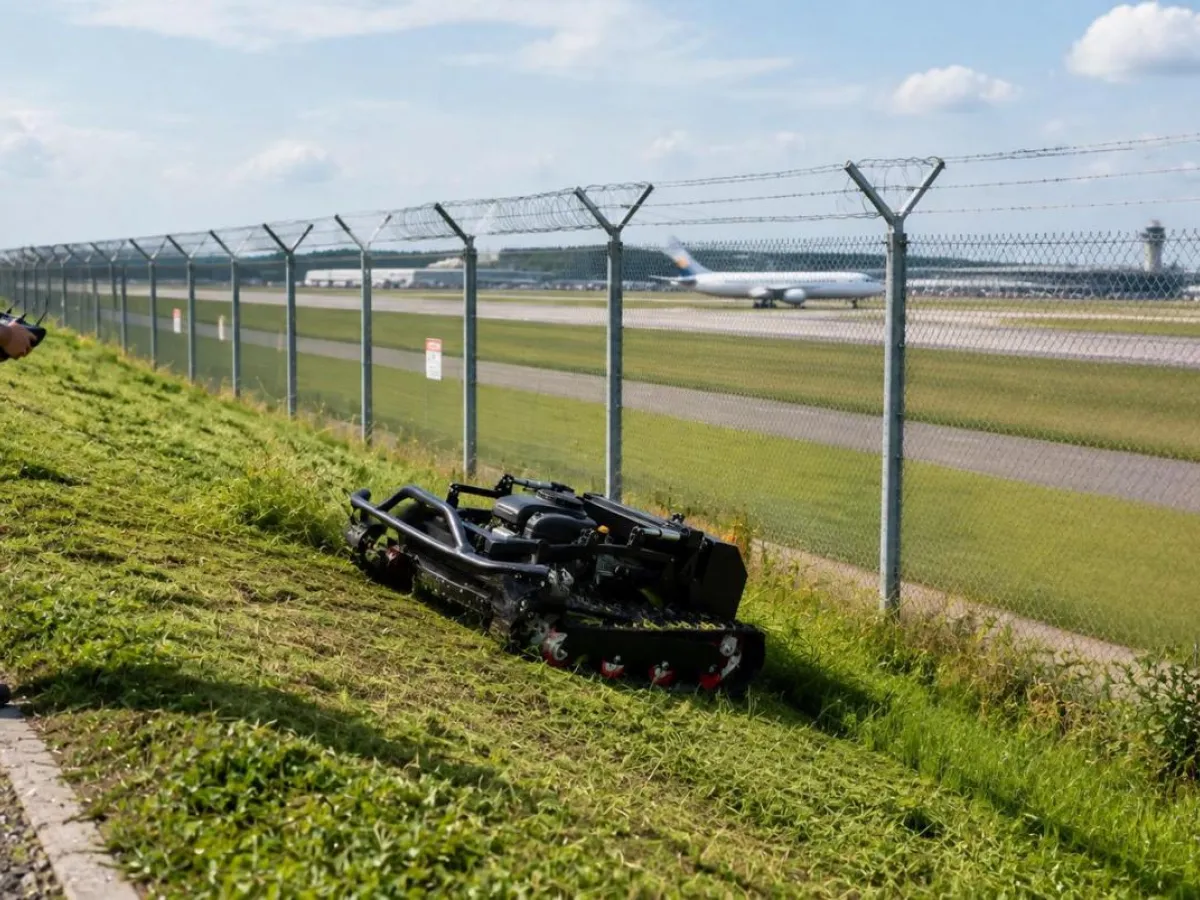
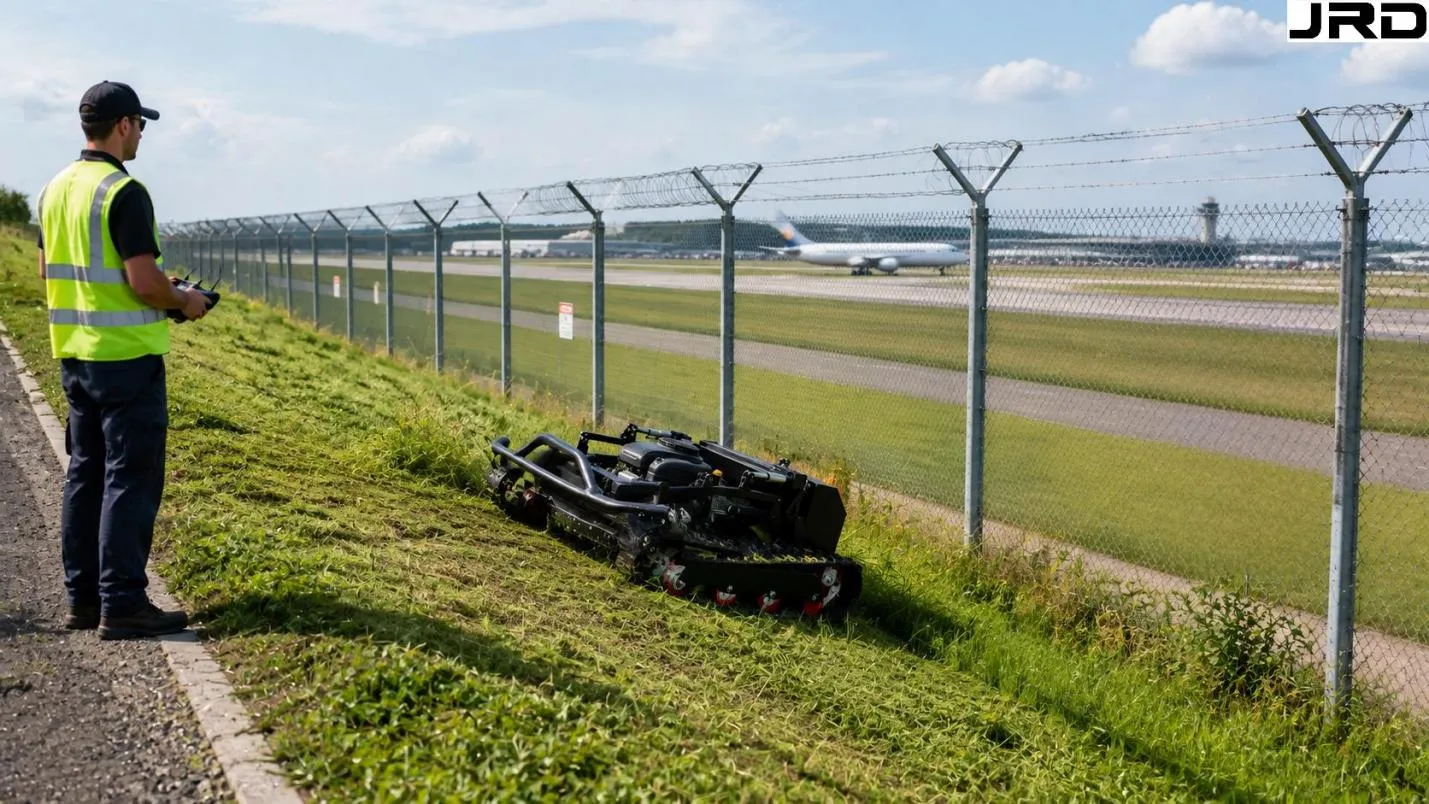
Airport perimeter security fences are typically constructed on the crest of a 1:2 to 1:3 grassed earth bank, providing physical separation from the surrounding terrain. These banks, often 2–4 m high, require regular cutting to maintain line-of-sight inspection capability and prevent woody encroachment that could compromise fence integrity. RC slope mowers can manage both the inside (airside) and outside (landside) face of the perimeter bank without requiring airside security clearance for the equipment operator.
RESA and Runway Shoulder Slopes
Runway End Safety Areas (RESAs) and runway shoulder slopes are critical safety areas that must be maintained to precise vegetation standards but are extremely difficult to access with conventional mowing equipment due to ground strength limitations and gradient. RC mowers' low ground pressure (typically < 0.05 bar) makes them ideal for maintaining these surfaces without causing ground disturbance that could affect the RESA's energy-absorbing properties.
Drainage Channel Banks
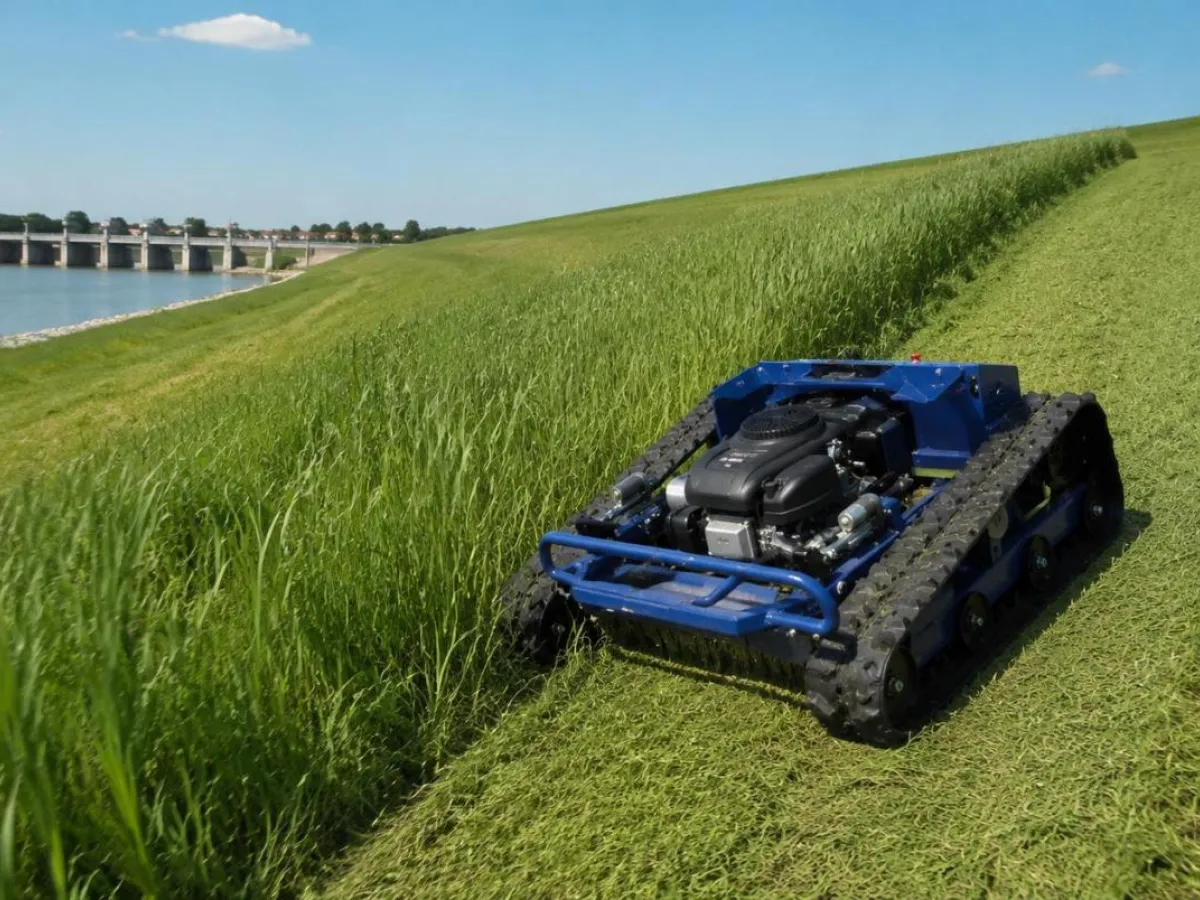
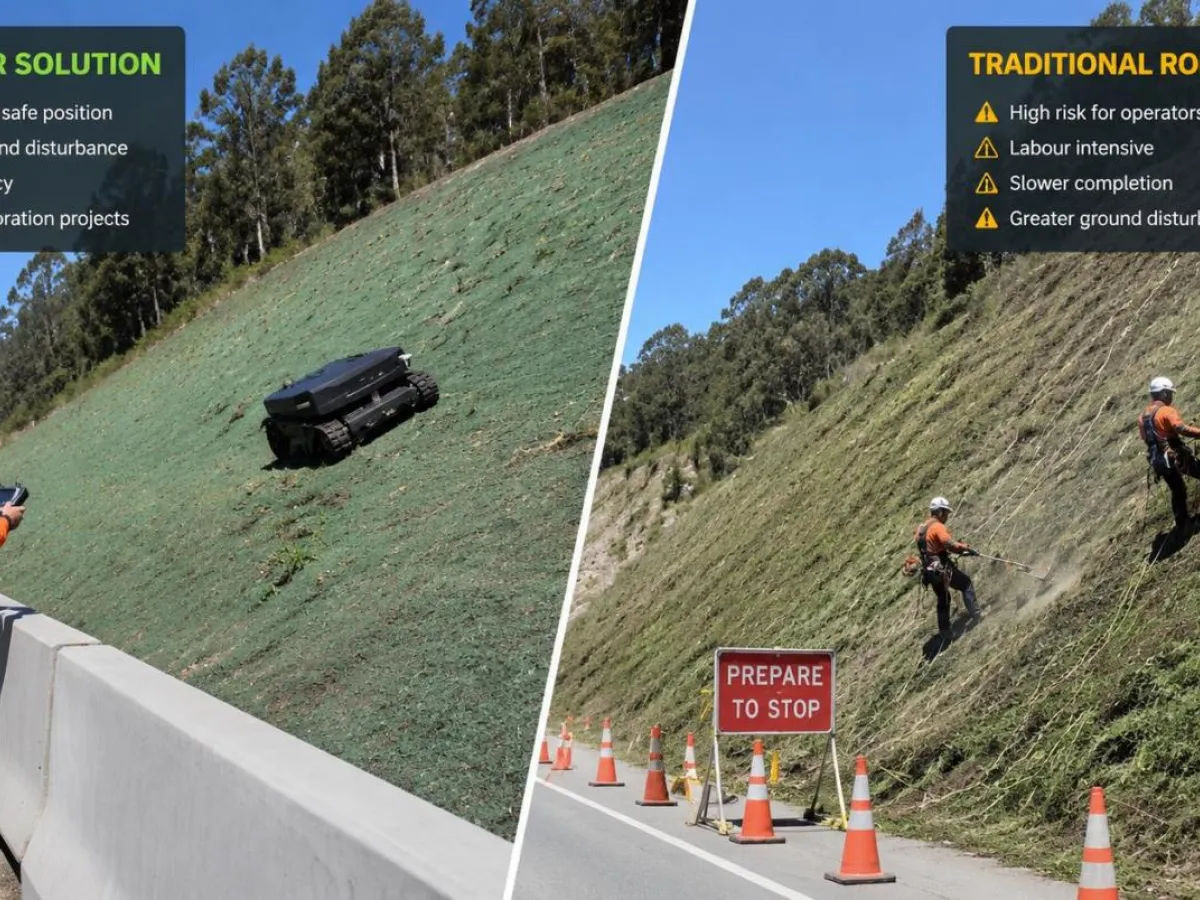
Major airports manage extensive networks of surface water drainage channels and detention basins. The banks of these channels are frequently steep and adjacent to live drainage infrastructure. RC slope mowers can cut these banks safely while the operator remains on the adjacent access track, with no risk of a person entering the drainage channel.
Airside Safety and Security Requirements
Note: All personnel and equipment operating airside must hold current airport security clearance (typically DfT-compliant CTC check in UK). RC mower operators working on the airside face of the perimeter bank require full airside pass. Those operating only on the landside face may require landside site induction only — verify with the airport's security team before mobilising.
All vehicles and equipment operating airside must be logged on the Movement Area authority at the start of each shift
RC mower radio control frequencies must be cleared with ATC and the airport's radio frequency management team to prevent interference with navigation aids, ILS, or communications
Mowing operations within the runway strip must be co-ordinated with ATC and must cease whenever an aircraft is on approach, landing roll, or departing within the applicable distance
All airside personnel must carry a functional airside radio (airport frequency) and know the immediate emergency channel
FOD walk of the working area must be completed before mowing begins — any debris collected and removed before blade engagement
Wildlife Hazard Management Integration
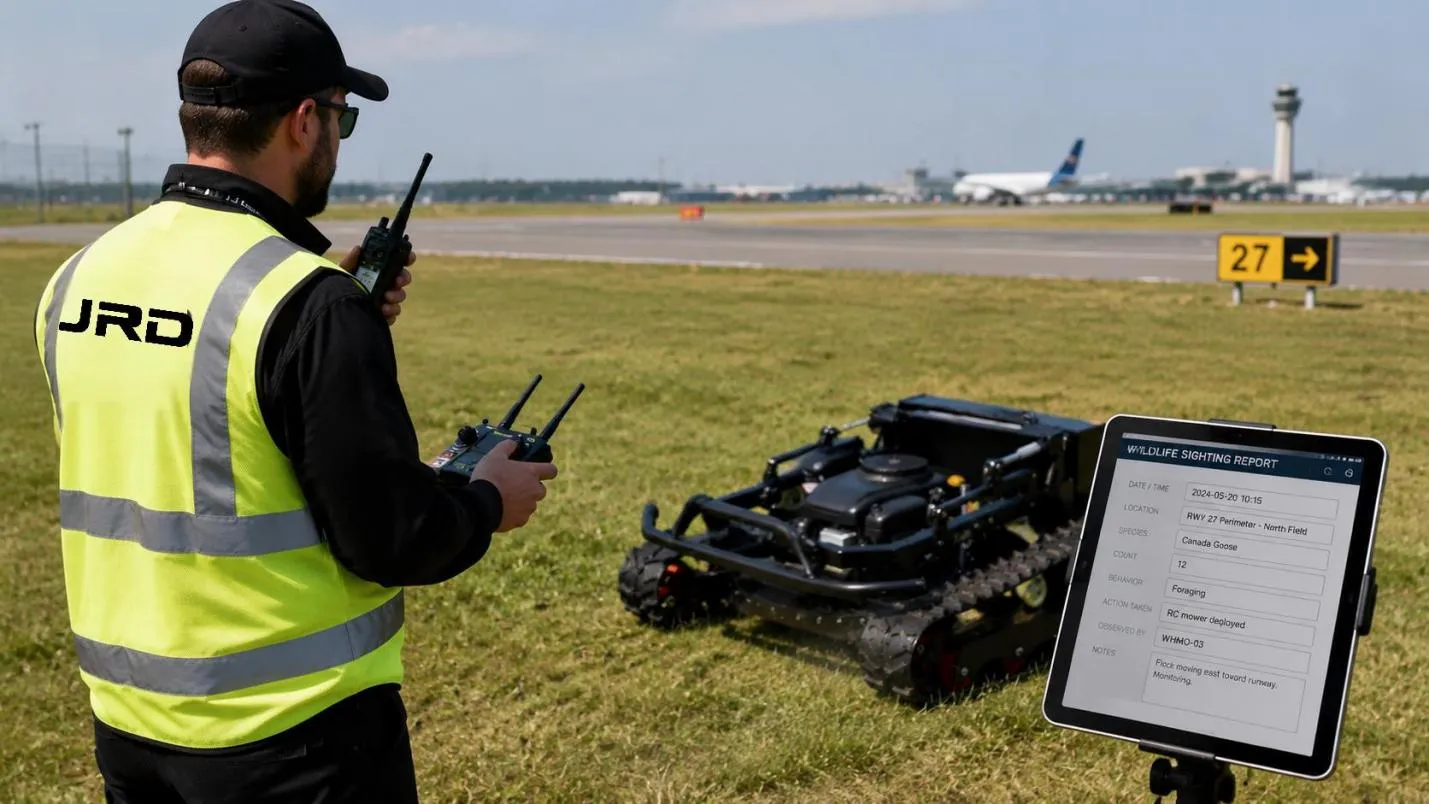
Grass management is one component of the broader Airport Wildlife Hazard Management Plan required by ICAO and mandated by the CAA under CAP 772. RC mower operators must be trained to report any wildlife sightings to the Wildlife Hazard Management Officer (WHMO) immediately, and mowing operations must be integrated with the bird dispersal programme to avoid creating simultaneous disturbance that could drive birds onto active runways.
|
Wildlife Concern |
Mowing Interaction |
Mitigation Measure |
|
Ground-nesting birds (lapwing, skylark) |
Cutting destroys nests and kills chicks |
Survey before first spring cut; delay if active nests found |
|
Small mammals (voles, rabbits) |
Mowing creates foraging activity that attracts raptors |
Co-ordinate mowing and raptor dispersal to prevent simultaneous activity near runways |
|
Insects (bees, hoverflies) |
Cutting flowering vegetation displaces foraging insects — then attracts insectivorous birds |
Time cuts outside peak insect activity; maintain unmown refugia away from runway |
|
Gulls and corvids |
Disturbed turf exposes earthworms and invertebrates |
Notify WHMO before mowing; deploy dispersal staff if gull flocks present |
Procurement and Approval Process
Introducing a new type of equipment to an airside environment requires formal approval through the airport's Safety Management System (SMS). The process for RC mower adoption typically includes:
Submission of a Change Management Proposal to the airport's Safety Review Board
Radio frequency clearance application to the Spectrum Management team
Demonstration trial on a non-critical landside area before airside deployment
Operator training records and competency assessment submitted to the Ground Operations Safety team
Incorporation of RC mower operation into the airside vegetation management section of the Wildlife Hazard Management Plan
Annual review of performance data and incident record to confirm continued suitability
Summary
RC slope mowers address the most challenging vegetation management locations at airports: perimeter banks, RESA slopes, and channel banks
Radio frequency clearance is a non-negotiable pre-deployment step — engage the airport's frequency management team at the earliest stage
Integrate mowing operations into the Wildlife Hazard Management Plan with WHMO input on scheduling
Ensure all operators hold the appropriate airside security clearance before deployment
Document all mowing activities in the airport's grounds maintenance management system, including area cut, height, date, and any wildlife observations
Airside grass management at airports is one of the most tightly regulated vegetation management environments in any industry — requiring equipment that meets strict safety, security, and wildlife hazard management standards. Our RC slope mowers are deployed at regional and international airports across Europe and North America for perimeter bank maintenance, RESA slope management, and drainage channel vegetation control. We understand the ICAO and CAA regulatory framework, the airside security clearance process, and the radio frequency coordination requirements that airport contractors must navigate. Our team can advise on machine specification, operator training, and Change Management Proposal documentation to support your airport's Safety Management System approval process. JRD Machinery is an RC slope mower manufacturer and supplier to airport grounds teams, and can supply the specification and training documentation your SMS approval process requires.
Get in touch for expert advice or a quote:
Email:info@jrdmachinery.com
Website: www.jrdmachinery.com