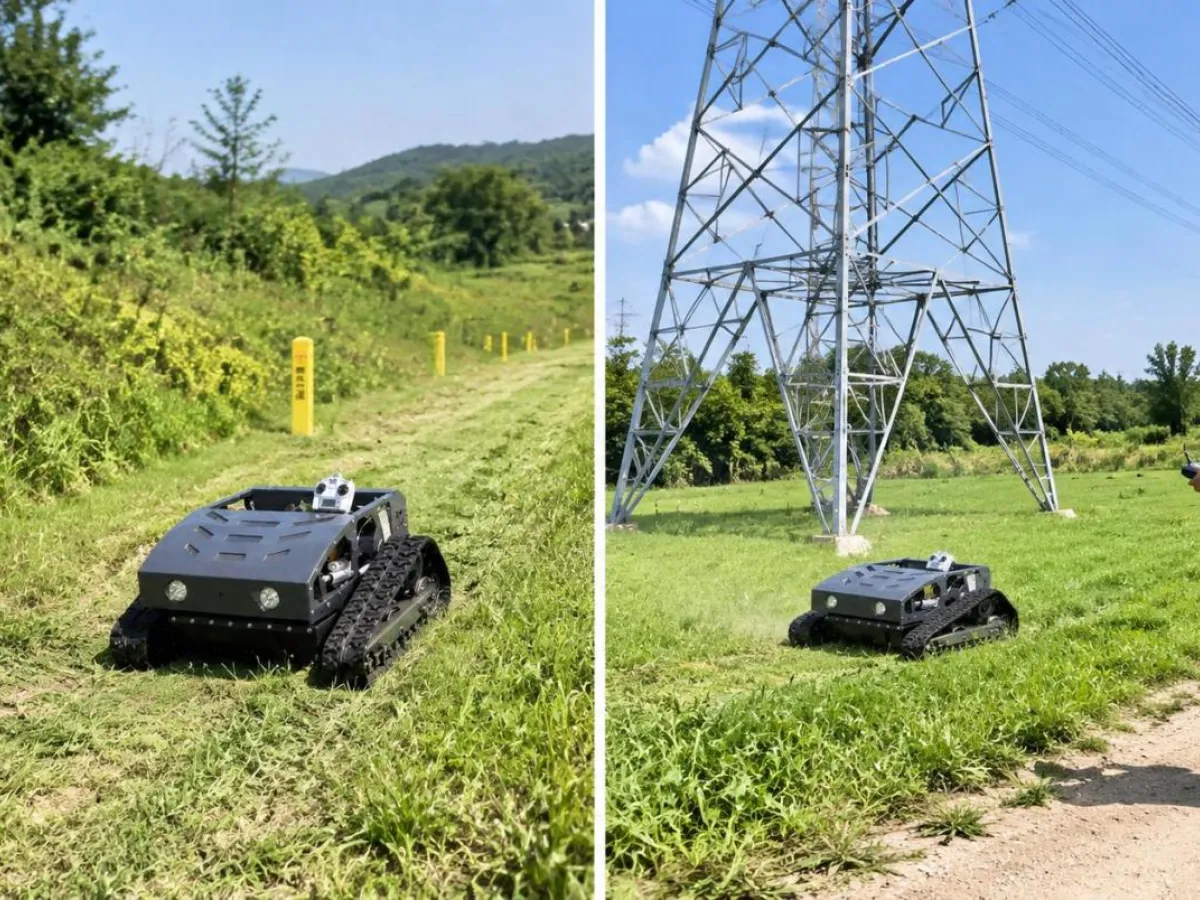




Cemetery & Memorial Ground Maintenance with RC Mowers
Introduction: A Unique Maintenance Challenge
Cemeteries and memorial grounds present one of the most operationally complex environments in grounds maintenance. The combination of dense commemorative stonework, uneven sunken ground, sloped sections, narrow access paths, public visiting activity, and the paramount requirement for respectful, damage-free operation creates a maintenance challenge that conventional mowing equipment handles poorly. RC slope mowers are increasingly the answer for the sloped and overgrown sections that conventional equipment cannot reach.
RC (remote-control) slope mowers have found significant uptake among local authority cemetery departments, private memorial park operators, and historic church grounds trusts — particularly for managing sloped sections, overgrown older parts of sites, and sensitive conservation burial grounds where manual machinery access is difficult.
Typology of Cemetery Grass Management Areas
|
Area Type |
Maintenance Standard |
Primary Challenge |
|
Active new burial section |
Close-cut amenity (30–40 mm); formal appearance |
Weekly cuts required during growing season; public access continuous |
|
Historic section (pre-1900) |
Conservation cut (100–150 mm); wildflower diversity target |
Sunken graves and leaning stones; stone damage risk |
|
Sloped access bank / terrace edge |
Safety cut to prevent trip hazard and visibility obstruction |
Gradient 20–45°; access for conventional mowers very limited |
|
War memorial and Garden of Remembrance |
Immaculate close-cut presentation standard |
High public sensitivity; zero damage tolerance |
|
Naturalised meadow section |
Single annual cut in August/September |
Biomass management; long arisings disposal |
|
Chapel and building surrounds |
Formal bedding and close cut to building line |
Tight access between structures; overhead obstacles |
Where RC Mowers Add Most Value in Cemetery Environments
Sloped Terrace Sections
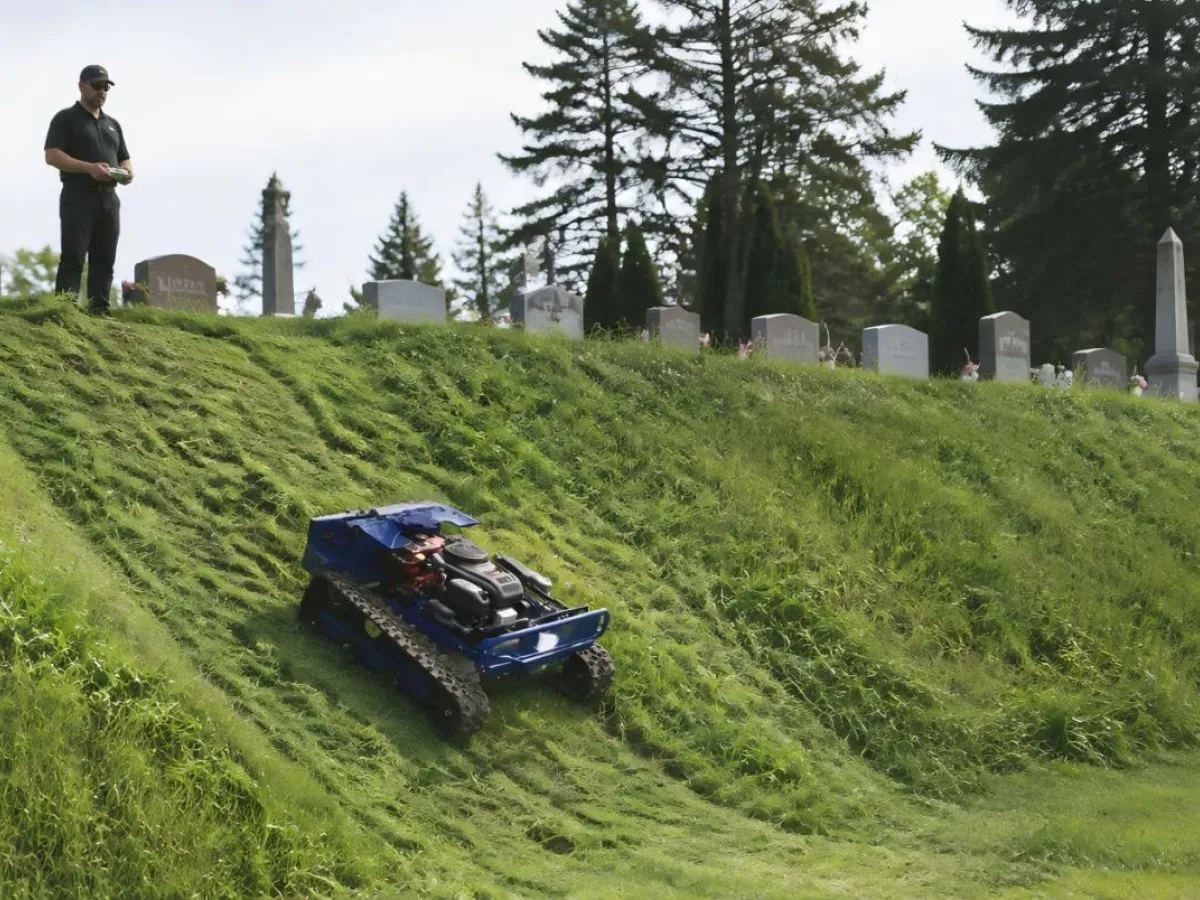
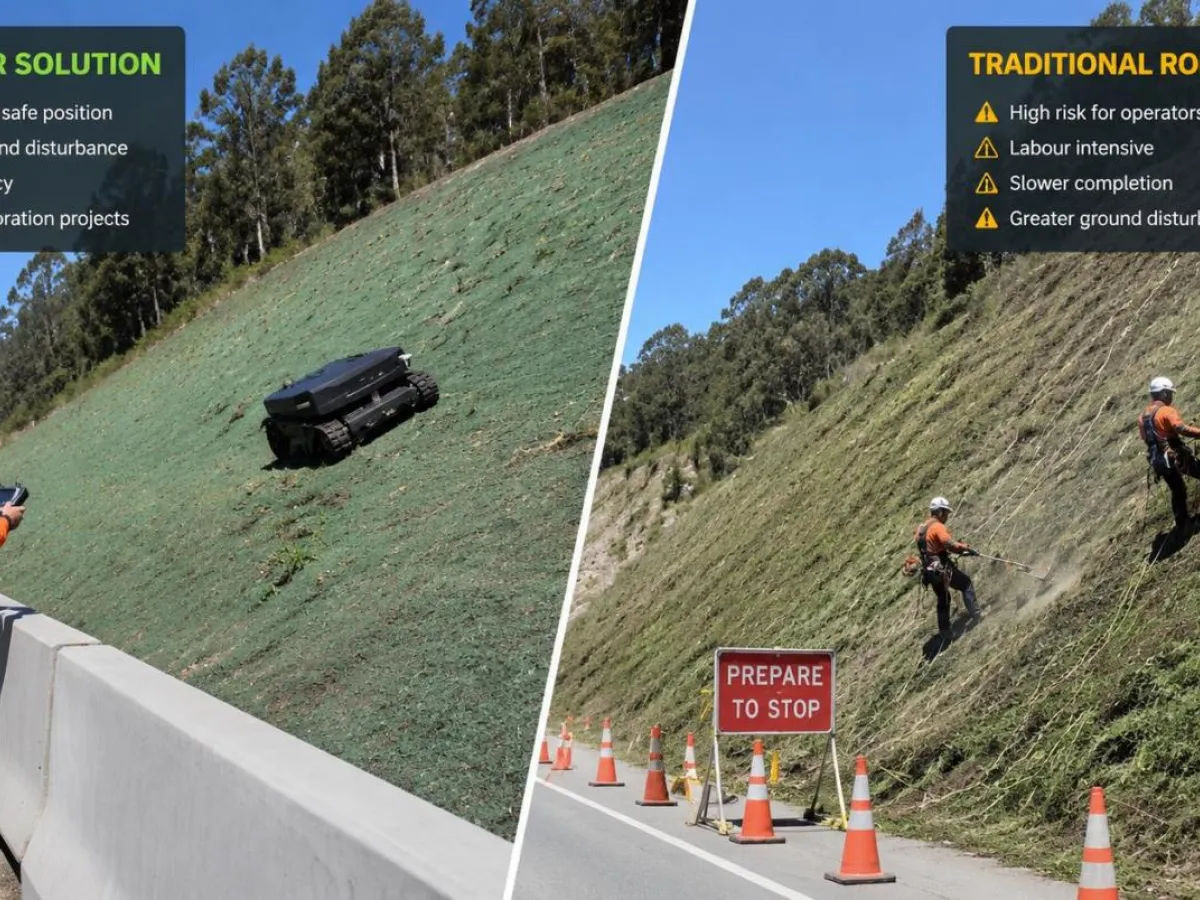
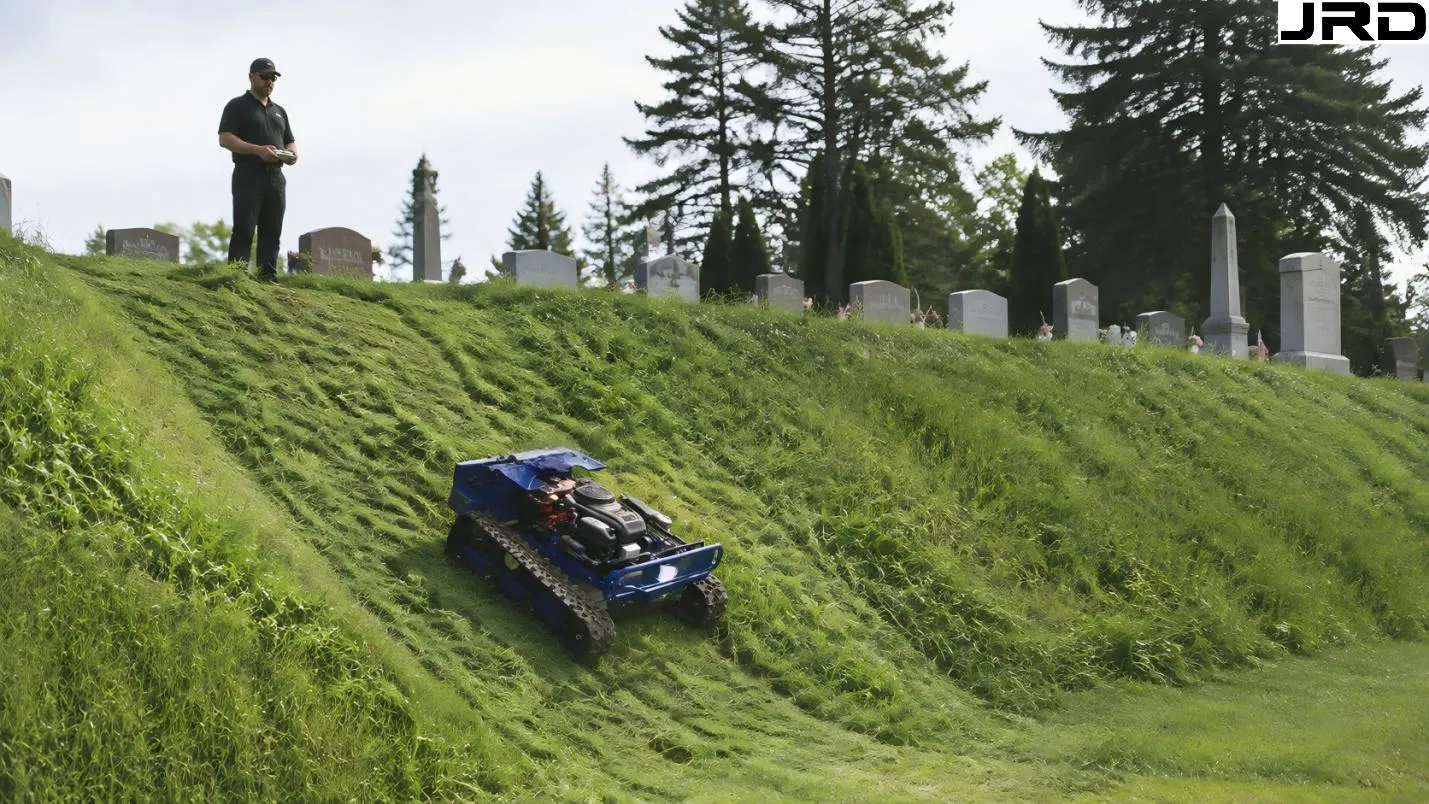
Many Victorian and Edwardian municipal cemeteries were designed on hillsides, with terraced sections connected by sloped banks at gradients of 20°–40°. These banks are often the most neglected sections of a cemetery, as conventional mowing equipment cannot operate safely on the gradient and manual strimming is time-consuming and physically demanding. RC slope mowers can cut these areas in a fraction of the manual time, with zero risk of operator injury from slope instability.
Clearance of Overgrown Older Sections
Many cemetery authorities have inherited sections of older ground where decades of under-resourcing have allowed vegetation to become severely overgrown. RC mowers fitted with flail or brush-cutting heads can tackle vegetation up to 500 mm height and light woody regrowth (bramble, elder, buddleia) that would be impossible for conventional pedestrian mowers and time-prohibitive for manual cutting.
Sensitive Stone Environments
In historic sections with fragile or leaning headstones, the RC mower's key advantage is the operator's ability to stand at a distance and guide the machine with precision, stopping instantly if a stone appears at risk. This is far safer than a ride-on mower or walk-behind with a distracted operator navigating dense stonework at close quarters.
Operational Protocol: Avoiding Memorial Damage
Conduct a pre-mow walk of every section before the RC mower is deployed — mark unstable stones with temporary surveyor's flags
Set blade height to a minimum of 40 mm in historic sections to reduce stone strike frequency and severity
Use flail deck rather than rotary blade in stone-dense areas — flail blades deflect on contact rather than projecting fragments
Fit full blade deflector skirts around the cutting deck perimeter when working within 1 m of memorials
Establish a 500 mm hand-strimming exclusion zone immediately adjacent to all headstones — never mow to base of stone
Photograph any pre-existing stone damage before work commences and record in the maintenance log
Key Requirement: Under the Local Authorities' Cemeteries Order 1977 (England & Wales), cemetery authorities have a statutory duty to maintain memorials in a safe condition. Any damage caused by maintenance operations must be reported and repaired at the authority's cost — making damage prevention protocols essential for cost control.
Public Interface and Operational Sensitivity
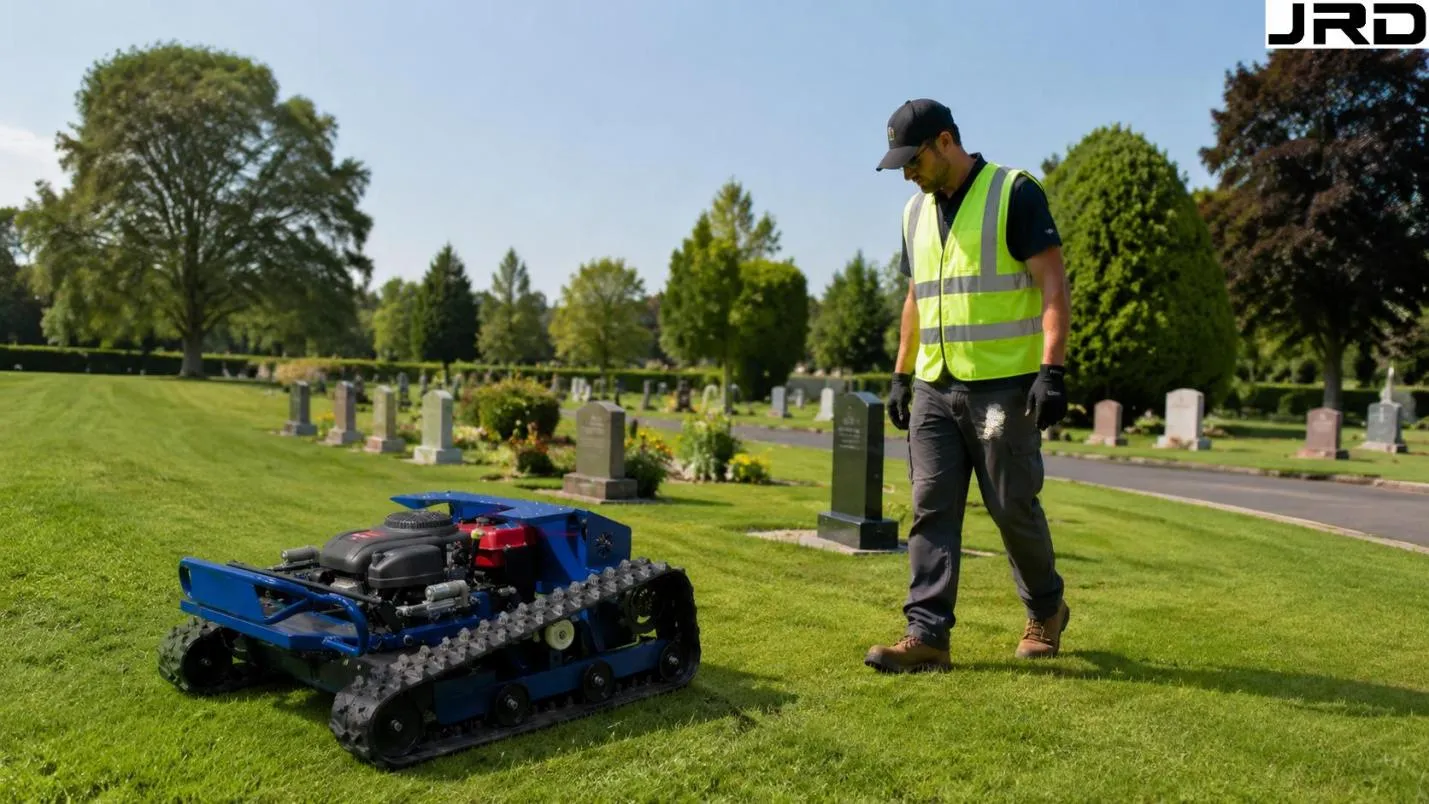
Cemeteries are public spaces used by bereaved visitors, often at times of acute emotional sensitivity. Grounds maintenance operations must be conducted with this in mind at all times. RC mowers, while significantly quieter than conventional machinery in most configurations, still produce operational noise and may cause distress to visitors if deployed inconsiderately.
Avoid deploying RC mowers within 50 m of an active burial ceremony or committal service
Cease operations if a distressed visitor approaches and cannot be redirected — resume after they have left the area
Ensure operator clothing is professional and identifiable (high-vis vest with grounds department identification)
Place informational signage at cemetery entrance on days when RC mowing is scheduled: 'Grounds maintenance in progress today'
Record any public complaints or interactions in the grounds maintenance log for supervisor review
Biodiversity and Naturalisation Opportunities
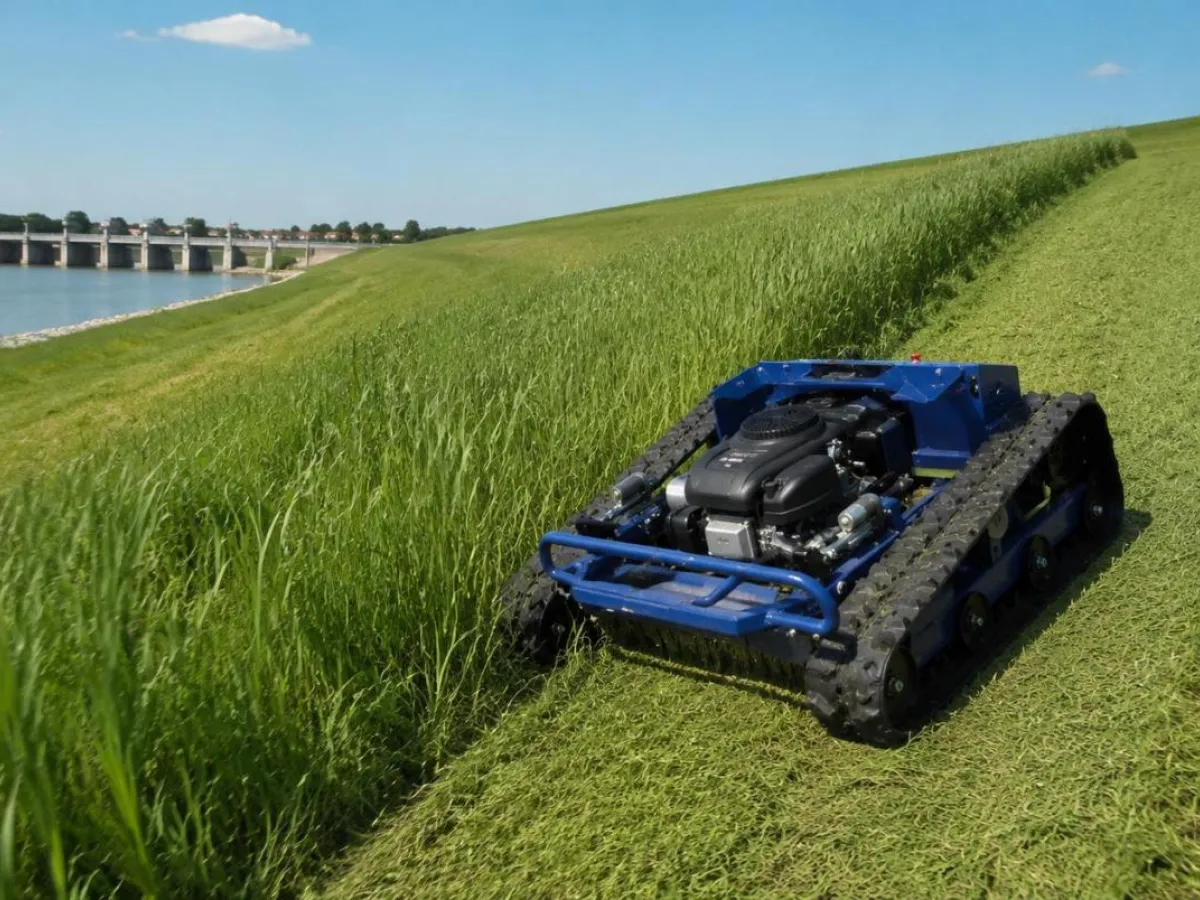
Many cemetery authorities are adopting naturalised management approaches for older sections of ground, converting from intensive close-cut management to annual hay meadow cuts that support declining pollinators and ground-nesting birds. RC mowers are well-suited to the single annual cut required for meadow management, handling the heavy biomass load of a full season's growth in a single pass using a flail mulcher or heavy-duty disc head.
Some local authority grounds teams now operate a zoned management approach: new sections managed to formal amenity standards using conventional ride-on mowers; sloped banks managed by RC mower; older sections managed as naturalistic habitat with a single RC flail cut in late summer. This multi-tier approach delivers biodiversity benefits, reduces grounds maintenance hours, and is supported by Cemetery Friends groups and conservation organisations.
Summary & Operational Checklist
Carry out a pre-season condition survey of all headstones and kerbsets in the RC mower's planned working areas
Define working zones with clear maps specifying cut height, frequency, and exclusion distances from memorials
Train all RC mower operators in cemetery-specific protocols including public interface guidance
Maintain a damage log and pre-work photographic record for all historic sections
Review naturalisation zoning annually — expand meadow sections where visitor acceptance and biodiversity data support it
Co-ordinate scheduling with the burials booking system to avoid conflict with active funeral services
Cemeteries and memorial grounds demand the highest standards of operational sensitivity, precision, and respect. Our RC slope mowers provide local authority cemetery departments, private memorial park operators, and church grounds trusts with the ability to manage sloped sections, older burial areas, and conservation zones safely and efficiently — with zero tolerance for memorial damage. We can advise on cemetery-specific operational protocols, stone exclusion zones, and zoned management approaches that balance maintenance requirements with heritage and biodiversity considerations. JRD Machinery is an RC slope mower manufacturer and supplier to cemetery and memorial ground teams, with the low-noise and precision configurations these sites require.
Get in touch for expert advice or a quote:
Email:info@jrdmachinery.com
Website: www.jrdmachinery.com