



Flood Defence & River Bank Management with RC Mowers
RC mower flood defence river bank vegetation management
Introduction: Vegetation and Flood Risk
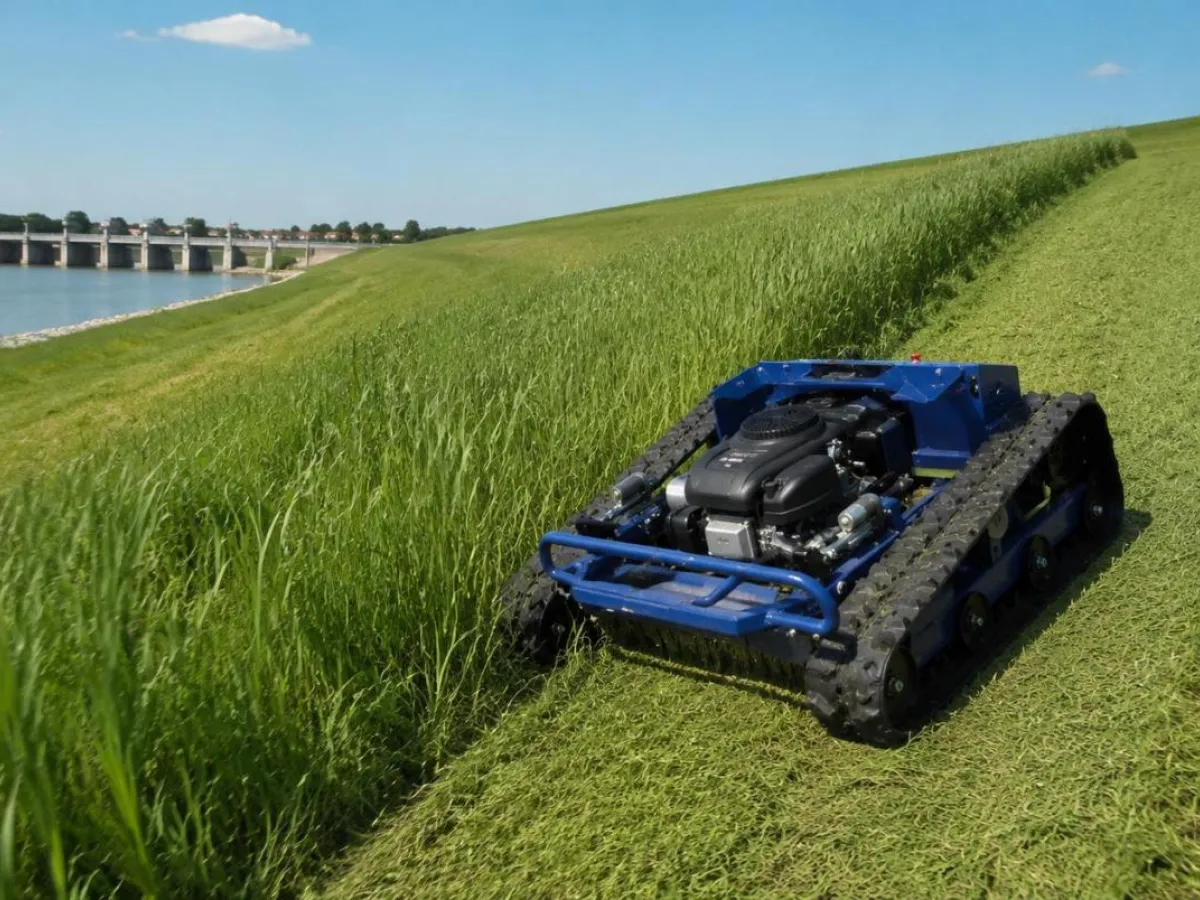
River banks, flood embankments, and drainage channel margins represent some of the most critical — and most hazardous — environments for vegetation management. Unmanaged vegetation on flood defence structures can conceal structural defects, provide pathways for burrowing animals to undermine embankment integrity, and in some cases obstruct flow capacity in drainage channels. Yet the steep, unstable, and often waterlogged nature of these environments makes conventional mowing equipment dangerous or impractical. RC slope mowers are the machines that made this work safe enough to do at scale.
RC (remote-control) slope mowers have been adopted by flood risk management authorities across the UK, Netherlands, Germany, and Australia as the preferred tool for safe, effective management of flood defence vegetation. This article examines the operational requirements, regulatory context, and practical techniques that define best practice in this sector.
Vegetation Management Objectives on Flood Defences
Enable visual inspection
Conceal defects: seepage, animal burrows, settlement cracks
Sward below 100 mm on earthwork faces
Prevent woody encroachment
Tree roots destabilise embankment fill; windthrow creates voids
Zero woody species establishment on primary defences
Maintain channel conveyance
Dense marginal vegetation reduces channel cross-section and increases roughness coefficient
Keep bank below top-water line clear of emergent vegetation
Protect embankment surface
Bare patches expose fill to erosion during overtopping events
Dense fibrous-rooted grass sward on all earthwork faces
Support ecology and WFD compliance
Water Framework Directive requires good ecological status for watercourses
Maintain native marginal vegetation outside primary channel zone
Why RC Mowers Are Essential for Flood Defence Work
Slope and Ground Conditions
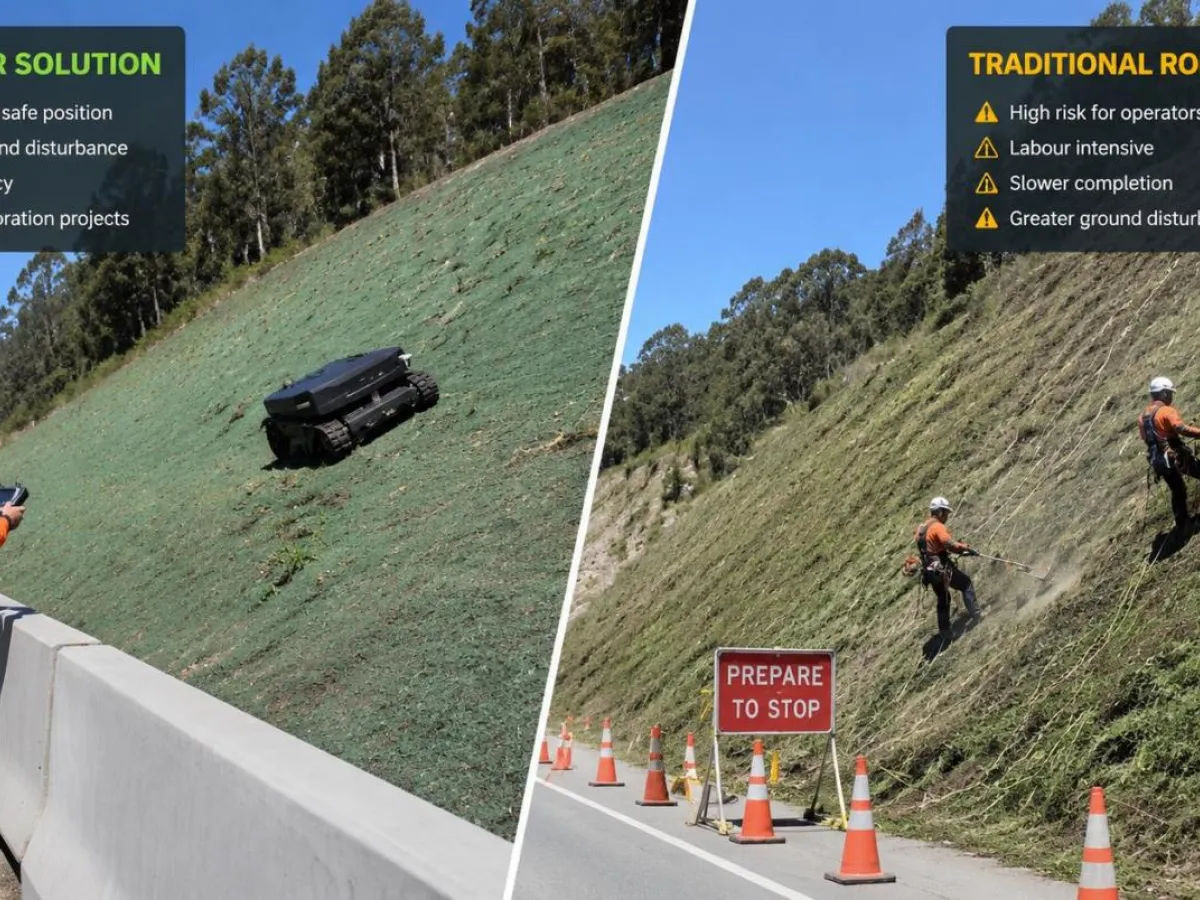
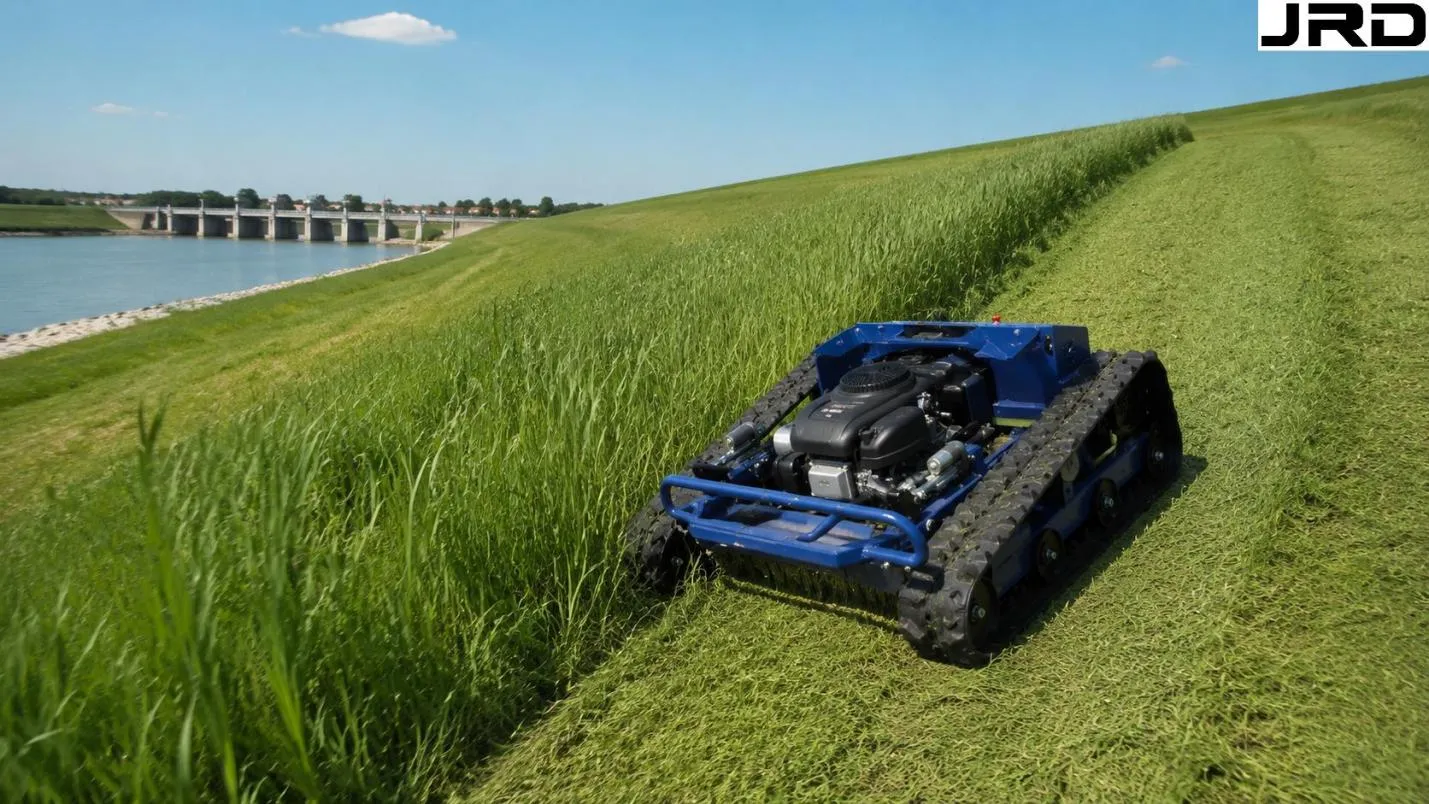
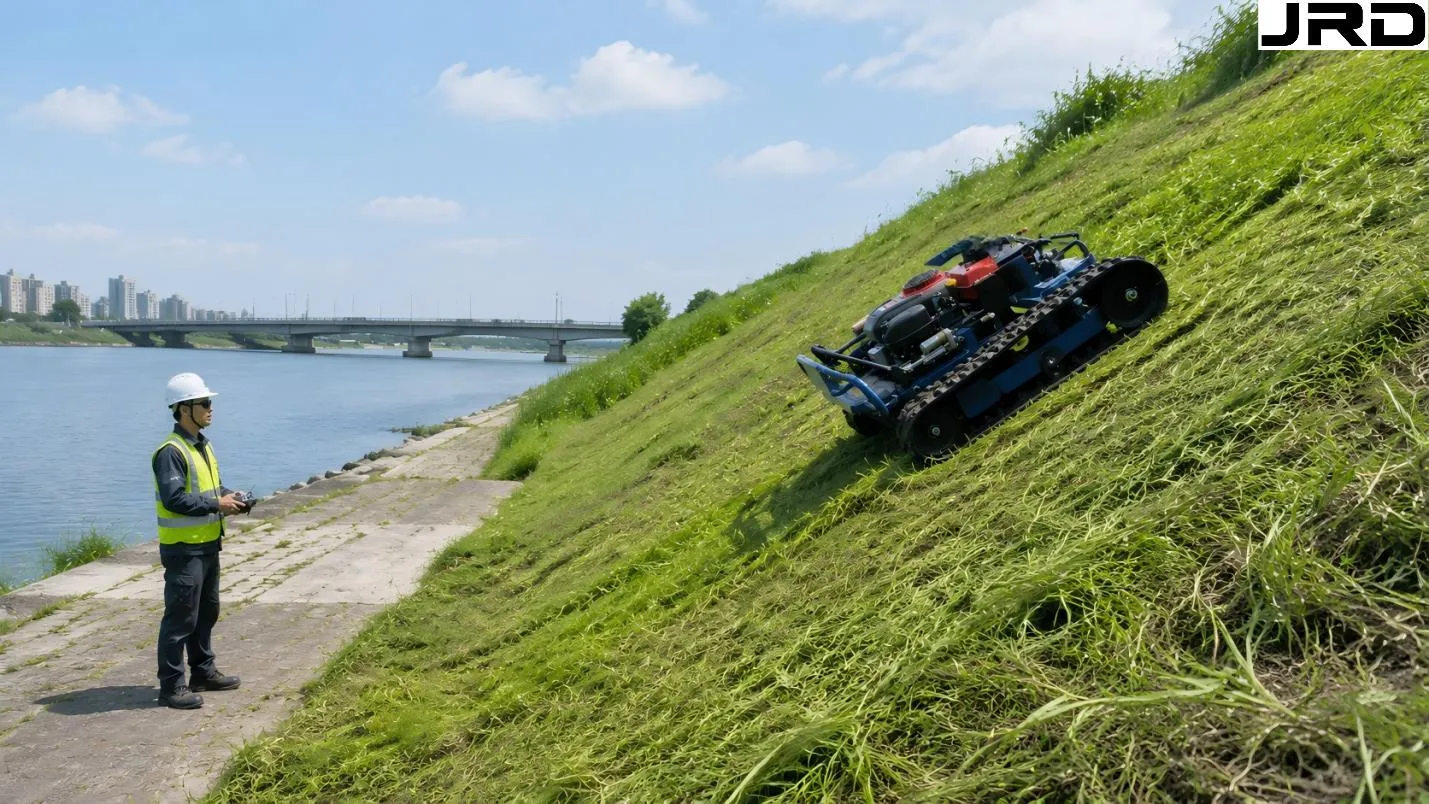
Flood embankment side slopes are typically constructed at 1:2 to 1:3 gradients (27°–45°). After rainfall events, these slopes are frequently saturated, with high pore water pressures close to the surface. Conventional ride-on mowers operating on saturated embankments are at serious risk of slope failure and rollover. RC tracked mowers, operating from a safe position at the embankment toe, eliminate operator exposure to this risk entirely.
Access Constraints
Flood embankments are often inaccessible to vehicles other than purpose-built all-terrain plant. The narrow crest width (typically 3–4 m on minor river defences) may not permit conventional mowing tractors to turn. RC mowers can be deployed from the crest and steered down the face without requiring vehicle access to the slope.
Working in Proximity to Water
RC operation eliminates the risk of an operator being carried into the watercourse by a slipping machine
Machines can be fitted with waterproof electronics packages rated to IP67 for operation in tidal and regularly inundated environments
Flotation attachments are available for some RC platforms, enabling recovery from partial immersion
Environment Agency & LLFA Operational Standards (UK)
In England, flood defence vegetation management is governed by the Environment Agency's (EA) Vegetation Management for Flood Risk Reduction guidance and the individual Flood Risk Management Plans of Lead Local Flood Authorities (LLFAs). Key requirements for contractors working on maintained flood defences include:
All work must be carried out under an EA or LLFA-approved Method Statement covering approach, equipment, and environmental constraints
Water Framework Directive Article 4 Exemptions may be required where cutting operations would disturb designated aquatic habitats
Cut arisings must not be allowed to enter the watercourse — a controlled tipping point or removal by hand raking is required on all bank cutting operations
Operations within 8 m of a main river require EA Flood Risk Activity Permit or Exemption registration
Specific bat and nesting bird surveys required before cutting hedgerows or scrub adjacent to defended channels
Note: Scottish Environment Protection Agency (SEPA) and Natural Resources Wales (NRW) operate equivalent but distinct consent regimes. Always verify the applicable regulatory authority for the site before commencing works.
Seasonal Cutting Programme: Main River Embankments
March–April
First cut: set cut height to 60 mm
Remove winter growth; enable spring inspection
May–June
Inspect for nesting birds before cutting — delay if active nests present
Legal requirement under Wildlife & Countryside Act 1981
July
Second cut: reduce to 50 mm; rake and remove arisings from slope
Pre-flood season inspection standard met
August–September
Third cut on high-profile defences; check for rabbit/mole activity
Flood risk peak period — maximum visibility required
October
Final cut before winter; overseed any bare patches
Maintain protective grass cover through winter rainfall
November–February
No cutting; winter inspection visits only
Avoid disturbing soil structure on saturated slopes
Special Environments: Tidal Defences
Tidal flood defences, including sea walls, tidal embankments, and managed realignment bunds, present additional operational challenges beyond those of fluvial (river) flood defences. Salt-laden tidal inundation events occur unpredictably, and machine corrosion is a primary concern for extended operations in these environments.
Specify marine-grade or salt-resistant coating packages on all hydraulic components when purchasing RC mowers for tidal environments
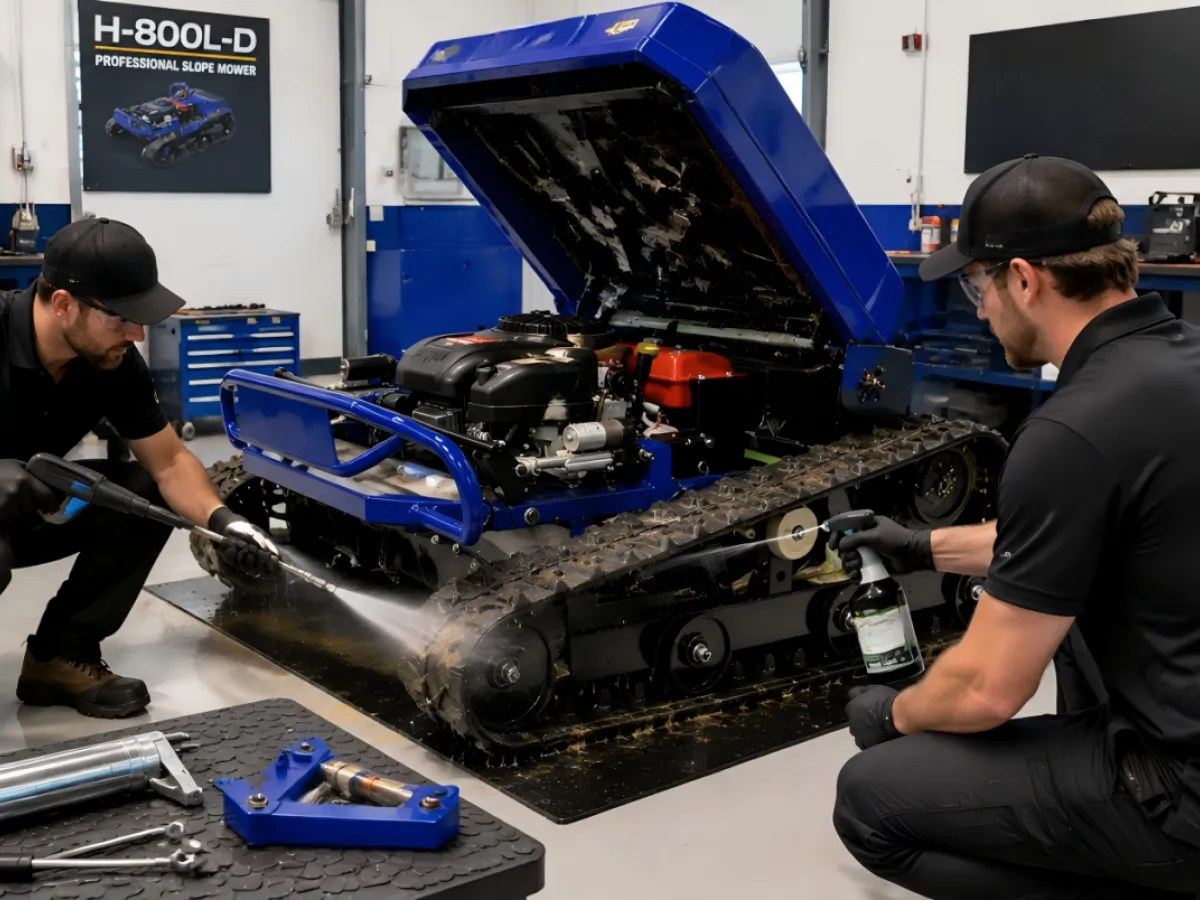
Wash machines with fresh water within 2 hours of any salt water contact to prevent accelerated corrosion
Battery and electronic systems must carry IP67 or higher waterproofing rating for regular tidal zone work
Cutting programme must be coordinated with tidal prediction tables — avoid operations within 4 hours of predicted high tide on exposed tidal bunds
Key Recommendations
Engage the relevant flood risk authority (EA, SEPA, NRW, LLFA) at planning stage to agree the consented cutting programme before mobilisation
Specify IP67-rated electronics for any machine operating in tidal or regularly inundated environments
Train operators in emergency machine recovery procedures specific to riverside environments
Integrate nesting bird and bat constraint windows into the annual cutting programme plan
Document all cut dates and arisings disposal records as required under the Method Statement and EA reporting obligations
Contact Us
Working on flood defence and river bank contracts? JRD Machinery is an RC slope mower manufacturer and supplier of IP67-rated machines for fluvial and tidal embankment work. We can provide the machine specification sheets, corrosion protection options, and operator training records that flood risk authorities ask for at Method Statement stage. Contact us to discuss your cutting programme.
Get in touch for expert advice or a quote:
Email:info@jrdmachinery.com
Website: www.jrdmachinery.com