



Wildfire Prevention & Fuel Load Reduction with RC Mowers
RC mower wildfire prevention fuel load reduction
Introduction: The Growing Wildfire Threat
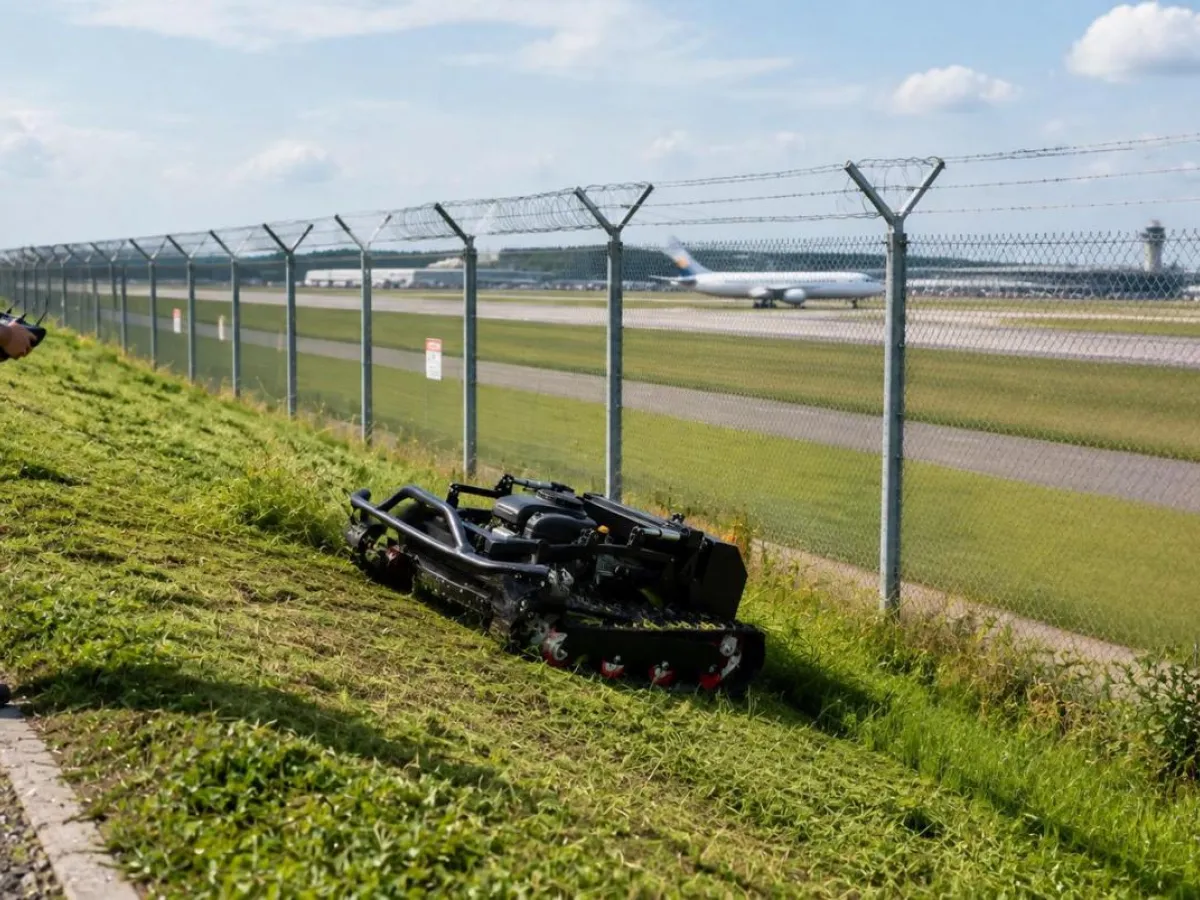
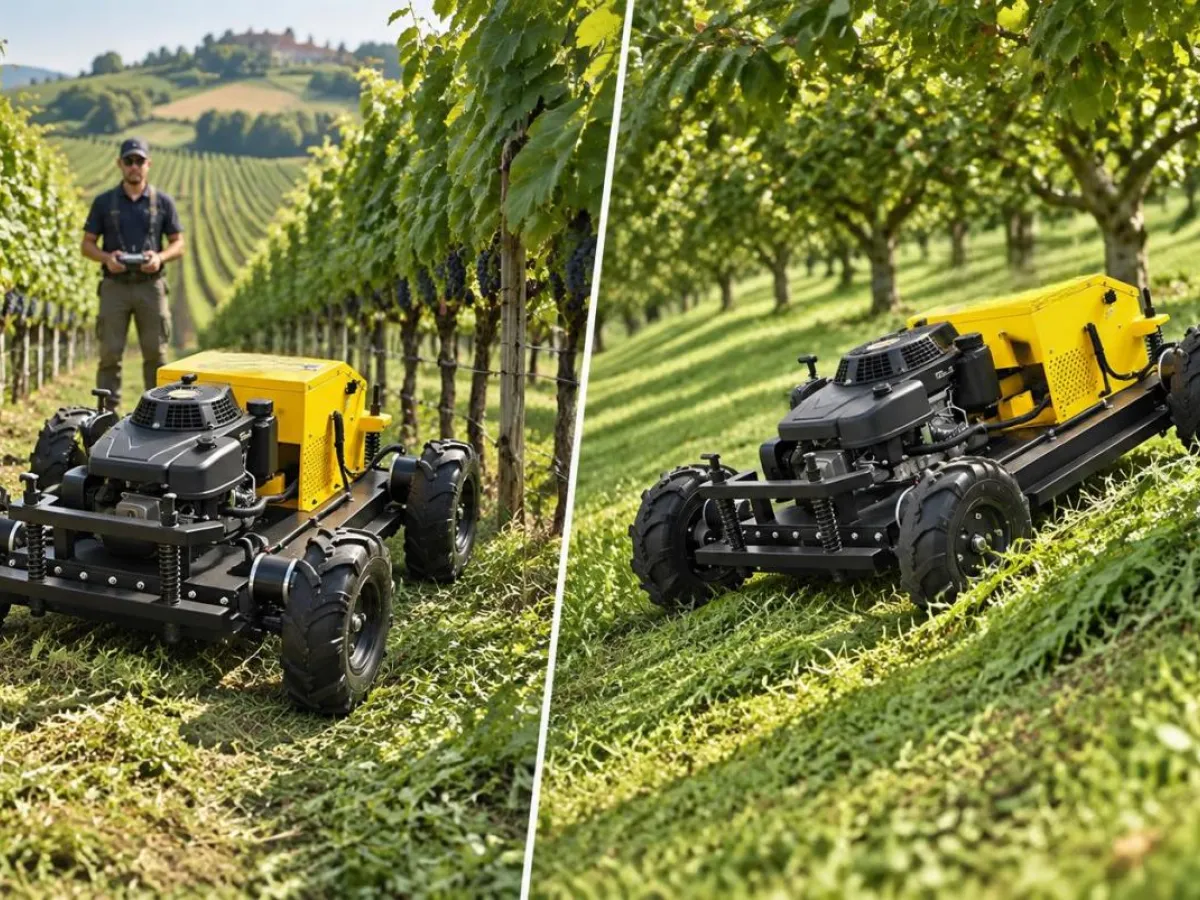
Wildfire frequency and severity are increasing across southern Europe, western North America, and Australia, driven by prolonged drought, elevated summer temperatures, and the accumulation of combustible vegetation — collectively termed 'fuel load' — in areas where traditional pastoral management has declined. The 2022 European wildfire season burned over 785,000 hectares across eleven countries, demonstrating the catastrophic scale that unmanaged fuel loads can reach. RC slope mowers are one of the few machines that can reach the steep ground where that fuel accumulates fastest.
Proactive fuel load reduction through mechanical vegetation management is a core strategy in Wildfire Risk Management Plans for fire authorities, national parks, utility companies, and transport infrastructure operators. RC slope mowers, capable of operating on the steep terrain where fuel loads are highest and access is most difficult, have become an important tool in preventive fuel management programmes.
Understanding Fuel Load in Wildfire Risk Management
Fine Surface Fuels
Dry grass, leaf litter, small twigs (<6 mm)
Primary target: flail mulching reduces continuity and moisture content
Ladder Fuels
Shrubs and small trees that carry fire from surface to crown
RC brush-cutter head removes shrubs up to 80 mm stem diameter
Heavy Surface Fuels
Large woody debris, logs, coarse brash
RC mowers not applicable — requires chainsaw or chipper
Elevated Fuels
Tree canopy, crown — the fire spread mechanism
Indirect effect only: RC mowing reduces ladder fuels that feed crown fires
RC mowers are most effective against fine surface fuels and ladder fuels — the two categories that most directly determine the speed of ignition and rate of fire spread in the critical first hours of a wildfire event.
Defensible Space Zones: Standards and Applications
Fire authorities and land managers apply a zoned approach to defensible space management around structures, infrastructure, and high-value land. RC mowers are deployed across multiple zones depending on fuel type and terrain.
Zone 0 (0–5 m from structure)
The immediate ignition zone around buildings or infrastructure. All combustible vegetation removed or heavily suppressed. RC mowers can maintain this zone at close-cut sward height, but hand removal of any woody material remaining after mowing is required.
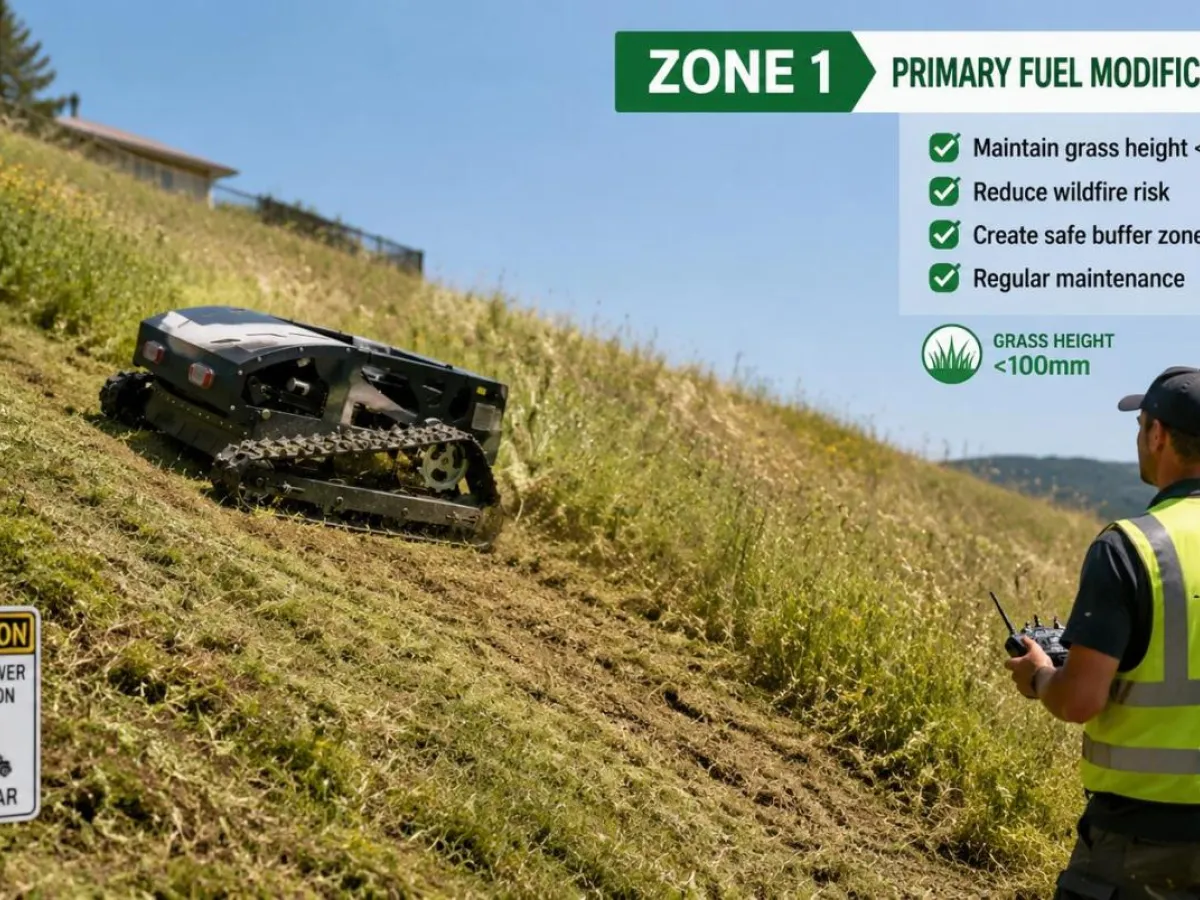
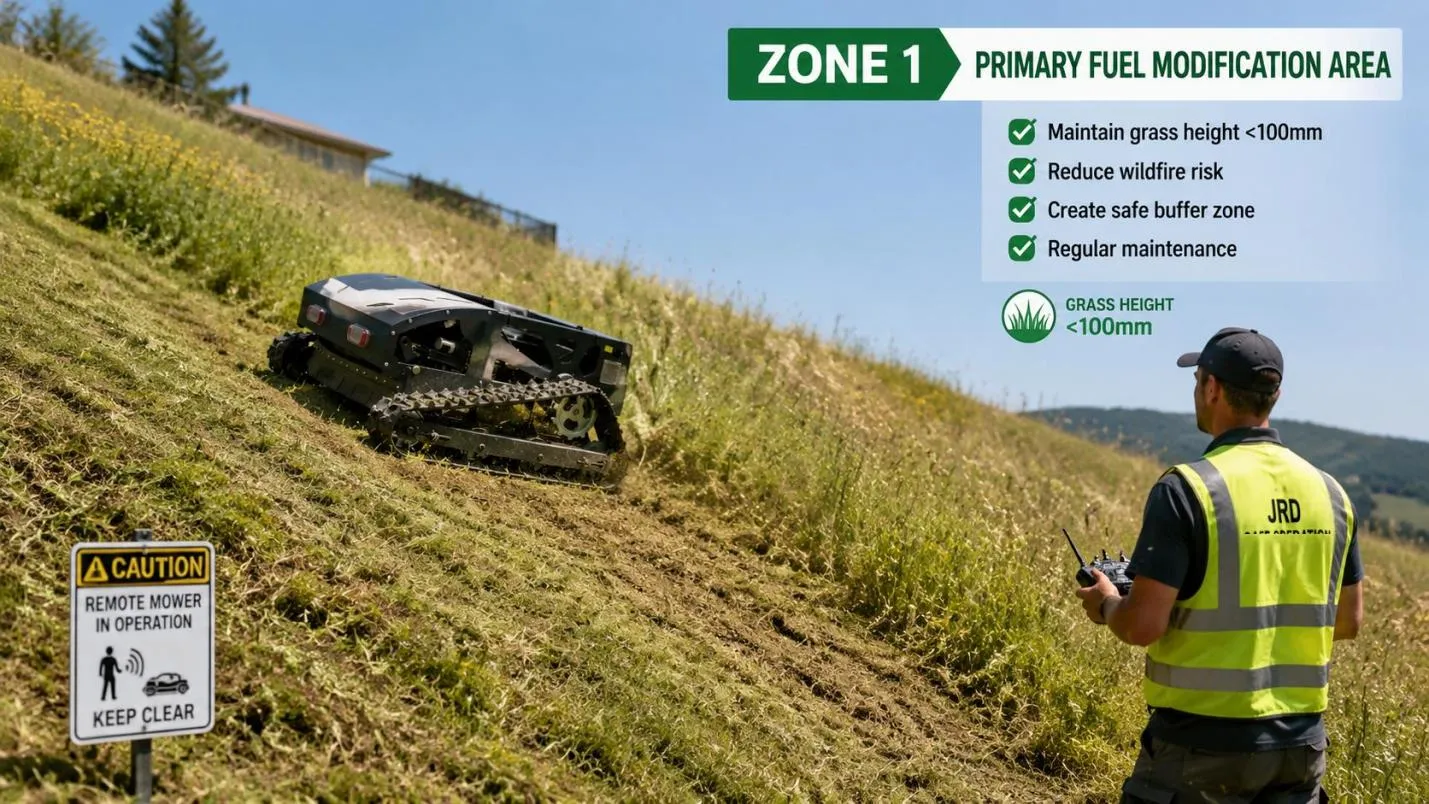
Zone 1 (5–30 m from structure)
The primary fuel modification zone. Grass is maintained below 100 mm height; shrubs are reduced to isolated specimens separated by a minimum of 3 m gap (no continuous fuel bed). RC mowers with flail or brush-cutting heads are the primary tool in this zone on slopes above 15°.
Zone 2 (30–100 m from structure)
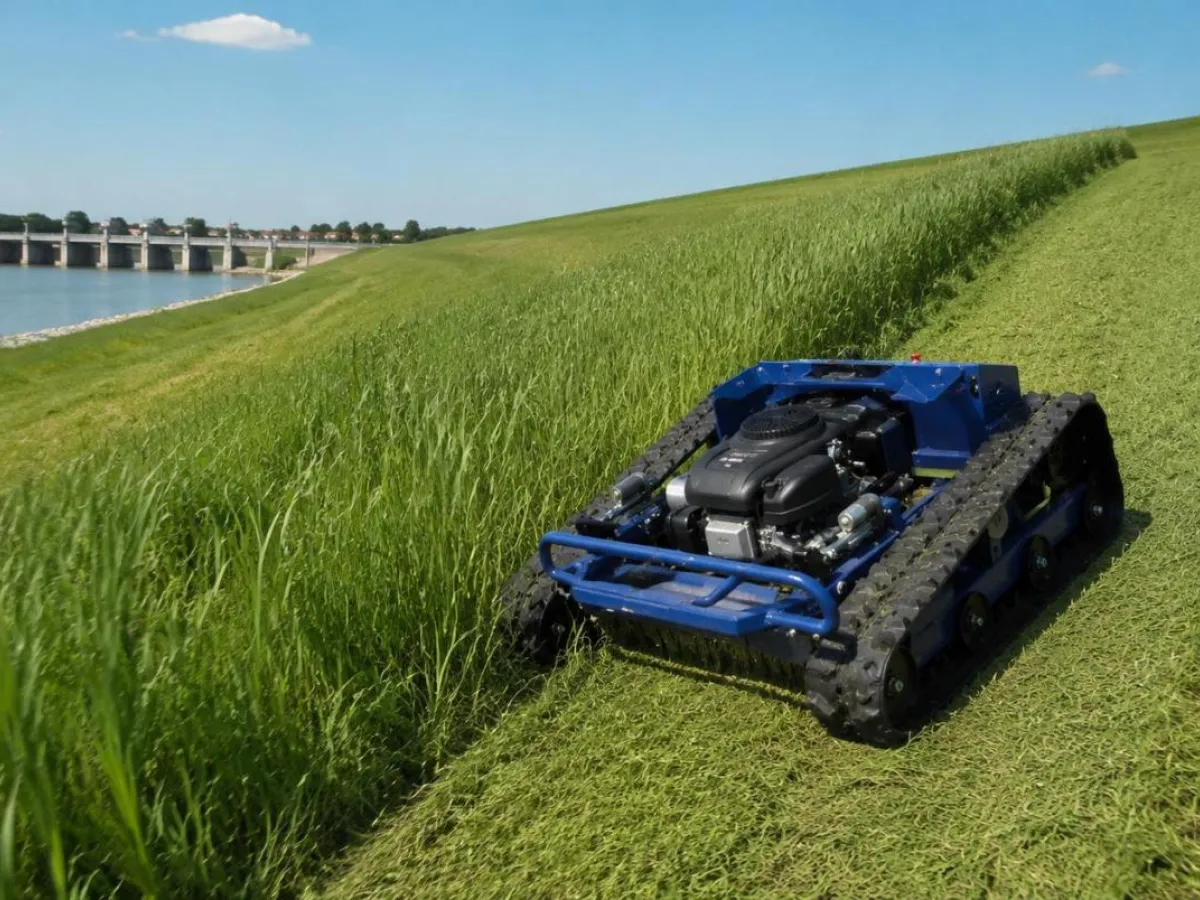
The extended fuel management zone. Regular mowing is impractical across this distance; targeted treatment of dense fuel concentrations and fire breaks. RC mowers are used for creation and maintenance of strategic fire breaks — cleared strips 3–8 m wide running perpendicular to prevailing fire-spread direction.
Operating RC Mowers in High Fire-Risk Environments
Always check fire weather index before deploying — never operate in conditions where fire risk is rated Very High or Extreme
Ensure machine's exhaust system is fitted with a spark arrester — mandatory in designated wildland fire areas in many jurisdictions
Carry a minimum 9-litre water extinguisher on the support vehicle during all fuel reduction operations
Avoid operations during peak temperature hours (11:00–17:00 on days with forecast temperature above 30°C)
Establish a clear emergency evacuation route for both operator and machine before starting work in steep terrain
Radio control transmitter must have manufacturer-rated range exceeding the furthest deployment distance from the operator's safe position
Key Safety Rule: If the machine causes or encounters an ignition during operation, the operator must abandon machine retrieval and evacuate immediately using the pre-established route. RC mowers are insured assets — operator lives are not replaceable.
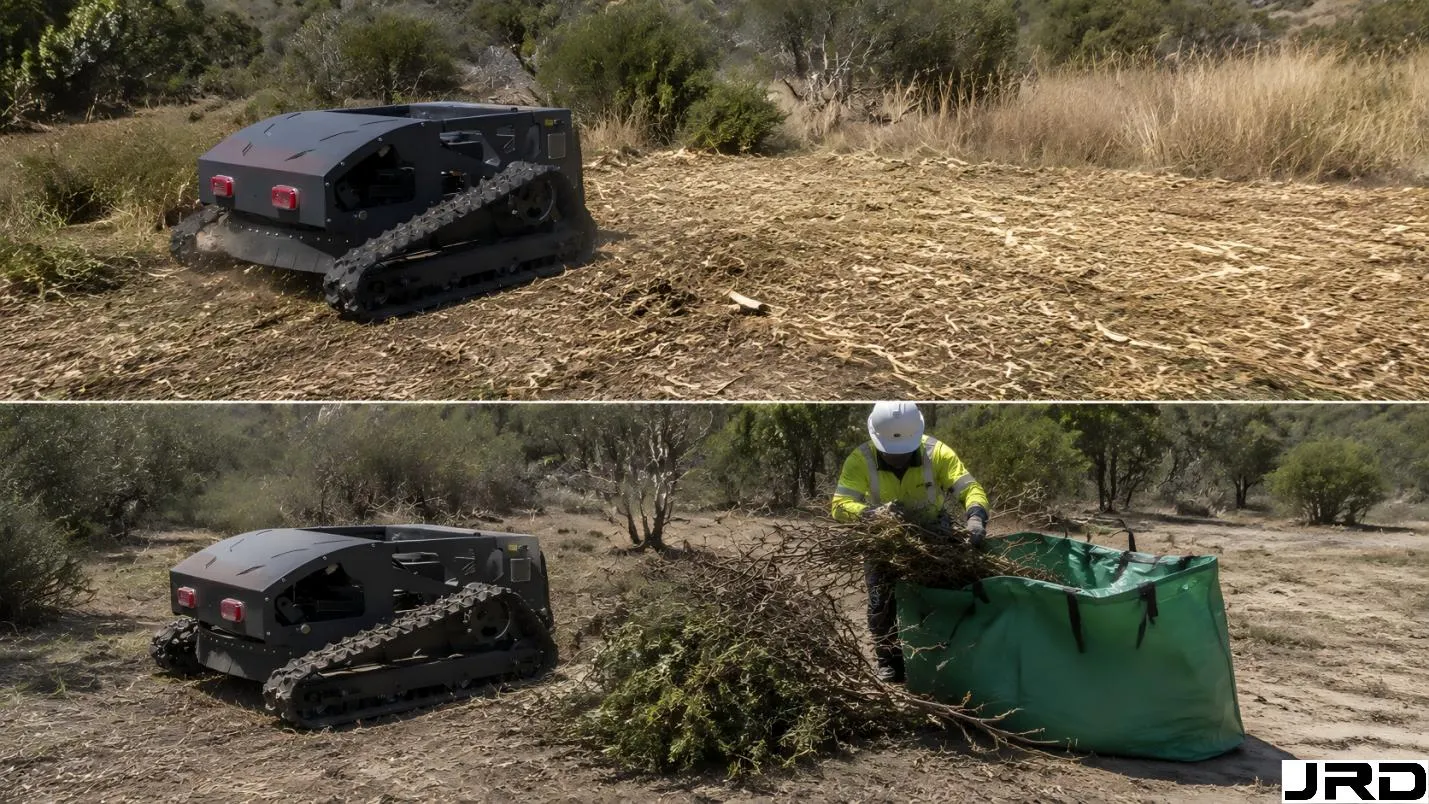
Arisings Management: Mulch vs. Remove
The disposal method for vegetation removed during fuel reduction operations has a significant effect on the net fire risk outcome. Two principal approaches are used:
Mulching in Situ
Flail mulching chops cut material to pieces of 30–50 mm length and distributes it across the ground surface. In moist conditions, mulch retains moisture and is not significantly more ignitable than undisturbed vegetation. However, in hot, dry conditions, dry mulch can form a highly flammable fine-fuel layer. Mulching is generally acceptable in Zone 2 but should be avoided in Zone 1 during high fire-risk periods.
Removal of Arisings
Where mulching is not acceptable (Zone 0 and Zone 1 during peak season), arisings must be removed from the site. This significantly increases the operational cost and complexity of fuel reduction programmes. Some fire authorities arrange green waste collection contracts to remove arisings in bulk from high-priority fuel reduction areas.
Infrastructure Applications: Power Lines and Rail Corridors
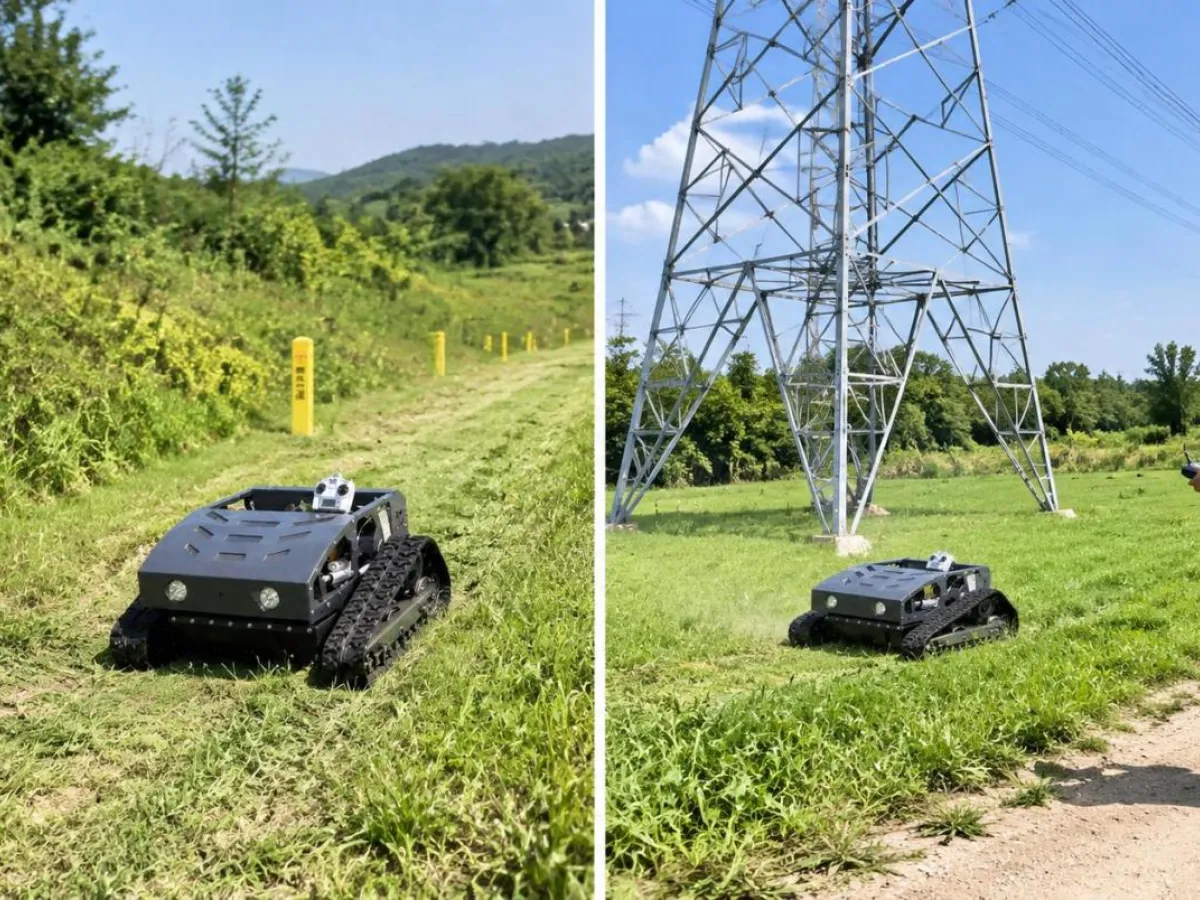
Electricity transmission and distribution networks are a major ignition source for wildfires in many regions. Vegetation in contact with or in close proximity to overhead conductors can cause arc ignition; fallen trees can bring down conductors onto dry fuel beds. Network operators have significantly expanded their fuel reduction vegetation management programmes in the last decade.
RC slope mowers are deployed by multiple UK Distribution Network Operators (DNOs) for fuel load reduction on steep embankments beneath 132 kV and 33 kV lines
US utility companies operating under NERC FAC-003 standards use RC mowers to maintain vegetation clearances on steep terrain unreachable by boom mowers
Rail network fire management programmes in southeast England deploy RC mowers on lineside cuttings to reduce grass fire risk during summer timetable periods
Conclusion: RC Mowers in Integrated Wildfire Management
Integrate RC mower fuel reduction operations into a formal Wildland Fire Risk Management Plan reviewed annually
Prioritise Zone 1 treatment annually and Zone 2 treatment on a 2–3 year rotation
Specify spark arresters and fire extinguisher carriage as mandatory for all RC mower operations in fire-prone environments
Coordinate with fire authority to align fuel reduction schedules with pre-season risk windows (typically March–May in northern hemisphere)
Train operators in fire behaviour basics — understanding fire spread direction and rate is essential for safe evacuation decision-making
Proactive fuel load reduction is one of the most effective strategies for reducing wildfire risk in fire-prone landscapes. Our RC slope mowers are specified by fire authorities, national park managers, and utility operators across southern Europe, North America, and Australia for defensible space management, fire break creation, and ladder fuel removal on steep terrain. We can advise on machine specifications — including spark arresters and fire suppression equipment — and support the integration of RC mower operations into formal Wildland Fire Risk Management Plans. JRD Machinery is an RC slope mower manufacturer and supplier, and can fit spark arresters and fire suppression equipment for fuel reduction work in fire-prone regions.
Get in touch for expert advice or a quote:
Email:info@jrdmachinery.com
Website: www.jrdmachinery.com