



Controlled Demolition With a Mini Excavator — Breakers, Technique, and Machine Selection
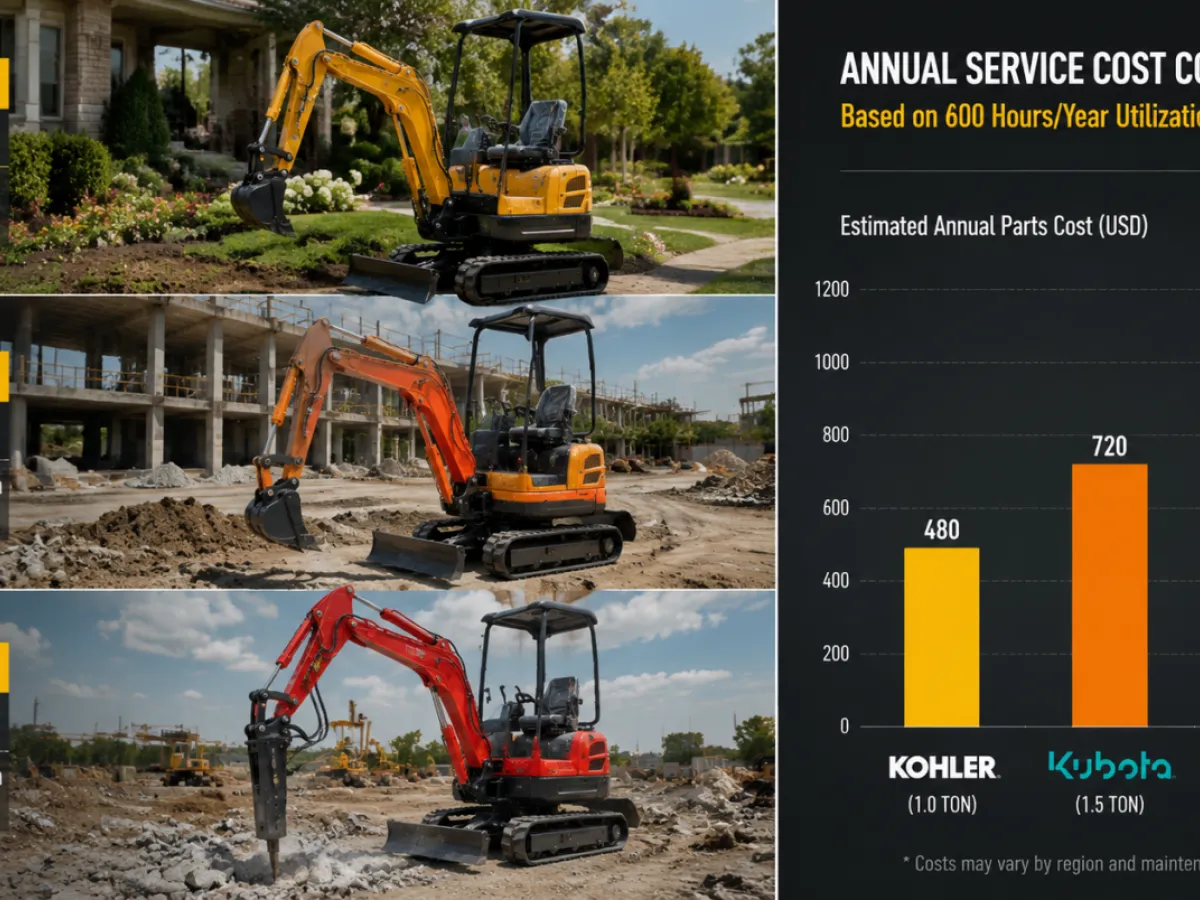
Selective demolition — removing a shed foundation, breaking a concrete driveway, knocking down a block wall — used to mean either a full-size excavator on a site large enough to accommodate it, or a crew with hand tools on a site that was not. Mini excavators with hydraulic breaker attachments occupy a third option: machine-powered impact force in the space a person can walk through.
This has changed the economics of small-scale demolition. An operator running a compact excavator with a hydraulic hammer can break the same concrete in a fraction of the time a crew with electric chisels takes — and do it with enough precision to stop at a boundary, protect an adjacent structure, or leave a pipe in place while removing the slab around it. But the machine-breaker combination only delivers on that promise if the match between breaker class and machine weight is correct, and the technique is right.
How a Hydraulic Breaker Works — The Basics
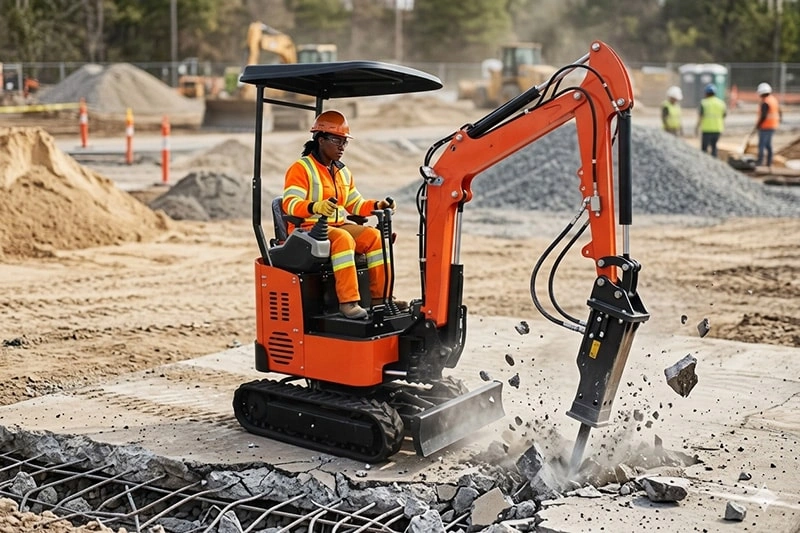
A hydraulic breaker (also called a hydraulic hammer or hydraulic rock breaker) is a percussion tool driven by the machine's hydraulic system. Oil flow from the machine drives a piston inside the breaker body; the piston strikes a tool steel chisel (moil point, flat tool, or blunt point) at high frequency, transmitting impact energy to the material being broken.
The key specifications that determine compatibility with a machine:
• Operating pressure: typically 100–180 bar for compact breakers; must be within the machine's auxiliary circuit operating range
• Oil flow requirement: compact breakers typically require 20–60 L/min; over-flowing a breaker accelerates seal wear and can split the cylinder
• Impact energy: measured in joules; a breaker rated at 100–250 J suits machines in the 1,000–2,500 kg class
• Blow frequency: impacts per minute; this interacts with flow rate — higher frequency requires more flow
• Weight: the breaker must not exceed the machine's maximum attachment weight at the specified reach
Matching Breaker Class to Machine
The most common error in mini excavator demolition is fitting a breaker that is too heavy or requires too much flow for the host machine. This does not produce faster breaking — it overloads the arm, causes hydraulic overheating, and shortens seal life in both the machine and the breaker.
For 10 series and 12 series machines (1,000–1,300 kg): breakers in the 100–180 J range, oil flow 20–35 L/min. These machines suit concrete up to 150 mm thick — pathways, thin slabs, block walls.
For 15 series and 17 series machines (1,350–1,700 kg): breakers in the 180–300 J range, oil flow 35–60 L/min. The 17 series with its variable piston pump and Taifeng multi-way valve provides consistent flow to the breaker circuit across varying operating conditions — this matters because breaker performance degrades quickly when flow drops below rated minimum. These machines break 200–300 mm reinforced concrete slabs at productive rates.
For 18 series through 25 series machines (1,500–2,500 kg): breakers up to 400–500 J, oil flow 50–80 L/min. At this class, the machine handles rubble stone and lightly reinforced structural walls. For heavier masonry or thick reinforced concrete, a conventional excavator in the 3–5 tonne class is more appropriate.
Hydraulic Circuit Requirements for Breaker Operation
Running a hydraulic breaker on a mini excavator requires the auxiliary (third-function) hydraulic circuit. On machines that come standard with this circuit, the port is typically located at the stick end — confirm it is a single-acting circuit (flow in one direction only; the breaker does not need a return stroke from the hydraulic circuit).
Breaker-specific circuit requirements:
• Flow control valve: install an adjustable flow control in the auxiliary line to set oil flow to the breaker's rated value; running more than rated flow is a common cause of breaker failure
• Back-pressure limit: confirm the return line back-pressure does not exceed the breaker manufacturer's maximum (typically 10–30 bar); excess back-pressure causes rear seal failure
• Relief valve setting: the auxiliary circuit relief should be set at or just above the breaker's operating pressure — not at machine system pressure, which may be 50–80 bar higher
• Oil specification: breakers are sensitive to oil viscosity; use the grade specified for the machine's operating temperature range
Demolition Technique — Controlling the Break
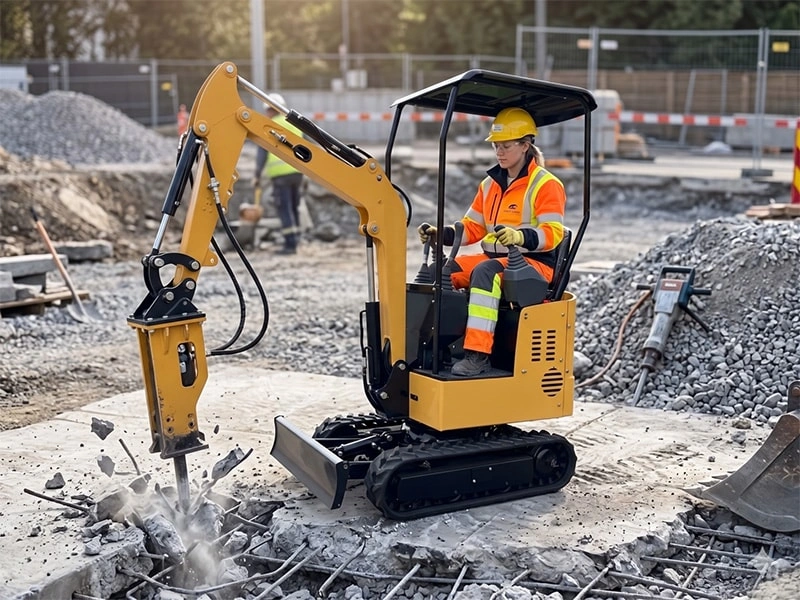
Breaking concrete and masonry with a hydraulic hammer is most efficient when technique is disciplined:
Perpendicular placement: position the chisel perpendicular to the surface. Angled strikes skip off the surface and transmit less energy to the material. The machine should be positioned so the tool meets the work at 90 degrees without forcing the boom or arm out of alignment.
Short burst operation: run the breaker in 15–20 second bursts. If the tool is not penetrating after 15 seconds, move to a new spot adjacent to the current one and work the material in a grid. Continuous breaking without penetration overheats the chisel and accelerates blank firing.
Work the perimeter first: on a slab, score a line along the cut boundary with the breaker before going to full depth. This prevents crack propagation outside the work zone and protects adjacent structures.
Use gravity: position the machine so its weight helps hold the breaker down on horizontal surfaces; on vertical work (wall demolition), use the arm to maintain tip pressure without relying on boom force alone.
No blank firing: blank firing (breaker operating without the tool in contact with material) destroys the breaker's internal components rapidly. Stop operation the moment the tool breaks through or loses contact with the work surface.
Selective Demolition — Working Precisely
The practical advantage of a mini excavator in demolition is precision. A full-size machine can take out a wall in a few passes — but it cannot stop reliably at the boundary of a neighbouring structure. A compact machine, operated by a skilled operator, can break to within 50 mm of a service trench, leave a post footing in place while removing the slab around it, or peel a concrete pathway without disturbing the adjacent paving.
Techniques for selective work:
• Define the cut line with a marker or chalk snap line before beginning
• Use a flat-face chisel rather than a moil point for straight-edge breaking
• Score and snap: make a partial-depth break along the cut line, then use the bucket to lever or fold the material along the score — cleaner than driving through to full depth all at once
• Keep the machine well clear of any structure that must be protected; arm reach, not machine proximity, does the work
Sorting and Loading After Break
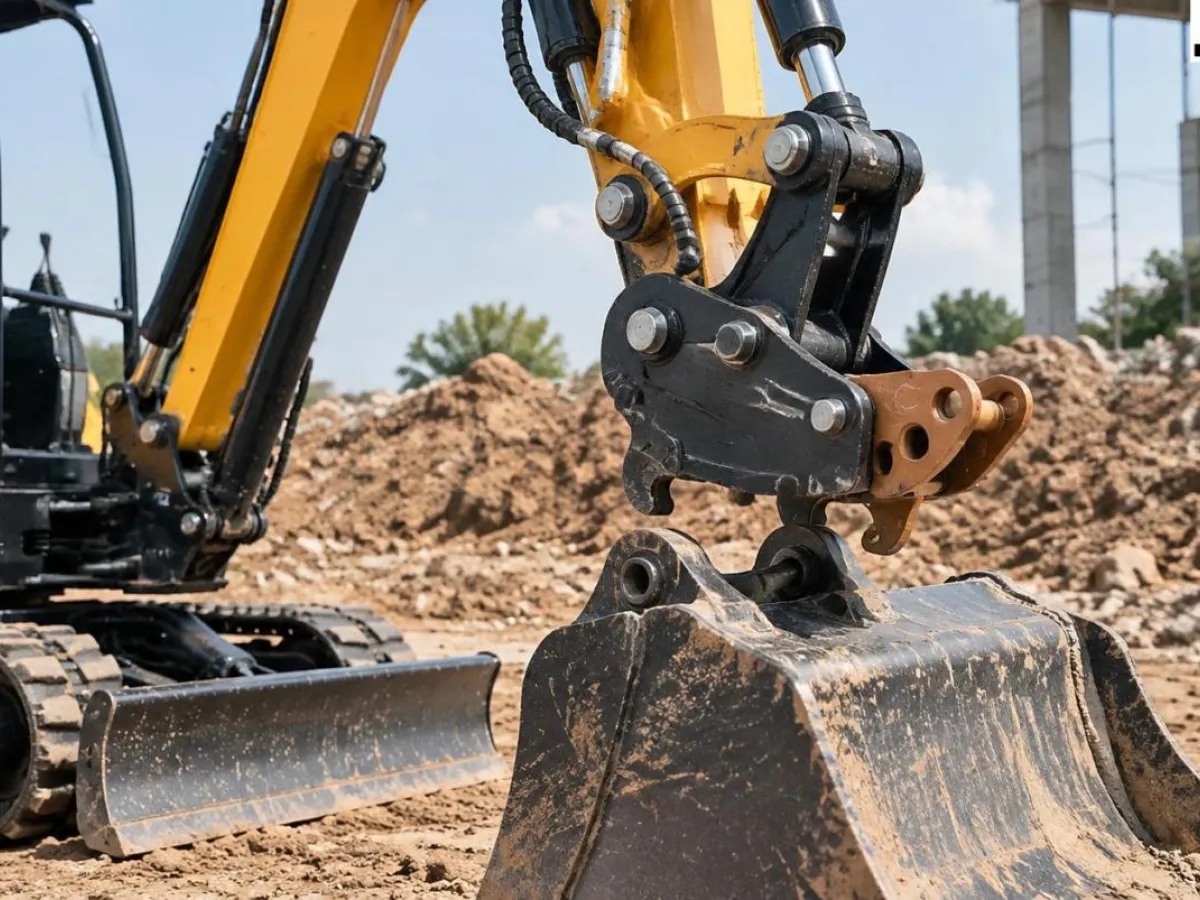
Broken concrete and masonry need to be sorted and loaded efficiently. This is where a hydraulic thumb or grapple attachment delivers value after the breaker is swapped off. The breaker breaks; the thumb loads. On a job where both are needed, a machine with a quick coupler allows the swap in under five minutes.
Rebar separation is a frequent requirement on concrete demolition sites — recycling facilities separate concrete and steel. The operator can use the bucket to break concrete away from exposed rebar, then use the thumb to stack rebar separately. This reduces skip hire cost and often generates scrap metal revenue.
Conclusion
A mini excavator with a correctly matched hydraulic breaker handles the full range of residential and light commercial demolition work — concrete breaking, wall removal, slab demolition — with precision that larger machines cannot match in confined or access-restricted sites.
The specification discipline matters: oil flow, operating pressure, and breaker weight all need to be within the host machine's capability. Run that match correctly, apply sound breaker technique, and the machine-tool combination is the most productive option on small-to-medium demolition projects.
Specifying a breaker for your machine?
Contact JRD Machinery with your machine model, auxiliary circuit flow rate, and operating pressure. We will confirm compatible breaker options and supply with full CE documentation. Quick coupler packages available for multi-attachment operation.
Email: info@jrdmachinery.com
Phone: +86 136 9536 6564
Website: www.jrdmachinery.com