



Getting the Grade Right — Leveling and Finishing With a Mini Excavator
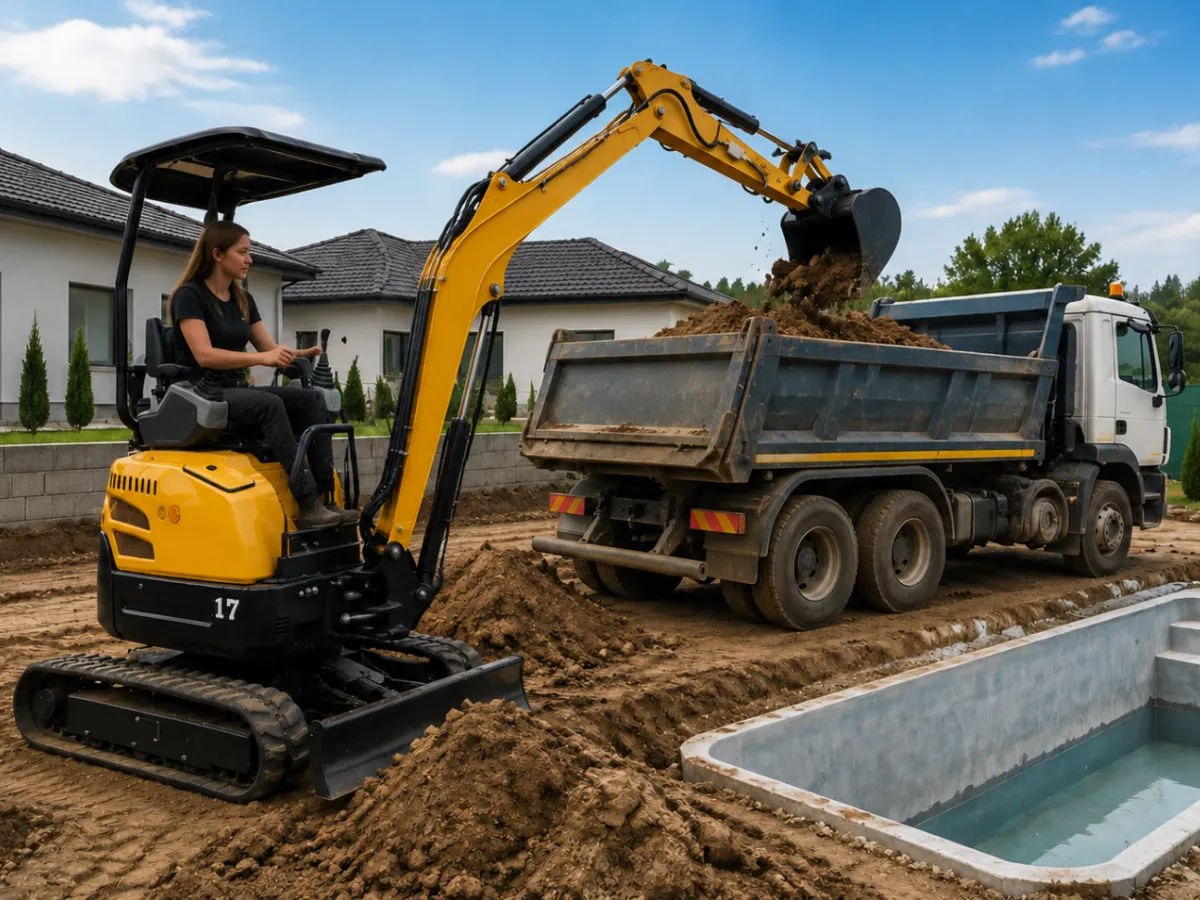
Most operators learn to dig before they learn to grade, and that order creates a skill gap. Digging is intuitive — break material, curl bucket, swing, dump. Finish grading is the opposite of intuitive. It requires shallow, controlled drag passes, constant reference to grade stakes or laser levels, and bucket curl discipline that goes against the digging instinct. On a site where the finished surface matters — a lawn area, a driveway sub-base, a building pad — grading done poorly with a mini excavator creates more work than it saves.
Done correctly, a compact excavator grades faster than hand raking, is more consistent than a skid steer on soft or irregular ground, and can access areas that a motor grader cannot reach. This article covers the technique, bucket selection, and machine configuration choices that separate a clean result from a rough one.
The Right Bucket for Grading Work
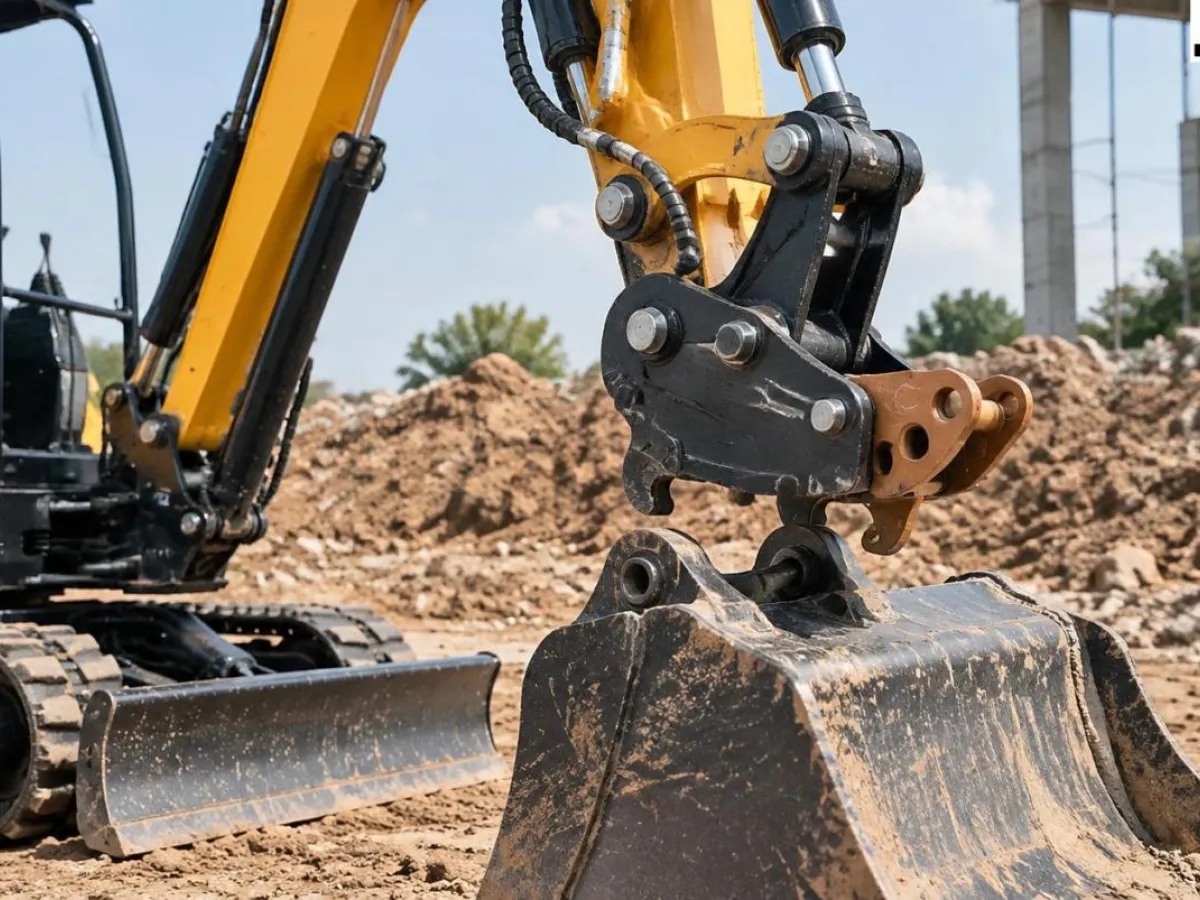
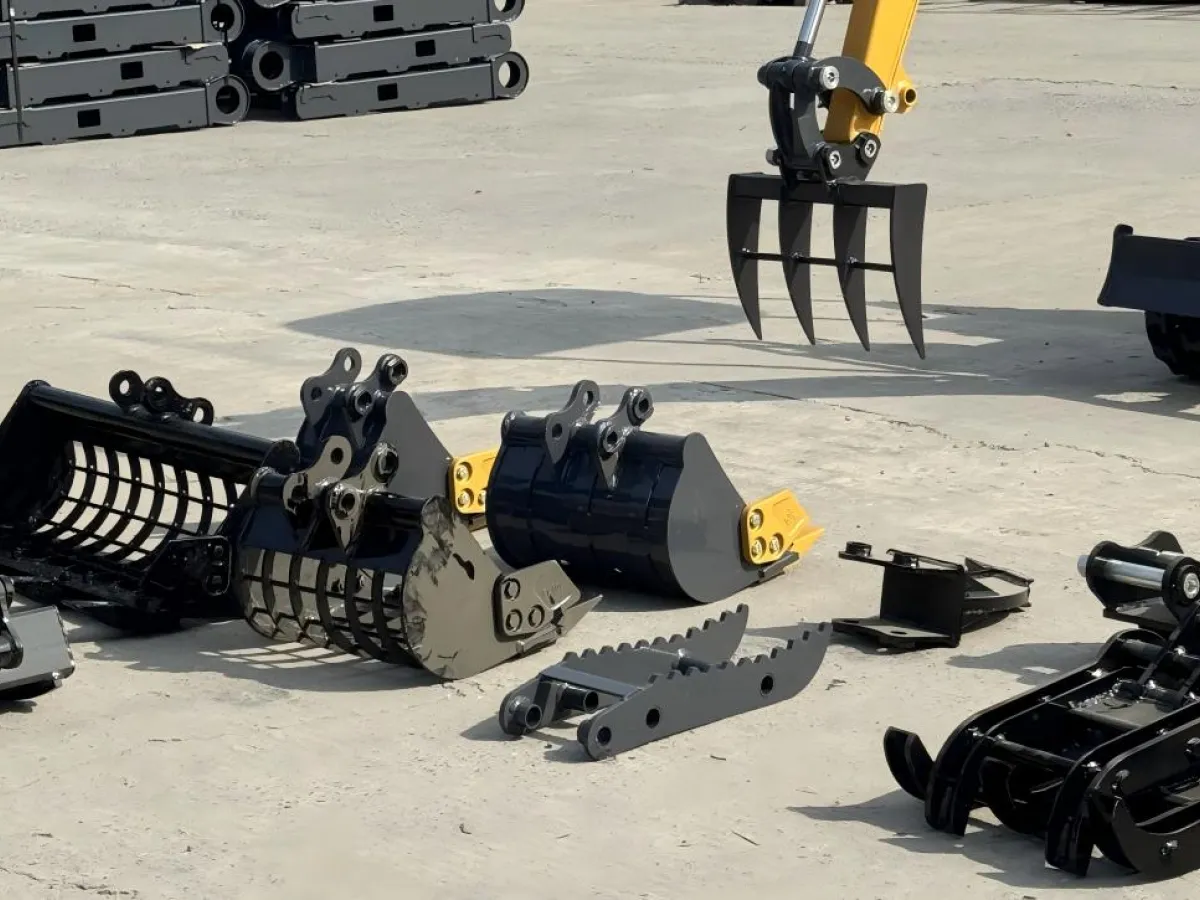
A standard digging bucket with teeth is the wrong tool for finish grading. The tooth tips cut into the surface rather than dragging across it, and the curved profile cannot lay material flat. Two bucket types suit grading work:
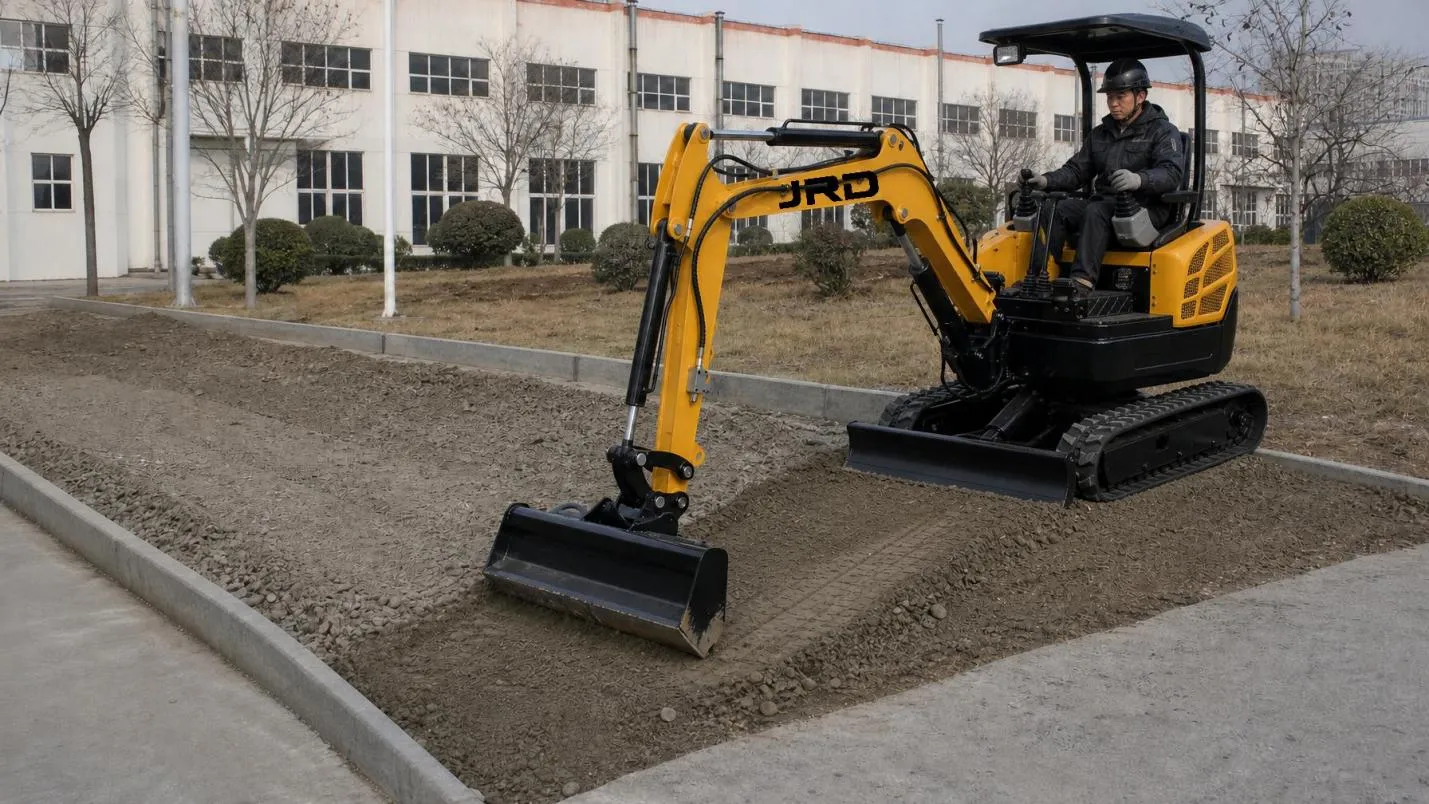
Grading bucket (cleanup bucket): wider than a digging bucket for the same machine class, with a straight bolt-on cutting edge rather than teeth. The flat base allows a clean drag pass. For a 15 series or 17 series machine, a 600–700 mm grading bucket covers useful area per pass without overloading the arm.
Tilt bucket: a grading bucket mounted on a hydraulic tilt mechanism (typically ±45 degrees left and right). The tilt function allows the operator to lay material at a cross-slope without repositioning the machine — critical for drainage gradients on driveways, hardstand areas, and around building pads where the finished surface needs a consistent fall. A tilt bucket requires a third-function auxiliary hydraulic circuit.
The 17 series with Taifeng multi-way valve handles tilt bucket operation cleanly — the dedicated auxiliary port provides consistent flow to the tilt cylinder without starving the main dig circuit. Machines running gear pumps rather than variable piston pumps may see pressure drop when bucket tilt and arm movement are demanded simultaneously.
Reading the Site Before the First Pass
Grading starts with understanding what material is where. Before the bucket touches the ground:
Identify high spots and low spots — walk the area, look for pooling from previous rain, or use a rotating laser level to map existing elevation
Calculate cut and fill balance — grading moves material from high to low; if the site is net-cut (more material to remove than to spread), a truck needs to be staged. If it is net-fill, material must be imported or drawn from a stockpile
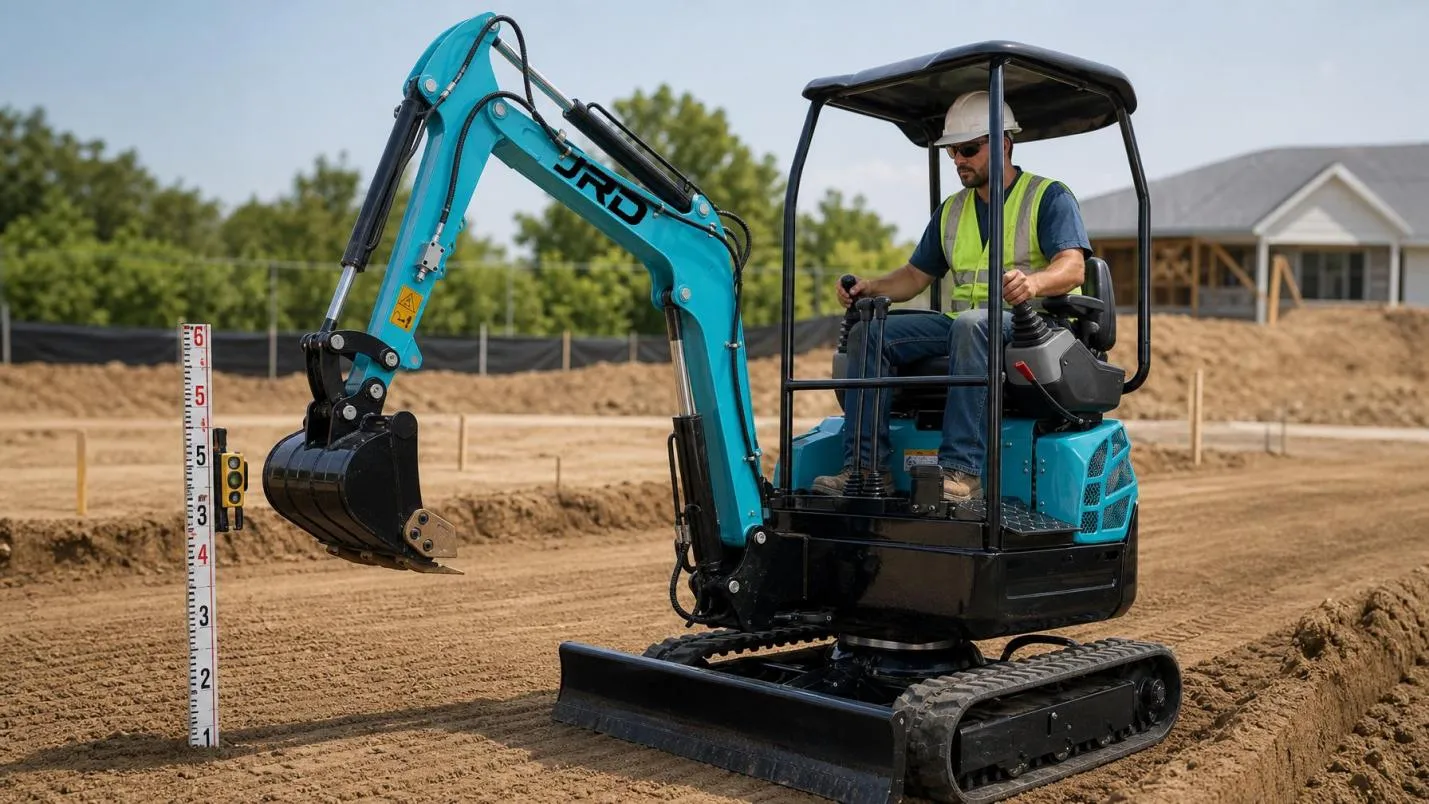
Locate grade stakes or laser references — work to a datum, not to visual estimation. A laser grade receiver mounted on the bucket or stick gives the operator continuous elevation feedback without leaving the cab
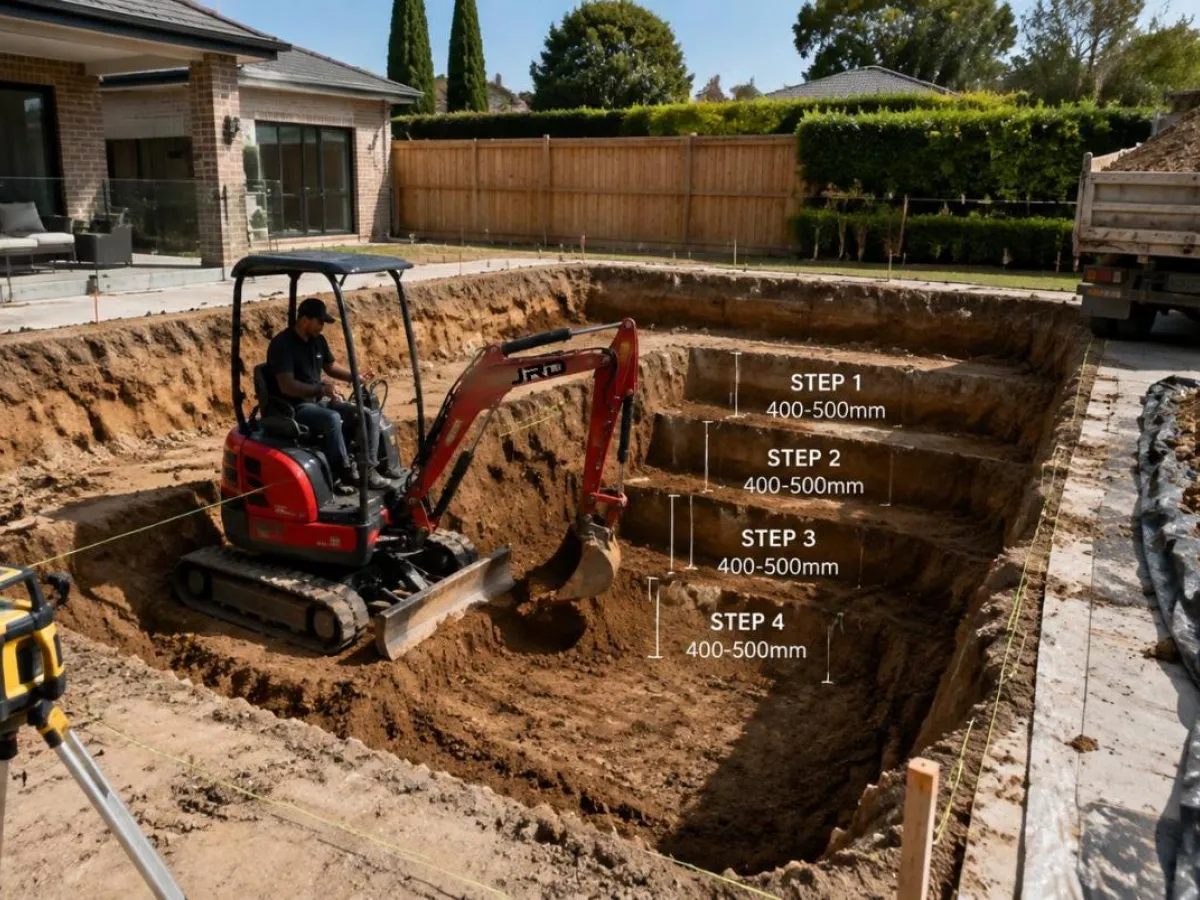
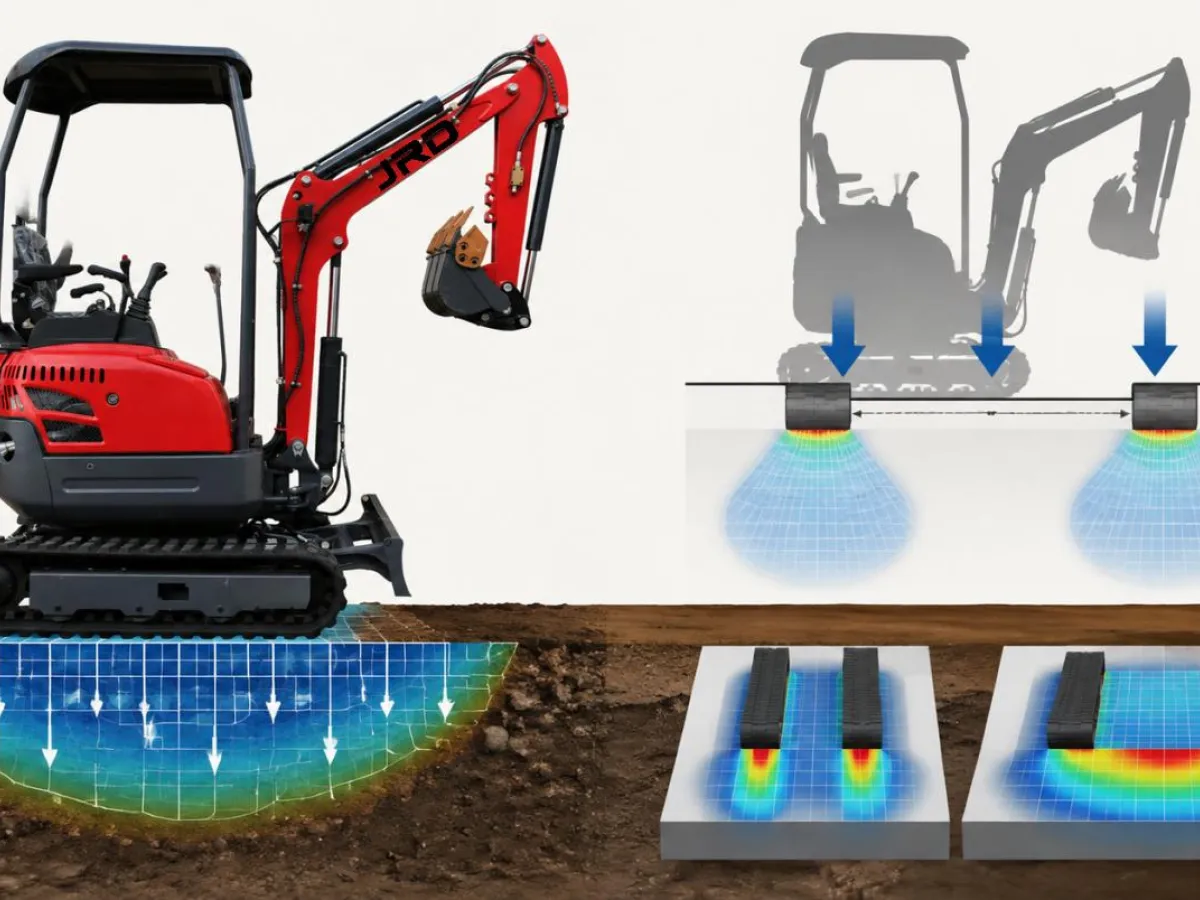
Check subgrade condition — grading over soft, wet ground compresses the surface unevenly. If the subgrade is unacceptably soft, stabilisation or waiting for dry conditions produces a better result than grading in wet conditions
Operator Technique — The Drag Pass
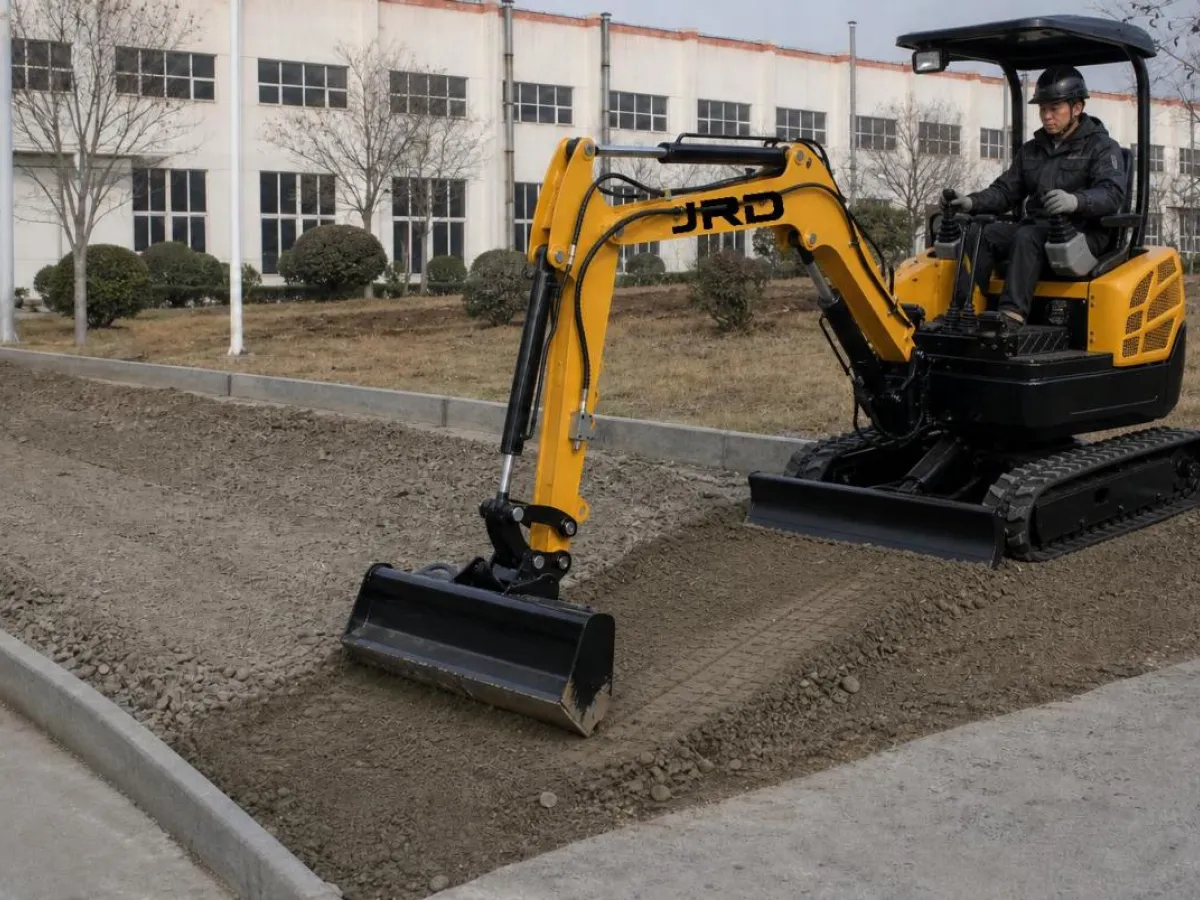
The fundamental grading technique with an excavator is the drag pass: the operator positions the bucket at a set height, then pulls the arm toward the machine with the bucket slightly above ground surface, letting the cutting edge redistribute material as it moves.
Key technique points:
Set boom height before arm movement — fix the boom so the bucket rides at the correct grade elevation, then move only the arm. Trying to control grade with boom and arm simultaneously is the most common cause of inconsistent surface
Curl discipline — maintain a constant bucket curl angle through the pass; do not add or remove curl during the drag, as this changes the cutting edge angle and disturbs the surface
Overlap passes by 100–150 mm — this prevents ridges between passes; the overlap zone smooths out any cut-height variation
Work with the machine, not against it — grade in the direction of the machine's reach, not across it; side-to-side grading requires repeated repositioning and produces less consistent results
Use short passes on final finish — 1.5–2 m drag passes give better control than long sweeps; longer passes lose bucket height reference mid-way
Machine Positioning Strategy
Position the machine to maximise the area covered from a single park. For flat grading, the mini excavator sits at one end of the work zone and grades toward itself, moving backward in 1–1.5 m increments as each strip is completed. This keeps the machine on ungraded ground and avoids tracking over finished surface.
The 16 series with telescopic undercarriage has a particular advantage in grading work: the operator can narrow the tracks to minimum width, grade a strip, widen the tracks for stability while the machine repositions, then narrow again for the next strip. This is useful in confined areas where a wider machine would damage finished edges.
For larger areas, set up grade stakes at 5 m intervals and work one bay at a time. Maintain visual line-of-sight to at least two stakes per pass. On bigger jobs, a laser grade receiver on the stick removes the need to stop and check stakes — the display in the cab shows whether the bucket is at, above, or below target grade continuously.
Common Grading Problems and How to Avoid Them
Washboard surface: caused by varying arm speed through the drag pass. Fix: maintain consistent arm pull speed; use engine speed setting to regulate hydraulic flow rather than relying on joystick modulation alone.
High centre between passes: caused by insufficient overlap. Fix: increase overlap to 150–200 mm and reduce pass length to maintain height reference through the full pass.
Low spots at the start of each pass: caused by the bucket dropping slightly as arm movement begins. Fix: begin the pass with the arm pre-loaded (arm slightly extended), so the first 200 mm of pull is stabilising the bucket height rather than correcting for initial drop.
Ridging at machine parkings: when the machine moves backward to a new position, the tracks disturb the surface behind. Grade across the track marks with a final cleanup pass before declaring the area finished.
Machine Classes for Grading Work
For lawn prep and light topsoil grading: 12 series or 13 series machines work well. They carry a 400–500 mm grading bucket without overloading the arm and are light enough to work on soft ground without rutting.
For driveway sub-base and building pad work: 15 series to 18 series machines with a 600–700 mm grading bucket. These classes balance reach, force, and operating weight for most residential and light commercial grading tasks.
For large hardstand or road sub-base: 22 series and 25 series machines with tilt bucket. At this class, the machines are approaching the boundary of the compact category and provide useful area coverage per repositioning. A laser control system on the bucket is worth the installation cost at this scale.
Conclusion
mini excavator is a learnable skill that produces professional results once the operator understands bucket selection, drag technique, and position strategy. The machine that handles digging efficiently can grade the same site — with the right bucket fitted and the right reference system established.
The key choices: a straight-edge grading bucket or tilt bucket matched to machine class, a grade reference system (stakes or laser), and drag technique that keeps boom height fixed while arm does the work. Get those three right and the finished surface will not need hand raking.
Contact Us
Choosing the right undercarriage is only half the battle—ensuring your mini excavator performs shift after shift starts with a conversation tailored to your terrain, your access points, and your daily work profile. Whether you need a compact 660 kg machine for narrow doorways or a telescopic-chassis 2,100 kg model for sloped, mixed-surface sites, our team helps you match the right track configuration, tensioning routine, and travel speed options to your real-world conditions.
Get in touch for expert advice or a quote:
Email: info@jrdmachinery.com
Whatsapp: +86 136 9536 6564
Website: www.jrdmachinery.com