



Reading the Numbers Right — What Mini Excavator Spec Sheets Actually Mean
Two mini excavators from different manufacturers, both listed at "1,500 kg" with "2.0 m digging depth" and "15 KN breakout force", can perform completely differently on the same site. The spec sheet numbers are real — but they measure different things, under different test conditions, at different points in the machine's geometry.
Buyers who know how to read a spec sheet correctly avoid two problems: paying for performance they cannot use on their actual job type, and underbuying on a spec that sounds similar but falls short in the field.
This article goes through the main spec sheet categories, explains what each number actually measures, and flags the comparisons that are misleading when taken at face value.
Operating Weight — What Is and Is Not Included
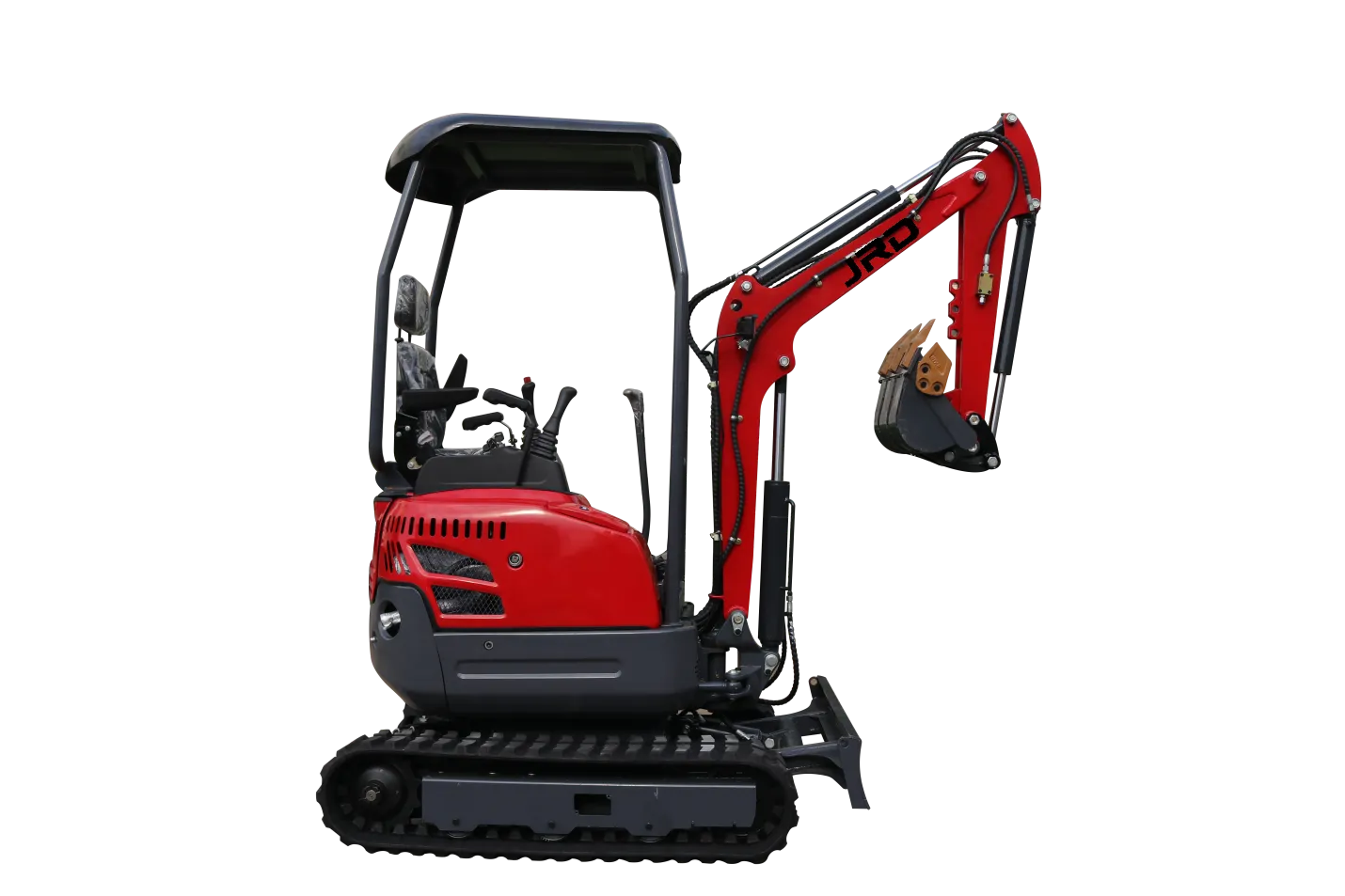
Operating weight is the starting point for every other performance number. But operating weight is not a consistent standard across manufacturers. Some figures include the operator (75 kg standard), a full fuel tank, hydraulic oil, and attachments. Others are machine-only weight without fluids.
Always confirm:
Is the operating weight stated with or without the operator?
Does it include hydraulic oil and fuel (most correct figures do)?
Is the standard bucket included, or is it machine-only?
For ground pressure calculations and transport weight limits, use the heaviest reasonable configuration — machine, oil, fuel, bucket, and operator if relevant. Track length and width appear separately on the spec sheet; ground pressure is derived from these plus operating weight.
Digging Depth — Maximum vs. Usable
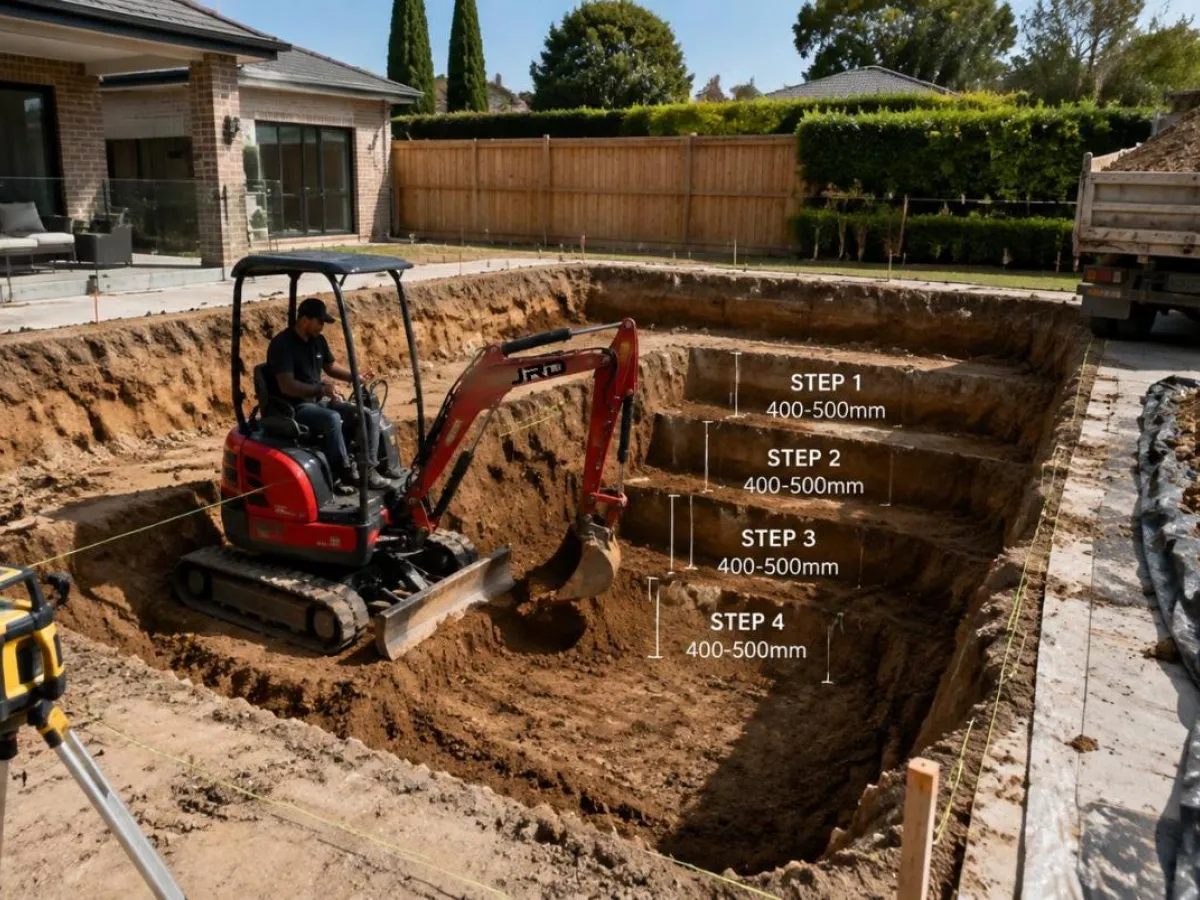
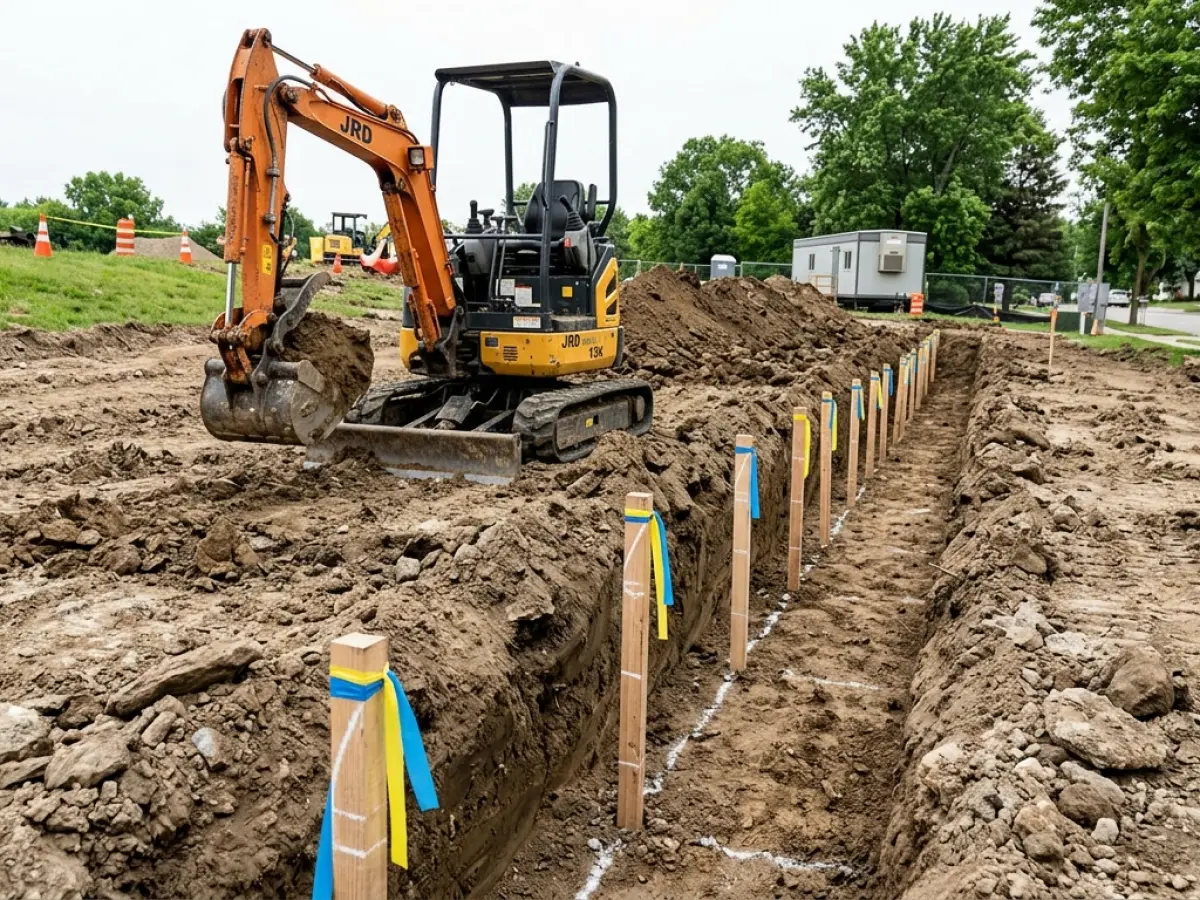
Maximum digging depth is the vertical distance from ground level to the lowest point the bucket tip can reach, with the arm fully extended. This is the best-case number — the machine must be on flat, level ground, and the bucket is at its extreme reach, where breakout force is at its minimum
For most trench work, the practical dig depth is 80–90% of the stated maximum — anything deeper requires the machine to be positioned at the edge, which affects stability, especially in soft ground. When comparing machines for a job requiring 1.8 m trench depth, look for machines rated at 2.0 m minimum, and confirm arm length.
Some manufacturers specify two dig depths: with the standard arm and with a long arm option. If both are listed without clear labelling, the number may be the long-arm spec — check arm length in the dimensions table.
Breakout Force — Two Numbers, Two Different Things
Most spec sheets list two breakout force figures: bucket digging force (also called bucket breakout force) and arm crowd force (arm digging force). These are measured at different points and are not the same measurement.
Bucket digging force: the force generated by the bucket cylinder curling the bucket toward the machine. This is typically the higher of the two numbers — it measures the machine's ability to bite into material at the bucket tip.
Arm crowd force: the force generated by the arm cylinder drawing the arm toward the machine. This is typically lower — it measures the machine's ability to drag material toward the machine during the power stroke.
Both figures are measured at ISO standard test conditions — bucket at the lowest point, arm extended at 90 degrees to the boom — which are not representative of most digging angles. Real-world available force is 60–75% of the ISO figure at typical working positions. When a supplier quotes "15 KN breakout force" on a 1,500 kg machine, confirm whether this is bucket force, arm force, or an undisclosed measurement point.
Tail Swing — Zero, Reduced, and Standard
Zero tail swing (ZTS): the upper structure does not protrude beyond the track width when slewing. This allows the machine to work within its own footprint — essential in confined indoor demolition, narrow roadside work, or trench operations where the rear swinging into a wall or passing vehicle is a hazard. ZTS machines sacrifice some counterweight, which affects lift capacity.
Reduced tail swing (RTS): the rear of the upper structure slightly exceeds the track width, but by less than standard machines. A practical compromise for tight sites where zero swing is not essential but minimal overhang matters.
Standard tail swing: the counterweight extends beyond the track width. These machines have better rated lift capacity at the same operating weight because the counterweight is more effective at a greater radius. Where site width is not a constraint, standard swing is the more economical choice per tonne of lift.
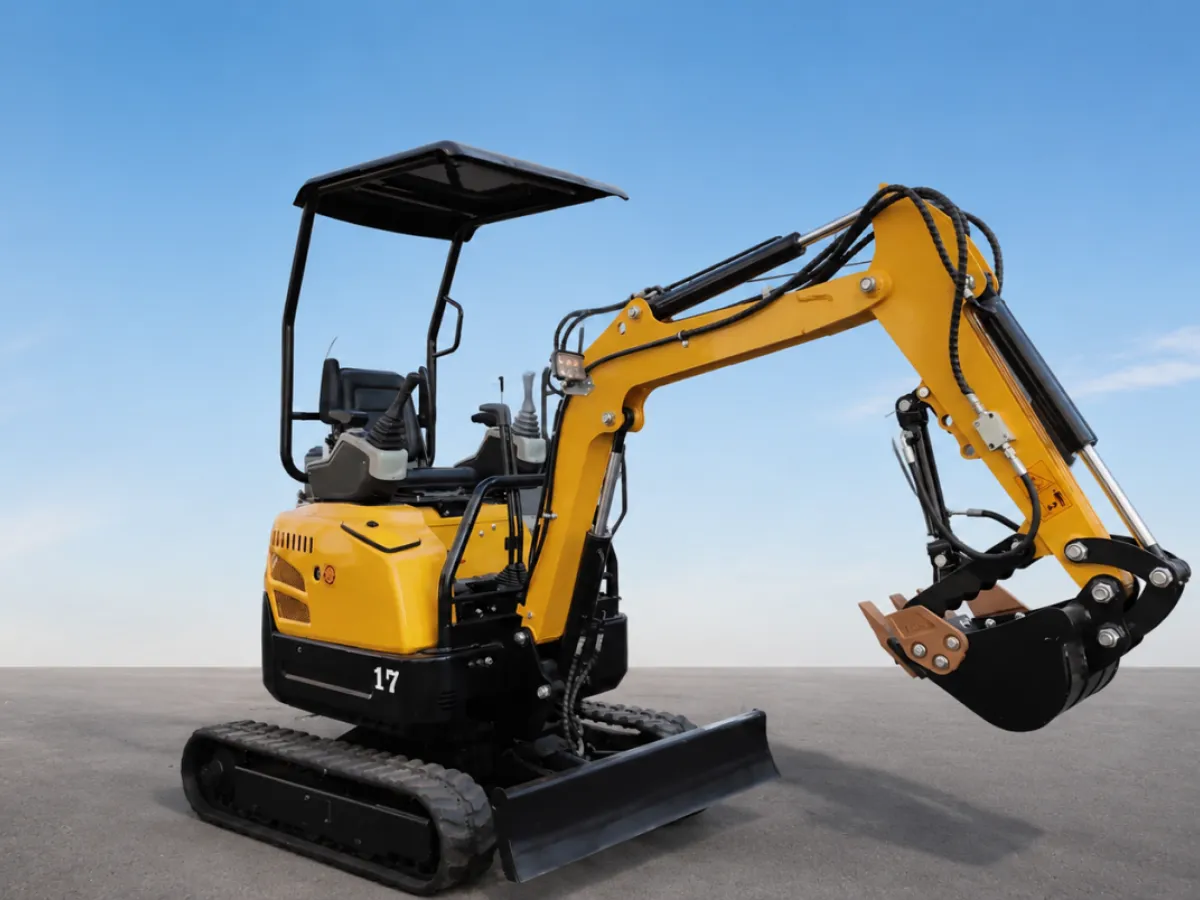
Most machines in the 06 series and 10 series class are inherently near-zero tail swing due to their compact upper structure. Larger machines — 17 series, 22 series, 25 series — are increasingly available in both ZTS and standard configurations; the spec sheet should state this explicitly.
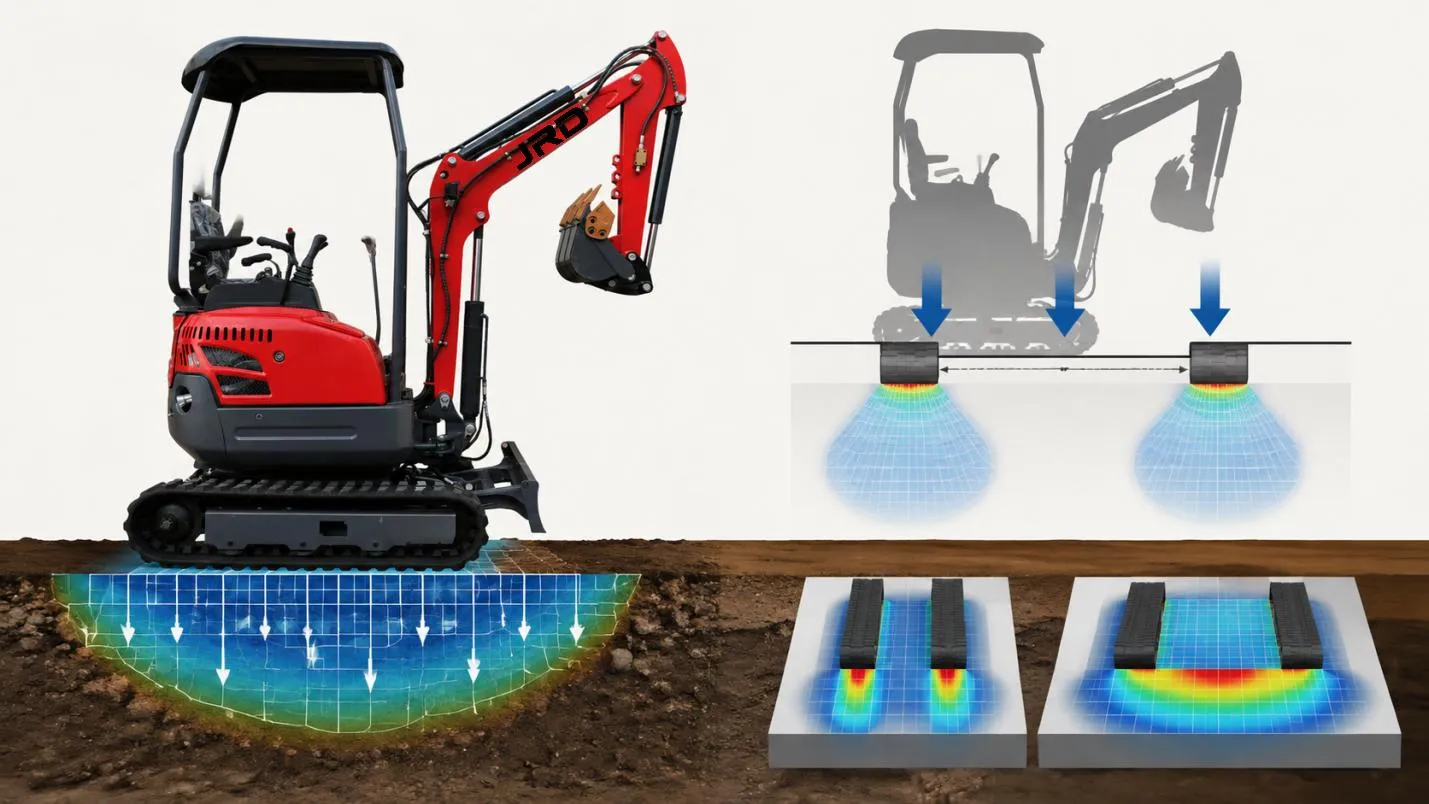
Ground Pressure — The Spec That Saves Your Lawn
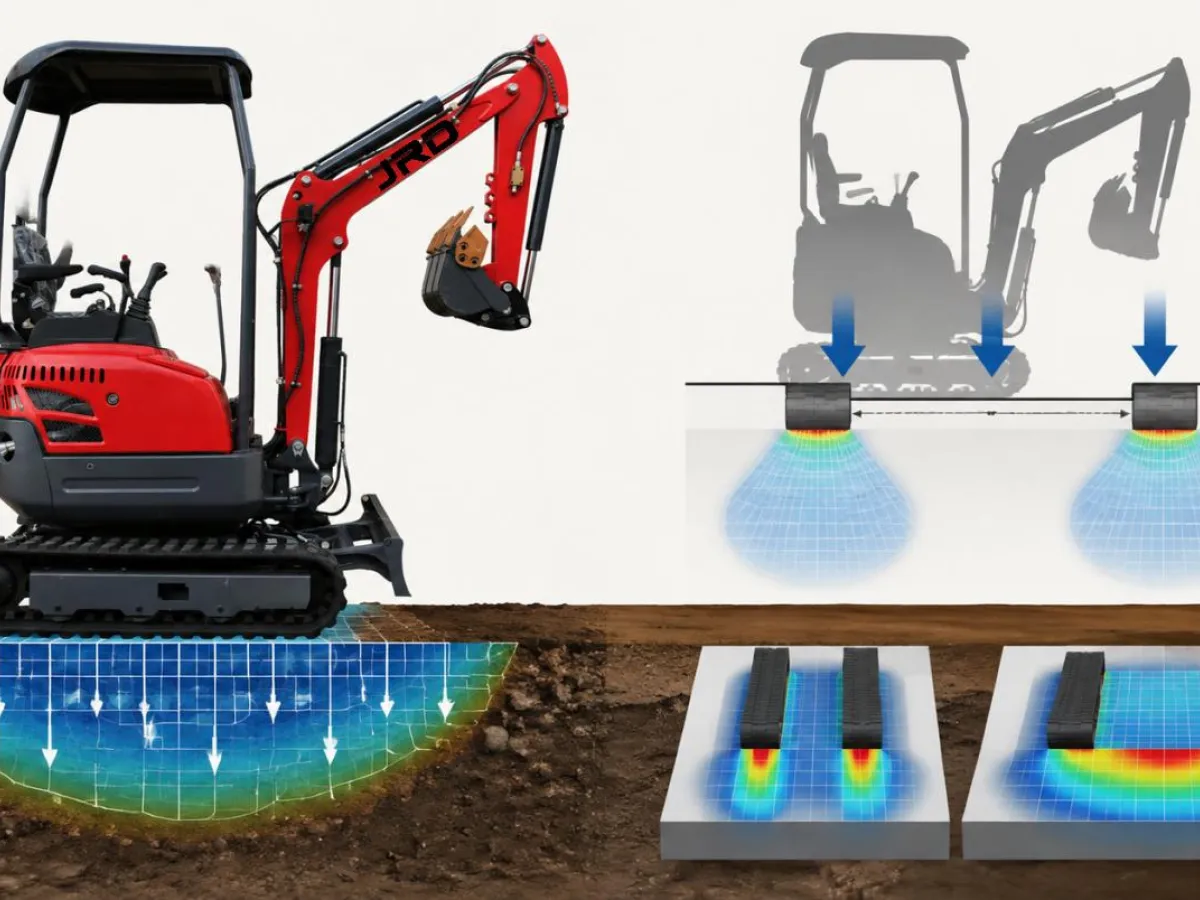
Ground pressure determines whether the machine will sink into soft ground, damage paving, or require timber matting. It is calculated from operating weight divided by the total track contact area — typically stated in kPa or kg/cm².
Low ground pressure machines — under 25 kPa — can work on turf, soft clay, and finished surfaces without leaving significant impressions. Machines with wider tracks for their weight (like the 16 series with extended telescopic undercarriage) achieve lower ground pressure in working configuration while retracting to a narrower width for transport and access.
A machine listed at 30 kPa ground pressure is roughly equivalent to a person standing on one foot — manageable on most ground. At 50 kPa+, surface protection measures are needed on anything other than compacted gravel or concrete.
Auxiliary Flow — The Attachment Enabler
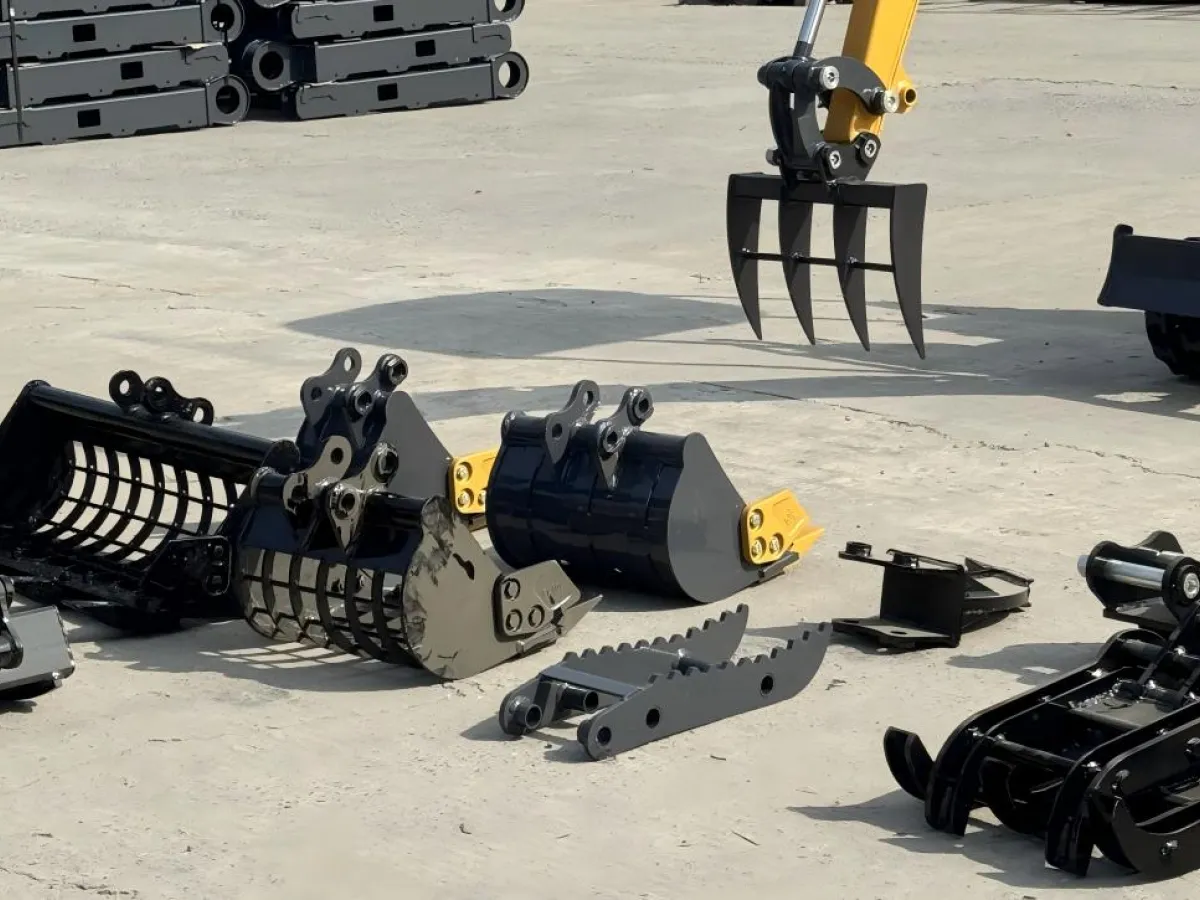
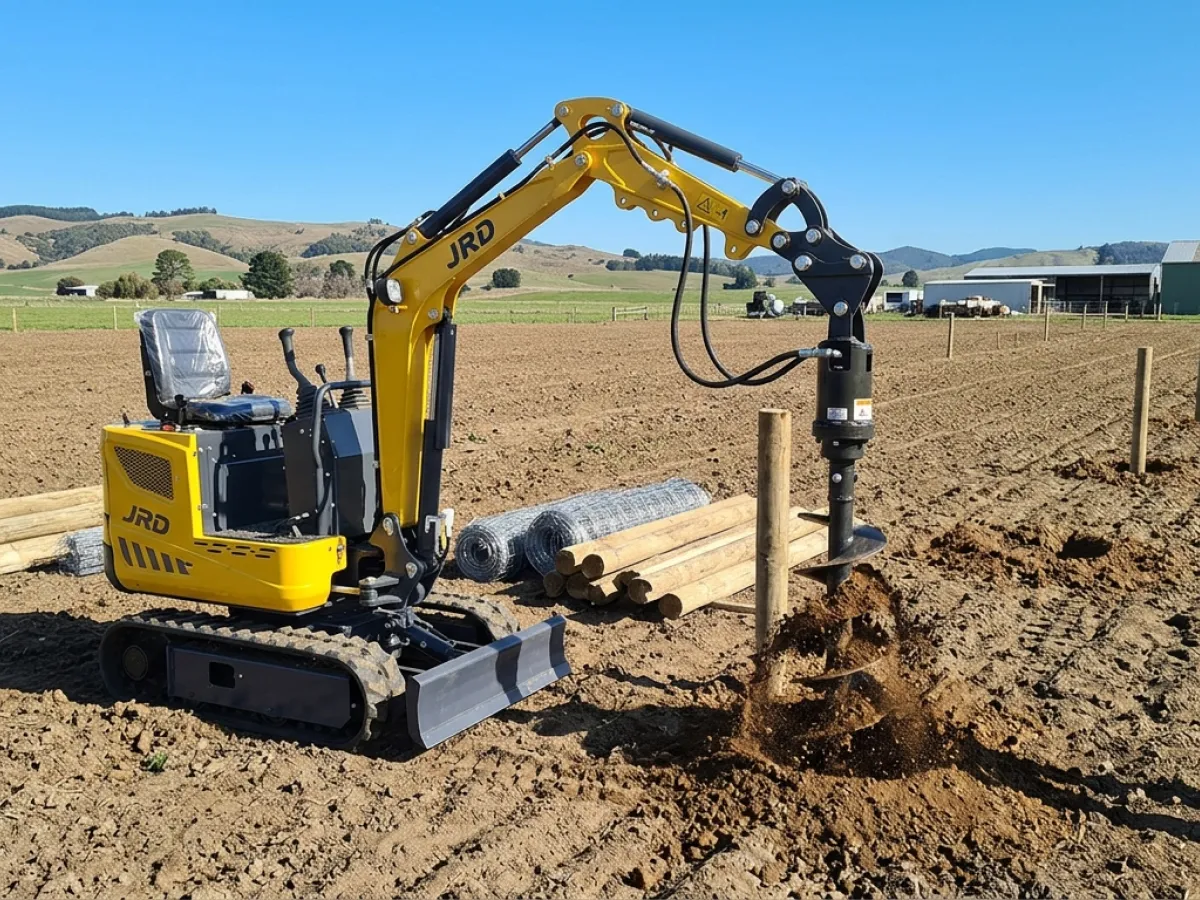
If you plan to run hydraulic attachments — breakers, thumbs, augers, tilting buckets, compaction plates — the auxiliary flow rate and auxiliary pressure are the numbers that determine compatibility. These appear as L/min at a stated bar pressure in the hydraulic system section of the spec.
A machine with 20 L/min auxiliary flow cannot run a hydraulic breaker that requires 60 L/min. The flow available at the auxiliary port — not the total pump output — is the relevant figure. On machines with fixed-displacement gear pumps (most sub-1,000 kg class), this flow is relatively low and varies with engine RPM. On machines with variable-displacement piston pumps — like the 17 series and 18K Pro — flow is more consistent under varying load, which benefits flow-sensitive attachments.
Engine — Rated Power vs. Net Power
Engine power is listed as rated output (gross) or net power (after cooling fan and alternator load). These can differ by 10–15%. Net power is the more useful figure for comparing machine capability under load.
Also check rated RPM — a small displacement engine producing its rated power at 3,400 RPM will be noisier and burn more fuel than an equivalent output from a larger engine at 2,400 RPM. For sustained digging work, lower-RPM engines at rated output run cooler and last longer between service intervals.
What the Spec Sheet Does Not Tell You
Four things rarely appear on a spec sheet that significantly affect ownership experience:
Service interval design — how accessible are the filters, the hydraulic drain, the track tension adjustment? These determine whether daily checks happen in five minutes or fifteen.
Parts availability — engine and pump parts availability by region determines your downtime exposure. A Kubota, Yanmar, or Laidong engine means parts are stocked in most markets. An obscure engine brand may not be.
Operator cab width and control layout — critical for fatigue over a full shift; no spec covers it
Build quality indicators — weld quality, paint prep, seal grades, and fastener quality differ between manufacturers at the same listed spec point
Conclusion
A mini excavator spec sheet is a starting point, not an answer. Breakout force needs qualification by measurement point. Dig depth needs a usability discount. Operating weight needs clarification of what is included. Auxiliary flow needs to be checked against the attachments you plan to run.
Buyers who ask these questions before signing an order avoid the most common outcome: a machine that meets its spec sheet and still does not quite do the job as expected. Get the answers in writing, compare on the same basis, and the right compact excavator is straightforward to identify.
Contact Us
Choosing the right undercarriage is only half the battle—ensuring your mini excavator performs shift after shift starts with a conversation tailored to your terrain, your access points, and your daily work profile. Whether you need a compact 660 kg machine for narrow doorways or a telescopic-chassis 2,100 kg model for sloped, mixed-surface sites, our team helps you match the right track configuration, tensioning routine, and travel speed options to your real-world conditions.
Get in touch for expert advice or a quote:
Email:info@jrdmachinery.com
Whatsapp:+8613695366564
Website: www.jrdmachinery.com