



Working Corners Without Moving the Machine — Boom Swing on Compact Excavators
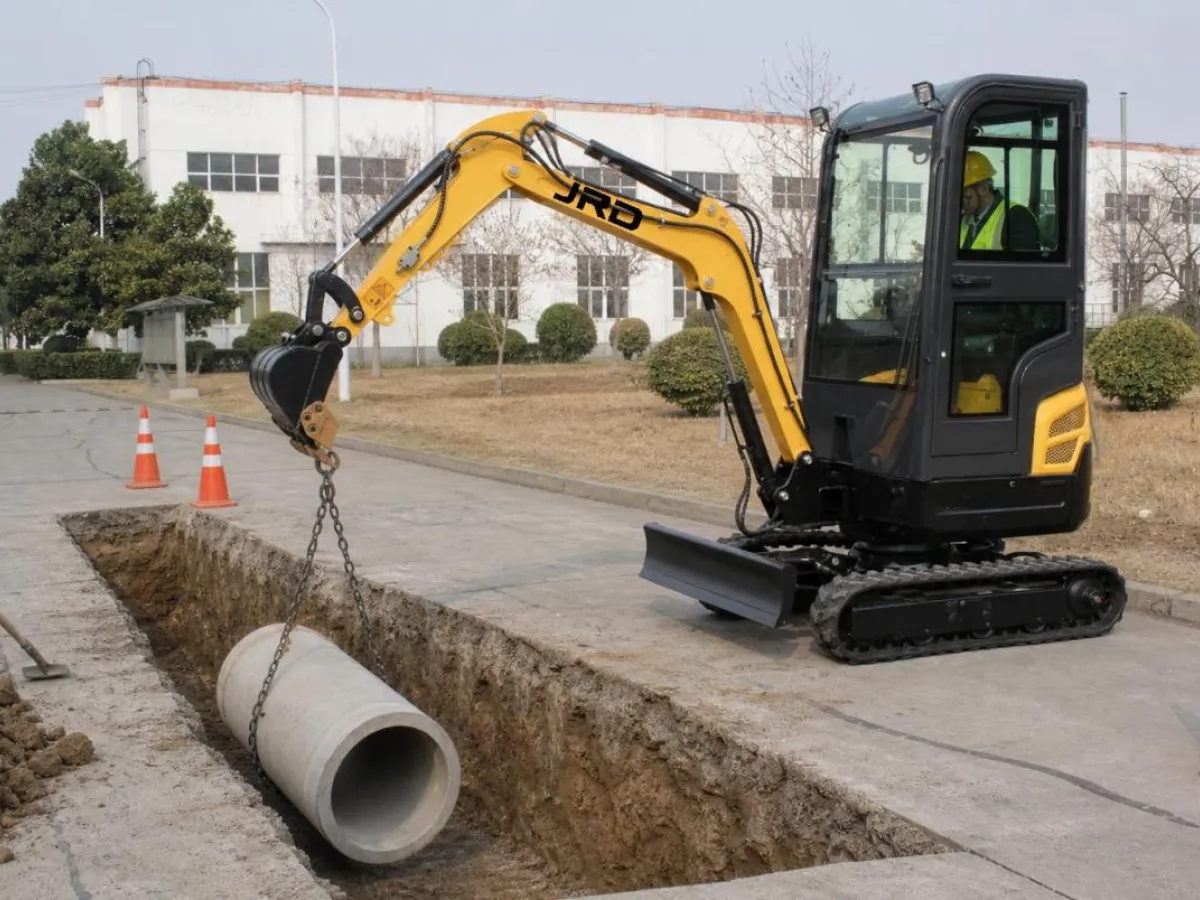
Here's a scenario every compact excavator operator knows: you're trenching along a wall, and the last 400 mm before the corner is unreachable without physically repositioning the machine. Without mini excavator boom swing, that repositioning means reversing out, re-tracking to the new angle, re-setting grade stakes, and losing ten minutes that add up across a day of wall-side trenching. Boom lateral swing — the ability to offset the arm left or right from the machine centreline while the chassis stays stationary — eliminates that constraint and changes how confined-space digging is planned.
This article examines how boom swing works mechanically, which machine configurations carry it and why, how it interacts with digging force and reach, and the practical techniques that get the most from it on tight sites. The machines that carry this feature are not entry-level — they're the models specified for professional site work where the cost of repositioning is measured in hours, not minutes.
What Boom Swing Actually Is — and What It Isn't
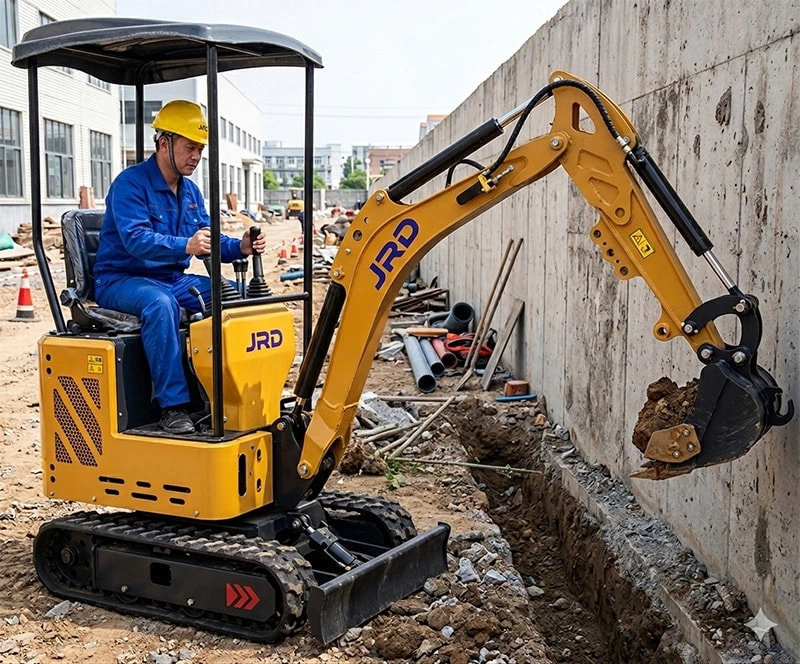
Mini excavator boom swing (also called boom lateral swing or offset boom) is the ability of the boom to pivot left or right at its base relative to the machine centreline. The pivot is typically driven by a dedicated hydraulic cylinder at the boom mount point. The range of swing varies by model — the 22 series and 25 series carry this feature with meaningful offset in both directions, enough to allow work along a wall face on either side without chassis rotation.
What boom swing is not: it is not a substitute for a competent slew radius. The machine still needs to be close to the work in both the lateral and forward-reach directions. What swing provides is the last 300 to 500 mm of lateral adjustment that the operator would otherwise achieve by creeping the undercarriage sideways — a manoeuvre that on soft or restricted ground is slow, disturbs grade work, and risks the machine's footing. Swing achieves the same lateral adjustment in a single joystick input while the chassis stays planted.
It also interacts with digging force. When the boom is swung to maximum offset, the effective bucket force at the tip drops compared to the centred position, because the hydraulic cylinder at the boom pivot must work against the offset angle. Experienced operators learn to swing to the offset position needed for access, then keep the bucket loading cycle within the range where force is still adequate for the soil being dug. For most wall-side trenching applications — typically 200 to 400 mm offset — the force reduction is minor and the gained access is the dominant benefit.
Which Machines Carry It and Why It's an Upgrade Decision
Across the range described in the product data, mini excavator boom swing appears on the 16 series, 22 series, and 25 series. This is not accidental — these are the machines positioned for professional site work where the productivity gain from swing justifies the additional hydraulic circuit complexity.
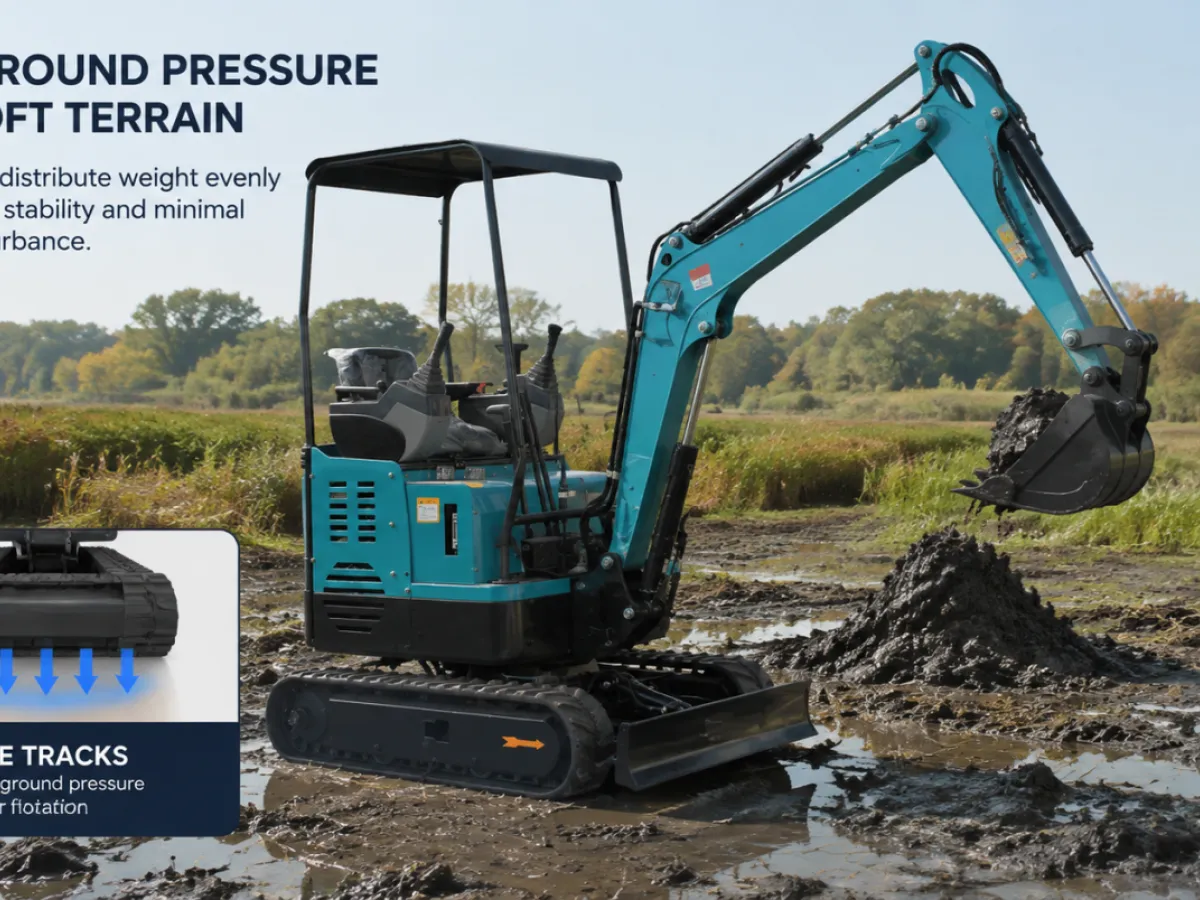
The 16 series at 1,500 kg with Kubota D722 engine pairs boom lateral swing with a telescopic chassis and high-low speed travel. This combination is specifically optimised for service trench work — utility installation along building facades, cable duct runs alongside existing infrastructure, pipe laying that requires the machine to track parallel to an obstruction while maintaining precise grade control. The telescopic chassis allows the machine to widen for stability when digging at offset and narrow for transit between zones.
The 22 series at 2,100 kg with Yanmar 3TNV80 engine and Bosch Rexroth axial piston pump adds boom swing to a machine that already delivers 15 kN digging force and a 3,800 mm maximum digging radius. At this weight class, the machine is handling work that smaller offset-boom machines cannot — breaking reinforced concrete within 200 mm of an existing structure, excavating footings alongside foundations that can't be disturbed by vibration from repositioning. The piston pump provides the stable flow priority needed to run boom swing hydraulics simultaneously with the main digging circuit without either function starving the other.
The 25 series at 2,000 kg adds a telescopic chassis and top-mounted boom cylinder to the boom swing and offset capability. The top-mounted cylinder improves hold position during offset work — a benefit described in detail in Article 51 — and the telescopic chassis means the machine can work at full offset width on a site and then retract to narrow mode for the next access point.
Practical Technique for Boom Swing Work
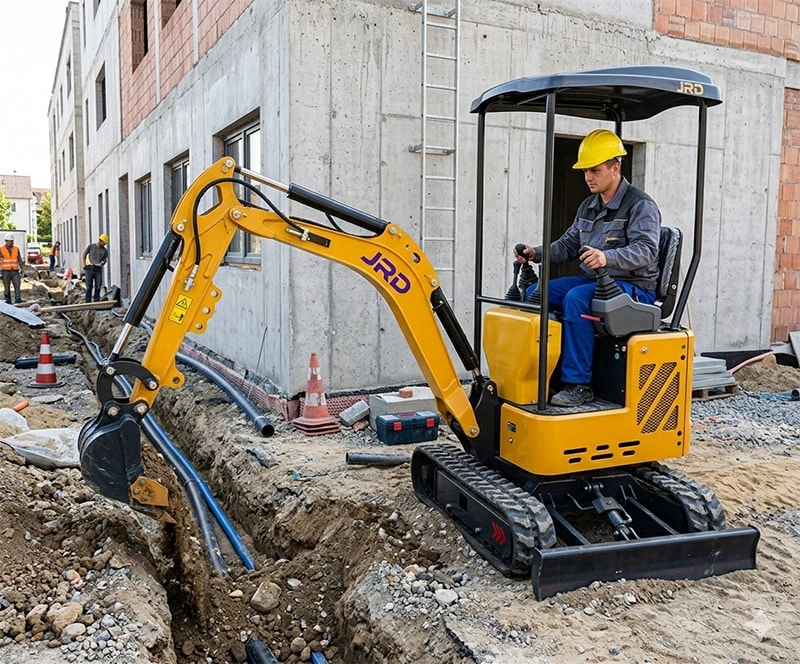
The most common mistake operators make with boom swing on a new machine is treating it like a fine-adjustment tool and expecting to use it continuously through the dig cycle. The boom swing pivot is typically operated with a foot pedal on K-series machines with pilot control (the 13K Pro, 17K, and 18K Pro all carry two-sided pilot control), which leaves both hands free on the main work functions. Where boom swing is joystick-operated, it's used to set position before the dig, then the joystick returns to boom and stick control for the actual excavation.
For diagonal trench lines — trenches that run at an angle to the machine's axis of travel — the boom swing lets the operator establish the working angle once and then drive along it without needing to constantly re-align the chassis to the trench direction. This is particularly useful in landscaping work where trenches follow curved paths, and in utility installation where pipes must follow building setback lines rather than straight property boundaries.
Side loading of the boom under offset is a real concern on heavy clay or rock. When the bucket hits resistance at maximum lateral offset, the resulting force has a twisting component on the boom mount. The correct technique is to curl the bucket first when facing high resistance, rather than crowding against the material with the arm extended. Curling engages the largest cylinder in the arm assembly — the bucket cylinder — which generates force in the direction aligned with the main structural members rather than across them.
Combining Boom Swing with Other Attachments
The hydraulic auxiliary circuit required to run boom swing also supports attachment operation on machines fitted for it. On the 22 series and 25 series, the multi-way valve architecture handles boom swing as one prioritised function among several — the machine can simultaneously run the swing offset and provide auxiliary flow for a rotating bucket or hydraulic thumb without either function starving. This matters for grab and sort applications where the operator is working debris in a tight corner: the boom swing positions the grab over the material, the auxiliary circuit opens and closes the hydraulic thumb or grapple, and both operations happen without needing to reset position.
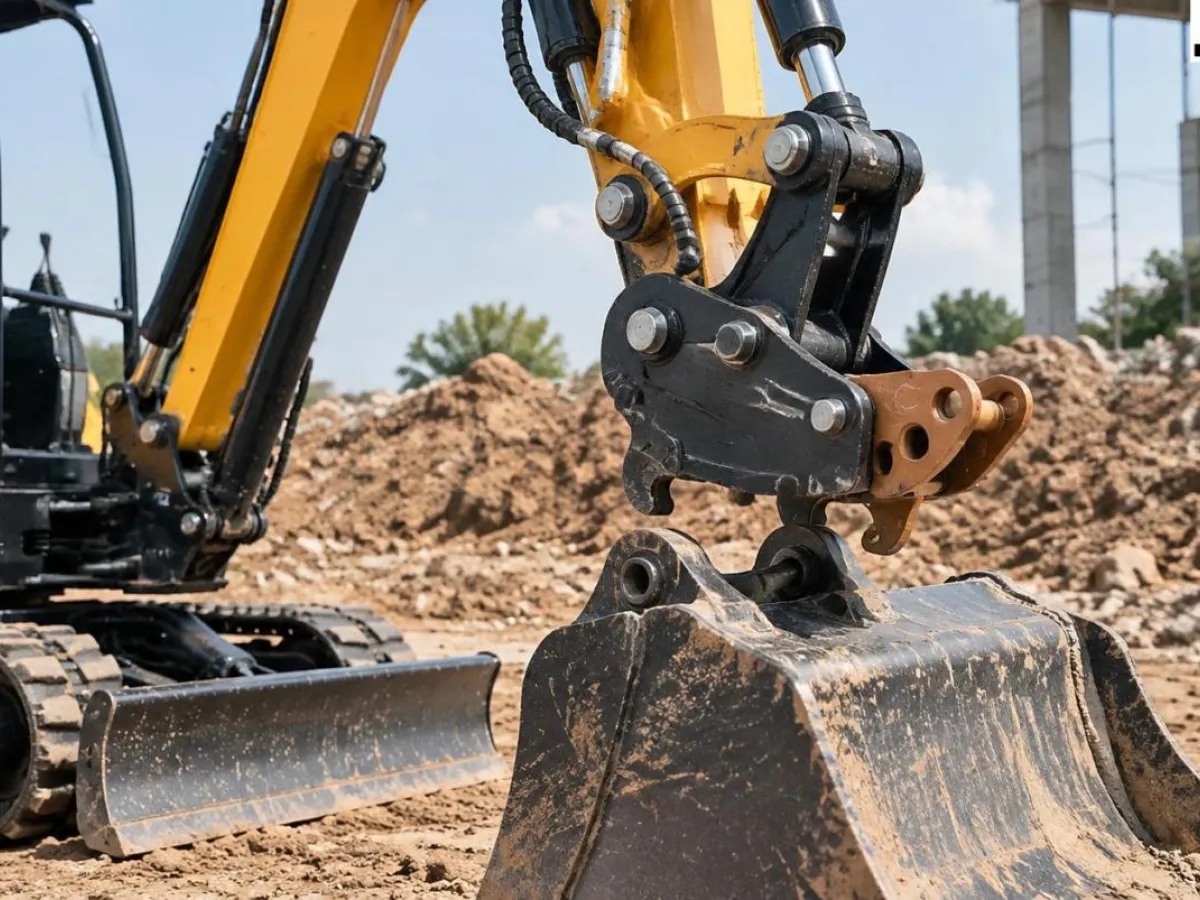
The tilting bucket — available as an optional attachment across the range — adds a further dimension of angle control that complements boom swing in flat work and grading applications. With a tilting bucket fitted on a machine with boom swing, the operator can cut a precise batter (sloped face) on the side of a trench that runs diagonally across the machine's path. Without boom swing, achieving this cut would require the chassis to be repositioned at exactly the right angle to the trench direction. With both features, it's a two-input adjustment from the cab.
For buyers evaluating the 16 series, 22 series, or 25 series as a mini excavator boom swing platform: the feature earns its keep fastest on sites with a lot of wall-side work, utility installation in tight urban areas, or landscaping jobs with complex curved layouts. On open excavation sites where repositioning is easy, it adds flexibility but doesn't transform the workflow. Match the machine specification to the majority of the work profile, not the occasional special case.
Need a compact excavator that works corners, walls, and confined zones without constant repositioning?
JRD Machinery offers CE-certified mini excavators with boom lateral swing on the 16, 22, and 25 series — including telescopic chassis and pilot control options for professional site work.
Visit www.jrdmachinery.com to compare specifications, or contact us for a model recommendation based on your specific site requirements and export destination.
Email: info@jrdmachinery.com
Phone: +86 136 9536 6564
Website: www.jrdmachinery.com