



Can a Mini Excavator Dig a Swimming Pool Yes — If You Plan the Access
For residential pool contractors and owner-builders, the question is not whether a mini excavator can dig a swimming pool — it is whether the machine fits the site. Most backyard pools sit behind a house, through a gate, across soft lawn. The compact excavator that can get through a 900 mm gate, stay on rubber track, and maneuver inside the pool footprint is exactly the right tool for the job.
The challenge is volume management. A standard plunge pool or lap pool in the 8 × 4 metre range generates 70–100 cubic metres of spoil at 1.5 metres depth. That material needs to get from the hole to a truck or a staging area — and in a residential backyard, there is usually only one route out.
This guide walks through machine selection, access planning, dig sequence, and the common mistakes that turn a three-day dig into a five-day cleanup.
Machine Size — The Gate, the Spoil, and the Depth
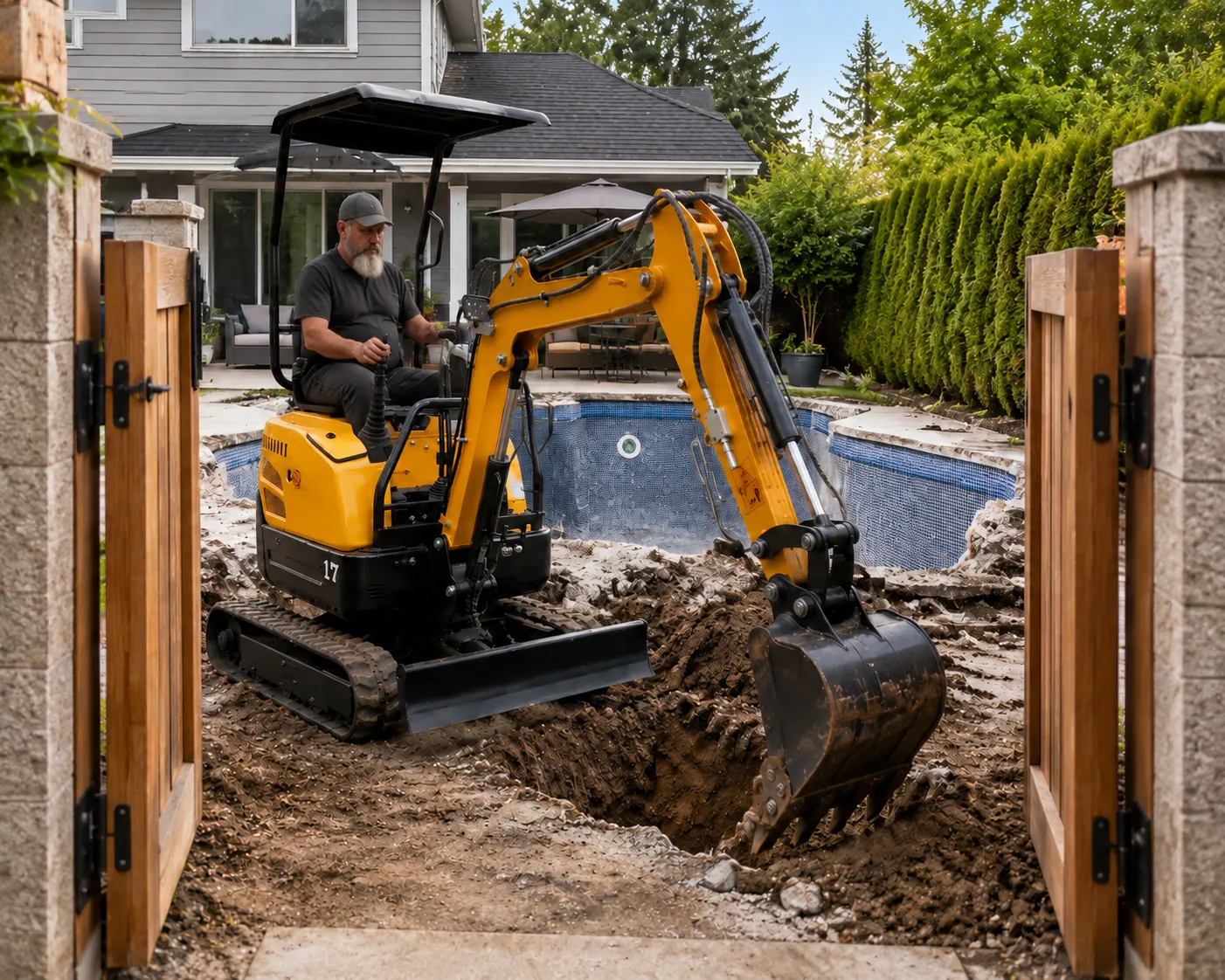
Access width defines the machine. A 06 series machine at roughly 600 mm track width passes through a standard 900 mm timber gate with room for the operator to manage the swing. However, at sub-700 kg and max digging depth of around 1.2–1.5 metres depending on the boom configuration, it is marginal for a standard pool that requires 1.6–1.8 metres of excavation.
A 10 series or 12 series machine at around 900–1,000 mm track width is often the practical minimum for pool work — enough digging force to break through the clay subsoil layer that typically sits below topsoil at pool depth, and a dig depth of 2.0+ metres on standard boom/arm configuration. If the access gate is 1,200 mm or wider, a 15 series machine becomes available and shortens the overall dig time significantly.
The 16 series with telescopic undercarriage is particularly well-suited to pool access: retract the tracks to 900 mm to pass through the gate, then extend to 1,400 mm for stability while working. No compromise on machine capability to fit a residential entry point.
Site Assessment Before the Machine Arrives
Arriving on site and discovering the fence post cannot be removed, or that the only route crosses a subsurface irrigation system, kills the schedule. Check:
Gate dimensions and removability — hinge pins, latch type, whether the posts are fixed or removable
Ground bearing from gate to pool mark — soft lawn, pavers, tree roots. Rubber track machines distribute load but still sink in saturated clay
Overhead clearance — pergolas, clotheslines, power lines near the pool edge
Spoil staging area — where do the first trucks queue? Trucks need to get within 20–30 metres for economic loading
Underground services — locate before breaking ground; pool excavations regularly encounter irrigation, power, and drainage lines
The Dig Sequence That Minimizes Rework
Pool excavation works in from the sides, not straight down. The machine sits outside the pool footprint, reaches in, and works from one end toward the other. For a rectangular pool, start at the far end from the spoil route and work toward the loading zone, so the machine travels over compacted, already-excavated material rather than fresh spoil.
Sequence:
Strip and stockpile topsoil separately — it has value for landscaping reinstatement
Cut the pool perimeter with a narrow bucket to define the wall line cleanly
Bulk excavate the centre mass to rough depth
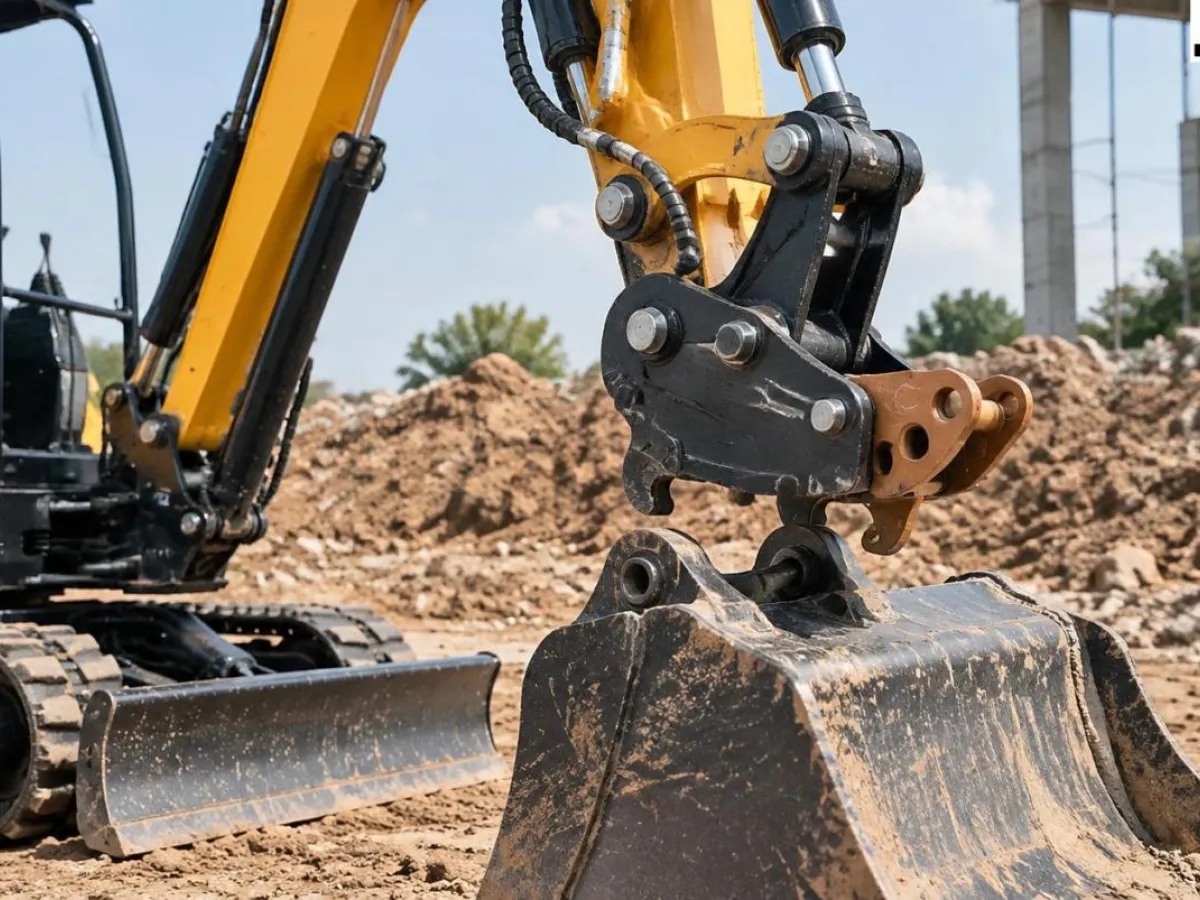
Step back and trim the walls to final profile using a grading bucket or straight-edge bucket
Hand-trim corners that the machine cannot reach — plan for this time in the schedule
Bench the ledge for the pool shell rebate if required — this is precision work; slow down
Managing Spoil Volume
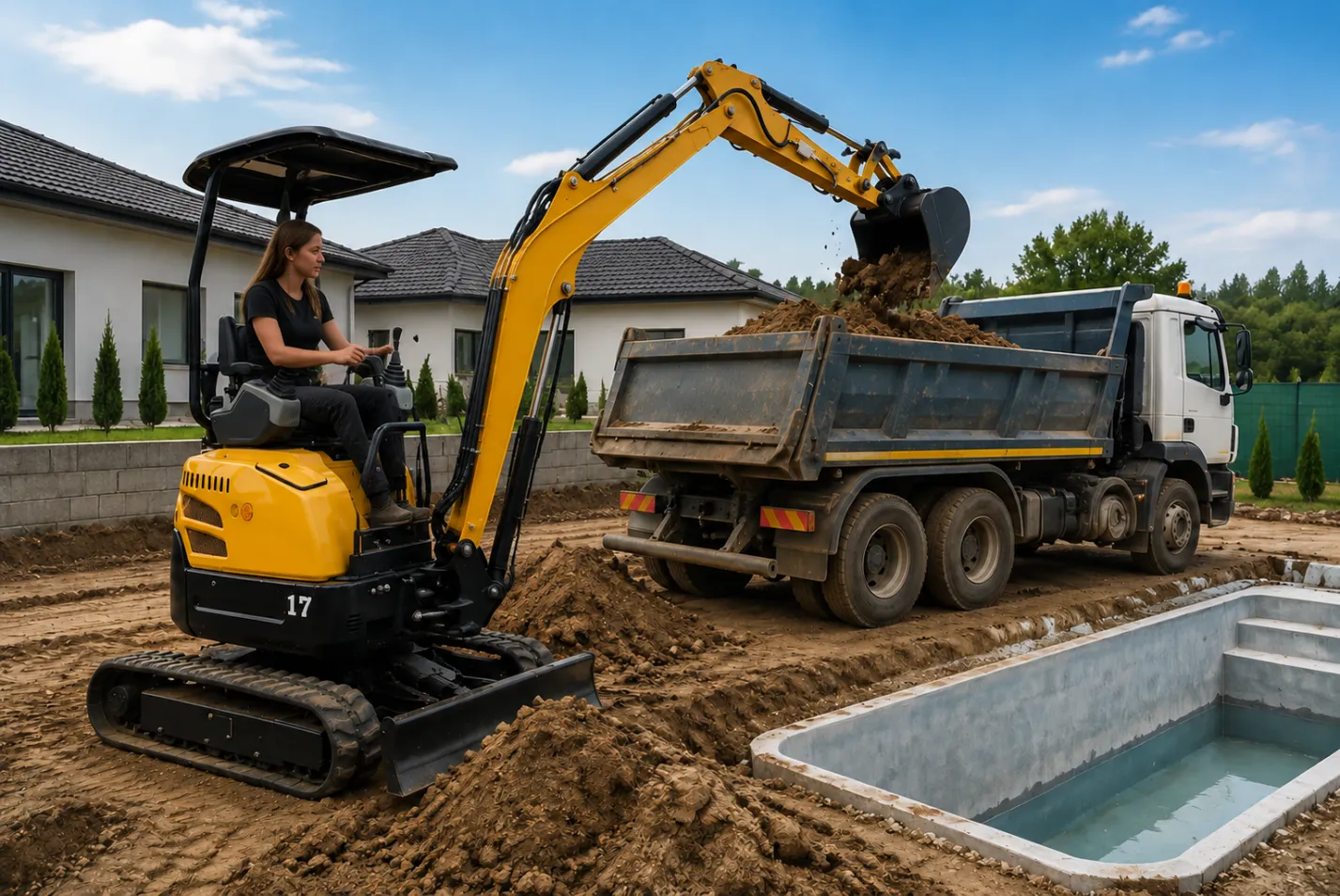
At 100 cubic metres of spoil, you need 10–15 truck movements for a standard 8-tonne tipper. The machine needs to load trucks efficiently — which means the operator should not be digging and loading in the same motion, one at a time. The better sequence is to dig a full pile, swing and deposit to a spoil pile adjacent to the dig, then load the truck from the pile separately. This keeps digging time and loading time distinct and reduces the impact of truck queuing delays.
If the gate access is too narrow for trucks and the spoil must be barrow-wheeled or loader-conveyed out, factor the cost correctly. A 60-tonne spoil removal job through a 900 mm gate on wheelbarrow is a full day of labour separate from the machine dig. Most experienced contractors in this situation arrange a temporary fence panel removal to create a wider opening for the truck.
Wet Ground and Groundwater
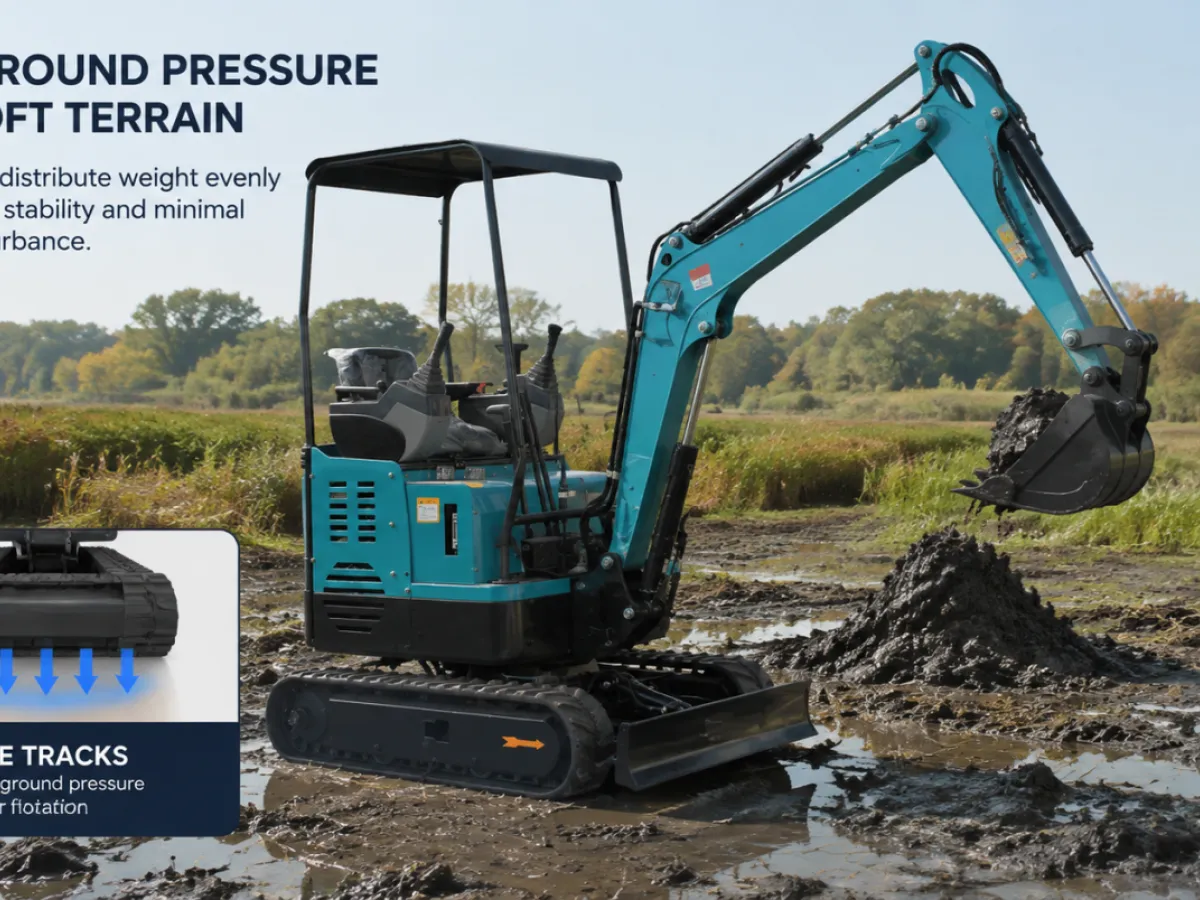
Pools in coastal areas or regions with high water tables regularly encounter groundwater at 1.0–1.5 metres depth. When the spoil turns to slurry and the base starts pumping, the machine is at risk of bogging — especially on rubber track with worn grousers.
Standard practice:
Install a sump in one corner from the first day; run a submersible pump continuously
Work from the high side of the excavation when a slope exists
If groundwater is severe, consider a dewatering bore adjacent to the site for larger pools
Do not allow the machine to sit in standing water — seal corrosion on cylinder rods starts quickly in saline ground
Conclusion
A mini excavator is the right machine for most residential swimming pool excavations — provided the access is resolved before the machine arrives, the dig sequence is planned, and spoil management is budgeted correctly. Machine selection comes down to gate width and dig depth: if the access allows a 15 series or 16 series machine through, the job runs faster and with less operator fatigue than forcing a sub-tonne machine to do mid-size excavator work.
The pool shell contractor will tell you the pool is simple. The excavation contractor knows the real complexity is what happens between the gate and the waterline. Plan for it, and the job is straightforward.
Planning a pool excavation project?
JRD Machinery can match the right compact excavator model to your site access constraints and dig depth requirements. CE and EPA-compliant machines available. Contact us with your gate width, pool dimensions, and ground conditions for a direct recommendation.