



The Bucket Confusion Problem — Why Wrong Width Costs You Hours
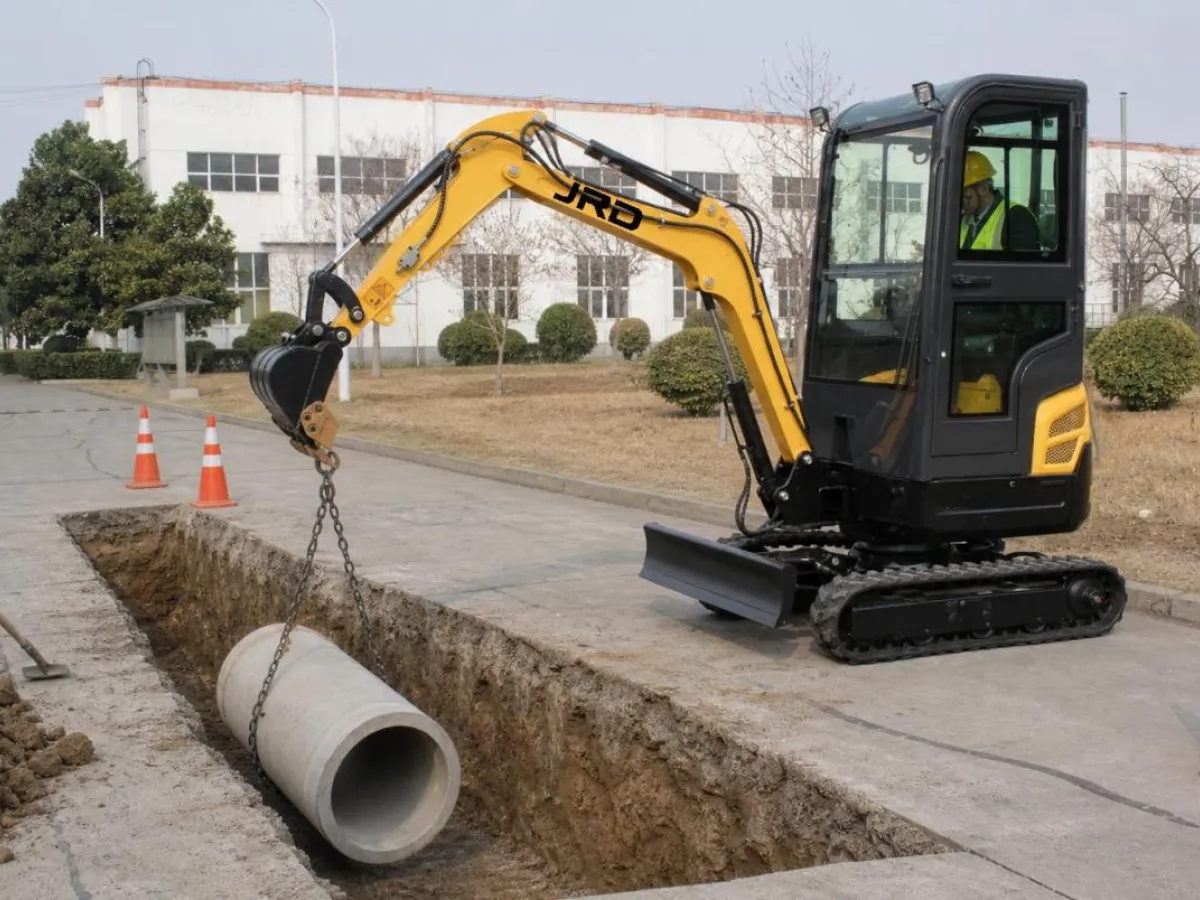
A mini excavator is only as productive as the bucket attached to it. Contractors who run a single-width digging bucket across all job types — trenching, grading, pond work, pipe laying — consistently report one of two problems: the bucket is too narrow for the volume they need to move, or it is too wide to fit the trench spec and they are paying a labour premium to hand-trim walls.
Bucket selection is not complicated once the variables are understood. The main decision points are width, profile type, teeth vs cutting edge, and material grade. This guide walks through each, with recommendations matched to machine class.
Picking right the first time reduces rework, lowers wear on the bucket and the machine's arm linkage, and shortens cycle times on every job that follows.
The Main Bucket Types and What They Are For
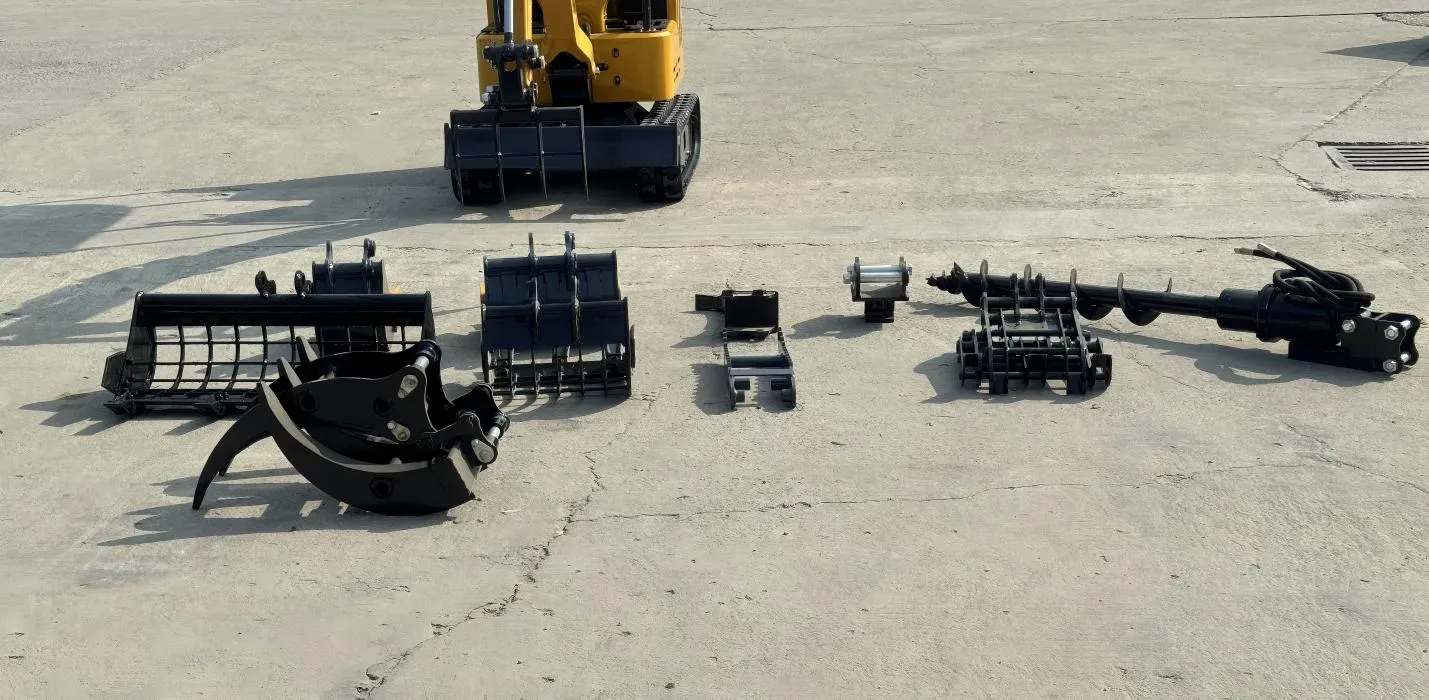
Digging (general purpose) bucket: the most common type, with a curved profile and replaceable bucket teeth. Suited to medium-cohesive soil — clay, gravel mix, firm subsoil. Tooth tips concentrate breakout force for penetration. Standard widths typically run 200–500 mm for mini excavators. This is the bucket that ships with most machines.
Grading bucket (also called a cleanup or ditch-cleaning bucket): wider than a digging bucket relative to machine class, with a straight cutting edge rather than teeth. The flat base allows the operator to drag and level material in a single pass. Suited to topsoil, soft fill, and subbase grading after bulk dig.
Ditching / trapezoidal bucket: shaped with angled side wings to cut sloped trench walls in a single pass. Used in drainage and irrigation work where the trench profile must match a specific side-slope ratio (e.g., 1:1 or 1:0.5). Reduces the need for hand-shaping.
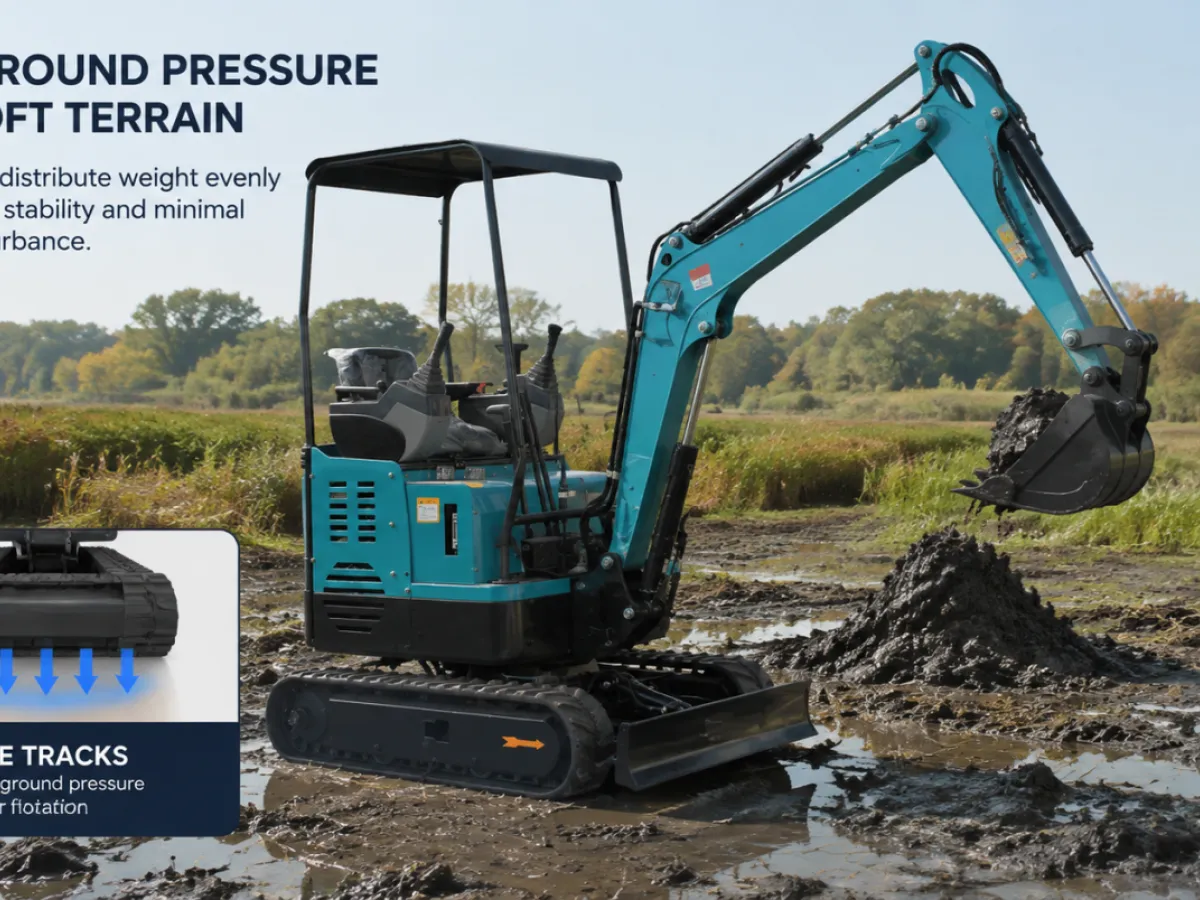
Mud / dredging bucket: a large-volume, open-profile bucket with no teeth, built from lighter steel to keep weight manageable at full load. Used in pond cleaning, drainage ditch maintenance, and wet-material handling. The open floor allows water to drain before the bucket is swung to the dump position.
Rock / heavy-duty bucket: thick-walled construction, reinforced side cutters, and aggressive tooth pitch. Suited to fractured rock, rip-rap, and hard compacted caliche. Weight is high — confirm machine lift capacity before fitting to smaller models.
Matching Bucket Width to Machine Class and Task
The fundamental rule: bucket width should not exceed the machine's rated breakout force at 80% of potential reach. Oversized buckets reduce cycle efficiency and stress the arm pins disproportionately.
For 06 series machines (sub-700 kg): widths in the 150–250 mm range for digging work. Grading passes work with up to 350 mm. At this size, the machine is primarily useful in very confined spaces — under decks, inside rooms, tight fence lines. Bucket weight is a real constraint; stick to single-layer lip construction.
For 10 series and 12 series machines (1,000–1,300 kg): standard digging at 200–300 mm; grading up to 400–450 mm. These machines handle full residential trench work — utility runs, footings, septic lines — with the right width selection.
For 15 series and 17 series machines (1,350–1,700 kg): digging at 300–400 mm is efficient; grading at 500–600 mm covers driveway prep and pond edge work comfortably. The 17 series with its 13.5 KN breakout force handles heavier-wall rock buckets without overworking the arm circuit.
For 18 series, 22 series, and 25 series machines (1,500–2,500 kg): full-width digging at 300–450 mm; grading at up to 700 mm is practical. These machines approach the lower range of mid-size excavator capability and can support heavier bucket configurations without impacting slew performance.
Teeth vs. Cutting Edge — When Each Is Right
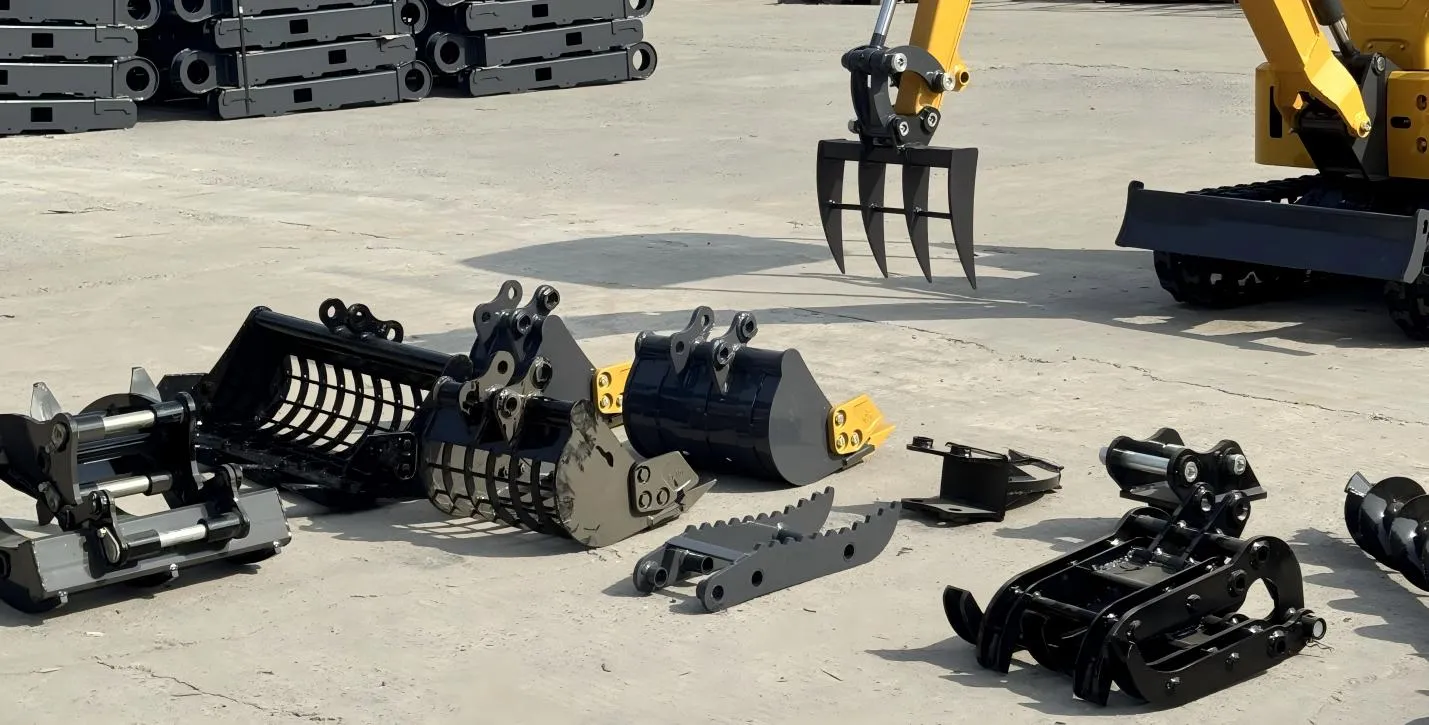
Replaceable teeth (also called tiger teeth or bucket tips) are the right choice when: the material is hard or has variable inclusions (roots, cobbles, tile), the operator is doing initial penetration rather than finishing, and wear resistance at the tip matters more than a clean cut surface.
Straight cutting edge (bolt-on reversible blade) is correct when: the task is grading, leveling, or cleanup where leaving a smooth base surface matters; and when material is soft enough that teeth would sink too aggressively and resist being dragged laterally.
Many experienced operators carry both and swap edges on site. The change takes under fifteen minutes on a quick-coupler-equipped machine.
Steel Grade and Wear Protection
Standard production buckets use Q355 or equivalent structural steel for the shell and Hardox 400 or similar wear plate for the lip, cutting edge, and side cutters. On a machine running in abrasive sandy gravel, a lip built from mild steel will wear through in 200–300 hours. Hardox-tipped lips run 800–1,200 hours under similar conditions.
Specify:
Hardox 400 or NM400 on the cutting lip, minimum 12 mm thick for 1-tonne class
Replaceable side cutters, bolt-on, with flat mating surface
Teeth on a standard series pin (e.g., GET, TIG, or equivalent) so tips are locally available
Weld quality — look for full-penetration welds at high-stress corners, not fillet-only
Quick Couplers — the Prerequisite for Multi-Bucket Operation
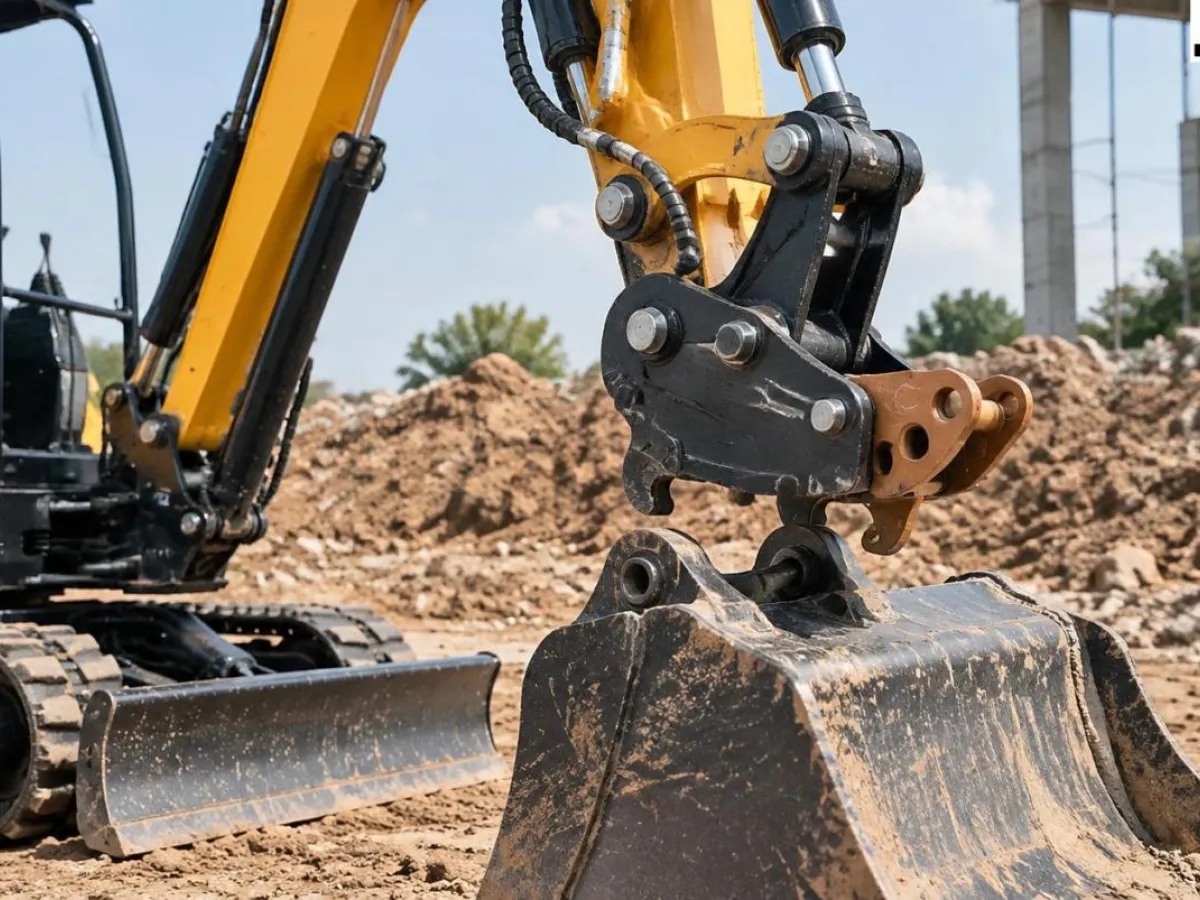
Running more than one bucket type on a single machine requires a quick coupler (also called a quick hitch). This is a mechanical frame that mounts between the arm and the bucket, allowing the operator to change attachments without tools — typically in under five minutes.
Quick couplers add weight (typically 20–50 kg depending on class) and slightly increase the pin-to-lip distance, which can reduce breakout force by 3–8% on smaller machines. For the time savings across a multi-task day, the trade is almost always worthwhile. Confirm the coupler's rated load capacity matches or exceeds the heaviest bucket you plan to run.
Ordering the Right Bucket — What Information to Provide
When contacting a supplier, provide the following to avoid a mismatch:
Machine model and serial (or machine weight class and max breakout force)
Pin diameter and pin center-to-center distance
Intended task (digging, grading, rock, mud)
Soil type (clay, sandy gravel, hard rock, wet silt)
Required width in millimetres (if a specific trench spec is involved)
Whether a quick coupler is installed, and the coupler make/model
Conclusion
Getting bucket selection right on a mini excavator is a one-time investment of twenty minutes that pays off across hundreds of hours. The default digging bucket that ships with most machines is a compromise — adequate for most tasks, optimal for none. A grading bucket on the same machine cuts site cleanup time in half. A mud bucket saves three or four passes per pond-cleaning cycle.
The bucket is the machine's only contact with the work. Specify it to the job, confirm the steel grade, and set it up with the right cutting edge or tooth type for the material. Everything else on the machine performs to spec — this is where the operator controls whether the machine actually delivers.
Need help specifying the right bucket?
Send JRD Machinery your machine model, pin dimensions, and task description. We will confirm width, profile, steel grade, and tooth system — and can supply matching buckets with CE certification for export orders.