



Managing a Full Workday with a Single Skid Steer Loader
On small and mid-scale job sites, a productive full workday often depends on how well one skid steer loader is scheduled, staged, and matched with the right attachments. With a planned attachment strategy, one machine can cover material movement, light surface prep, cleanup, and support tasks—provided the workflow is sequenced and attachment changes are kept to scheduled blocks. In practice, the goal is not to make the skid steer “do everything at once,” but to keep it working in a predictable rhythm with minimal idle time: arrive, stage materials, complete the high-priority cycles, and finish with cleanup so the site is ready for the next day or the next trade.
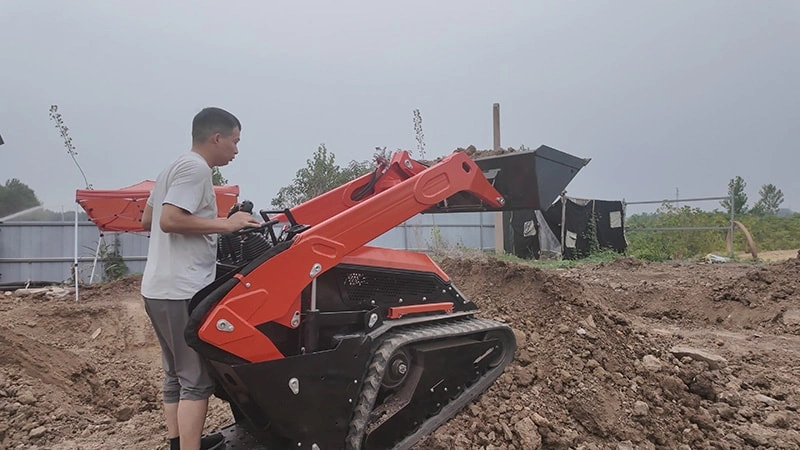
A skid steer loader is typically most effective when it runs steady cycles across multiple small tasks, rather than being optimized for one high-volume operation all day. Over a full day, operators may cycle from loading aggregates, back-dragging to level small areas, moving pallets, and doing end-of-shift cleanup to keep access lanes open. Attachments such as skid steer buckets, sweepers, and pallet forks support these transitions without changing machines, which is often critical on compact sites where space, traffic flow, and staging areas are limited. When the attachment plan is clear, the operator can move from one task category to the next with fewer delays, and the crew can coordinate around one predictable piece of equipment rather than chasing multiple machines across the site.
Planning Tasks Around Attachment Transitions
Efficient workdays are rarely about speed alone; they depend on reducing interruptions such as unplanned attachment swaps, waiting for materials, or stopping to clear congested work zones. A practical way to plan is to group tasks by attachment and by location. Operators often begin with material handling using a skid steer bucket to move soil, aggregates, or construction debris from one staging point to another. If the site involves repeated short-distance travel, the bucket phase can be scheduled as a single block: load–carry–dump cycles first, then a short leveling pass while the bucket is still installed, and only then move on to the next attachment. This reduces “half-finished” areas and avoids switching back and forth because one section was missed.
After primary material movement, switching to a sweeper helps clear loose debris from travel lanes and staging areas so the next crew can work without tracking material back onto finished surfaces. On many projects, sweeping is most effective when it is done at predictable times—midday to restore order after deliveries, and late afternoon to leave the site ready for the next shift. This sequence reduces clutter and improves safety without introducing additional equipment, because the same skid steer can both create the mess (loading, dumping, spreading) and then remove the loose residue that makes the area harder to work on.
By grouping tasks that use the same attachment and setting specific changeover windows, crews avoid unnecessary switching and can stage attachments in a consistent, easy-to-connect location. For example, pallet forks can stay installed for multiple runs: moving palletized pavers, relocating boxed materials, or staging tool cages near the work face. Fork tasks often look small individually, but they can consume time if they are scattered across the day and force multiple changeovers. Keeping them together allows the operator to keep a consistent travel path and turning pattern, which also reduces congestion around narrow access points. This approach keeps hydraulic connections engaged for longer periods and can reduce repetitive coupling cycles that contribute to connector wear and contamination risk. It also helps the crew plan around one “attachment state” at a time—bucket block, fork block, sweeper block—so the skid steer remains productive from morning to late afternoon.
Maintaining Consistent Machine Performance
A full workday places steady demands on hydraulic systems, operator focus, and machine balance. Skid steer loaders perform best when attachments are matched to machine capacity and task requirements, and when the job is approached with repeatable operating habits. Overloading a bucket or using oversized attachments may look efficient in the short term, but it often creates control issues: longer stopping distance, more bouncing on uneven ground, and slower cycle times because the operator must correct the machine repeatedly. On sites with tight turning areas or soft ground, that loss of control can also lead to deeper ruts and additional rework during finishing.
Operators who maintain smooth control inputs and consistent operating speeds experience fewer disruptions, especially when the work involves repetitive cycles such as loading, dumping, and leveling. Consistency is not only about comfort—it is about predictable outcomes. When the operator keeps a steady approach angle into a stockpile, maintains a repeatable lift height on the travel path, and dumps at similar positions each time, the crew can better manage stockpile shape, keep haul lanes cleaner, and reduce the time spent “fixing” areas that were accidentally disturbed. Stable operation reduces strain on both the machine and the operator, allowing productivity to remain steady rather than declining after several hours. In many cases, the best indicator of an efficient day is not the fastest single cycle, but the ability to sustain clean cycles without interruptions for correction, cleanup, or fatigue-related mistakes.
Why One Machine Can Be Enough
For many contractors, relying on one skid steer loader simplifies logistics and reduces overall operating costs. Instead of coordinating multiple machines, crews focus on sequencing tasks efficiently and choosing attachments that support daily workflow needs. This can also simplify site traffic planning: one machine becomes the “utility unit” responsible for loading, moving, staging, and cleanup, while other trades can work around a predictable equipment pattern. When properly planned, a single skid steer loader can support an entire workday without compromising output or site organization, particularly on compact job sites where the work is distributed across many small tasks rather than one large excavation or haul operation.
This practical approach explains why skid steer loaders remain a core tool for contractors managing varied tasks on compact job sites.