



Mini Excavator for Agriculture — Drainage, Pond Work, and Farm Infrastructure
Agricultural applications of compact excavators share a set of conditions that are different from construction sites: the ground is often soft and wet when the work needs to happen, the machine may need to cross cultivated fields without leaving damaging ruts, there is no paved road surface at the work location, and the machine owner is typically an owner-operator who also operates full-size farm machinery and is evaluating the compact excavator as an addition to that fleet. Mini excavator agriculture work rewards the right machine and attachment specification, and punishes a mismatch more than most environments because there is no infrastructure to help recover a stuck or under-specified machine.
This article covers the specific agricultural applications where compact excavators are most used — field drainage ditch cutting and maintenance, farm pond construction and desiltation, farm track and gateway repair, post hole drilling for fencing, and tree management — with attention to the machine weight, track width, and attachment configurations that work in wet and soft agricultural ground.
Ground Pressure and Track Width — The Critical Starting Point for Agricultural Work
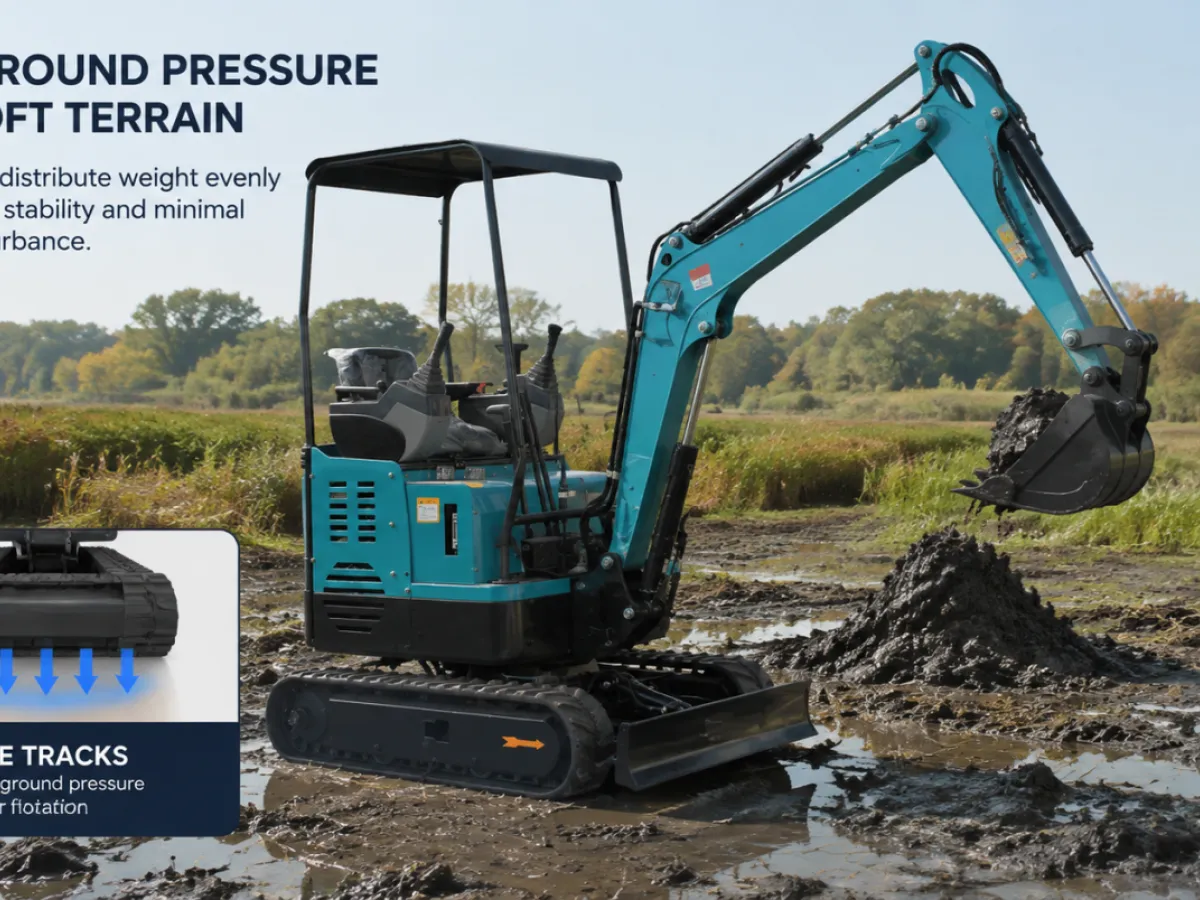
The first question for any mini excavator agriculture application is not the machine's digging force — it is whether the machine can reach the work without becoming stuck in the process. Agricultural ground in the conditions where drainage work is most needed (late autumn, early spring) is at its wettest and softest. A machine that sinks past its belly plates in wet clay before it reaches the ditch line is useless regardless of its hydraulic capability.
The 06 series at 660 kg operating weight and 700 mm track width provides the lowest ground pressure in the range and is appropriate for very soft or recently cultivated ground where even a lightweight tractor would leave damaging ruts. The 10 series at 1,000 kg and 930 mm track width is the more practical choice for most agricultural drainage work — it provides more digging force and deeper reach than the 06 series while still maintaining low enough ground pressure for established pasture and light soils.
The 15K at 1,100 kg and the 17 series at 1,700 kg are significantly heavier and will create visible track marks on wet cultivated ground. These machines are appropriate for agricultural applications on firm ground — farm track repair and gateway reconstruction where the ground has been consolidated, or pond work where the machine operates from a firm bank rather than across the soft area. Running a 1,700 kg machine across a waterlogged field to reach a drainage ditch is a reliable way to create a worse drainage problem than the one you started with.
Field Drainage — Ditch Cutting and Maintenance
Field drainage ditch work includes two distinct tasks with different machine requirements: cutting new drainage ditches through previously undrained ground, and maintaining or desiltating existing ditches that have partially filled with sediment, vegetation, and accumulated spoil.
New ditch cutting in agricultural soil is straightforward digging work — the soil profile in agricultural fields is typically topsoil over subsoil, without the mixed materials, buried services, and concrete obstructions found in urban sites. The mud bucket is the preferred tool in soft ground conditions; the standard digging bucket with teeth is faster in dry or firm subsoil conditions where the toothed bucket can break material efficiently. Ditch profile — the trapezoidal cross-section with sloped sides rather than vertical walls — is essential for agricultural drainage because vertical walls slump and fill the ditch faster than gently sloped sides. The compact excavator bucket angle during the cut controls the wall slope; experienced operators develop the arm movement pattern that produces a consistent wall slope without needing to re-cut the profile.
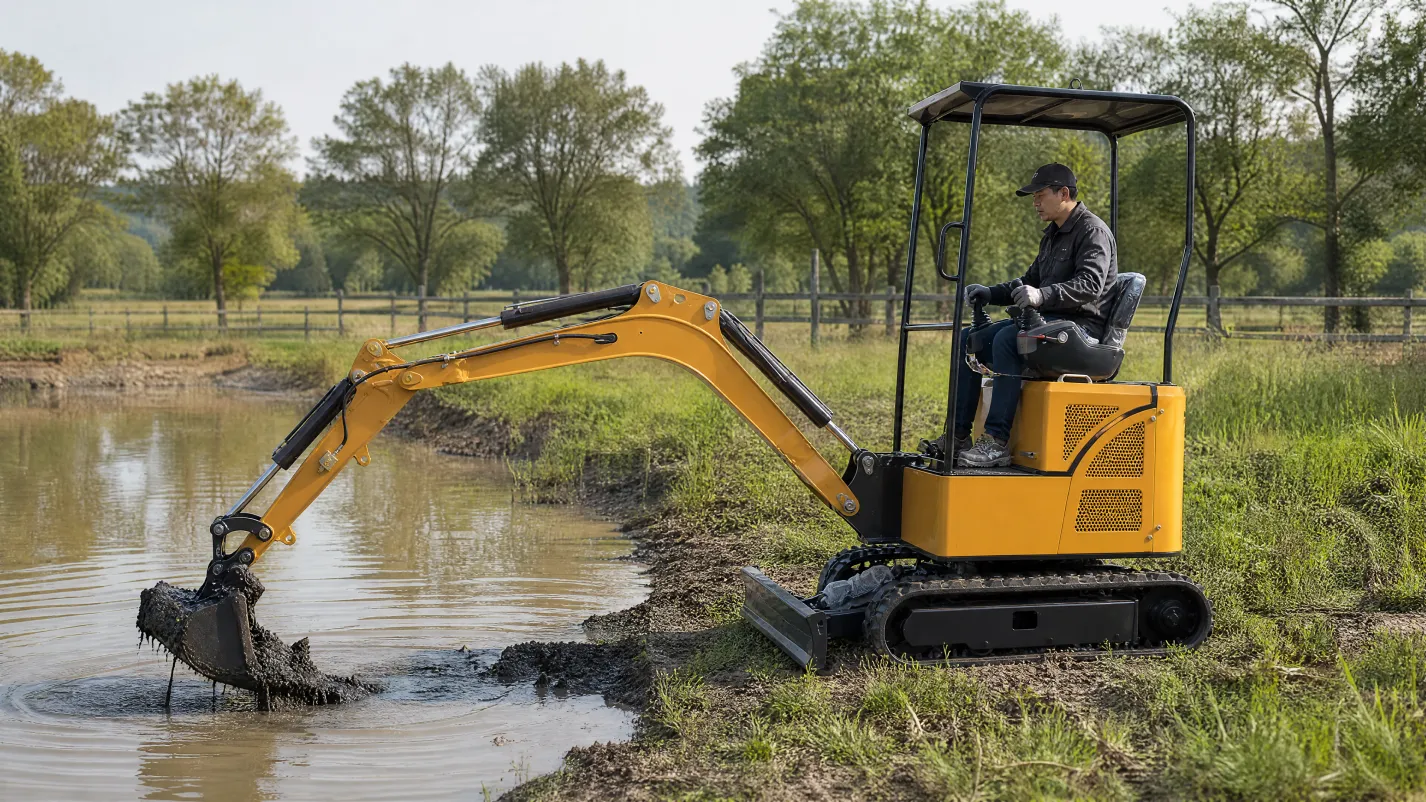
Ditch maintenance is desiltation work — removing accumulated material from an existing ditch that has reduced in capacity. The mud bucket operating from the ditch bank side removes silt in a series of passes along the ditch length, loading spoil into a row along the field edge for later spreading. This is work where the machine's maximum reach is the limiting factor: the ditch may be 2 to 3 metres wide, requiring the arm to reach across the full width from a bank position. The 13K series at 1,740 mm digging depth and approximately 3.5 m maximum digging radius can reach across most agricultural field drains from a firm bank position.
Farm Pond Construction and Desilting
Compact excavators in the 1,000 to 1,700 kg class can construct or enlarge farm ponds up to approximately 10 to 15 metres diameter working from the bank — the machine stays on firm ground and the arm reaches progressively further into the excavation as the pond deepens and widens. Larger ponds require the machine to work from within the excavation area, which requires ensuring the base material is firm enough to support the machine during the excavation process.
Farm pond desilting follows the same working pattern as ditch maintenance — the machine works from the firm bank and reaches into the pond with a mud bucket. The depth limit for effective desilting from the bank is approximately 60 to 70% of the machine's maximum digging depth, since the arm angle at maximum extension limits the bucket's ability to develop digging force in the horizontal direction. For the 10 series, effective desilting depth from the bank is approximately 1.0 to 1.1 metres; for the 13K series, approximately 1.2 metres. Ponds that have silted to greater depths than this require either the machine to enter the pond area (requiring firm enough base material) or a long-reach arm configuration.
Water quality consideration: in desilting work, the silt removed from the pond base is often anaerobic (low-oxygen) material with high nutrient content. Spreading this material directly onto pasture land can cause nutrient burn on the grass, particularly if spread thickly. Agricultural drainage practice recommends spreading in thin layers during dry weather and avoiding spreading directly before rain that would wash the material into watercourses. These are farm management considerations rather than machine operation considerations, but they affect how the spoil is managed during the desilting operation.
Fencing, Post Holes, and Farm Infrastructure
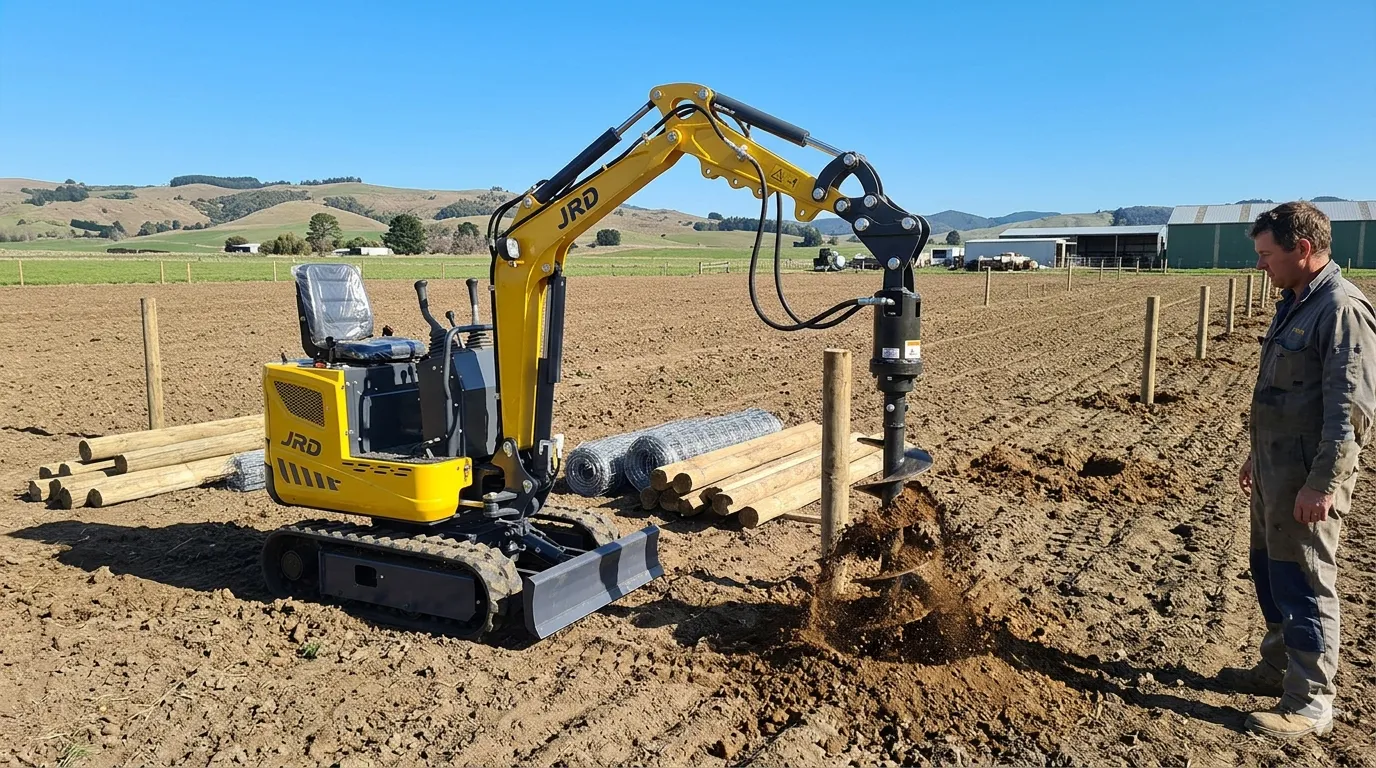
Fencing is one of the highest-value agricultural applications for compact excavators equipped with an auger drill attachment. Manual post-hole digging with a handheld auger is slow, physically demanding work; a compact excavator with a 200 to 300 mm auger can drill 40 to 60 post holes per day in average agricultural soil compared to 8 to 12 by manual methods. For a farmer fencing several kilometres of new paddock, the time saving justifies the machine purchase or hire cost within the first season.
The practical challenge in agricultural auger work is rock — not everywhere, but in areas with surface rock or embedded field stone, the auger encounters material that a standard bit cannot penetrate. A tungsten carbide rock bit, as described in Article 56, handles this condition but adds to the attachment cost. The decision to equip a farm machine with a rock auger versus a standard auger should be based on the specific geology of the land — if rock is present in 20% of post hole locations, a rock bit is the right investment; if rock is rare and occasional, drilling around obstructions with a standard bit is more economical.
Farm track repair — resurfacing rutted or eroded farm tracks with imported aggregate or reshaping the existing profile — is bucket work. The compact excavator spreads aggregate along the track from a tipper trailer depositing material, then shapes and compacts the spread material with a flat bucket or the back of the bucket shell. This is productive machine work that would otherwise require a small bulldozer or road grader — the compact excavator's ability to perform basic profiling and spreading work makes it a versatile farm infrastructure tool beyond its core digging function.
Agricultural Machine Management — Protecting the Machine Between Uses
Agricultural compact excavators typically see seasonal use rather than the daily use of a construction site machine — intensive use during drainage season, then periods of storage. This usage pattern has specific maintenance implications that differ from the continuous-use schedule in Article 62.
Before extended storage (more than four weeks between uses): change the engine oil regardless of hours since the last change, because moisture contamination from temperature cycling degrades oil faster during storage than during operation. Fill the fuel tank completely to minimise the air space in which condensation forms — water in the fuel tank is a common cause of injector corrosion during storage. Apply a corrosion inhibitor spray to exposed hydraulic cylinder rod surfaces — the polished rod surface that was in contact with the seal is extremely vulnerable to pitting corrosion if left exposed in a damp environment.
Track tension management during storage: release the track tension slightly below the normal operating specification before storage. Rubber tracks held at operating tension for extended periods can take a compression set in the steel core that causes irregular tension distribution when the machine returns to service. Check and reset tension to the operating specification before the first use after storage.
Agricultural environments also expose machines to fertilisers, slurry, and pesticides that accelerate corrosion on steel surfaces and degrade hydraulic hose outer sheaths. After working in or near these materials, wash the machine's undercarriage and track frames with fresh water before parking. The five minutes of washing after use prevents the progressive corrosion that is difficult and expensive to address after it has become established.
Sourcing a compact excavator for farm drainage, fencing, pond work, or general agricultural infrastructure?
JRD Machinery offers CE-certified mini excavators with low ground pressure rubber tracks, mud bucket options, and auger drill attachments suited to agricultural applications. Models from 660 kg for sensitive ground to 1,700 kg for heavier farm work.
Visit www.jrdmachinery.com to view the full range and attachment options, or contact us with your specific agricultural application for a model and attachment recommendation.