



The Grip Problem Why a Bucket Alone Loses Half the Job
Anyone who has tried to load irregular debris — broken concrete, tree roots, tangled brush, rip-rap — with a standard bucket knows the frustration. You fill the bucket, travel five meters, and half the material slides off the curved lip before you reach the dump zone. You scoop again. You lose time. On a mini excavator working a land-clearing or light demolition site, that lost grip can add an hour to a job that should have finished before lunch.
The solution is a hydraulic thumb attachment. Fitted to the boom-end of a compact excavator, a thumb acts as a moveable finger that closes against the bucket, clamping material securely during travel. For contractors who run a single machine across multiple task types, the mini excavator thumb is often the most cost-effective single upgrade available.
This article explains how thumbs work, what to look for when specifying one, which machine configurations support hydraulic operation, and the job situations where a thumb pays for itself fastest.
What Is a Thumb Attachment and How Does It Work
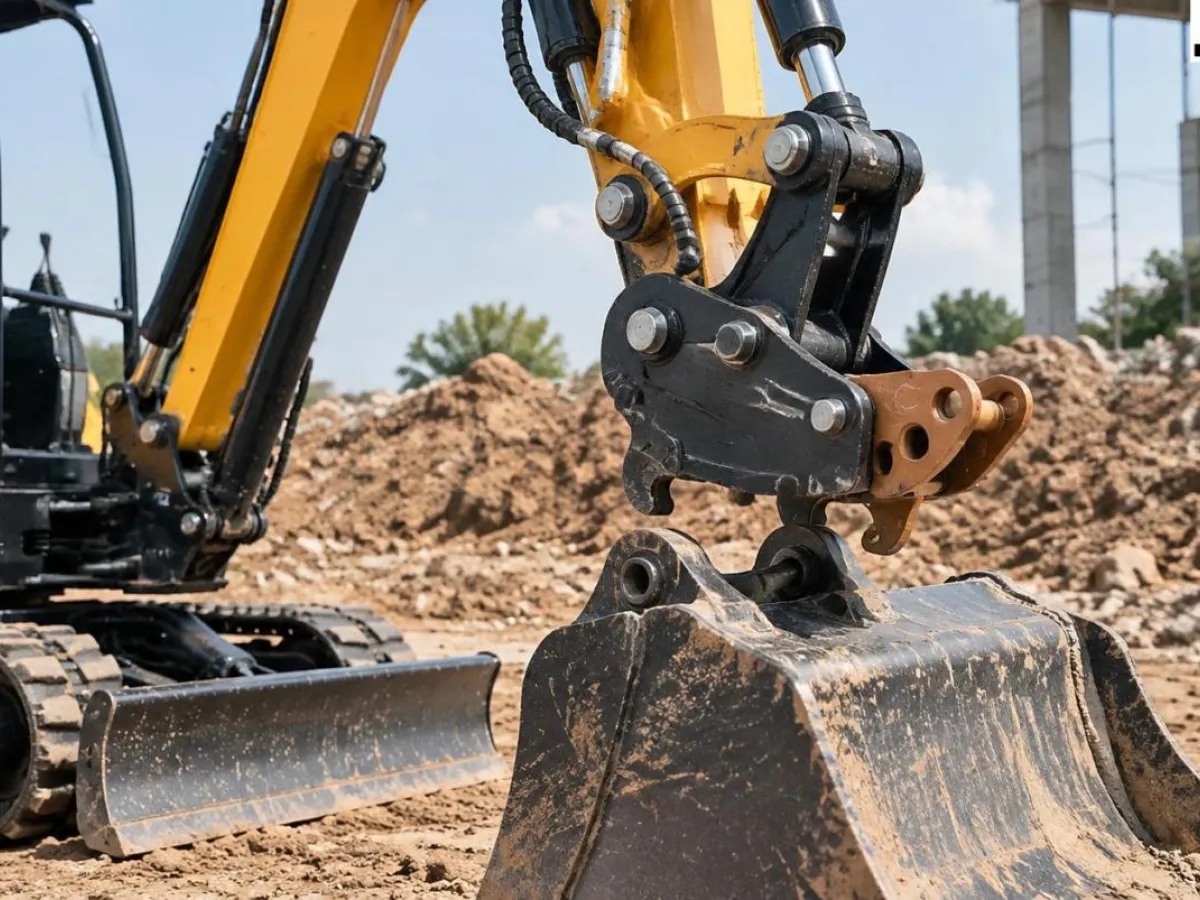
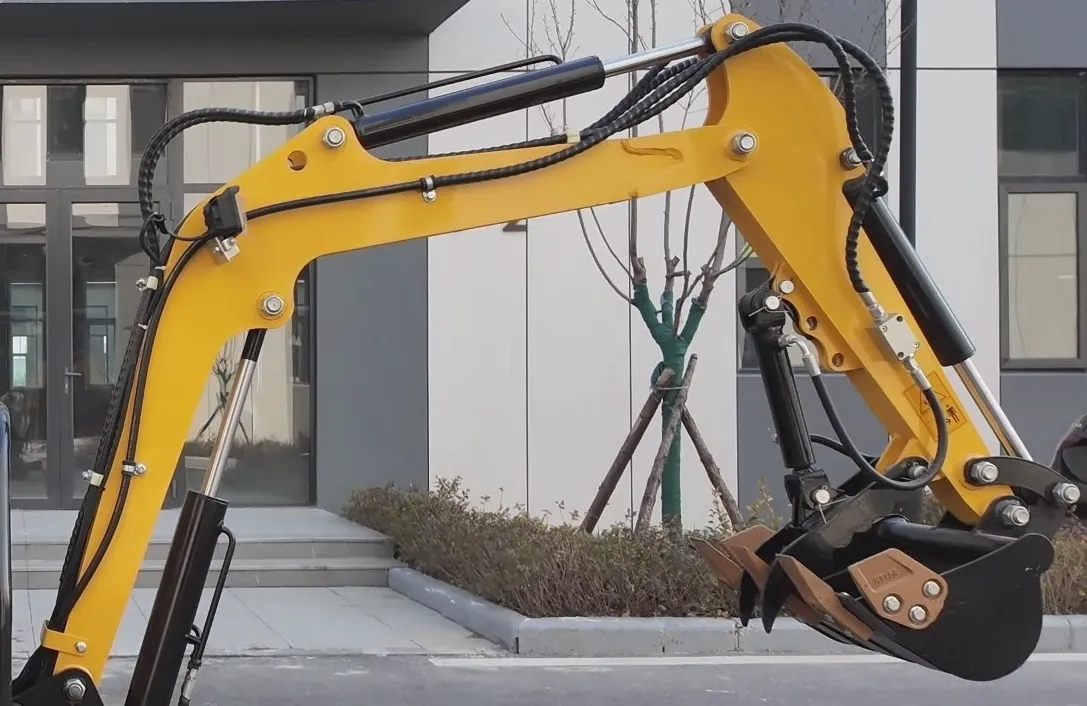
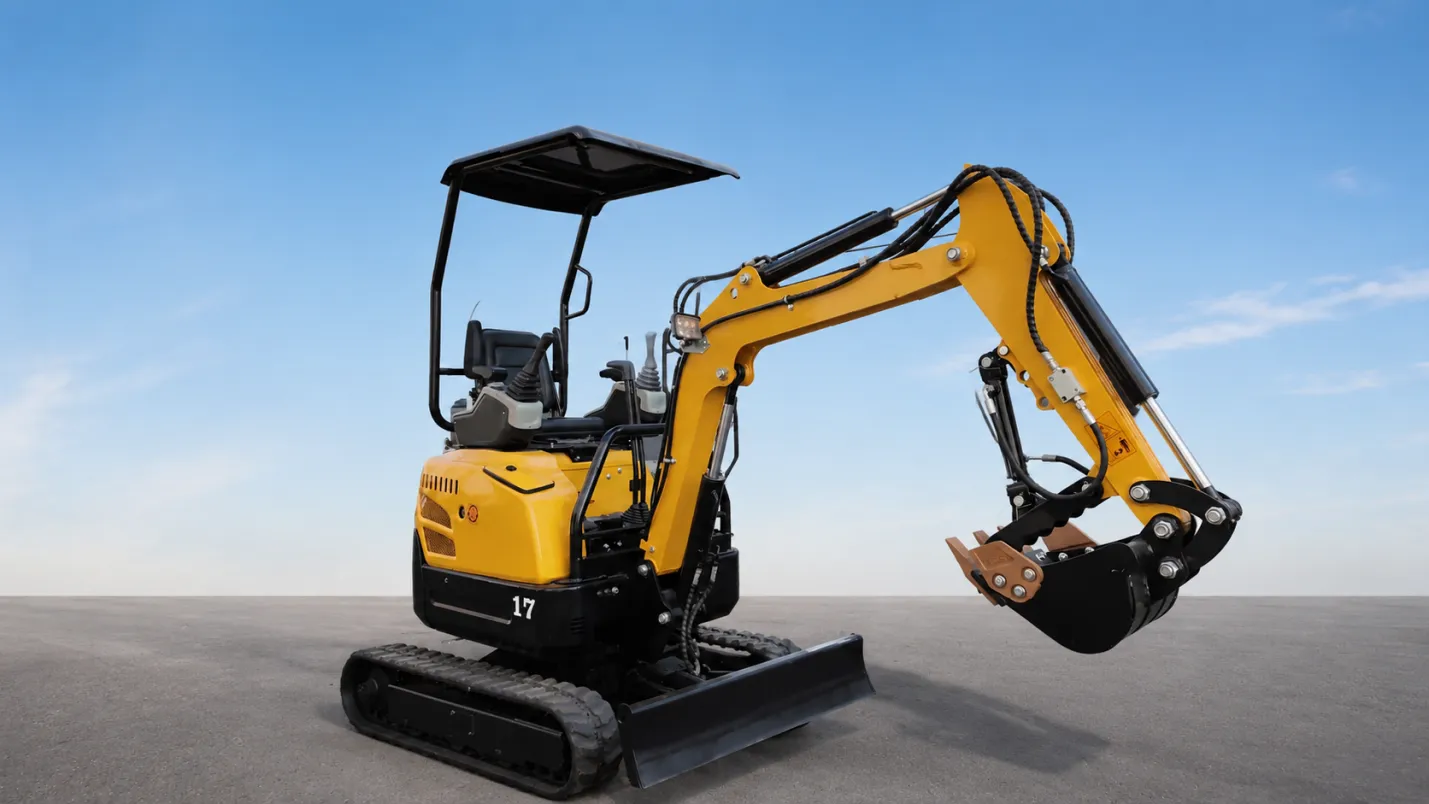
A mini excavator thumb is a curved steel finger that mounts on the boom stick (arm), positioned opposite the bucket. In its simplest form — a fixed mechanical thumb — it stays in a set position and relies on the bucket curl to pinch material against it. This works for uniform, large objects but offers no adjustability.
A hydraulic thumb adds a dedicated cylinder connected to the machine's auxiliary hydraulic circuit. The operator opens and closes the thumb independently, from the cab, using a foot pedal or thumb switch on the joystick. This gives full control over grip angle, grip force, and release timing — essential when handling awkward shapes or fragile material.
Key operational advantages:
No repositioning between grabs — material is clamped and stays clamped during travel
Selective sorting — the operator can place individual pieces rather than dumping a full bucket
Reduced ground disturbance — fewer passes, less tracking over finished areas
Dual function — thumb folds back flush when running the bucket in normal digging mode
Matching Thumb Size to Machine Class
Thumb dimensions are spec'd by pin bore diameter, stick width, and thumb reach — the distance from the pivot pin to the tip. Undersized thumbs flex under load and lose grip. Oversized thumbs create interference with the bucket sides, preventing full curl.
For machines in the 06 series and 10 series — sub-1,000 kg class — narrow thumbs with 30–40 mm pin bores are appropriate. The short stick length on these models limits reach anyway, so a compact thumb keeps weight at the boom tip manageable.
Mid-class machines — 15 series, 17 series, 18 series — typically suit thumbs with 40–50 mm pin bores and deeper curvature to match the wider bucket width. The 17 series with its variable piston pump and dedicated auxiliary port handles hydraulic thumbs with good flow consistency. The Taifeng multi-way valve on this model gives the thumb circuit a clean pressure response, which matters when feathering grip on fragile objects.
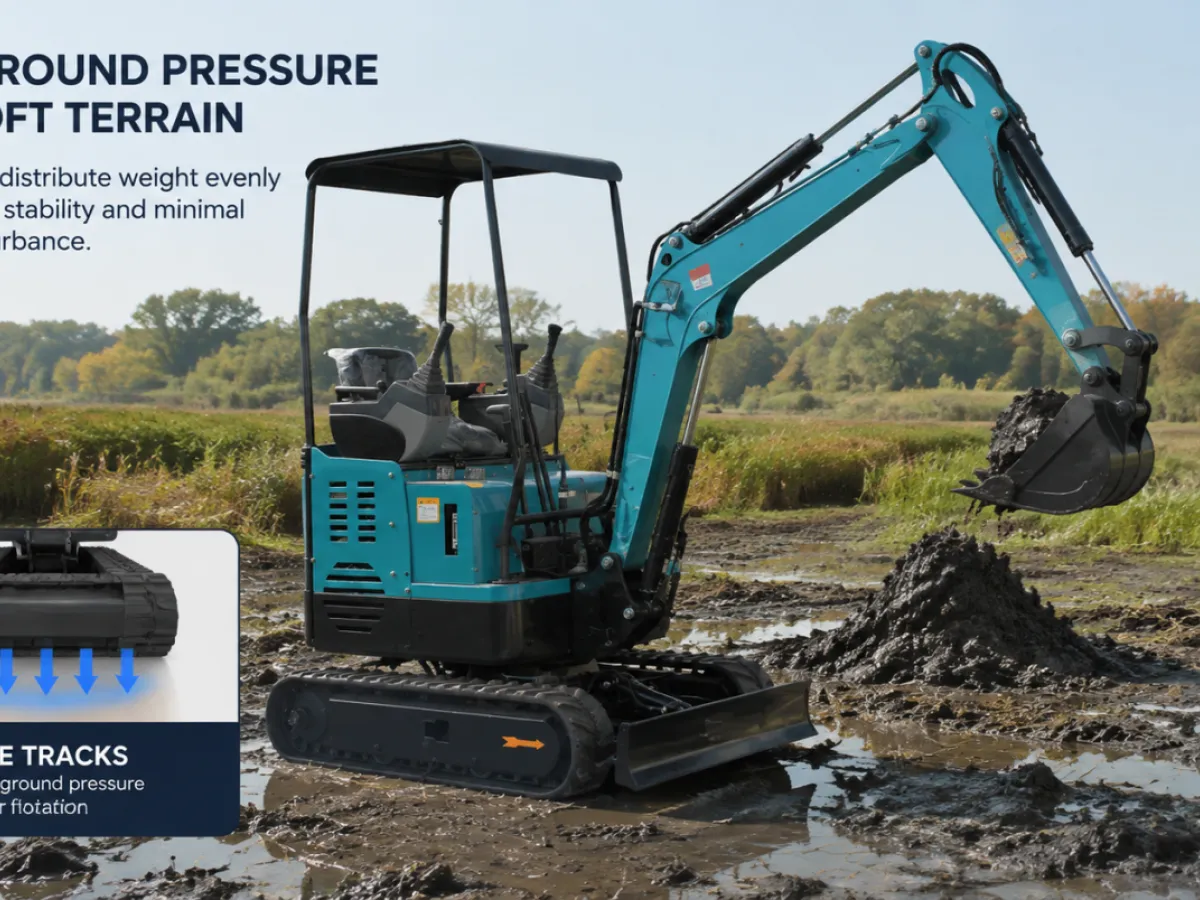
The 16 series with telescopic undercarriage benefits particularly from a hydraulic thumb because the combination of variable track width and thumb-equipped boom makes it competitive in roadside utility work — stripping turf on a narrow verge and sorting sod into a trailer without opening the track to full width.
Auxiliary Hydraulic Requirements
Running a hydraulic thumb requires an auxiliary circuit — also called a third-function circuit or auxiliary port. Not every machine at the compact end of the range offers this as standard. Confirm the following before ordering a thumb:
Flow rate: most thumbs operate comfortably on 15–35 L/min; match this to the machine's auxiliary output
Operating pressure: typically 150–250 bar; ensure the thumb relief valve is set below the machine's system pressure
Port type: flat-face or JIC quick couplers on the stick — confirm thread and coupling standard
Return line: the thumb needs a return path; machines without a dedicated return port may require an adapter tee at the tank port
Machines without auxiliary circuits can still use a mechanical thumb or a manual-adjust thumb (also called a wrist-lock thumb), where the operator sets position by hand when the machine is stopped. These are significantly cheaper but add a step between each grab. For high-frequency sorting — running through a full truck of brush in 20 minutes — the cost difference is recovered in labor quickly.
Job Applications Where a Thumb Earns Back Its Cost
Land clearing and stump removal: pulling root balls intact is nearly impossible with a bucket alone. A thumb hooks under the root mass and holds it during extraction, reducing the number of passes and preventing the machine from driving over fresh root tears.
Demolition debris sorting: separating rebar from concrete at a knockdown site requires deliberate placement. A thumb lets the operator grab a piece, sort it to the correct pile — metal vs masonry vs backfill material — and move on without a loader.
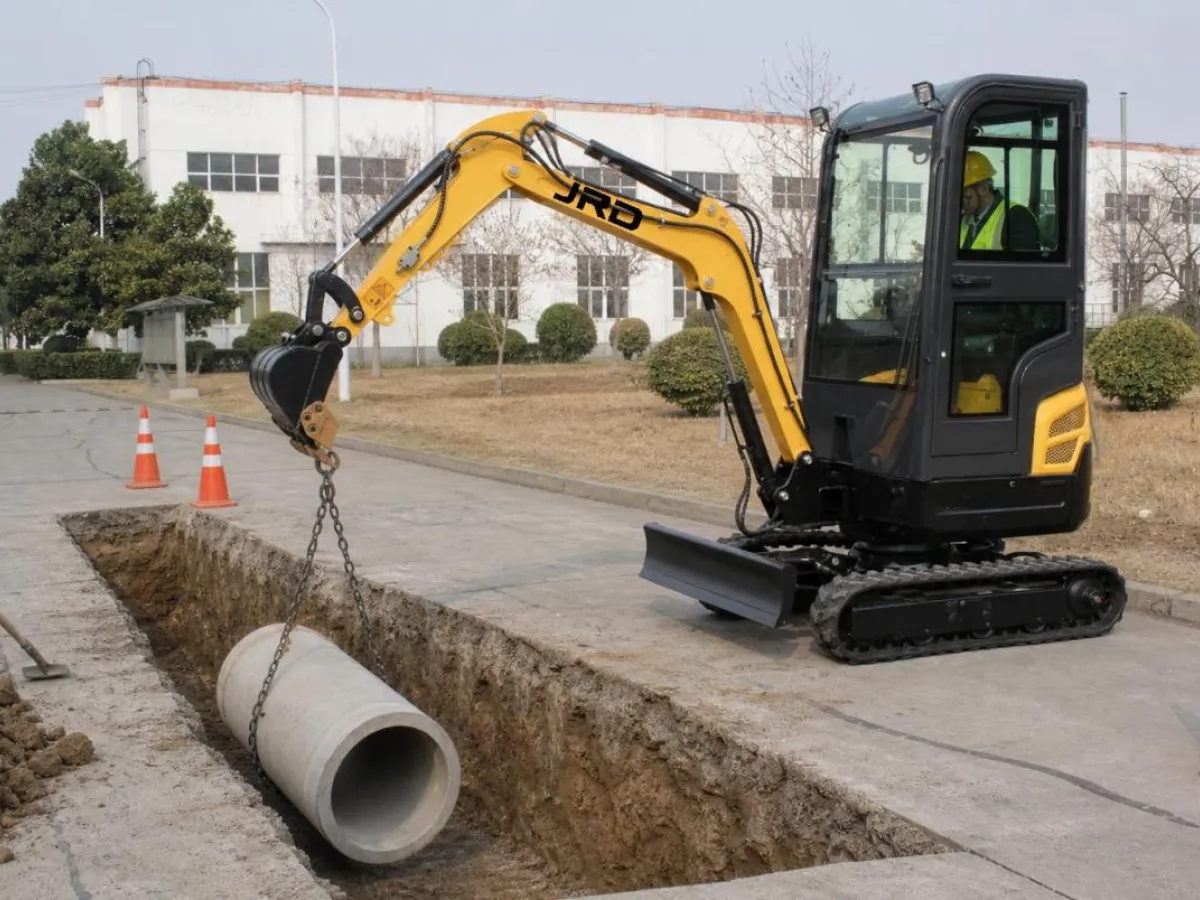
Pipe and culvert placement: lowering a concrete pipe into a trench while keeping it aligned is a two-man job with chains; a thumb makes it a one-man job. The operator grips the pipe barrel, positions it over the trench, and releases gently.
Rip-rap and boulder placement: the operator picks individual rocks and places them face-out, which matters for erosion control walls. Bucket-only work on rip-rap almost always results in poorly packed walls that shift.
Utility trench backfill management: instead of pushing large clods back into a trench and creating voids, the thumb allows the operator to break clods against the bucket and drop clean fill.
Thumb Materials and Durability Considerations
Thumbs on working machines take significant impact. The spec you should request from any supplier: Hardox 400 or equivalent wear plate on the tips and inner contact surface, with structural steel on the spine. A thumb built entirely from mild steel will deform after two or three serious pulls on root balls.
Look for:
Full-penetration welds at the pivot bracket — no fillet-only construction
Grease fittings at both the pivot pin and cylinder rod end
Replaceable wear pads on the bucket contact surface
Tines rather than a solid plate for the grab face, which allows material to shed debris rather than holding it
Installation and Setup
Most thumbs ship as a weld-on or bolt-on bracket at the stick, with a separate cylinder mount. The installation sequence:
Measure stick width and select the correct bracket width
Mark center on the stick and tack-weld the pivot bracket — check alignment against bucket centerline before full weld
Mount the cylinder to the machine's auxiliary port; bleed air from the cylinder by cycling it fully several times
Set the mechanical stop so the thumb tip clears the bucket lip at full open, with 5–10 mm clearance
Adjust the relief valve to stop short of machine system pressure to protect the cylinder seals
When Not to Use a Thumb
A thumb on the stick adds weight — typically 20–60 kg depending on class. On a 06 series or 10 series machine near its rated operating weight, this matters for stability. For jobs that are purely digging — trenching, pond excavation, footing work — removing the thumb and running clean saves wear on the slew bearing and improves bucket curl force since the auxiliary circuit isn't under load.
The thumb is a versatile tool, not a permanent fixture. Building the habit of fitting and removing it takes less than ten minutes on most mounts.
Conclusion
A hydraulic thumb attachment turns a mini excavator from a digging machine into a material handler capable of sorting, placing, and gripping irregular objects. The decision to spec one comes down to job frequency — if you run clearing, demolition, or sorting work more than twice a month, the attachment pays back in reduced labor and faster cycle times.
When ordering, confirm auxiliary flow rate, pin bore size, and stick width. If the machine lacks an aux circuit, a manual thumb still captures most of the benefit at a fraction of the cost. Either way, the grip problem gets solved.
Ready to add a thumb to your fleet?
Contact JRD Machinery with your machine model and stick dimensions — our team will confirm the correct thumb bracket, cylinder specs, and auxiliary port configuration. CE and EPA-compliant machines available for immediate enquiry.